AI Mode is the most demanding model we track — and the one where good content pays off most.
In our 2026 data, AI Mode's top factor, Search Intent Alignment, sits at 29.6% — the highest value any factor reaches for any model in our entire dataset. Its top three — Search Intent Alignment (29.6%), Early Query Confirmation (28.6%), and Early Query Answer (25.5%) — all measure what your first paragraph does. And unlike the other models, AI Mode doesn't stop caring after that: factors that barely register elsewhere still carry real weight here.
The short version: optimize your first paragraph first, like everywhere else — but for AI Mode, almost nothing on your page is safe to ignore.
Let me show you.
The pickiest judge in AI search
Here's the cleanest way to see what makes AI Mode different: compare its numbers to everyone else's.
Perplexity's strongest factor reaches 15.3%. ChatGPT tops out at 17.9%. AI Overviews peaks at 22.3%. AI Mode's hits 29.6% — and its tenth-place factor (15.4%) would rank first or second on Perplexity's entire chart.
What does that mean in practice?
Content quality separates winners from losers more sharply in AI Mode than anywhere else. For models with flatter profiles, a mediocre page can still get lucky. In AI Mode, the gap between well-crafted and average content results in the largest citation difference we measure.
If you only have the resources to write genuinely good content for one AI channel, the data says this is the one that rewards it hardest.
What the data shows about how AI mode chooses sources
From Positive Surfer's AI Tracker — AI-generated answers scored across a 20-factor content rubric, 2026 run:
.avif)
Two things to notice.
First, the top three — Search Intent Alignment (does your content address why someone is asking, not just the literal query?), Early Query Confirmation (does your first paragraph signal it's answering the right question?), and Early Query Answer (do you deliver a short version of the answer before elaborating?) — are the same trio that leads every model in our 2026 run. The convergence is total: whatever else each model rewards, they all check your first paragraph first.
Second, look at how slowly the table falls off. Eleven factors sit above 15%. For comparison, Perplexity has exactly one. AI Mode isn't running a shortlist of pet criteria — it's grading the whole page.
Start where every model starts: The first paragraph
I've written separately about why almost 40% of all AI citations come from the first 100 words of a page. For AI Mode, the factor weights back that up at the highest values we've measured anywhere.
The playbook is the same one from our Perplexity and ChatGPT studies — name the topic in sentence one, deliver the short answer before elaborating, and write for the reason people ask, not just the words they type. If you've set that up already, you've covered AI Mode's top three factors.
What's different here is what comes next.
The experience signals finding — AI Mode actually rewards first-hand experience
Experience Signals — does the content demonstrate first-hand experience with the topic? — comes in at 17.4% for AI Mode. That's its fourth-highest factor, and the highest EEAT value anywhere in our dataset. ChatGPT sits at 7.3%, AI Overviews at 9.4%, and Perplexity at 4.3%.
.avif)
One distinction matters before you act on this. Experience Signals measures experience demonstrated in the content — "when we tested this on 40 client sites," "the mistake I made the first time I tried this." Author Credibility — the bio box with credentials — sits at just 8.5%, near the bottom of AI Mode's table.
So the play isn't building a fancier author page. It's writing from experience where you have it: real tests, real numbers from your own work, lessons that only come from doing the thing. AI Mode is the one model where that kind of content earns measurably more citations — and it happens to be the kind of content competitors can't fake by prompting harder.
Broad grounding makes AI mode value intent alignment a little bit less than other models. It means that you can try to get cited in an article that gives a different aspect or perspective on a given topic.
~Michał Suski, Head of Innovation and co-founder at Positive Surfer
The summary box surprise
In our Perplexity and ChatGPT studies, I told you to stop building Key Takeaways boxes for AI visibility — they register at 2.5% for both models.
For AI Mode, they register at 13.6%.
That's not a typo, and it's worth being precise about what it means. If AI Mode is your priority channel, a clear takeaways section is a legitimately useful element, not a decoration. If you're optimizing cross-model, it's still a lower priority than everything above it in the table — but AI Mode is the reason I'd stop short of telling you to delete them.
This is also a good reminder of why we publish per-model studies instead of one generic "AI SEO tips" list. The models genuinely disagree on some of this (and, in my opinion, will continue to disagree until they land on a solid monetization model that’s scalable across all of them —but that’s my personal hypothesis).
What matters least for AI mode
The bottom of AI Mode's table — Expert Citations (8.9%), Table of Contents (8.8%), Author Credibility (8.5%), FAQ Section (8.1%), Relevant Statistics (5.6%) — comes with a caveat the other studies don't need: most of these values would sit mid-table for other models.
AI Mode's floor is relatively high.
Still, priorities are priorities. Relevant Statistics at 5.6% is the clearest laggard, and it deserves a word — because it sounds like it contradicts Semantic Triplets at 15.9%, and it doesn't. Semantic Triplets rewards complete, extractable statements: "X reduces Y by 30% according to Z."
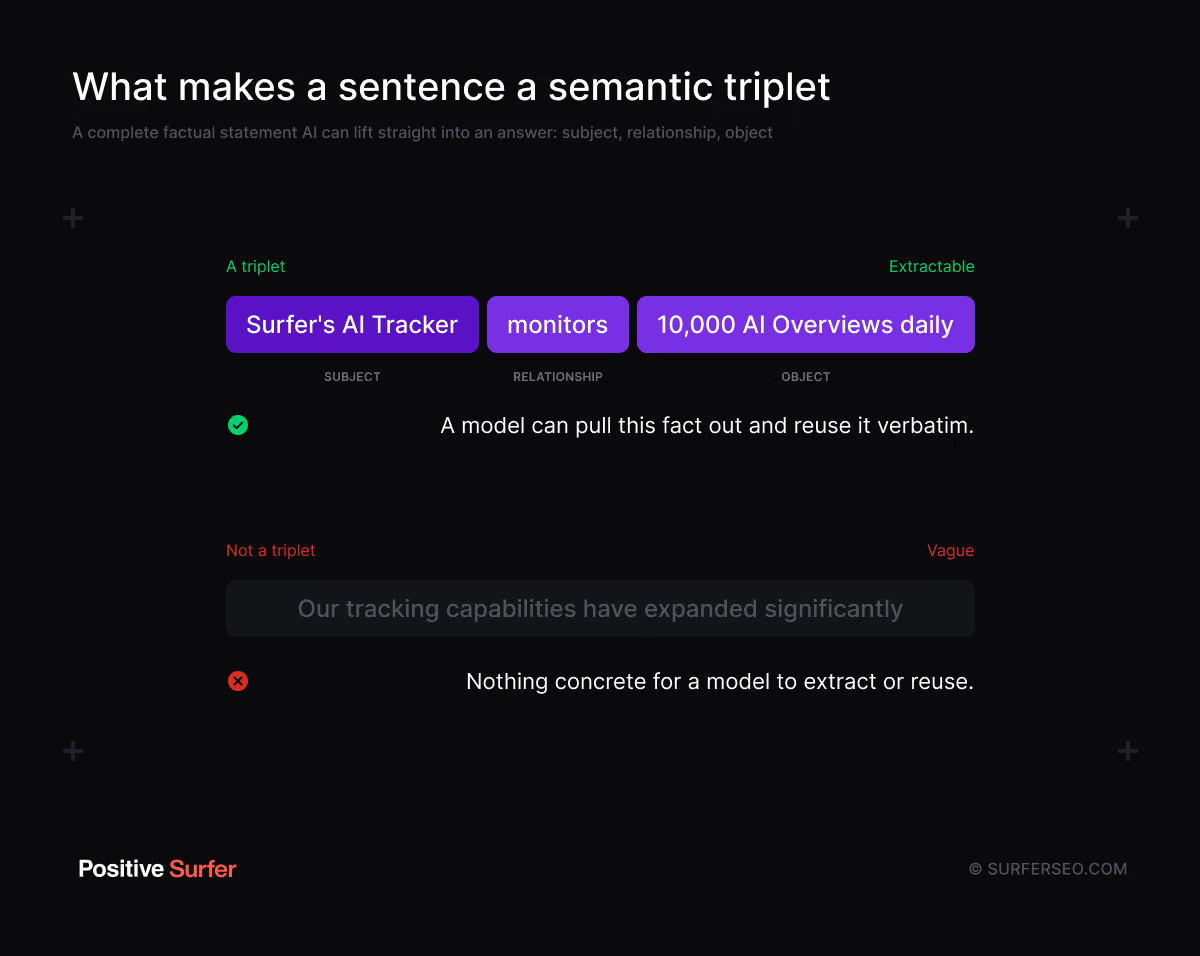
Relevant Statistics measures the presence of stats themselves. The lesson: a number inside a clear, quotable sentence is worth a lot; a paragraph stuffed with disconnected figures is worth almost nothing. It's not the data that gets cited. It's the sentence around it.
Optimize for AI Mode with Surfer
Surfer's Content Editor now has an AI SEO Content Score that combines both SEO and AI search guidelines in one place.
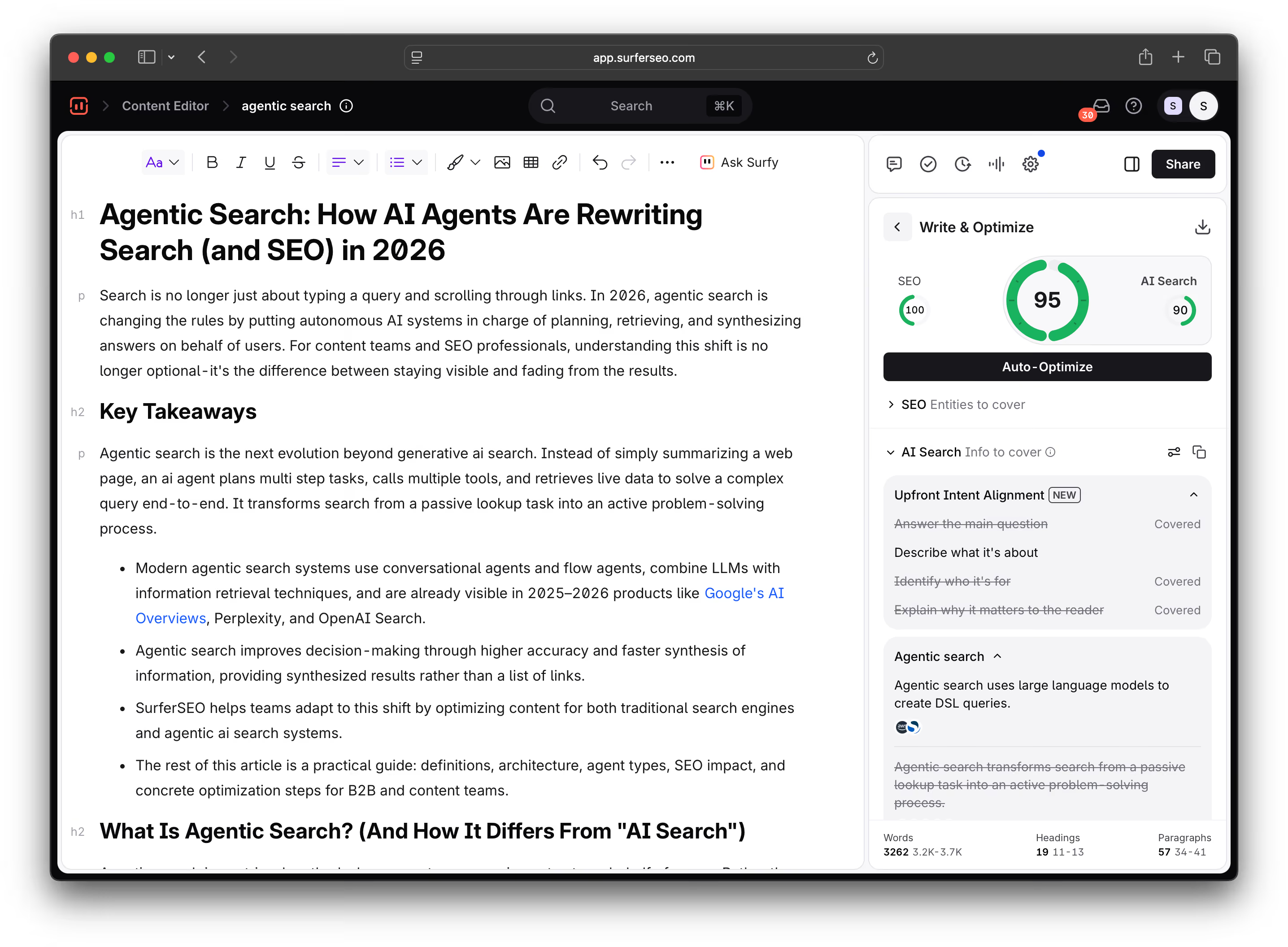
For AI Mode, start with Upfront Intent Alignment — it checks whether your first paragraph names the topic in sentence one, includes a factual anchor, and delivers the answer before the elaboration. That's AI Mode's top three factors handled in one guideline.
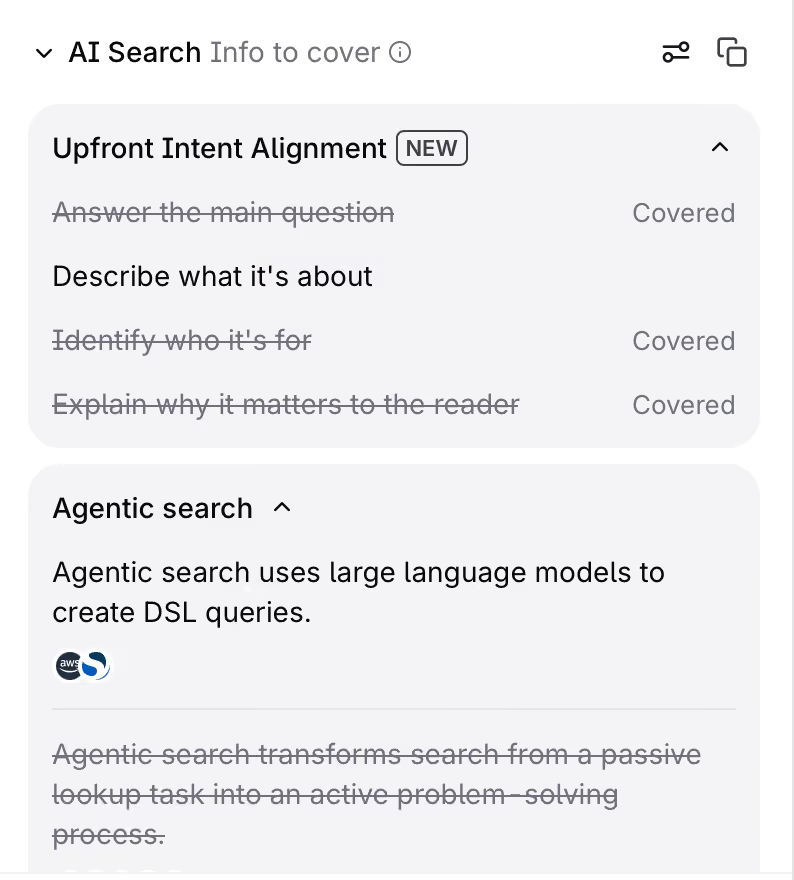
Then check the information to cite under Agentic Search — the specific facts AI models look for when answering questions in your topic. Covered facts, written as complete statements, are exactly what AI Mode's Semantic Triplets factor rewards — and they're how you become the source instead of the page that almost made it.
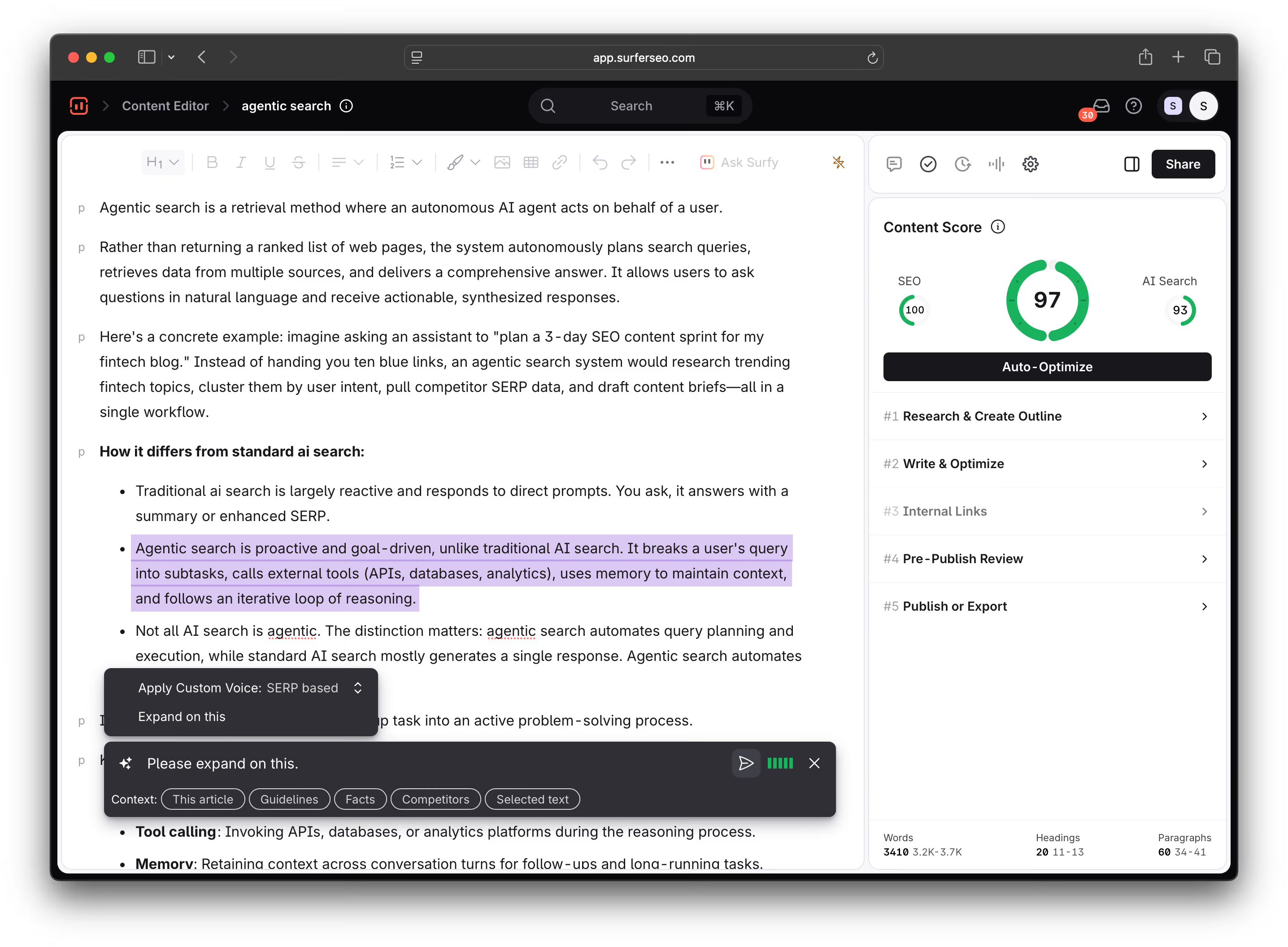
You can apply suggestions manually, ask Surfy to handle them selectively in your tone of voice, or use Auto-Optimize to fix your SEO and AI search guidelines — introduction rewrites included — in one pass (my preferred approach).
The one thing no tool can add for you is the first-hand experience AI Mode rewards at 17.4% — that part is yours, but you can ask Surfy, our AI writing assistant, to word your loose thought for you instead of writing everything manually.
Step two: Find out who's getting cited instead of you
Head over to AI Tracker and set up prompts organized into the topics you want to track — for us, that's things like AI visibility, AI SEO tools, and content optimization:
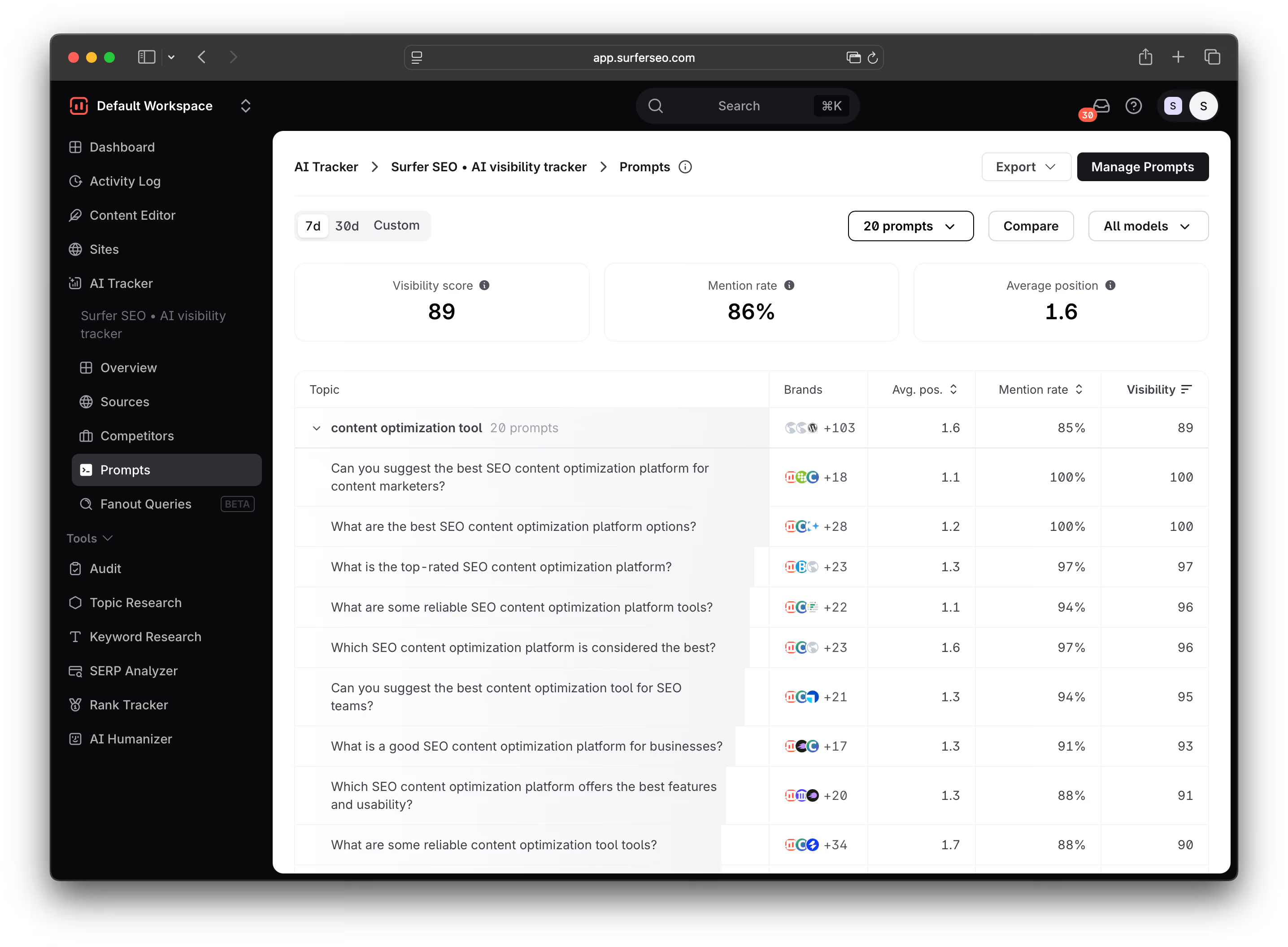
This shows you who's currently being cited for the most important questions your buyers ask about your niche. Every answer falls into one of three buckets: you, your competitors, or third-party content you could get into.
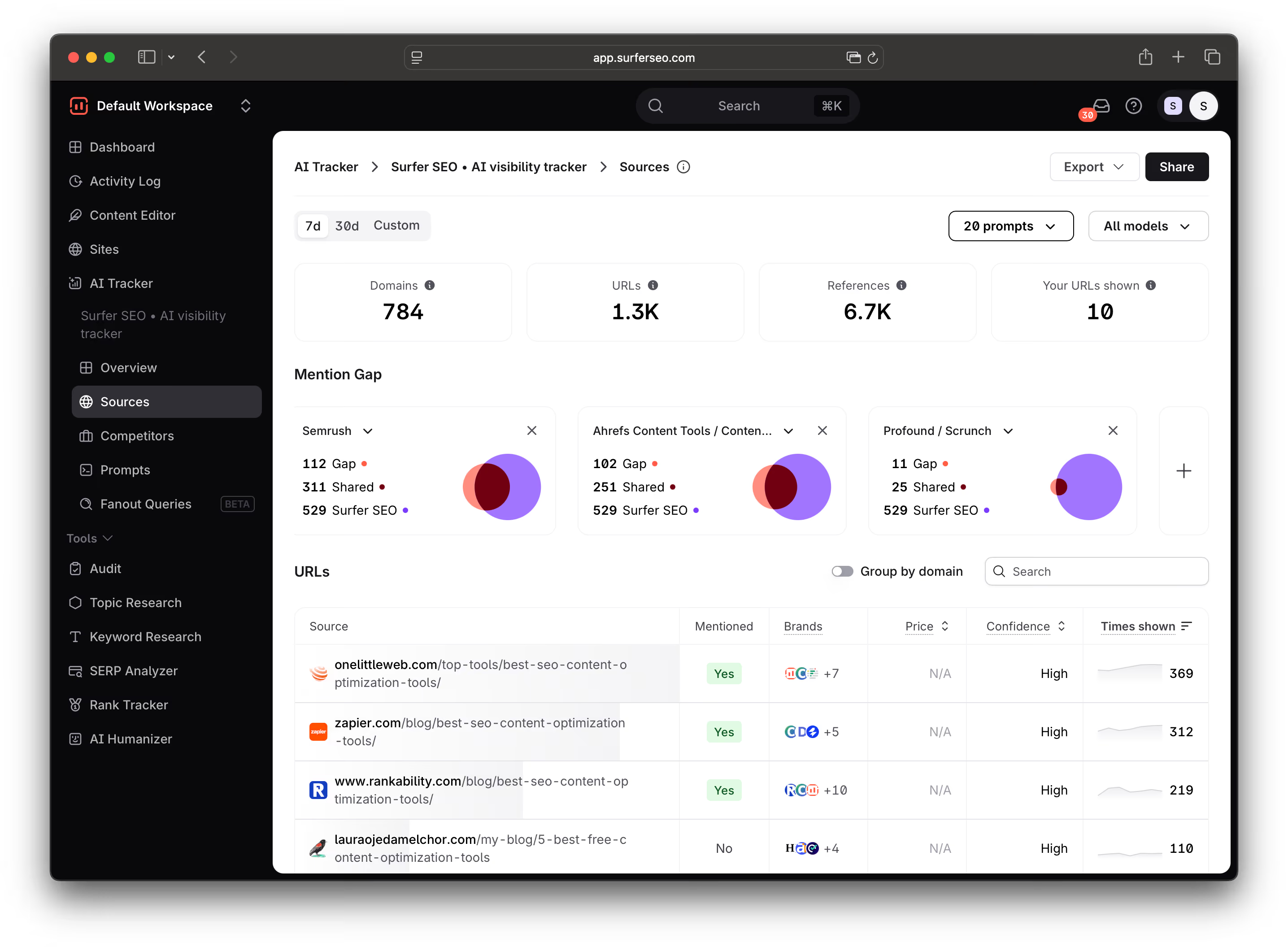
That third bucket is where the opportunity usually is.
Your job from there: get mentioned in as many of the top sources as possible — as high as possible if it's a listicle, and always in a positive light.
How you get there depends on your time and budget. If you're short on time but have AI visibility budget to spend, use paid insertions: whenever a source is covered by one of our current backlink providers, you'll see a price and an option to buy the placement directly in AI Tracker.
If not — or for the sources our providers don't cover — I recommend a more personalized approach: outbound. Make it personal, offer something in return — a unique content exchange, data they can't get elsewhere, or money — and write like a human. You're asking someone to go out of their day to edit a published article and add you to it. Your odds go up dramatically when the request doesn't read like the two hundred other template emails they got that week.
One more thing while you're in AI Tracker: check the fanout tab.
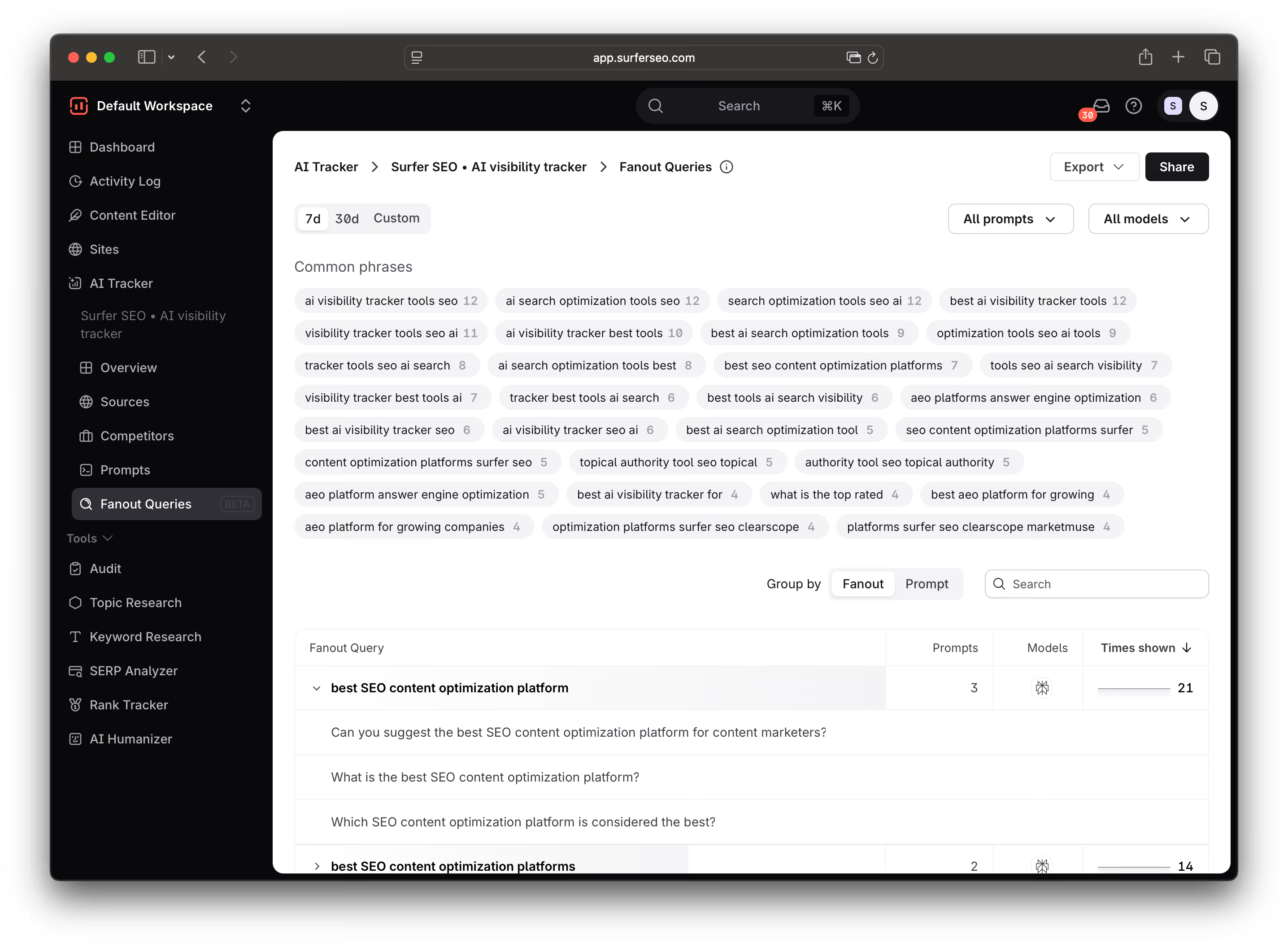
AI models don't answer your buyers' questions from a single query — they quietly run several related searches and stitch the results together. The fanout tab shows you those related queries, and they're a map for expanding your content clusters around the core topics you track. If you want to go beyond monitoring who gets cited and become the source yourself, those are the prompts your blog should be answering directly.
Data: AI-generated answers from real user interfaces — not API responses (we've written about why that distinction matters here). Every cited source was scored against a 20-factor content rubric across ChatGPT, Google AI Overviews, AI Mode, and Perplexity. Data collection: 2026 run. Analysis: Michał Suski, Head of Innovation, and Maciej Gruszczyński, Data Scientist at Positive Surfer.
This is correlational data — we can show what content that gets cited by AI Mode looks like, not definitively why it gets chosen over something else.
A bigger study is coming that pulls all of these together — our full approach, plus what's changed over time. The actionable parts came first because that's the order they're useful in ;)