Perplexity decides whether to cite you based mostly on your first paragraph.
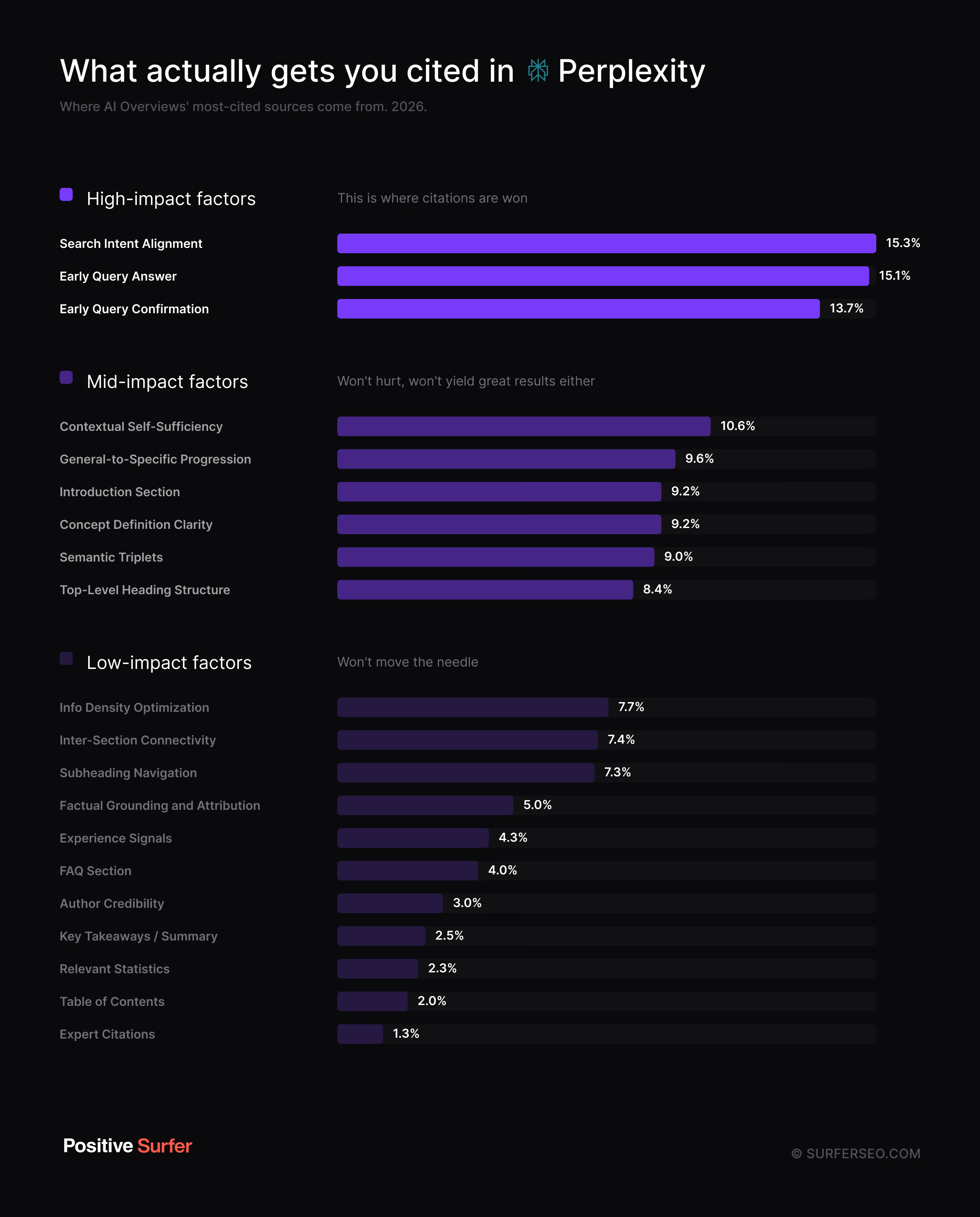
Its top three content factors in our 2026 data all measure the same thing: does your content confirm, match, and answer the query before the reader scrolls?
If your first paragraph doesn't do that job, Perplexity is probably citing someone else. And as you'll see at the end, a Perplexity citation is worth more effort than its market share suggests — because once you earn one, you tend to keep it.
Why Perplexity is built differently
Perplexity isn't just another AI search engine with citations on the side. Citations are the product — every answer comes with numbered source links that users are meant to click.
That's not a footnote. It's the interface. And that design choice shapes how Perplexity selects sources.
A page that immediately confirms it's relevant is a lower-friction citation. The model can establish "this answers the query" without reading far into the document.
A page that buries its relevance requires more work before it can be confidently cited — and Perplexity's factor profile shows exactly what that looks like in the data.
What the data shows about how Perplexity chooses sources
From Positive Surfer's AI Tracker — 650,000+ AI-generated answers scored across a 20-factor content rubric, April 2026:
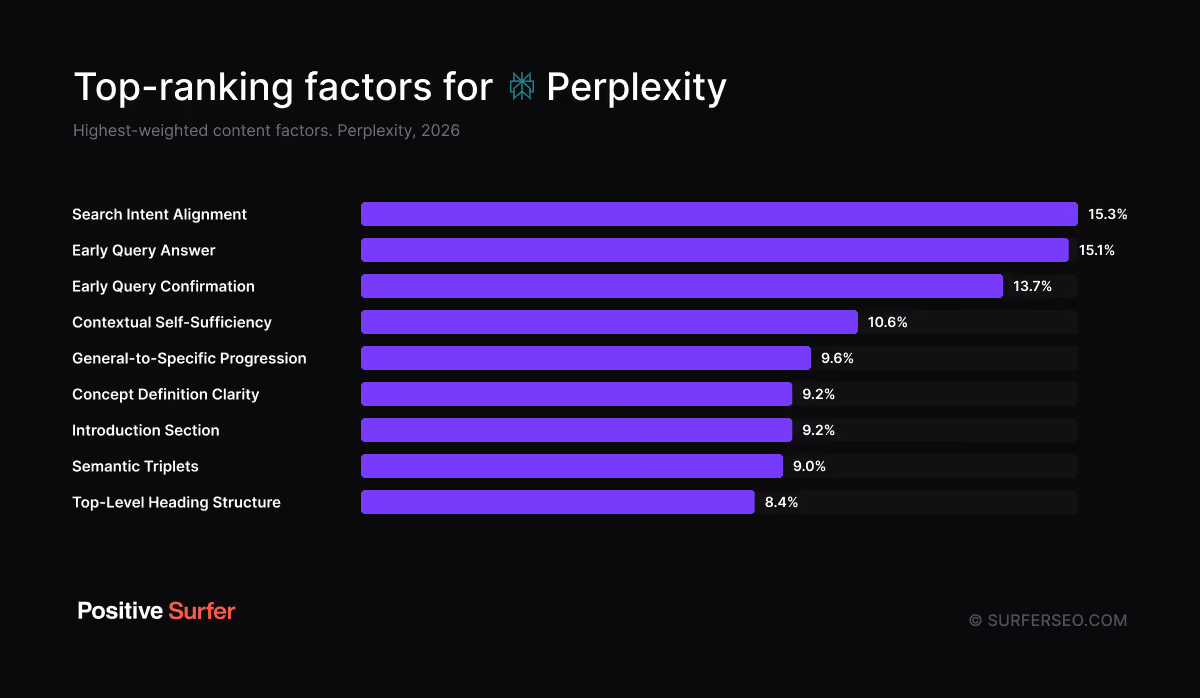
The top three — Search Intent Alignment (does your content address why someone is asking, not just the literal query?), Early Query Answer (do you deliver a short version of the answer before elaborating?), and Early Query Confirmation (does your first paragraph signal it's answering the right question?) — are all measuring the same thing from slightly different angles: how fast does your content get to the point?
Notice the gap after the trio. Fourth place drops to 10.6%, and everything below it sits in single digits. For Perplexity, the first paragraph isn't just the biggest lever — it's bigger than the next several levers combined.
The bottom of the table is just as useful:
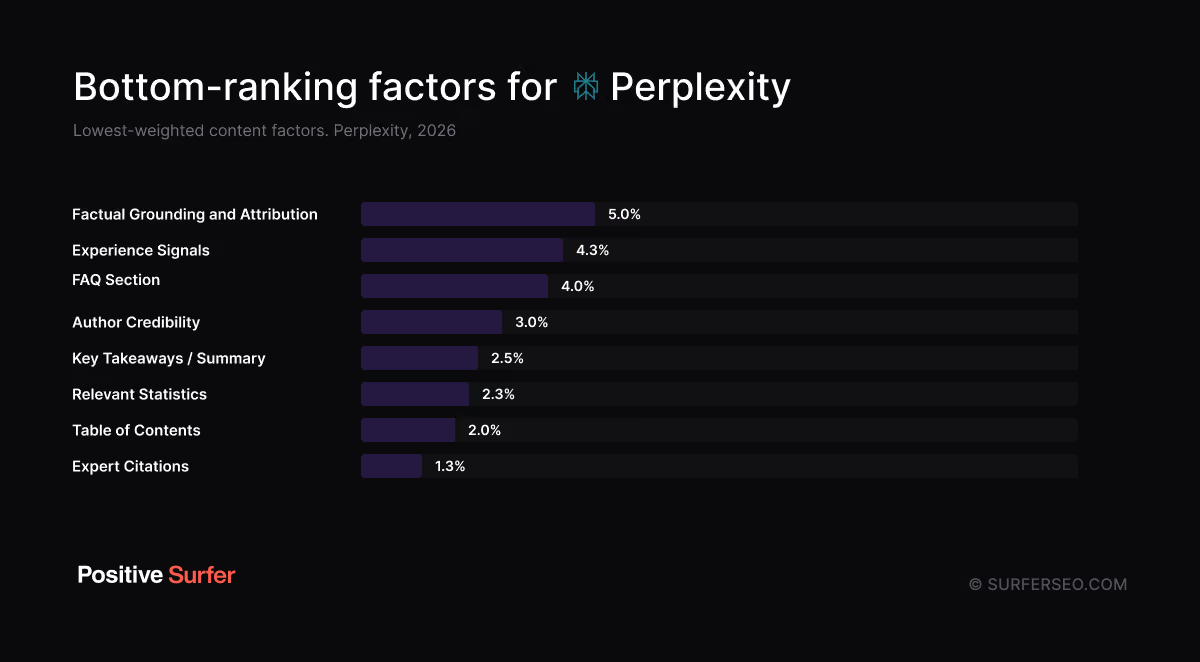
None of these are negative. They're just low enough that building them specifically for Perplexity visibility isn't a good use of your time. A summary box at the end of your article is doing almost nothing for your Perplexity citation odds. The same effort spent on your first paragraph would do considerably more.
What "answer first" actually means for Perplexity
I've written separately about why almost 40% of all AI citations come from the first 100 words of a page — and how retrieval cost explains the pattern. Perplexity's factor profile is that same behavior, measured from the content side. It's worth reading alongside this one.
Back to the topic.
"Write an answer-first introduction" sounds obvious until you try to do it and realize most introductions aren't actually doing it.
There's a difference between confirming you'll answer a question and answering it. "In this article, I'll explain why X matters" is the first. Actually explaining why X matters — in simplified form, before elaborating — is the second. Perplexity's top factor is measuring the second, not the first.
A Perplexity-optimized first paragraph does three things:
1. Names the topic in sentence one. Not near the topic — the topic itself, stated plainly. If someone asked a question and landed on your page, sentence one should confirm they're in the right place.
2. Delivers the answer before the explanation. Short version first, full version after. The rest of the article is the proof. The first paragraph is the claim.
3. Addresses the real intent, not just the surface query. Search Intent Alignment at 15.3% is Perplexity's single highest factor. For a lot of the queries Perplexity handles — research, comparisons, "is X worth it" — the real intent isn't just "define this." An intro that names the topic but ignores why someone is actually asking is still leaving citations on the table.
What not to do when optimizing for Perplexity
If you're spending time on summary boxes, FAQ sections, expert citation blocks, and tables of contents specifically to improve AI visibility, you're optimizing for the wrong part of the document — at least for Perplexity.
The data is consistent across both our collection runs: these elements register much lower differentiating weight for Perplexity citations. That doesn't mean removing them if they help human readers. It means stopping the habit of treating them as a key AI search optimization tactic — focusing on the first paragraph will give you much better results, cross-model.
One more reason Perplexity is worth your attention
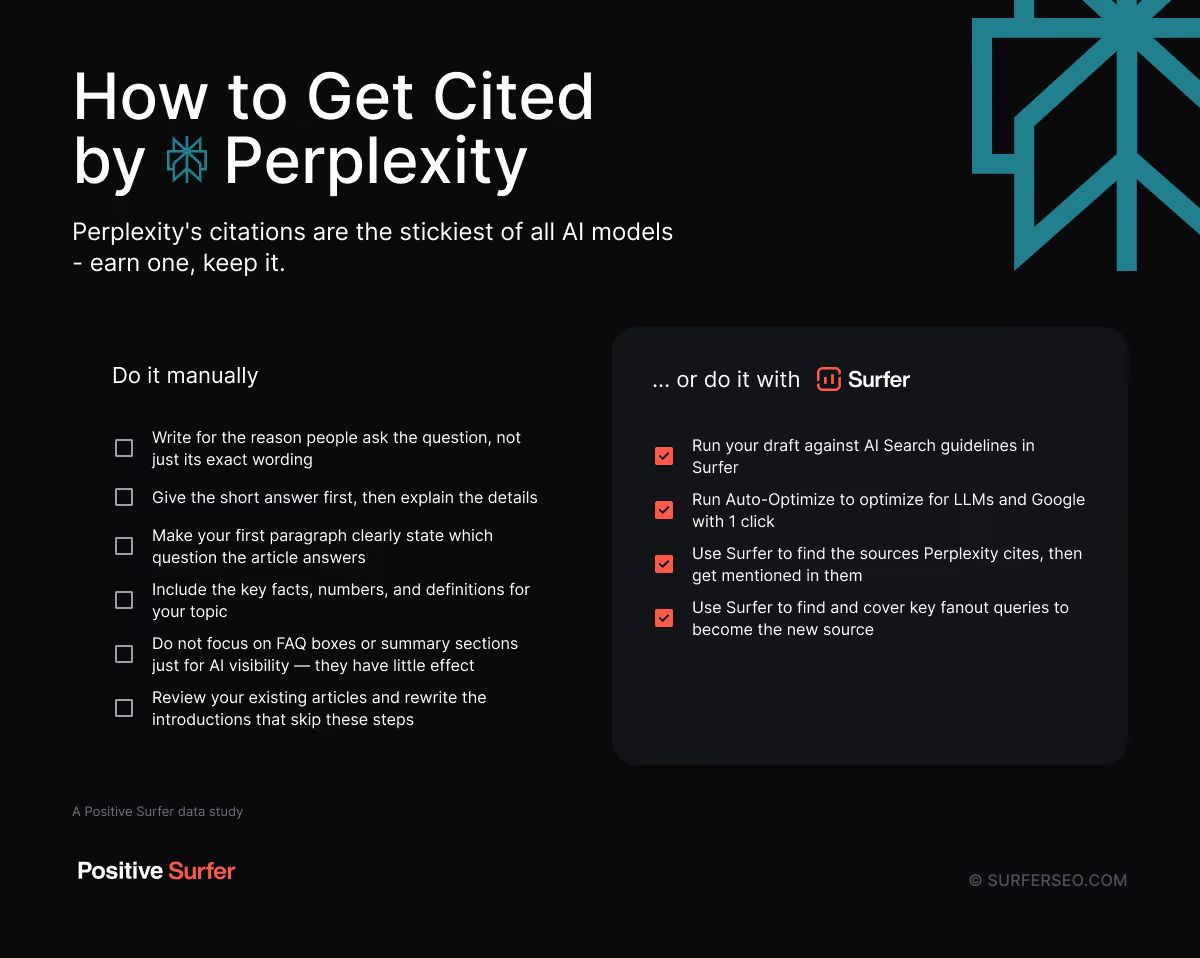
Of the four models in our study, Perplexity has the highest source stability. Once you earn a citation, you're significantly more likely to keep it over time. ChatGPT and AI Mode show much higher churn month to month — sources rotate in and out.
Perplexity's citations are stickier.
That changes the investment math. A Perplexity citation isn't just the traffic you earn this week — it compounds while competitors' citations churn. For long-term AI visibility, Perplexity is worth prioritizing more than its current market share alone would suggest.
~ Paulina Kaleta, Product Marketing Lead at Positive Surfer
Improve visibility in Perplexity with Surfer
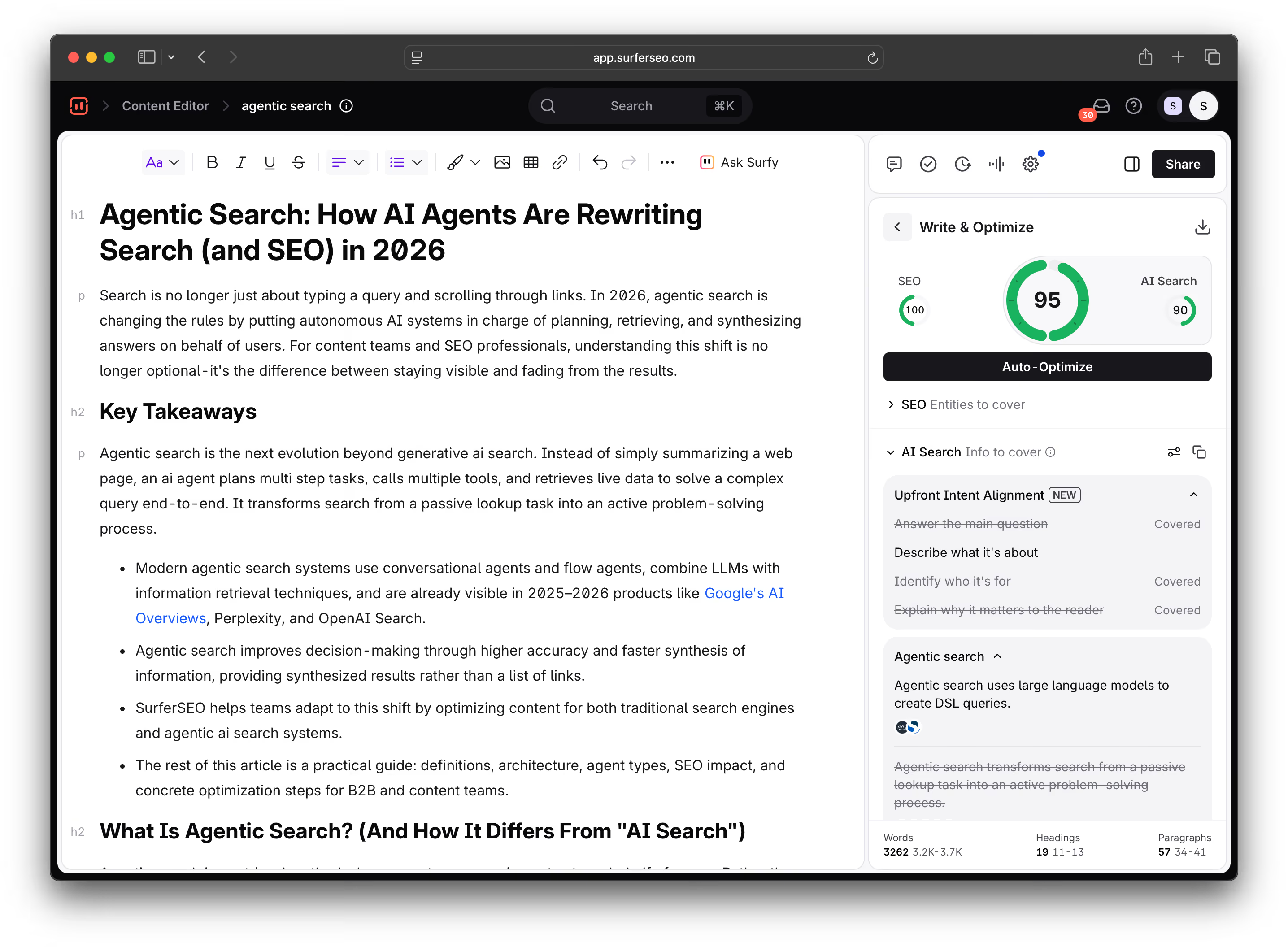
The AI Search guidelines in Surfer's Content Editor include the Upfront Intent Alignment check, scoring your introduction directly against Perplexity's top factors — whether the topic is named in sentence one, whether the answer comes before the elaboration, and whether the intent behind the query is actually addressed.
If your intro is flagged, it's not a style note. It means your first paragraph isn't doing what Perplexity is looking for before it decideswhether to cite you.
While you're in the AI Search guidelines, check the information to cite under Agentic Search — the specific facts AI models look for when answering questions in your topic. Remember how Perplexity's top factors all reward extractable answers? This is where you make sure your content actually contains them.
To fix both, simply apply Surfer suggestions to your article; you can do it manually, ask Surfy to do it for you selectively in your tone of voice, or use Auto-Optimize to fix your SEO and AI search guidelines — introduction rewrites included — in one pass (my preferred approach).
Step two: Find out who's getting cited instead of you
Then, head over to AI Tracker and set up prompts organized into the topics you want to track — for us, that's things like AI visibility, AI SEO tools, and content optimization:
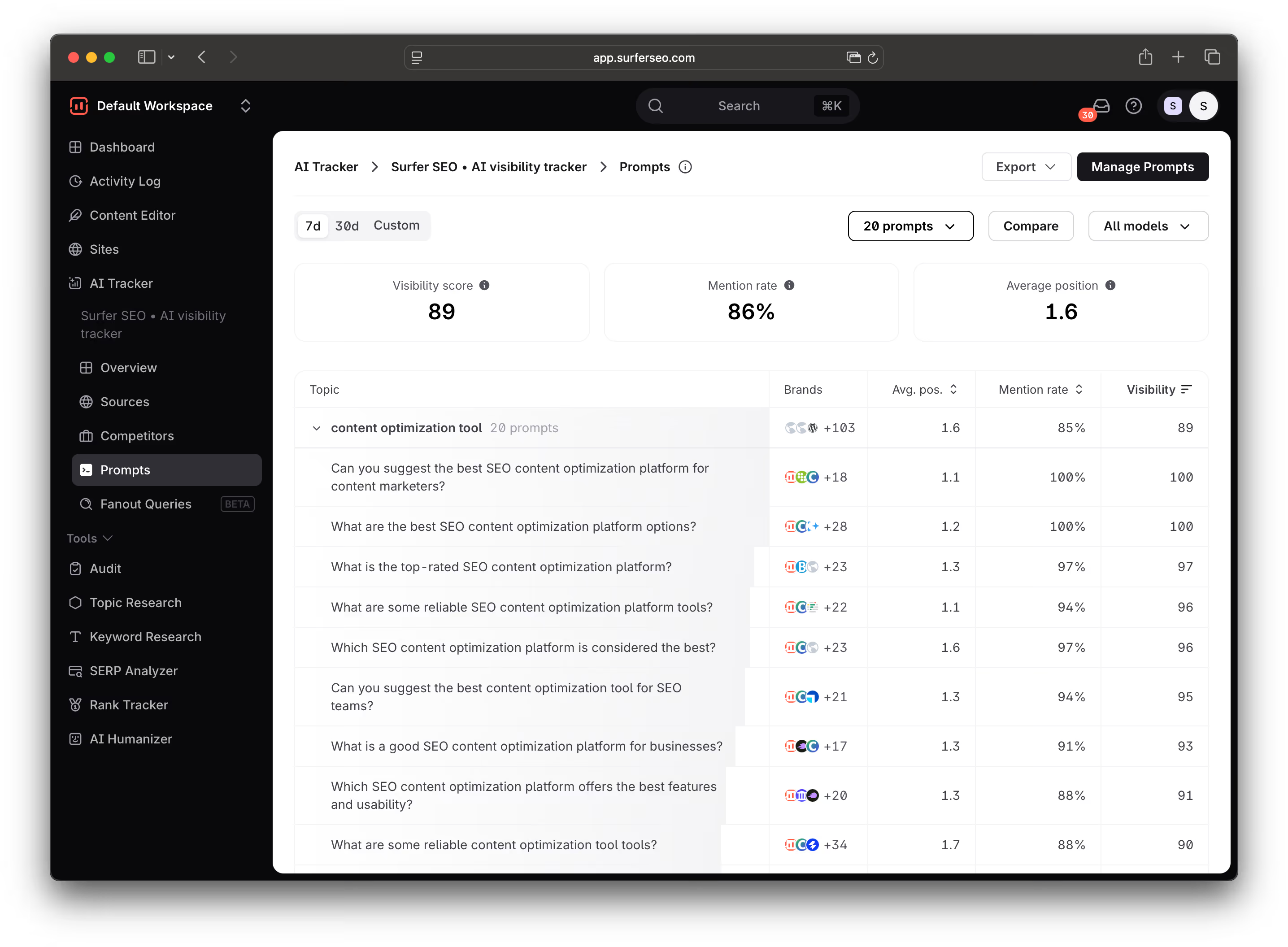
This shows you who's currently being cited for the most important questions your buyers ask about your niche. Every answer falls into one of three buckets: you, your competitors, or third-party content you could get into.
That third bucket is where the opportunity usually is.
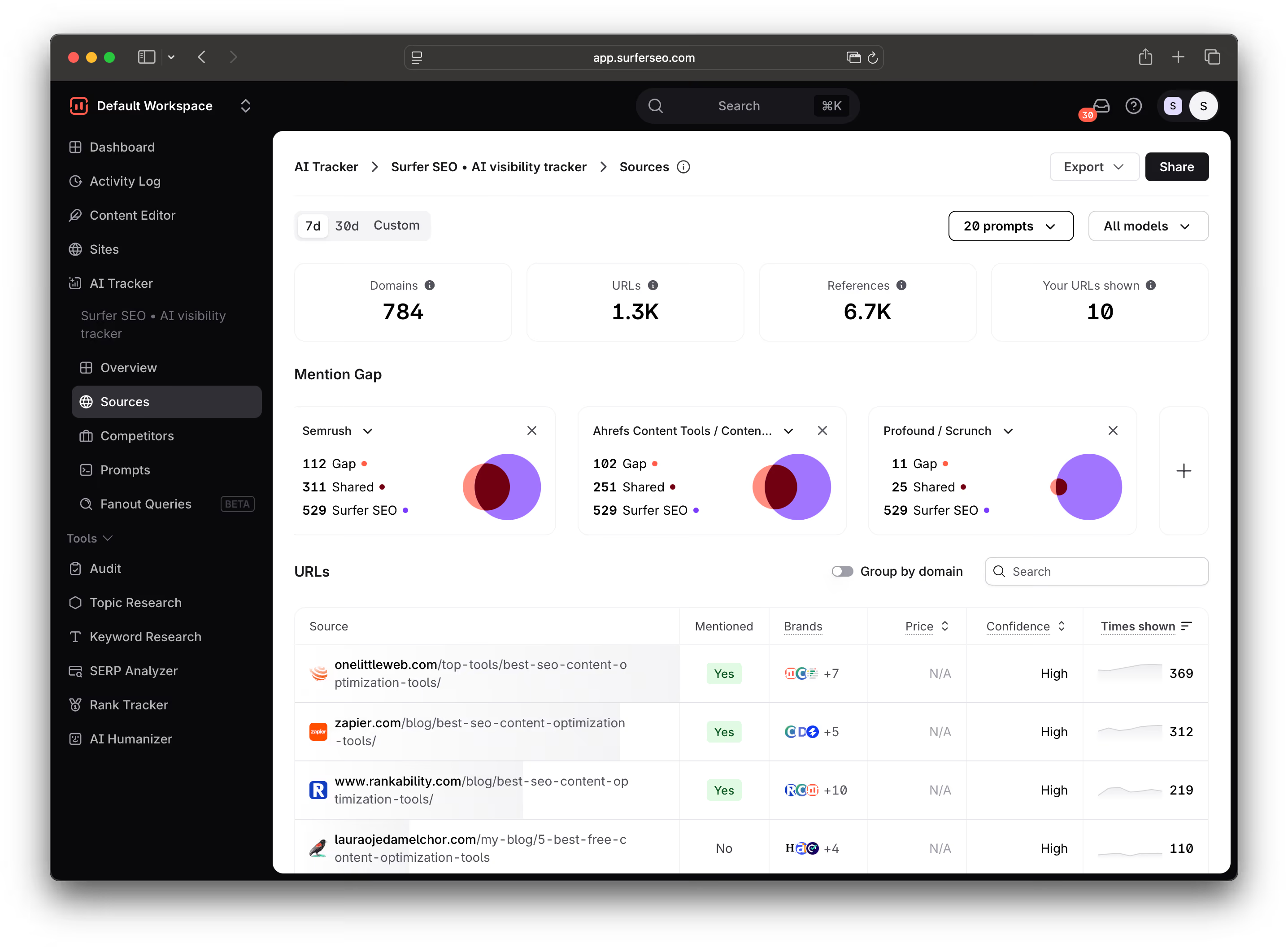
Your job from there: get mentioned in as many of the top sources as possible — as high as possible if it's a listicle, and always in a positive light.
How you get there depends on your time and budget. If you're short on time but have AI visibility budget to spend, use paid insertions: whenever a source is covered by one of our current backlink providers, you'll see a price and an option to buy the placement directly in AI Tracker; you can also always use your own providers.
If not — or for the sources no providers cover — I recommend a more personalized approach: outbound.
Make it personal, offer something in return — a unique content exchange, data they can't get elsewhere, free access — and write like a human. You're asking someone to go out of their day to edit a published article and add you to it. Your odds go up dramatically when the request doesn't read like the two hundred other template emails they got that week.
One more thing while you're in AI Tracker: check the fanout tab.
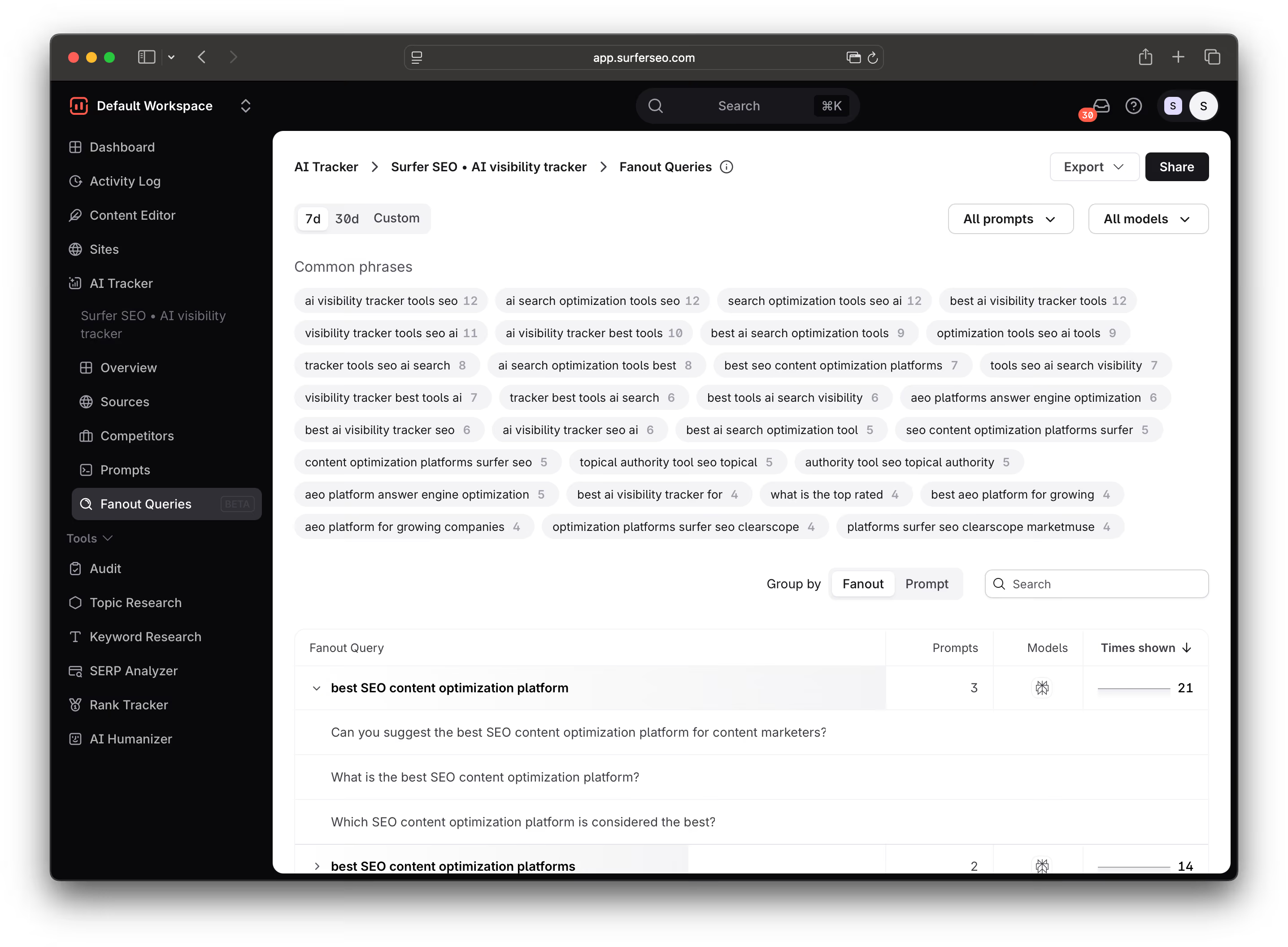
AI models don't answer your buyers' questions from a single query — they quietly run several related searches and stitch the results together. The fanout tab shows you those related queries, and they're a map for expanding your content clusters around the core topics you track.
Perplexity’s fanout queries are much more stable than any other AI, especially ChatGPT. What does it mean? When you ask Perplexity the same question every day, it usually uses the same fanout query to get sources. This makes optimization for Perplexity way more straightforward.
~Jakub Sadowski, Product Manager at Surfer
If you want to go beyond monitoring who gets cited and become the source yourself, those are the prompts your blog should be answering directly.
Data: 650,000+ AI-generated answers from real user interfaces — not API responses (we've written about why that distinction matters here). Every cited source was scored against a 20-factor content rubric across ChatGPT, Google AI Overviews, AI Mode, and Perplexity. Data collection: April 2026. Analysis: Michał Suski, Head of Innovation, and Maciej Gruszczyński, Data Scientist at Positive Surfer.
This is correlational data — we can show what content that gets cited by Perplexity looks like, not definitively why it gets chosen over something else.
A bigger study is coming that pulls all of these together — our full approach, plus what's changed over time. The actionable parts came first because that's the order they're useful in ;)