We analyzed over 100,000 AI citation placements across more than 10,000 AI Overviews responses. Every citation was matched to its exact position within the source article — by word count and by percentage of total document length.
The finding: 38% of all AI citations are pulled from the first 100 words of a page.
Not the most credentialed author. Not the best-written section.
The first 100 words.
The distribution after that drops steeply and keeps dropping. By the time you're past the first 500 words, citation frequency has already fallen to a fraction of what it was at the top. The tail is long and flat.
This is the mechanical reason the top three content factors for every AI model we've tested — all four of them — are factors measuring your first paragraph. Not because introductions happen to be well-written, but because of where they sit in the document.
Let’s dive in.
Here’s what the data looks like
First time we looked into it, we scraped 356 AI Overviews responses from real search results on June 17, 2025. Of those, 277 had citations. We found 1,237 legitimate cited passages across 259 unique queries, then mapped where in each article every citation landed.
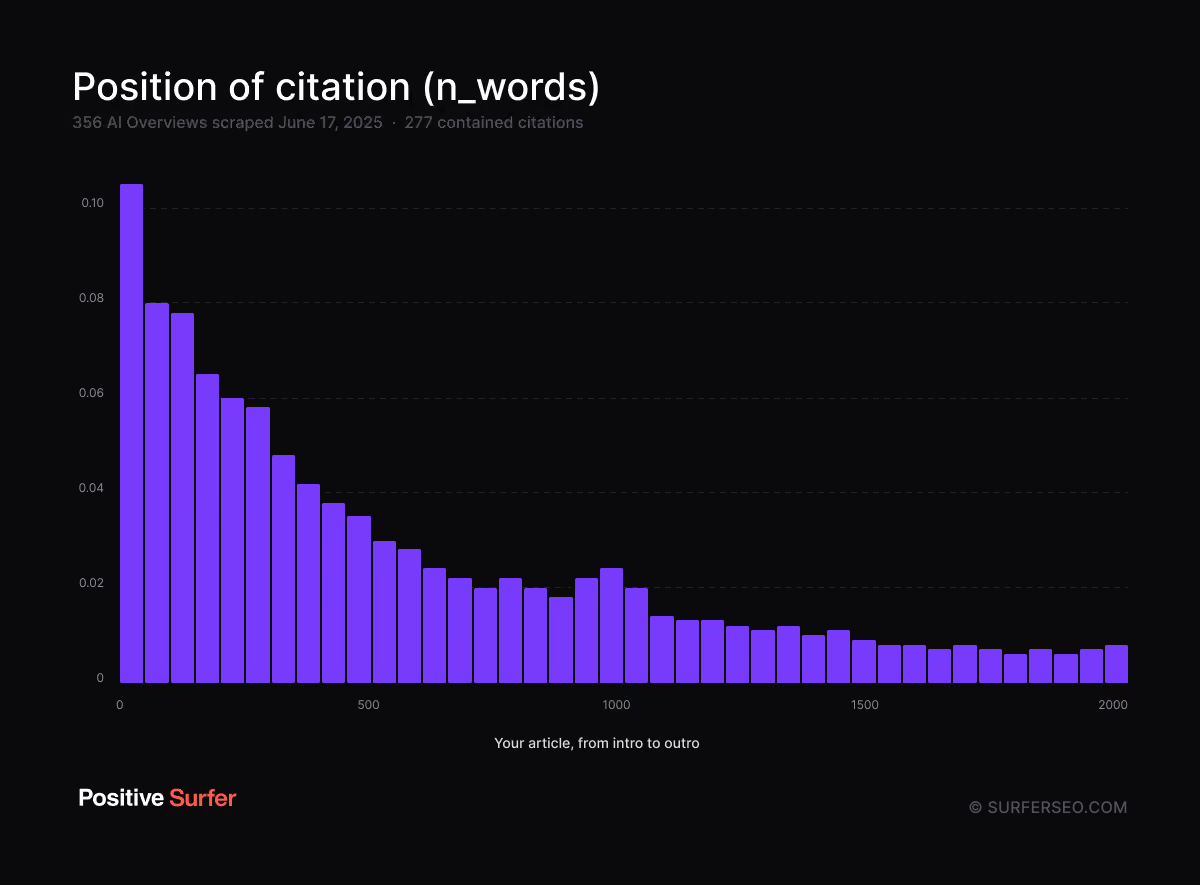
The result was a cliff. Citation frequency peaked in the first hundred words, dropped steeply through the first 500, and kept falling. By the time you were past the halfway point of a typical article, AI models were barely citing anything.
But that was a tiny sample. Plus it’s been a year.
So, we scraped it again, this time on a much bigger scale.
100’000 citations across 10’000 AI Overviews responses from real search results on June 2, 2026.
Many content writers adopted this technique of starting with broad, vague descriptions, describing the setting, adding some story, and providing readers with the answer usually somewhere in the middle or at the very bottom. They wanted to provide value while also increasing readers’ engagement. Now we have a new type of reader: LLMs, and they make a quick judgment only by the very first few dozen words.
~Jakub Sadowski, Product Manager at Surfer
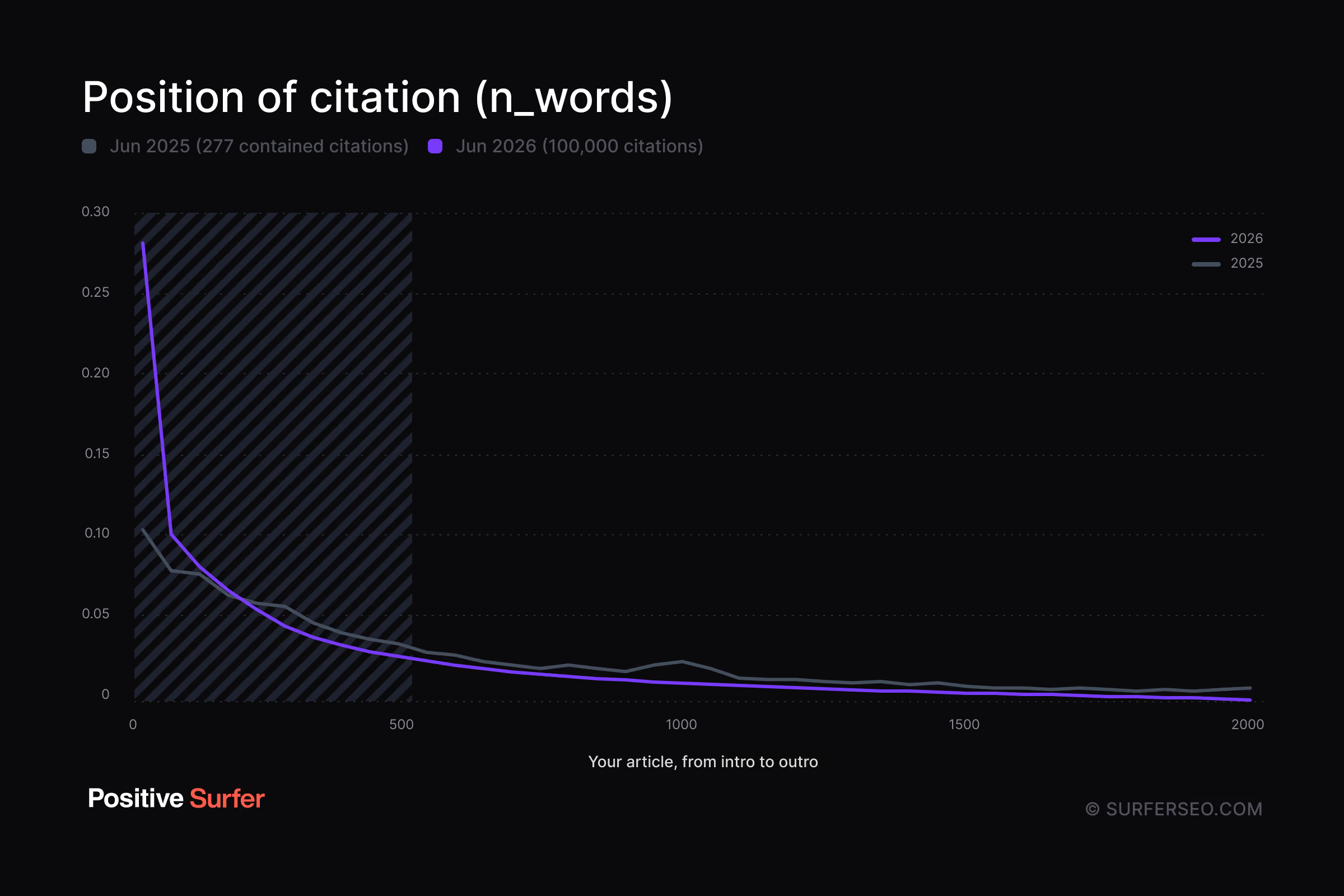
The result? The cliff grew even bigger — from 20% to 38% of all citations landing in the first 100 words.
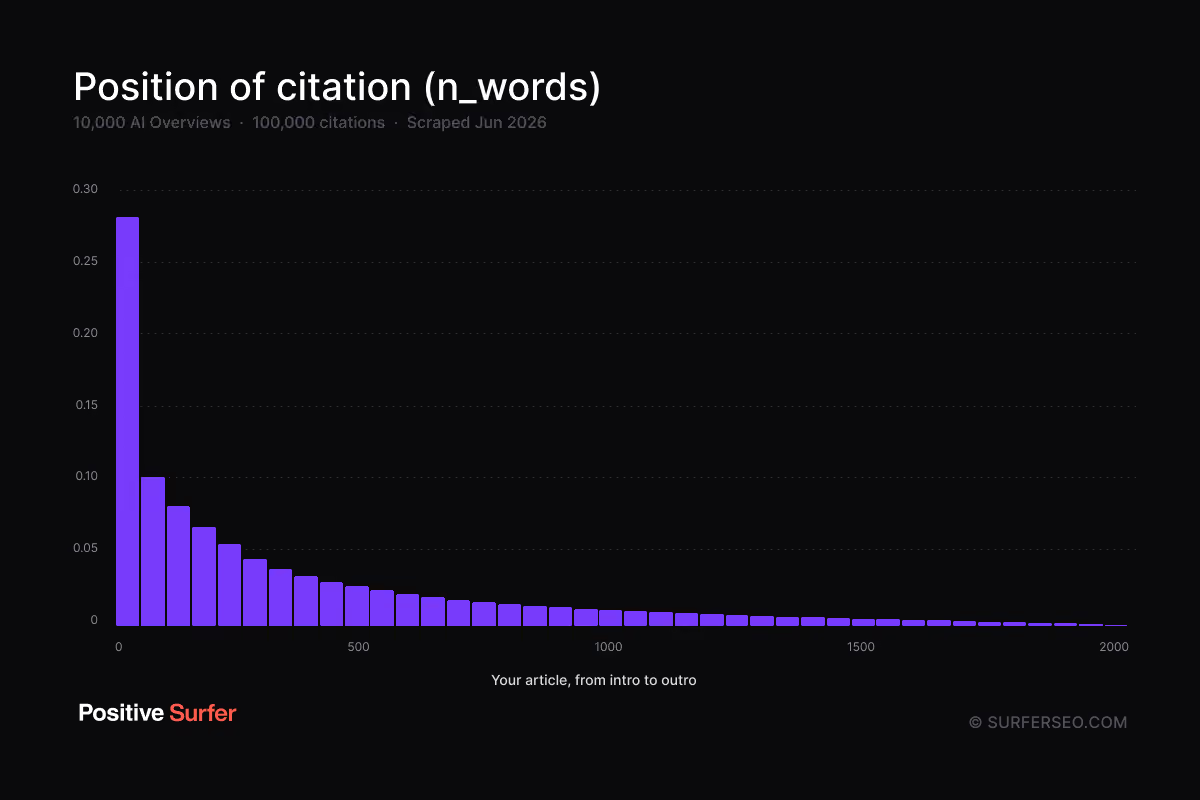
The jump from 20% to 38% is what I want you to remember.
Now, here’s what I want you to understand: what those numbers are actually describing is a decay curve that starts right after your first paragraph and doesn't really flatten until you're most of the way through the document.
It almost doubled within a year (!). And with how much the newest AI models cost (I’m looking at you, Fable 5), the chances of this trend reversing are slim to none.
Let me explain why.
Why AI models love your introduction (it's not what you think)
AI models don't read articles the way you do.
When you're looking for an answer, you might skim to the relevant section, read a few lines, and decide if the page is useful. You can jump around. You can scan.
AI models can't do that as cheaply.
Think of it like a taxi meter: the further into a document the model has to travel before finding a usable answer, the more it costs.
Documents where the answer is right at the top are cheap to cite.
Documents that make the model wade through three paragraphs of scene-setting before getting to the point cost more — and when a cheaper option exists, models take it.
That's why front-loading information in the intro keeps winning.
Not because it's your best writing.
Because it's the least expensive place to cite from.
The information-retrieved-to-token-spent ratio is a key equation to understand results. This is exactly like the crawl budget concept but for a single document. If there is very little computing power required to retrieve a lot of useful insights, the page is gaining traction.
~Michał Suski, Head of Innovation and co-founder at Positive Surfer
This shows up in our ranking factor data, too
This isn't a one-off finding. It explains something we see consistently across Surfer's broader dataset of 650,000+ AI-generated answers: the three factors that lead the ranking for every single model — ChatGPT, Google AI Overviews, AI Mode, and Perplexity — are all measuring the same thing: what your first paragraph does.
No structural, credibility, or formatting factor does more to improve citation odds across all four models.
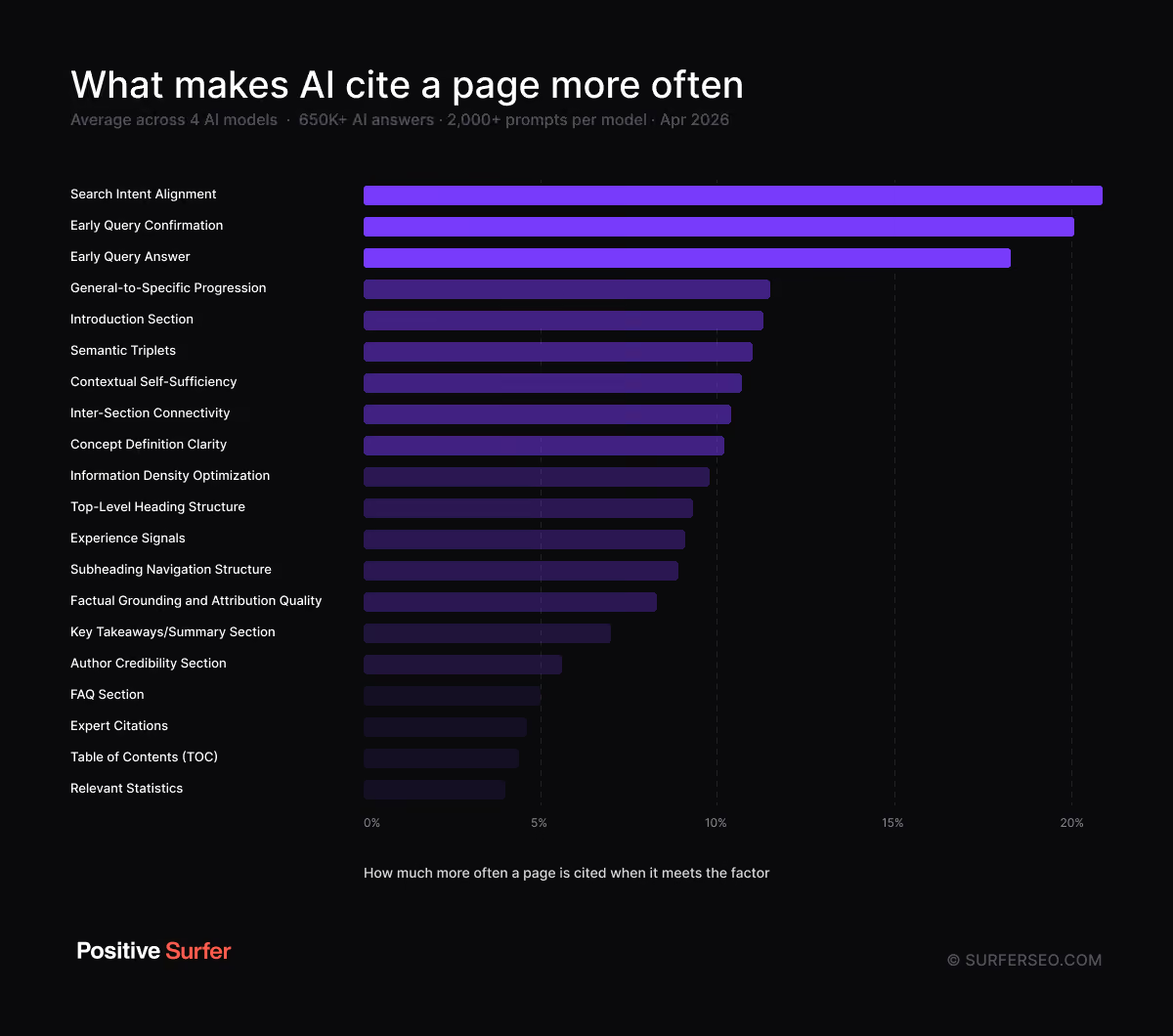
Two signals in our rubric measure exactly this front-loading behavior:
Early Query Confirmation — does your first paragraph signal you're actually answering the question asked? Think of it as the "am I in the right place?" check AI models run before committing to a citation. AI Mode weights it at 28.6%, AI Overviews at 22.3%, ChatGPT at 17.9%, and Perplexity at 13.7%.
Early Query Answer — do you give a simplified version of the answer before elaborating? Average importance: 18.6% across all four models.
These aren't subjective style points. They're measuring whether your first paragraph does the job the citation data says it needs to do: confirm relevance and surface something extractable, before the retrieval cost curve starts working against you.
Wondering if your introductions are optimized for LLMs? Surfer’s new AI Search score measures your content’s upfront intent alignment, and the guidelines tell you specifically what information you should cover to get cited — more on that at the end of this article.
~Anna Jagiełło, Product Manager at Positive Surfer
What your first 100 words actually need to do
The practical implication isn't "write a better introduction" in the sense most content advice means it.
Most introductions are written for human readers: open with a hook, set the context, build toward the main point. That structure is reasonable for someone who needs a reason to keep reading.
It's the wrong structure if you want an AI model to cite you.
The hook is the worst offender. A compelling opener that defers the actual answer to paragraph three is doing real damage to your citation probability — not because it's bad writing, but because it's expensive writing from an extraction standpoint. By the time the useful content appears, the model has either already committed to a cheaper source or moved past the part of the document it was most likely to cite from.
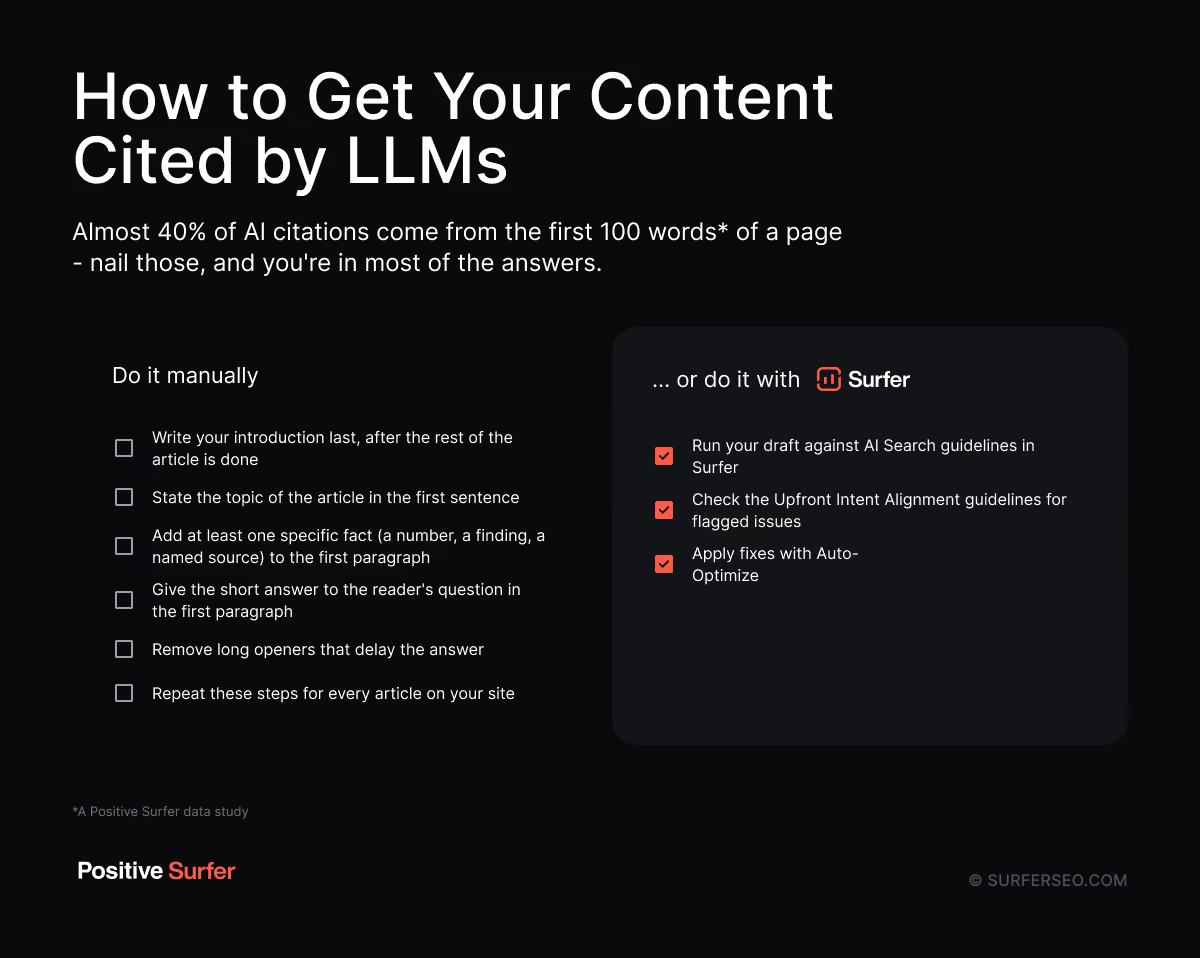
A strong, AI-optimized intro does three things — in the first paragraph, not spread across the first three:
1. Name the topic in sentence one. Not "in today's rapidly changing landscape..." — I mean the actual subject, stated plainly. If someone asked a question and landed on your page, sentence one should confirm they're in the right place.
2. Include at least one specific, citable fact. A number, a finding, a concrete claim. Something a model can actually extract and use. "Studies show content matters" isn't citable. "40% of AI citations come from the first 100 words" is.
3. Answer the question before elaborating. Give the short version of your conclusion upfront. The rest of the article proves it — the intro just needs to state it.
None of this requires you to write a worse article. It requires you to write the introduction last — once you know what you’re actually arguing, instead of using it to warm up.
Content optimized with Surfer is up to 2x more likely to be cited by AI
That 2x isn't a tagline — it comes straight from this dataset.
In our sample, pages that don't confirm and answer the query early get cited 23% of the time. Pages that do: 45%. Nearly double the citation likelihood, from the single strongest factor pair we measure. Other factors add gains on top of that — just smaller ones, which is why we say "up to."
We're not doing these studies for fun (at least, not only for fun). The findings go straight into the product — and this one became a scoring guideline.
Meet: Intent Alignment guidelines.
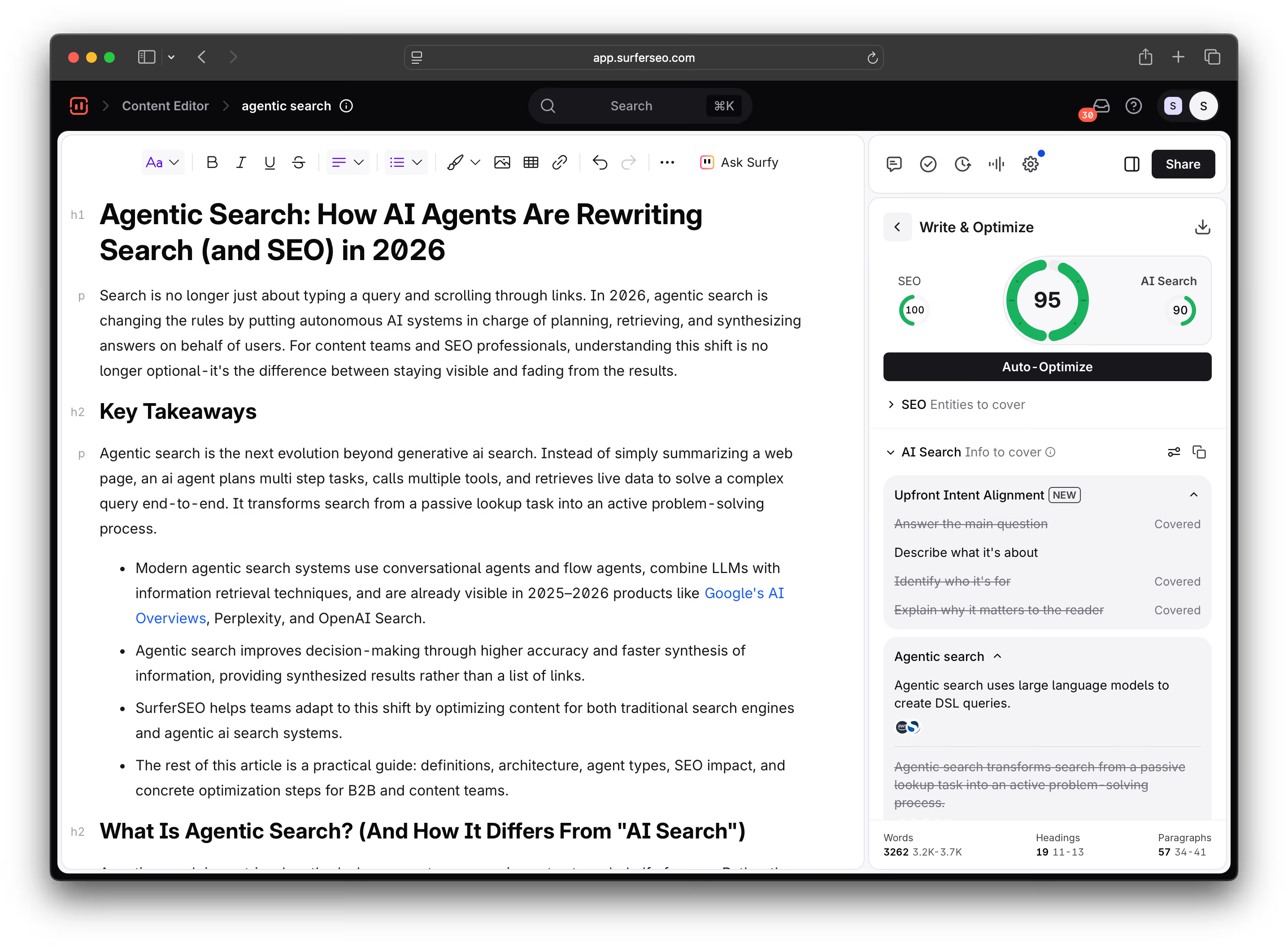
The new Intent Alignment section in Surfer's Content Editor guidelines scores your intro against exactly this pattern: whether the topic is named in sentence one, whether there's a factual anchor in the first paragraph, and whether the answer comes before the elaboratio
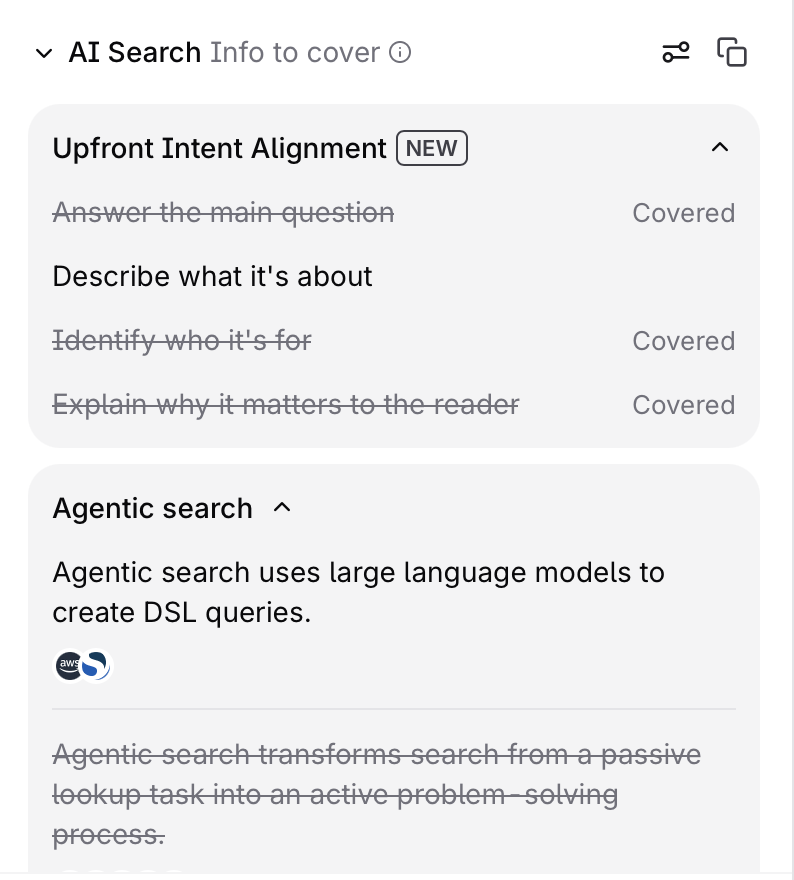
In other words, Surfer measures the retrieval cost and lets you know if your first 100 words pass the check or not — then suggests changes. You can apply them manually, ask Surfy writing assistant to do it for you selectively in your tone of voice, use Auto-Optimize to fix your SEO and AI search guidelines — introduction rewrites included — in one pass (my recommended approach).
If you’re not using Surfer to write (you should, duh), the fix is almost always the same: move the answer up. What you currently have in paragraph three is usually the introduction you should have written first
Data, 1st scrape: 1,237 citation placements from 277 AI Overviews responses scraped from real user interfaces — not API responses (we've written about why that distinction matters here). All 1,237 verified citations were matched to their position in the source article by word count and document percentage. Data collection: June 17, 2025. Analysis: Janek Krasnodębski, Surfer Data Team.
Data, 2nd scrape: 100,000 citation placements from 10,000 AI Overviews responses scraped from real user interfaces via Surfer AI Tracker. All 100,000 verified citations were matched to their position in the source article by word count and document percentage. Data collection: June 2, 2026. Analysis: Maciej Gruszczyński, Data Scientist at Positive Surfer.
A note on methodology between the two runs: in 2025, we located cited passages using the Scroll to Text Fragment feature in AI Overviews links (the #:~:text= part of a URL that jumps you to a highlighted passage). AI Overviews no longer uses that feature — it now includes the cited fragment explicitly in the response, which is what we matched against in the 2026 run. Same question, more direct measurement.
This is correlational data — we can show where AI models cite from, not definitively state why. The retrieval cost explanation is a reasonable model, not a proven causal chain.
A bigger study is coming that pulls all of these together — our full approach, plus what's changed over time. The actionable parts came first because that's the order they're useful in ;)