ChatGPT changed how it picks sources — more than any other model we track.
We've been scoring AI citations against content AI ranking factors for over a year now, across two large collection runs. In the 2025 run, ChatGPT's top factor was whether content backs up its claims with specific data and named sources — and completely disregarded EEAT signals. In the 2026 run, it shifted to measuring one thing (in three different ways I'll explain below): what happens in your first paragraph.
Nobody has published this comparison before because nobody else has accurate data. We've been sitting on it for a year, waiting for the second run.
Here's what changed — and what to do about it.
ChatGPT stopped being the outlier
In our 2025 run, ChatGPT was the weird one.
Every other model rewarded front-loaded, well-structured content. ChatGPT mostly shrugged at structure — its factor values clustered low, its top factor was Factual Grounding and Attribution Quality (does your content cite specific data and named sources?), and it was the only model in our dataset with negative values for any factor: Author Credibility (does the page show who wrote it and why they're qualified?) and Experience Signals (does the content demonstrate first-hand experience with the topic?) both sat below zero.
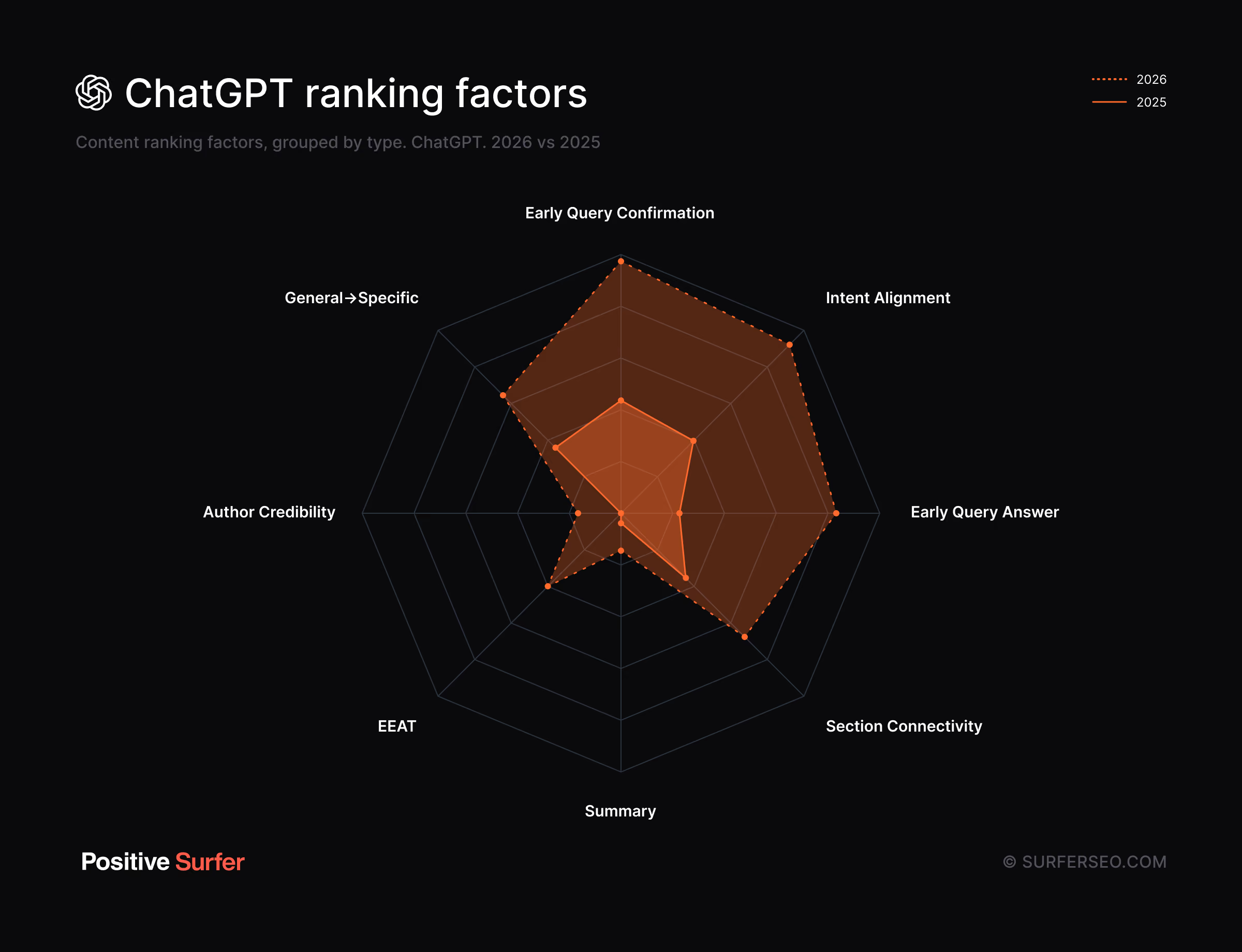
The 2026 run tells a different story:
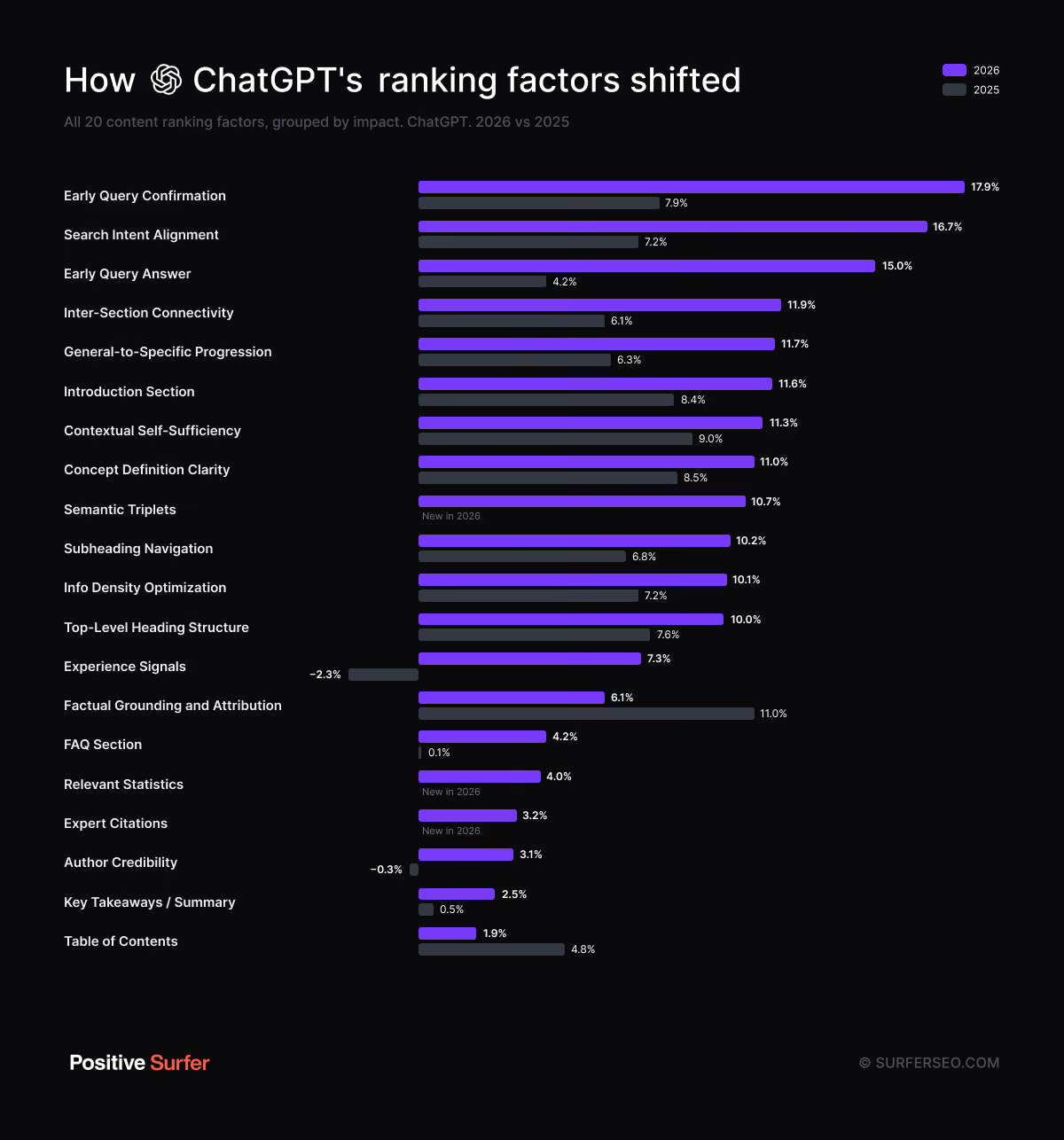
ChatGPT now looks a lot like Perplexity.
Three shifts stand out — and each one changes what you should be doing.
According to the study published by OpenAI in September 2025, 52% of interactions with ChatGPT are questions! People ask about information, guidance, or help. And you want to make your brand the one that has this information, guidance, or can solve the problem. This is the distribution moment for your brand
~Jakub Sadowski, Product Manager at Surfer
Shift one: Your first paragraph now decides most of it
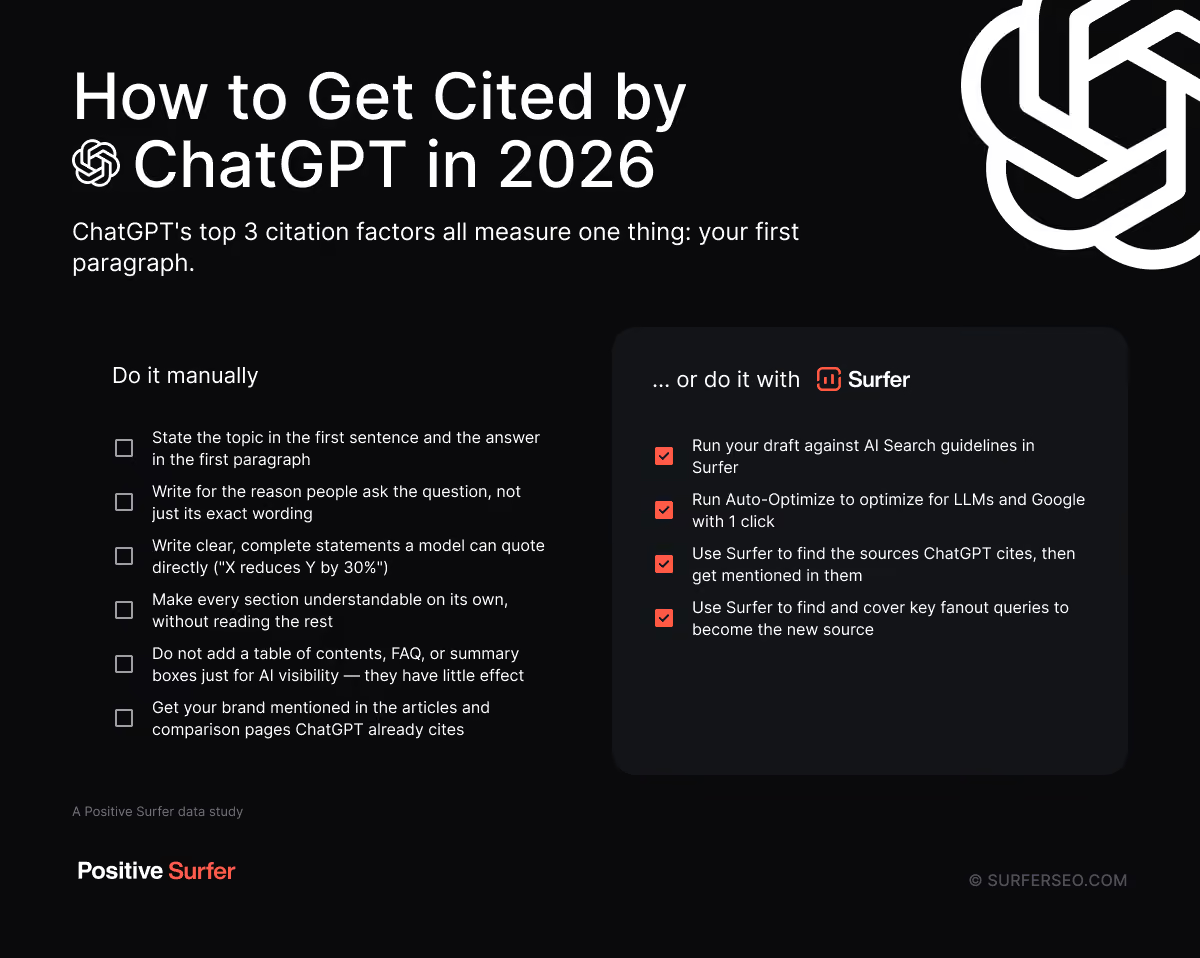
The top three factors in the 2026 run — Early Query Confirmation (does your first paragraph signal it's answering the right question?), Search Intent Alignment (does your content address why someone is actually asking?), and Early Query Answer (do you deliver a short version of the answer before elaborating?) — are all measuring how fast your content gets to the point.
A year ago, these ranked mid-table or lower for ChatGPT. Now they lead by a clear margin.
This matches what we found in our citation placement study: almost 40% of all AI citations come from the first 100 words of a page — a share that nearly doubled within a year. ChatGPT's factor shift and the citation placement trend are two views of the same behavior. The models are converging on the top of your document.
If you read our Perplexity study, the playbook here will sound familiar — name the topic in sentence one, deliver the short answer before elaborating, and address the real intent behind the query, not just its literal wording. What our data shows as the winning Perplexity strategy will work for ChatGPT too.
Shift two: The factual grounding collapse
Here's the finding I didn't expect.
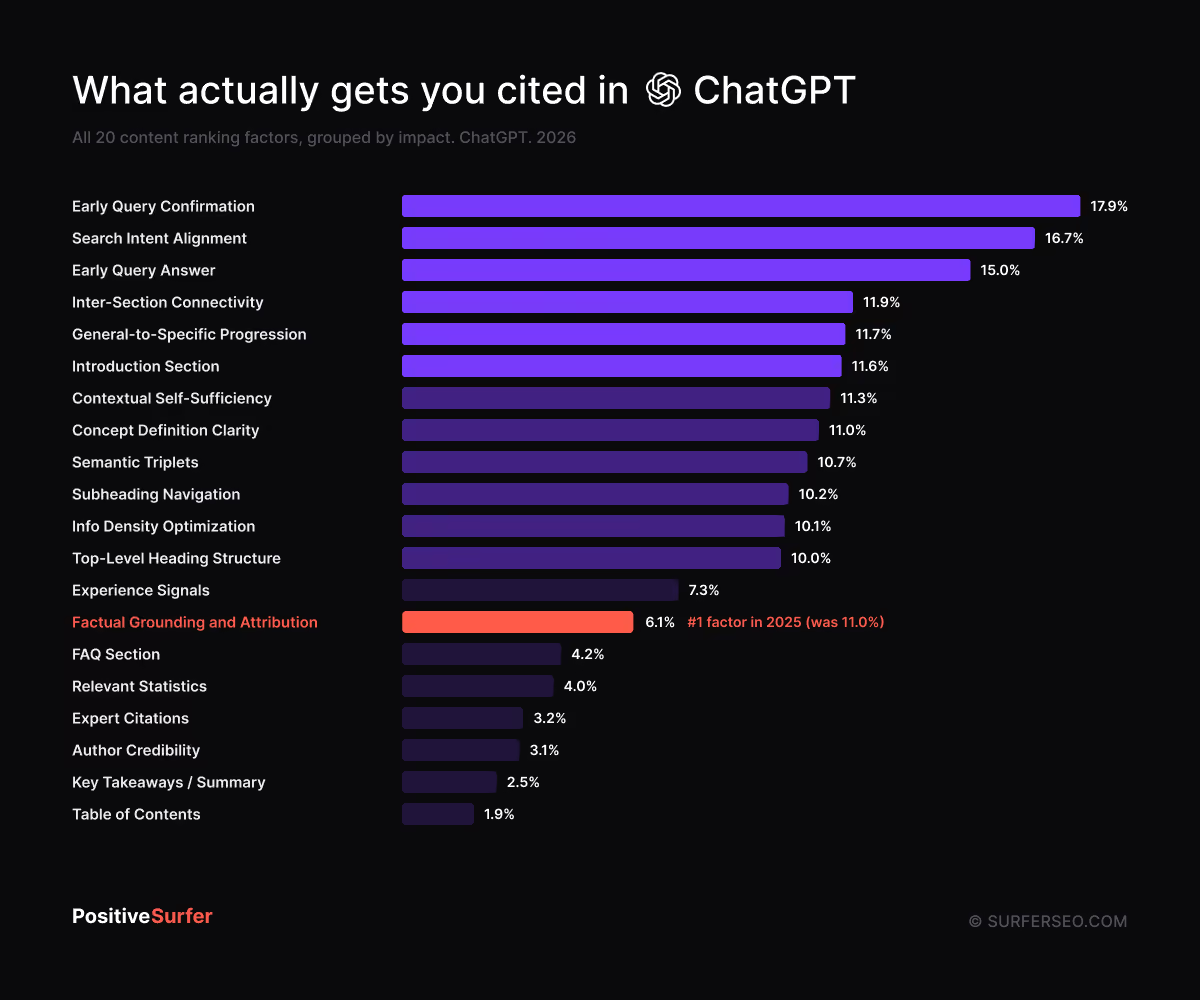
Factual Grounding and Attribution Quality — ChatGPT's #1 factor a year ago at 11% — dropped to 6.1%, bottom third of the table.
I'll be honest about what we can and can't say here. The data shows the correlation weakened; it doesn't tell us why. Maybe ChatGPT's retrieval got better at verifying facts on its own. Maybe well-sourced content became so common it stopped differentiating anyone. Both are guesses.
What the data does say clearly: building your ChatGPT strategy around dense sourcing alone, the way last year's numbers justified, no longer matches how the model behaves. Specific facts and named sources still help — they just stopped being the main event.
Shift three: EEAT went from negative to... mildly positive?
Last year, ChatGPT was the only model with negative factor values: Author Credibility at -0.3% and Experience Signals at -2.3%. Even internally, we were careful with that finding — the values were close to zero, so the honest read was "EEAT doesn't move the needle for ChatGPT," not "ChatGPT penalizes author bios."
That caution turned out to be the right call.
.avif)
In the 2026 run, both flipped positive: Experience Signals at 7.3%, Author Credibility at 3.1%.
Before you rebuild your author pages: these are still modest values. Experience Signals now sits mid-table; Author Credibility remains near the bottom. The honest read is that EEAT signals went from irrelevant to slightly relevant for ChatGPT — not from penalty to superpower.
ChatGPT does not contain a massive index of content; it is grounding every answer on the web. It does not evaluate authors' credibility like Google - you can manipulate it with content not written by a professional or even a relevant author.
~Michał Suski, Head of Innovation and co-founder at Positive Surfer
If you already invest in demonstrating first-hand experience because other models reward it (AI Mode weights Experience Signals at 17.4% — the highest EEAT value in our dataset), ChatGPT no longer gives you a reason to hold back.
It just doesn't give you a reason to lead with it either.
What still doesn't work for ChatGPT
Some things didn't change.
Table of Contents (1.9%), Key Takeaways boxes (2.5%), Author Credibility sections (3.1%), Expert Citations (3.2%), and FAQ sections (4.2%) all sit at the bottom of the 2026 table — the same neighborhood they occupied in 2025.
If you're adding these elements specifically for ChatGPT visibility, the data still says your time is better spent on the first paragraph. Keep them if they serve human readers. Just don't file them under AI optimization.
One new Factor worth knowing: Semantic Triplets
The 2026 rubric includes a factor that wasn't measured last year, and it debuted at a notable 10.7%: Semantic Triplets.
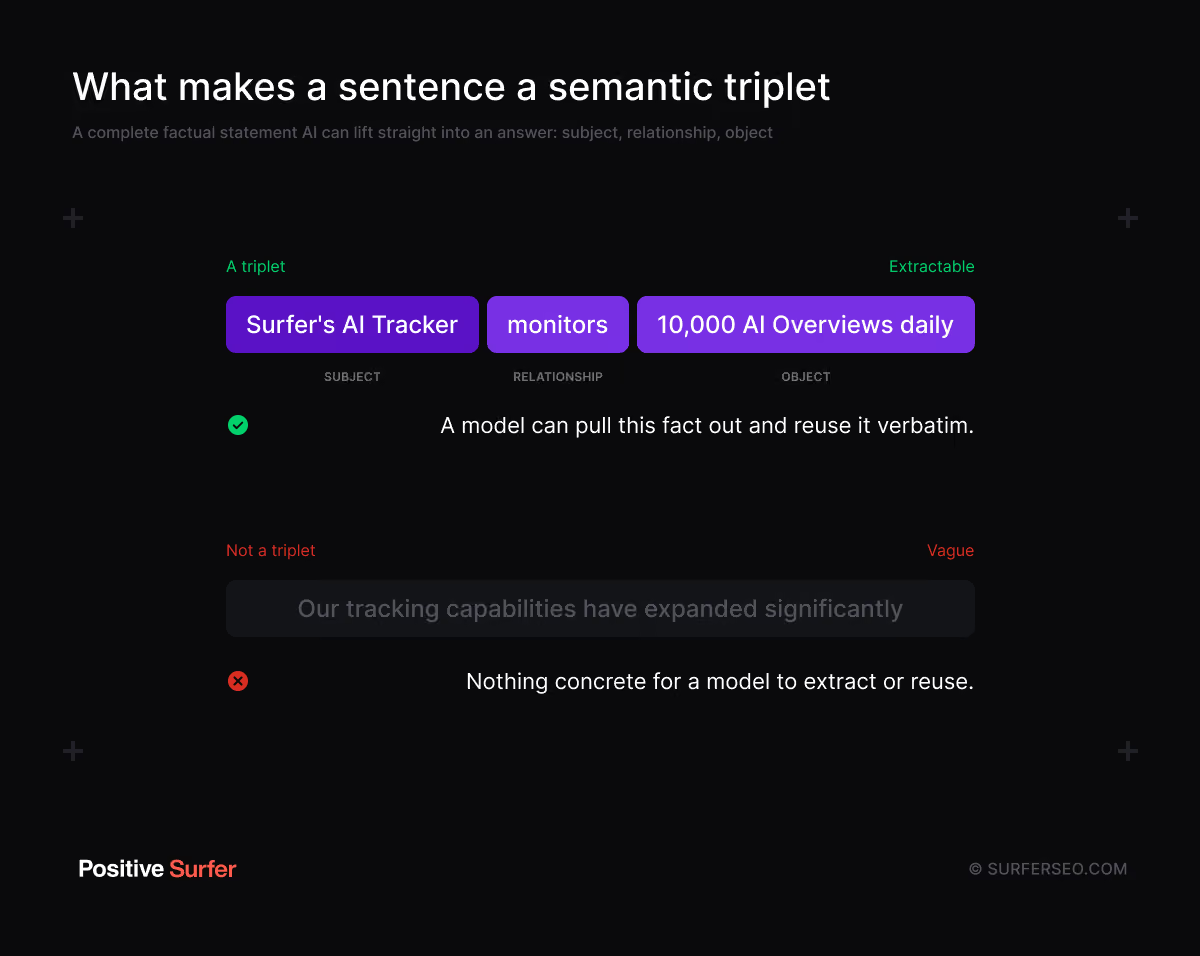
A semantic triplet is a simple, complete factual statement — subject, relationship, object. "Surfer's AI Tracker monitors 10,000 AI Overviews daily" is a triplet. "Our tracking capabilities have expanded significantly" is not — there's nothing a model can extract and reuse.
Content built from clear, extractable statements gives an AI model ready-made citation material. Content built from vague, self-referential prose makes the model do assembly work — and as we covered in the citation placement study, models don't like doing extra work.
Optimize for ChatGPT with Surfer
Surfer's Content Editor now has an AI SEO Content Score that combines both SEO and AI search guidelines in one place.
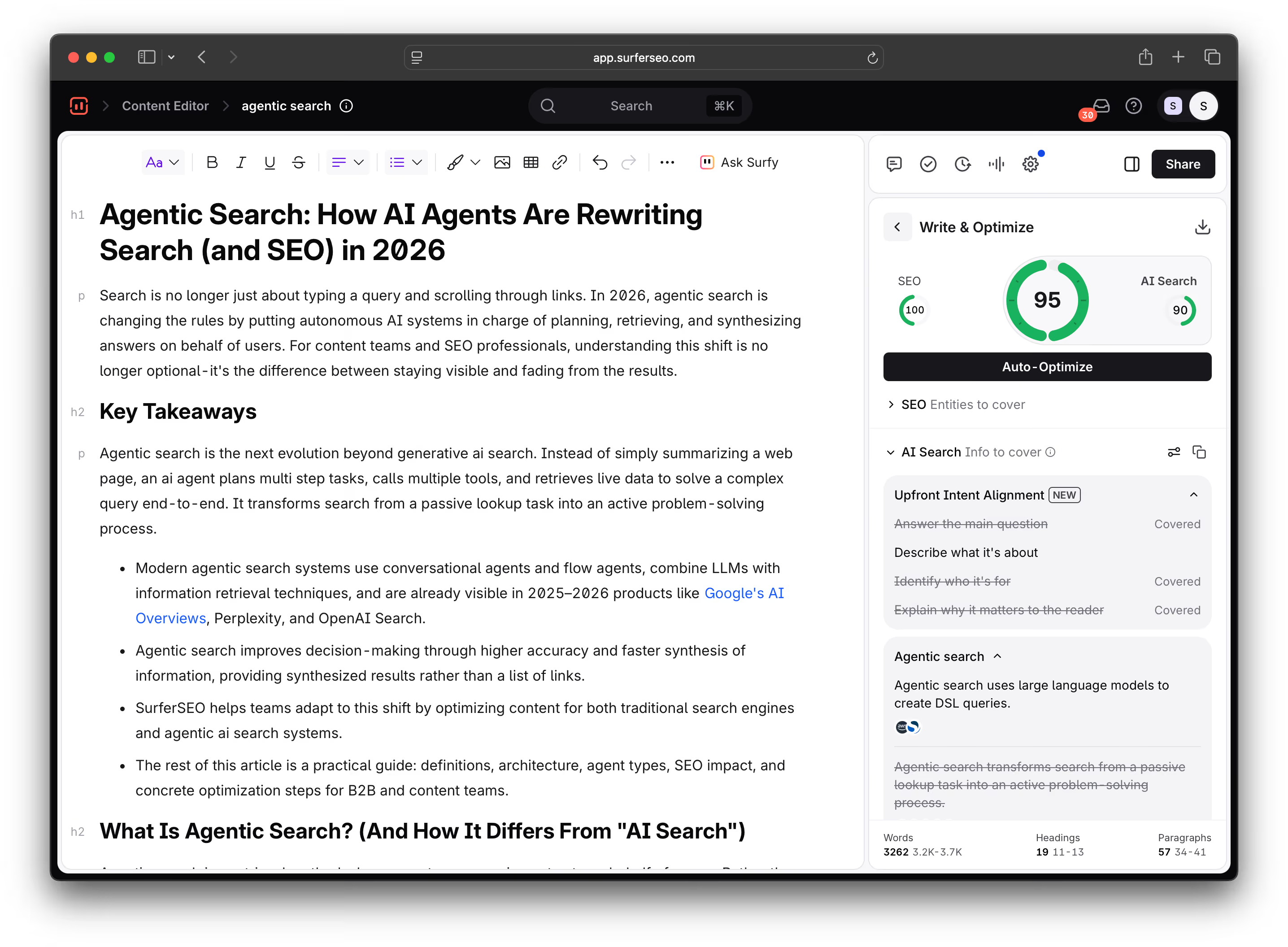
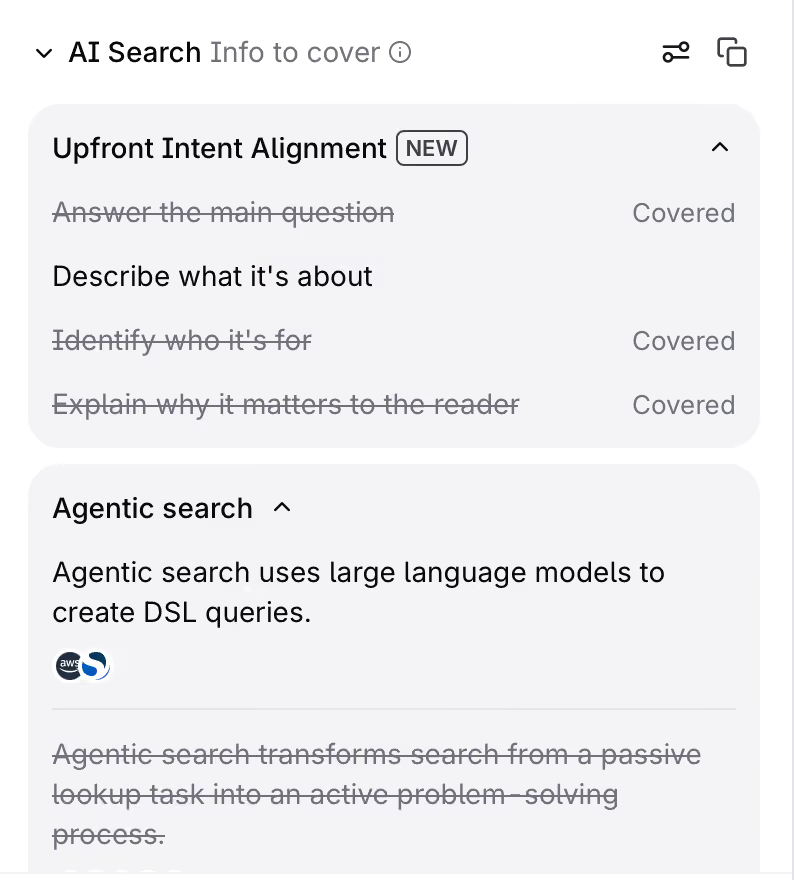
Given the 2026 numbers, the guideline that matters most for ChatGPT is Upfront Intent Alignment — it checks whether your first paragraph names the topic in sentence one, includes a factual anchor, and delivers the answer before the elaboration. Exactly the pattern ChatGPT's new top three factors reward.
The AI Search recommendations also include information to cite under Agentic Search — the specific facts AI models look for when answering questions in your topic. The more of them your content covers, the higher your chances of becoming the source models pull from.
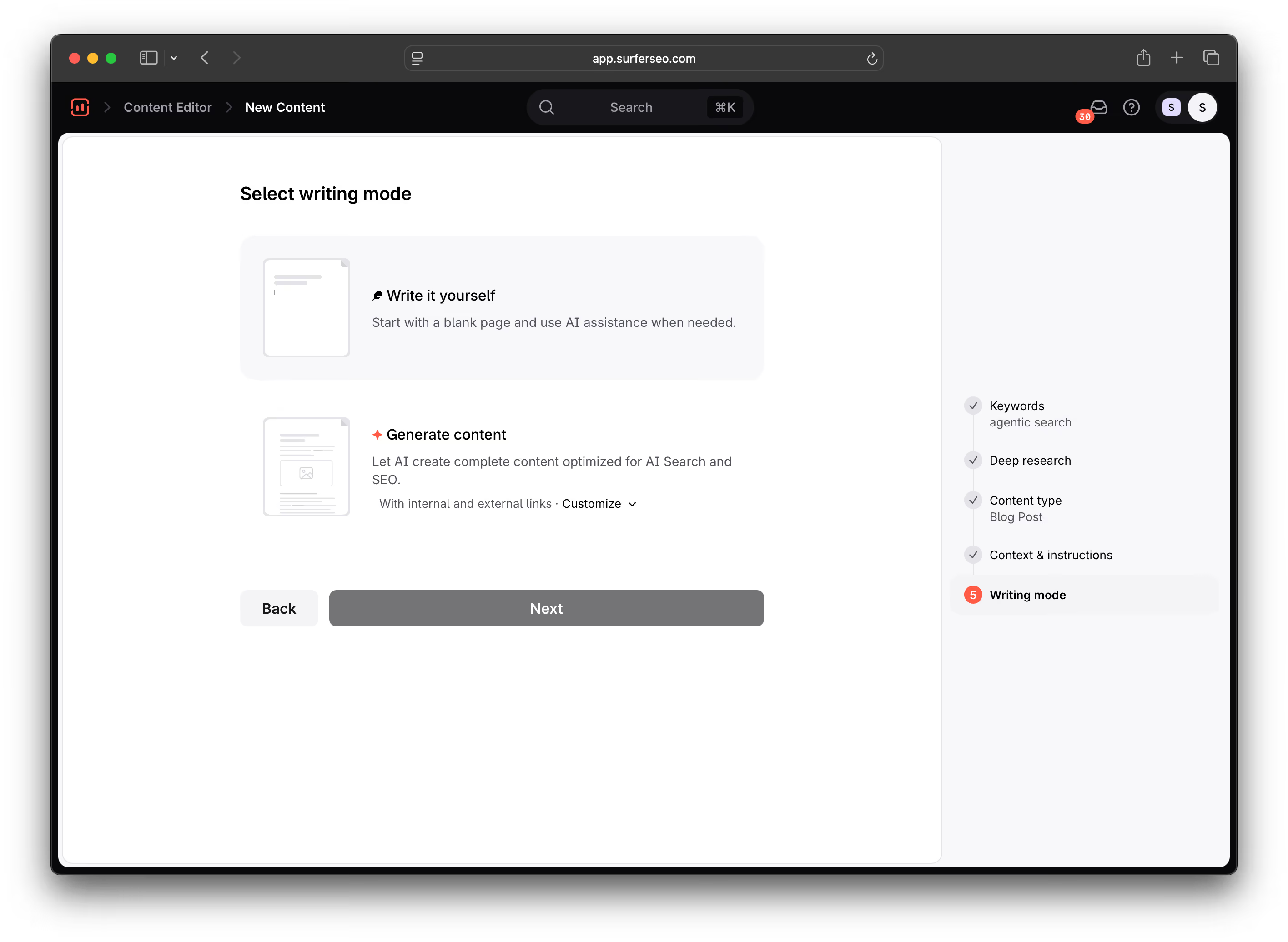
You can review both sets of suggestions under the AI Search guidelines tab and apply them one by one manually, ask Surfy to handle them selectively in your tone of voice, or use Auto-Optimize to fix your SEO and AI search guidelines — introduction rewrites included — in one pass (my preferred approach).
And if you generate content with Surfer AI rather than writing from scratch: it automatically interlinks your most relevant existing pages and links out to the external sources backing the claims in the generated article.
Sourcing matters less for ChatGPT than it did a year ago — but it still counts across every other model, and extractable, well-attributed statements are exactly what the Semantic Triplets factor rewards.
Step two: Find out who's getting cited instead of you
Head over to AI Tracker and set up prompts organized into the topics you want to track — for us, that's things like AI visibility, AI SEO tools, and content optimization:
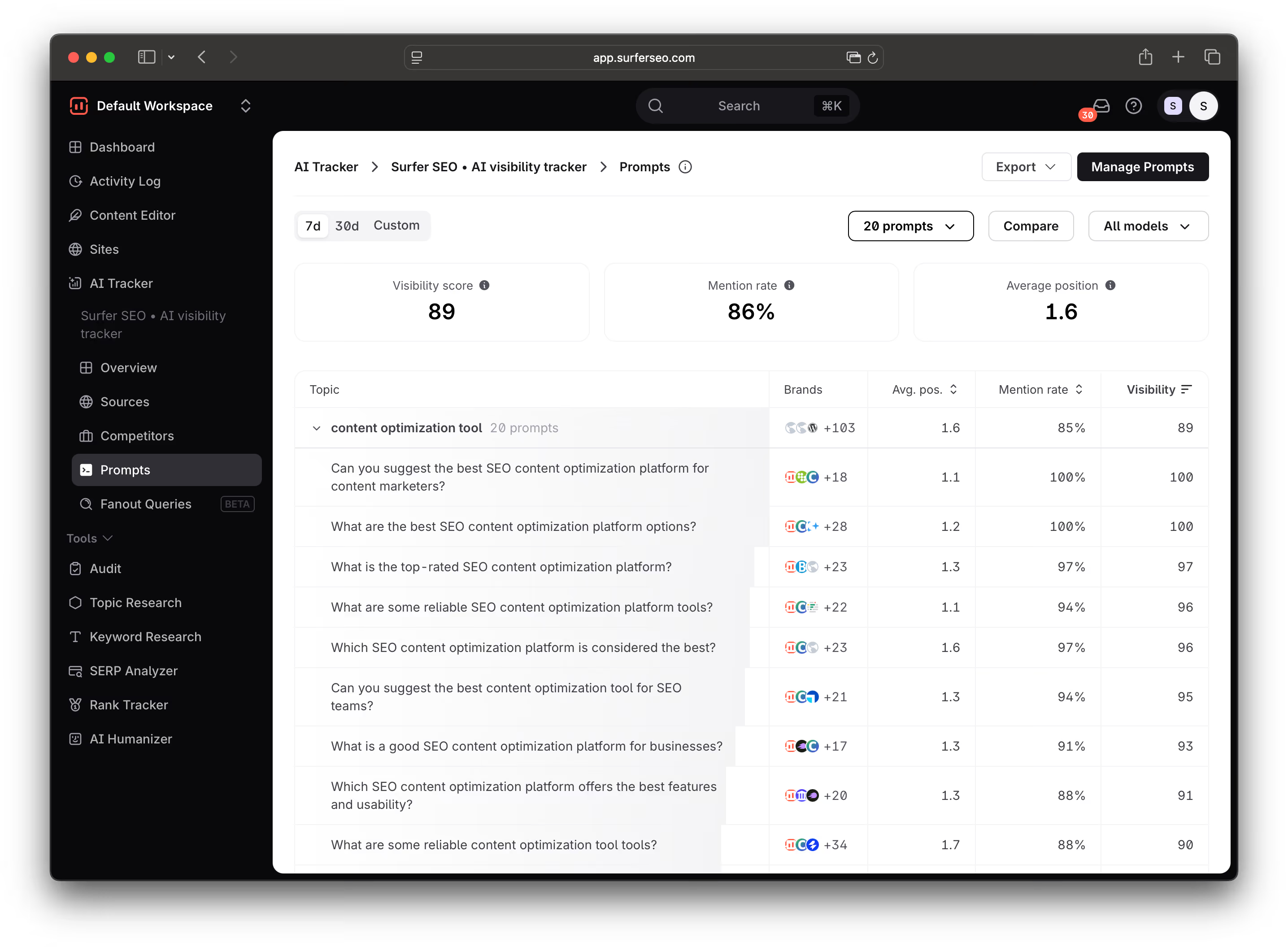
This shows you who's currently being cited for the most important questions your buyers ask about your niche. Every answer falls into one of three buckets: you, your competitors, or third-party content you could get into.
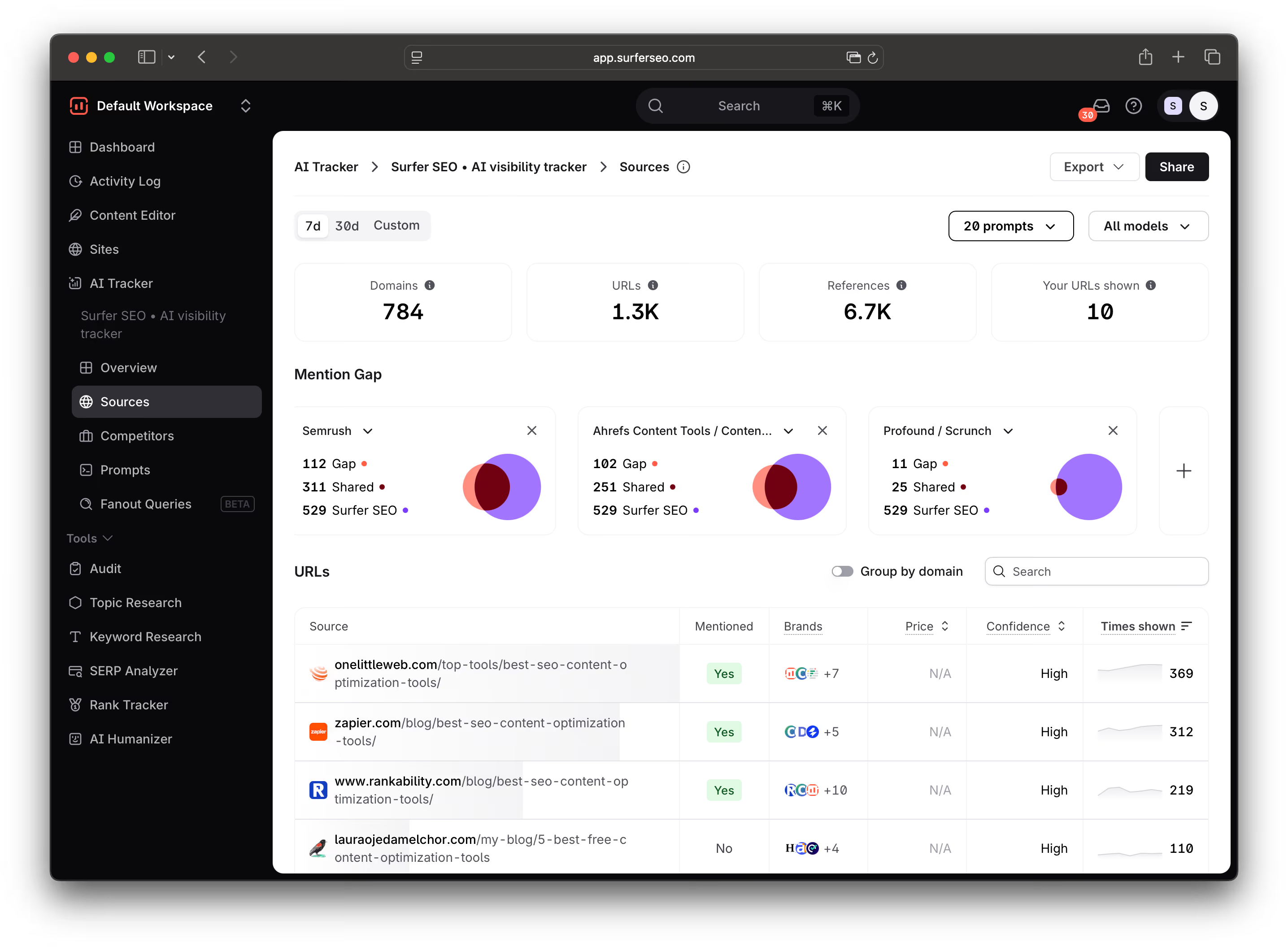
That third bucket is where the opportunity usually is — third-party articles and comparison pages are off-site presence you can earn without outranking anyone.
Your job from there: get mentioned in as many of the top sources as possible — as high as possible if it's a listicle, and always in a positive light.
How you get there depends on your time and budget. If you're short on time but have AI visibility budget to spend, use paid insertions: whenever a source is covered by one of our current backlink providers, you'll see a price and an option to buy the placement directly in AI Tracker.
If not — or for the sources our providers don't cover — I recommend a more personalized approach: outbound. Make it personal, offer something in return — a unique content exchange, data they can't get elsewhere, or money — and write like a human. You're asking someone to go out of their day to edit a published article and add you to it. Your odds go up dramatically when the request doesn't read like the two hundred other template emails they got that week.
One more thing while you're in AI Tracker: check the fanout tab.
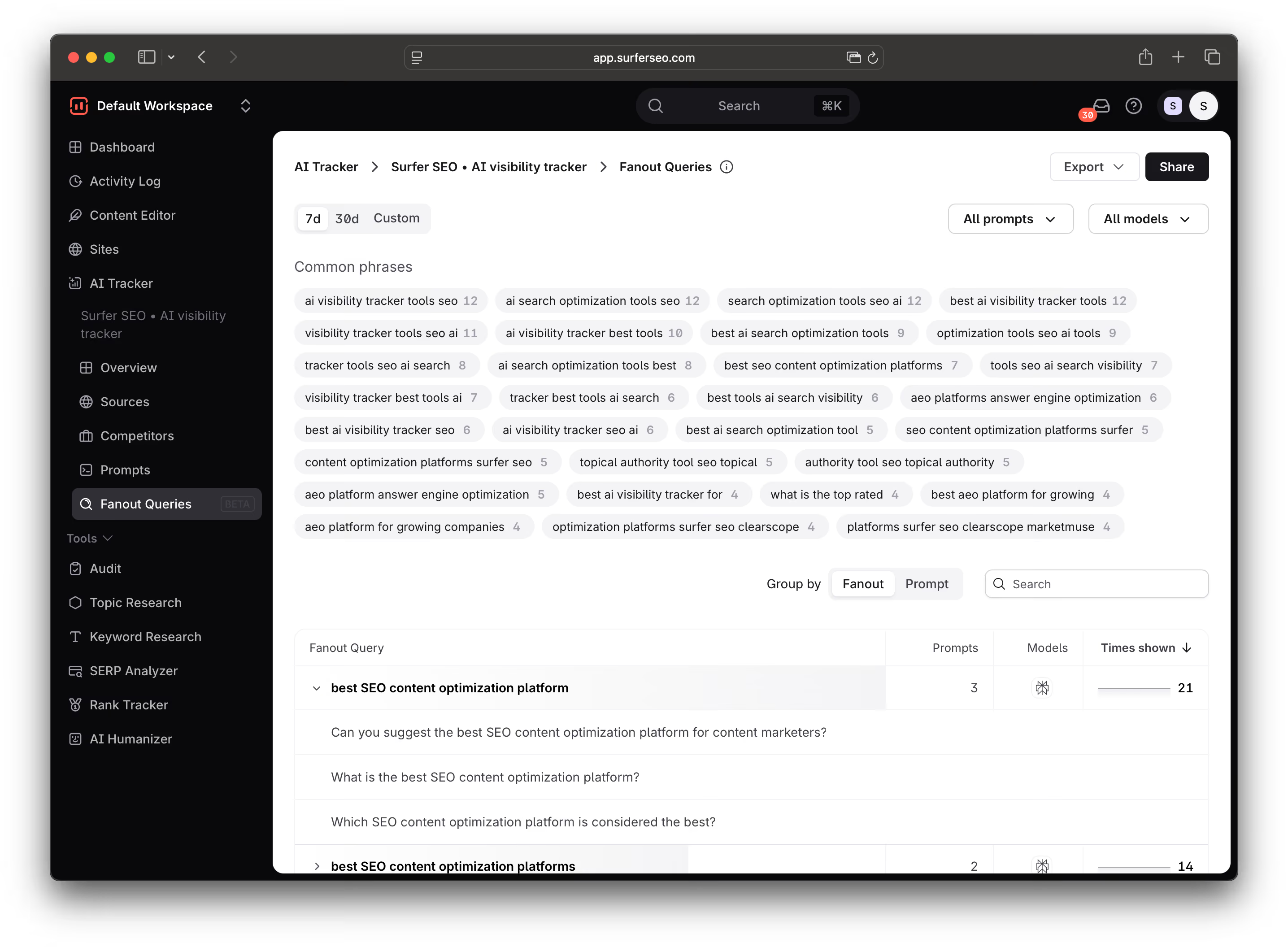
AI models don't answer your buyers' questions from a single query — they quietly run several related searches and stitch the results together. The fanout tab shows you those related queries, and they're a map for expanding your content clusters around the core topics you track. If you want to go beyond monitoring who gets cited and become the source yourself, those are the prompts your blog should be answering directly.
Data: 650,000+ AI-generated answers from real user interfaces — not API responses (we've written about why that distinction matters here). Every cited source was scored against a 20-factor content rubric across ChatGPT, Google AI Overviews, AI Mode, and Perplexity, in two collection runs: October 2025 and April 2026. Analysis: Michał Suski, Head of Innovation and co-founder at Positive Surfer, and Maciej Gruszczyński, Data Scientist at Positive Surfer.
This is correlational data — we can show what content that gets cited by ChatGPT looks like, and how that changed between runs, not definitively why it gets chosen over something else.
A bigger study is coming that pulls all of these together — our full approach, plus what's changed over time. The actionable parts came first because that's the order they're useful in ;)