Users aren’t relying on one search platform anymore. They still turn to search engines like Google for depth, but they also ask ChatGPT, Perplexity, Gemini, and other AI search engines for quick explanations, comparisons, and recommendations.
But this doesn’t make traditional SEO less important. It has simply expanded where good content needs to show up. Pages that rank well in classic search results often appear in AI search results too, because the same factors matter: structure, topical authority, clarity, and depth.
AI SEO is the natural continuation of that direction. It builds on the fundamentals of search engine optimization while extending them to AI platforms that millions of users rely on every day.
What you will learn
- The two meanings of AI SEO and why both matter.
- How visibility works across AI platforms like ChatGPT, Perplexity, and Google’s AI overviews.
- Why AI platforms drive real discovery, and why brands ranking well in classic SERPs often appear in AI answers.
- How to integrate generative engine optimization, answer optimization, and traditional SEO into one strategy.
What AI SEO actually means in 2026
AI SEO in 2026 refers to two things: using AI to improve traditional SEO tasks, and optimizing your content so it appears in AI-generated answers.
AI optimization for SEO can involve automating large-scale keyword research, clustering related queries, identifying gaps, improving SEO content creation, predicting search engine rankings, and helping with outlines or first drafts. These tasks still require strategy and human judgment — AI-powered tools simply make them faster and more precise.
Visibility in AI search results is all about getting your content to appear on platforms like ChatGPT, Perplexity, Gemini, Claude, and Google’s AI Overviews and AI mode. These AI-powered search engines read, interpret, and synthesize information from multiple sources.
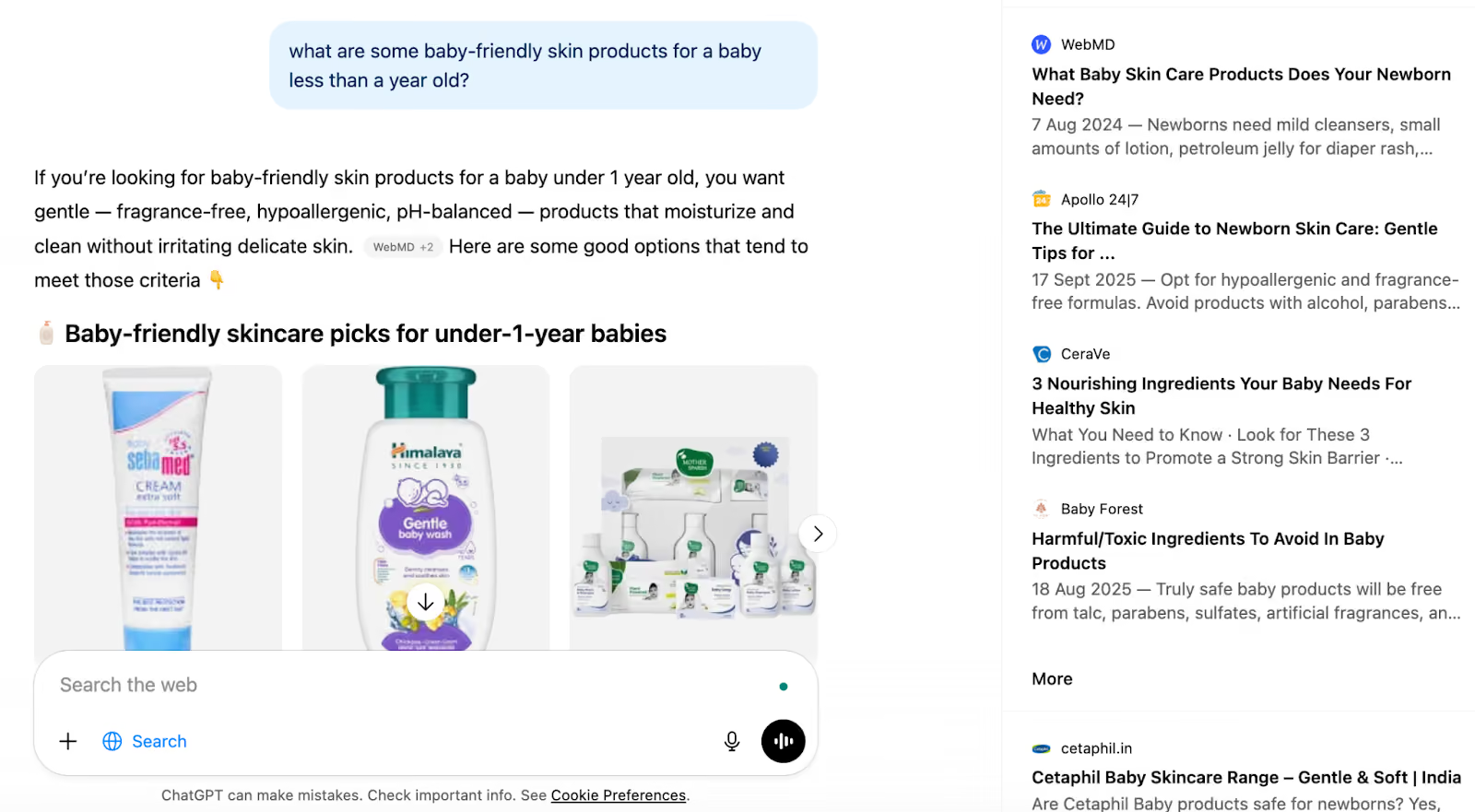
AI platforms pull from multiple sources to generate answers and tend to reference clear, authoritative, and well-structured pages.
This is where generative engine optimization (GEO) and answer engine optimization (AEO) become relevant—both focus on making content easy for AI systems to interpret and cite.
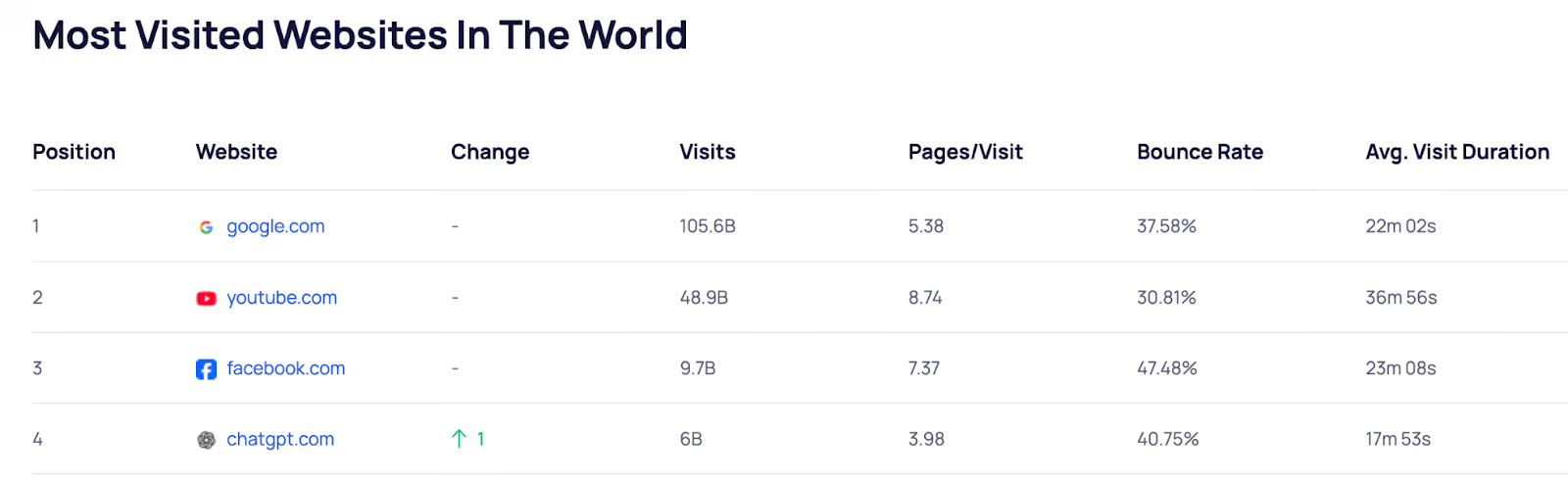
The scale makes this worth paying attention to. ChatGPT is now the 4th-most-visited website worldwide, with nearly 6 billion monthly visits.
And as more users rely on AI search engines to research topics, compare options, and get quick explanations, appearing in those answers becomes another layer of brand visibility.
What’s interesting is that the brands that show up in AI-generated responses are usually the ones that already perform well in traditional search engines.
Strong structures, clear entities, comprehensive coverage, and topic-level authority help content get recognized by both search engine algorithms and AI engines.
That’s why AI SEO isn’t a new discipline. It’s an extension of the same digital marketing foundations that already drive visibility in search engine results pages, now applied to AI search visibility.
Traditional SEO vs. AI-powered SEO
Traditional SEO is manual and reactive. Whereas AI-powered SEO is automated, proactive, and driven by patterns you can’t identify by hand. Both approaches support broader search engine optimization, but they work very differently beneath the surface.
SEO processes used to rely on manual SERP reviews, keyword placement, backlinks, and meta tags. It focused on improving visibility on search engine results pages and responding to changes when rankings fluctuate.
But the limitation with traditional SEO is speed. You can only move as fast as you can analyze. AI-powered SEO removes that constraint. Since AI-powered SEO tools can analyze search algorithms instantly, they surface opportunities earlier, detect shifts faster, and help teams adjust before performance drops.
49.2% of companies using AI for SEO performance saw improved rankings after major Google updates, largely because they could respond more quickly to changes.
AI also broadens how SEO practices work.
Instead of matching keywords alone, machine learning models now evaluate topics, entities, and intent patterns — all of which influence both traditional search rankings and AI-driven results. Pages that demonstrate clear topical understanding are easier for generative engines to cite.
And this direction isn’t new.
Google has been using AI in its algorithms for years. RankBrain (Google’s machine-learning artificial intelligence system) helps the search engine interpret queries it has never seen before, and BERT improves its ability to understand context and nuance within sentences.
These systems were early signs of a shift toward semantic and intent-driven search — long before generative engines like ChatGPT or Perplexity started synthesizing answers.
Here’s a quick comparison between how traditional and AI-powered SEO work:
Remember, AI doesn’t replace existing SEO strategies. It enhances it by improving speed, expanding insight, and supporting visibility across both search engines and AI algorithms.
The three pillars of AI SEO: GEO, AEO, and traditional search optimization
AI SEO today rests on three connected pillars: GEO, AEO, and traditional search optimization. Together, they determine how easily your content can be understood, ranked, and cited across both search engines and AI platforms.
GEO (generative engine optimization) focuses on making content easy for AI search engines like ChatGPT, Perplexity, Gemini, and Claude to interpret and reuse in their responses.
These platforms generate synthesized answers from multiple sources, so content needs to follow a strong structure, be clear about entities, and provide comprehensive topical coverage to surface across AI algorithms.
AEO (answer engine optimization) follows the same principles but is slightly more targeted. It supports environments that deliver direct answers first, such as Google’s AI Overviews or voice assistants. AEO emphasizes clear, concise explanations that help answer-focused systems pull the right information without friction.
The two terms are often used interchangeably because they share the same goal: making your content legible and trustworthy to AI systems that extract and generate answers.
Even with concepts like GEO and AEO, traditional search optimization remains the base layer. Ranking well in search engine results pages still influences how AI systems evaluate trust and authority.
Tomasz Rudzki, co-founder of ZipTie, analyzed real queries across ChatGPT, Perplexity, and Google’s AI Overviews. His study found that if your website ranks #1 in Google’s blue links, you have a 25% chance of being cited as a source in AI Overviews.
This means strong traditional SEO signals like topical authority, clarity, internal linking, and depth increase your visibility in both classic and AI search trends.
Here’s a quick snapshot of how they work together:
Instead of choosing one pillar, modern AI SEO involves combining all three.
This hybrid approach ensures your content can rank in traditional search results while also appearing in AI-generated answers — wherever users choose to search.
Understanding AI Overviews and their traffic impact
Google’s AI Overviews appear at the top of search results pages and provide an AI-generated summary based on information from multiple sources.
Instead of showing users a list of links first, Google presents a consolidated answer and then displays follow-up prompts and references. This changes how people interact with search engines, especially for informational queries.
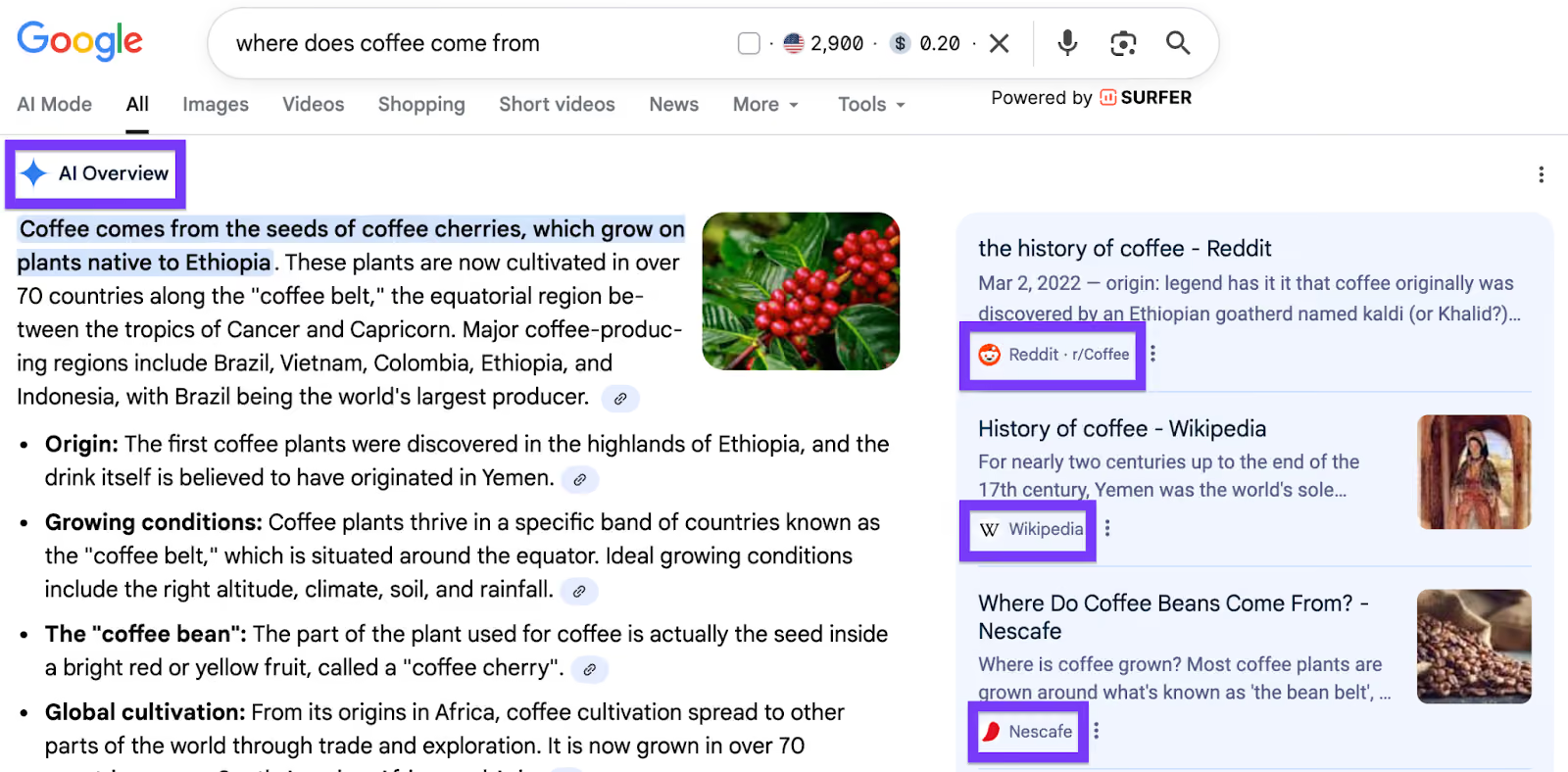
Because AI Overviews answer the main question immediately, they can reduce click-through rates for the pages included in them. A recent Surfer analysis found a 15–35% drop in CTR when an overview is present.
But the impact isn’t absolute.
In the same analysis, we found that zero-click behavior from January to March 2025 decreased slightly, from 38.1% to 36.2%. This suggests that users still click through when they need detail, but the point of entry has shifted: users read the overview first, then decide whether to explore further.
It's also important to note that AI Overviews rely on multiple sources rather than a single page. Surfer’s research across industries showed that three domains appear most often as references:
- YouTube: used for practical, visually demonstrative explanations
- Wikipedia: used for structured, definition-driven topics
- Google-owned properties: used for verified guidance and foundational concepts
These sources appear frequently because they consistently offer clear, factual information that helps AI systems synthesize accurate answers.
For brands, this highlights the increasing importance of well-structured, factual, and entity-rich content in AI SEO.
The zero-click search challenge (and opportunity)
Nearly 60% of Google searches now end without a click because users get answers directly from AI Overviews, knowledge panels, and other on-page AI summaries. This reduces immediate traffic for your website's visibility, but it doesn’t remove the value of showing up and optimizing for SEO.
Your brand is still seen, just earlier in the journey, as many users now:
- Start with AI-powered research on ChatGPT, Perplexity, Gemini, or Google’s AI surfaces.
- Return through organic or direct channels when they’re ready to compare, evaluate, or buy.
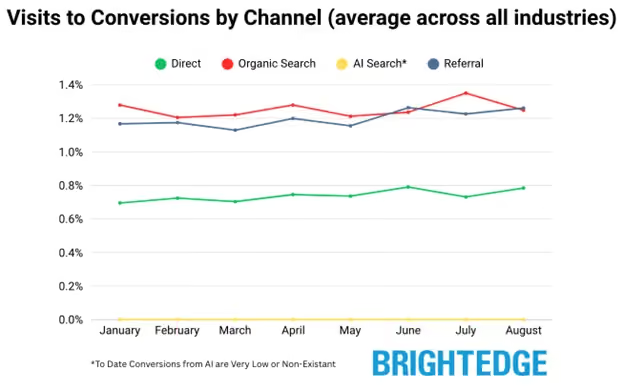
A BrightEdge study reflects this pattern. It found that organic search remains the highest-converting channel, even as more discovery happens on AI platforms. AI handles the “early research,” while organic captures the “decision moment.”
AI Overviews play a central part in that early research. Search Engine Land reports that 88.1% of AI Overview triggers are informational queries — the exact queries users rely on when learning about a topic or narrowing down options.
Of course, this naturally affects click-through rates:
- Organic CTR for AI Overview queries dropped from 1.76% to 0.61%
- Paid CTR fell from 19.7% to 6.34%
- Even non-AI-Overview queries saw a 41% year-over-year drop in organic CTR.
Despite lower CTRs, appearing inside AI citations still provides an advantage. Search Engine Land also found that brands cited in AI Overviews earned 35% more organic clicks and 91% more paid clicks than brands that weren’t referenced.
This means AI SEO is making early-stage visibility crucial for marketers.
Showing up inside AI-generated answers influences users long before they click — and many of those clicks still happen later, through organic or direct channels that continue to convert best.
Why visibility still matters even without clicks
AI Overviews don’t always drive immediate traffic, but they still influence what users remember and what they search for next.
People often skim the AI-generated summary first, get a sense of the key brands or sources, and then return later through organic or direct channels when they’re ready to compare options or make a decision.
And this pattern is becoming more common.
Research from Bain & Company shows that 80% of consumers rely on zero-click results at least 40% of the time, meaning users absorb information long before they visit a website.
This early exposure affects downstream behavior.
For example, during Amazon’s 2025 Prime Day, generative AI traffic to U.S. retail sites grew 3,300% year over year, even though many shoppers began their research in AI tools. Users now have a habit of exploring through AI first, then clicking through to retailers once they’re closer to buying.
For brands, this means showing up inside AI search results ensures your name enters the user’s consideration early, which increases the likelihood of a later visit.
Research shows that brands cited in AI Overviews earn 35% more organic clicks and 91% more paid clicks than brands that aren’t mentioned.
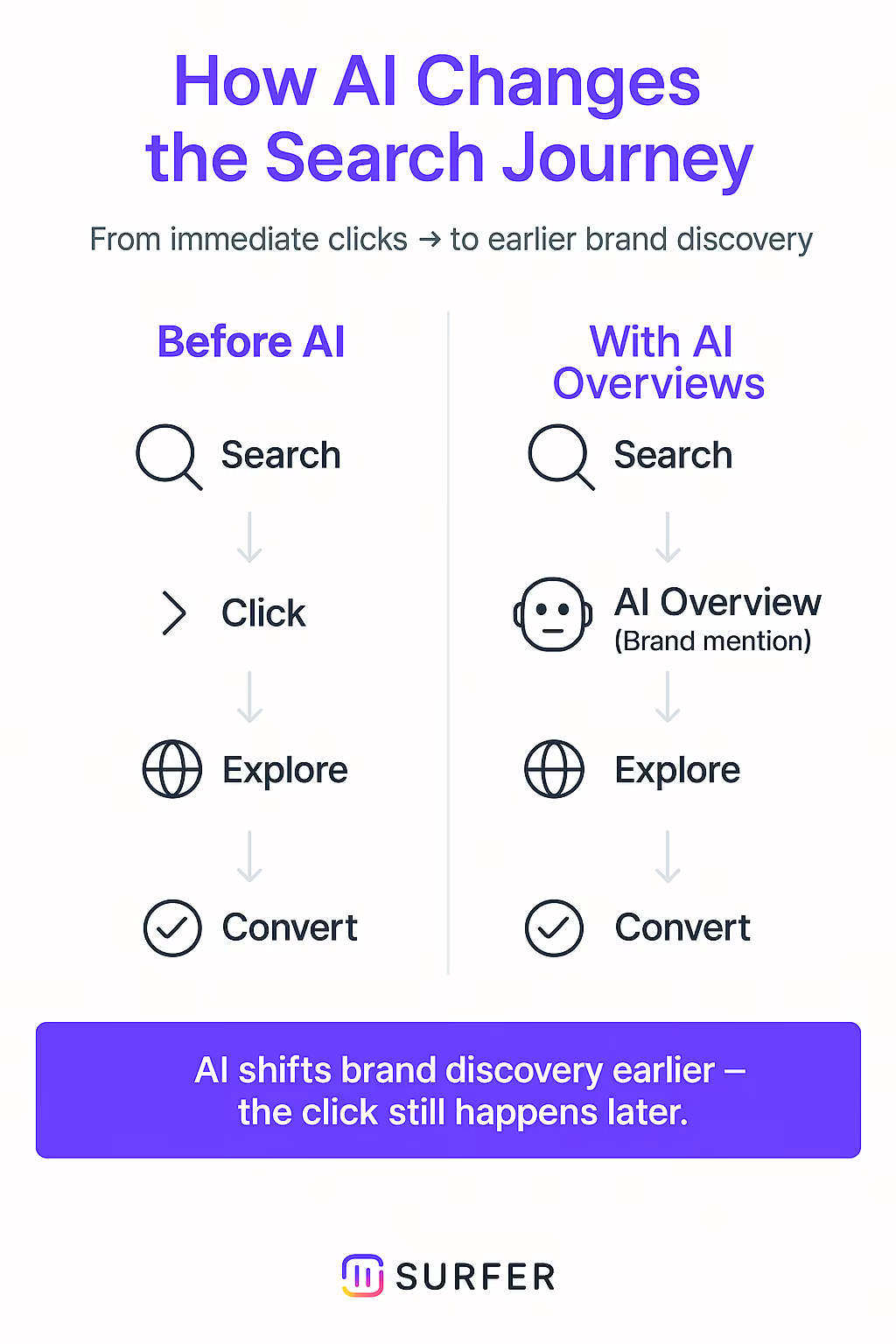
Visibility inside AI answers is now part of the awareness stage.
Users may not click immediately, but they’re far more likely to return to brands they’ve already seen at the top of their research flow.
That’s why AI SEO is not just about winning the click—it’s about shaping the journey from the very first touchpoint for your target audience.
How to optimize for AI search engines
AI systems don’t just crawl pages — they interpret meaning, map relationships, and combine information from multiple sources to generate personalized search results.
To appear in AI search results, your content needs to be structured in a way that machines can instantly understand while being helpful and readable for humans.
Think of AI web crawlers as a new type of content consumer.
They look for clear intent, strong entities, clean formatting, and unambiguous structure. Pages that meet these criteria are easier for systems like ChatGPT, Perplexity, Gemini, and Google’s AI overviews to extract, cite, and reuse.
What’s important is that the brands showing up in AI answers are usually the same ones that already perform well in search engine results pages. They haven’t shifted away from traditional SEO—they’ve simply extended it to align with how AI evaluates content.
Here’s how to implement this step by step:
1. Structure content for AI comprehension
AI models read pages by breaking them into headings, summaries, and patterns. The clearer those signals are, the easier it is for an AI engine to understand what your page covers—and decide whether it should cite you. Here’s how you can implement this:
- Use descriptive H1–H3 tags: Instead of vague headers like “Best practices”, use something like “How to implement schema markup for AI”. This helps both search crawlers and AI systems categorize your content instantly.
- Answer the main question in the first 40–60 words: AI systems don’t scroll. They skim. Placing the core answer early increases your chances of being extracted into AI search results or used inside an AI-generated summary.
- Keep sentences short: Short, direct lines are easier for models to parse and reduce token noise. This improves comprehension for both humans and machines.
- Use lists, bullets, and tables whenever possible: Structured formatting gives AI a clearer map of your content. Lists are easier to extract into AI overviews, while tables help AI compare concepts cleanly.
- Optimize for dual consumption: Your content should make sense to:
- Traditional search engines, which crawl HTML hierarchies.
- AI-powered systems, which interpret meaning, relationships, and structure.
This dual optimization ensures your pages are visible across both ranking-based and generative search platforms.
2. Build topical authority across multiple surfaces
AI search engines don’t rely on one type of content. They pull from encyclopedic sources, practical explainers, and real user discussions — often in the same answer. To show up consistently across AI search results, your brand needs topical authority that reaches beyond your website.
Our analysis found that Youtube, Wikipedia and Google SERPs make up most of Google AI Overview's top citations, other research shows that Reddit appears heavily in Perplexity and Gemini results.
This tells us that AI engines treat the internet as an ecosystem rather than a list of rankings. They cross-reference sources to understand a topic from multiple angles:
- Wikipedia → structured knowledge with clean entity relationships
- YouTube / visual content → step-by-step, “how-to” clarity
- Reddit and community spaces → context, nuance, lived experiences
- Authoritative websites → depth, expertise, and credibility
To align with that, your content ecosystem needs similar diversity. Here’s what that means in practice:
- Strengthen the main pages on your site: Cover topics comprehensively, link related pages, and ensure each article offers valuable insights with a clear user intent. Machine learning algorithms rely on semantic signals, so internal coherence can influence whether a page is considered a high-quality source.
- Appear in places AI frequently cites: This means being present in credible third-party environments. For example:
- Guest posts on reputable industry sites.
- Participating in expert Q&As or community threads.
- Publishing research or data that others reference.
These are the signals AI uses to decide whether your brand has authority worth citing.
- Use entity-driven writing: AI engines pick up on concepts, not just keywords. Make sure your content names the correct entities (tools, processes, frameworks, people, organizations) so models can understand its relevance.
- Build topical depth, not just volume: AI prioritizes brands that understand user intent, not brands that publish the most. Clusters matter here: pages that link together around a clear topic help clarify what your site is an “authority” on.
This multi-surface approach explains why the brands appearing repeatedly in AI-generated answers are often the same ones dominating organic search.
It’s because they’ve built strong topical reputations, and AI engines can recognize that through signals across the wider web, not just on-page optimization.
3. Answer long-tail queries that mimic prompts
AI search behavior is shifting toward conversational queries. Instead of typing short keywords into search engines, people ask AI platforms full questions with context, goals, and constraints, just as they would ask a person.
A major driver of this shift is voice search. In 2025, 153.5 million people (41% of U.S. adults) use voice assistants, with year-over-year growth of 2.5%. Voice queries tend to be longer, question-based, and intent-driven. Users naturally phrase their searches as:
- “How do I improve local SEO for an e-commerce site?”
- “What’s the difference between AI-powered SEO tools and traditional ones?”
- “Which AI platforms work best for content creation?”
To adapt to these shifts, create content around questions people naturally ask AI systems. These queries tend to be longer, clearer, and more intent-driven, which makes them easier for AI models to understand.
Some examples of high-value content include:
- Specific use cases: “How to fix duplicate content issues using AI.”
- Comparisons: “Best AI SEO tools vs traditional SEO tools 2025.”
- Scenario-based queries:
“What AI SEO tools should I be considering for my e-commerce site?” - Decision-stage questions: “Top AI marketing platforms for e-commerce.”
These queries are valuable for two reasons:
- They match how AI engines interpret intent: AI models often surface longer, more contextual answers — so pages that mirror natural questions are easier to extract into AI search results.
- They’re easier to rank for: Long-tail keywords have clearer search intent and less competition, yet they’re highly relevant to AI-generated answers.
A simple way to find these queries is to use Google autocomplete. Google searches like “AI tools for…” or “how to use AI for…” reveals real user questions pulled directly from search activity.
Essential AI SEO tools in 2026
As of 2025, 86% of SEO professionals have already integrated AI into their workflows, and the AI-powered SEO market hit $67 billion, growing at a 22% CAGR since 2020.
Amin surging AI marketing trends, teams now evaluate SEO toolkits on how well they support both traditional SEO like Google rankings and AI search optimization, analysis, content structuring, semantic clarity, and most importantly, tracking AI visibility.
Before we get into the best AI SEO tools for your team, keep in mind, choosing the right platform depends on team size, budget, and workflow:
- Solo creators will need simple, integrated platforms.
- Small teams need combined optimization + monitoring.
- Agencies and enterprises need prompt-level visibility, automation, and advanced research.
I've summarized the most useful AI SEO tools here.
Surfer: AI visibility tracking & prompt monitoring
Traditional SEO analytics tools don’t show when AI platforms cite your content. You could already be cited inside an AI Overview or Perplexity response and never know.
Surfer’s AI Tracker fills this gap by showing you exactly where and how generative search systems reference your site.
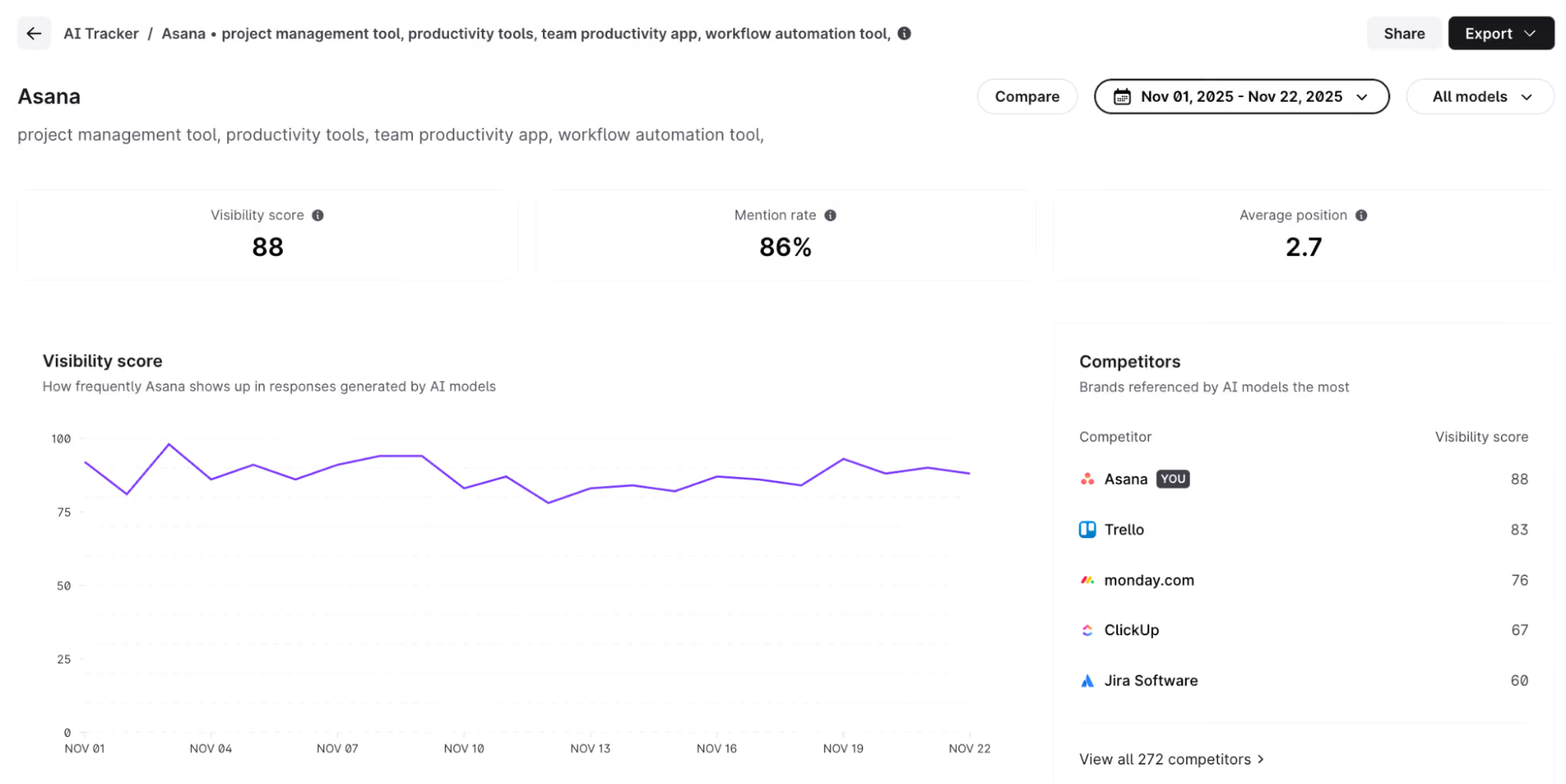
Metrics you can monitor using Surfer’s AI Tracker:
- Visibility score: How often your brand shows up in AI answers.
- Mention rate: The frequency of visible brand mentions in model responses.
- Average position: Your domain’s ranking across all cited responses, compared to competitors.
- Top sources: Which domains LLMs rely on most for a given prompt (shows who AI trusts).
How Surfer helps AI SEO:
- Measures real AI share of voice: Instead of guessing whether ChatGPT or Perplexity used your content, you get a concrete visibility metric you can track over time and report on.
- Shows model- and prompt-level behavior: You’ll see, for example, if Perplexity favors community forums while ChatGPT leans on encyclopedic sources — so you can adjust where and how you publish or outreach.
- Flags mention gaps and misquotes: If competitors are being cited for buyer-intent prompts you care about, Surfer highlights those gaps so you can prioritize content or source outreach.
- Connects to content ops: The tracker pairs with Surfer’s Topical Map and Content Editor so you can turn visibility signals into content briefs that are built to be cited.
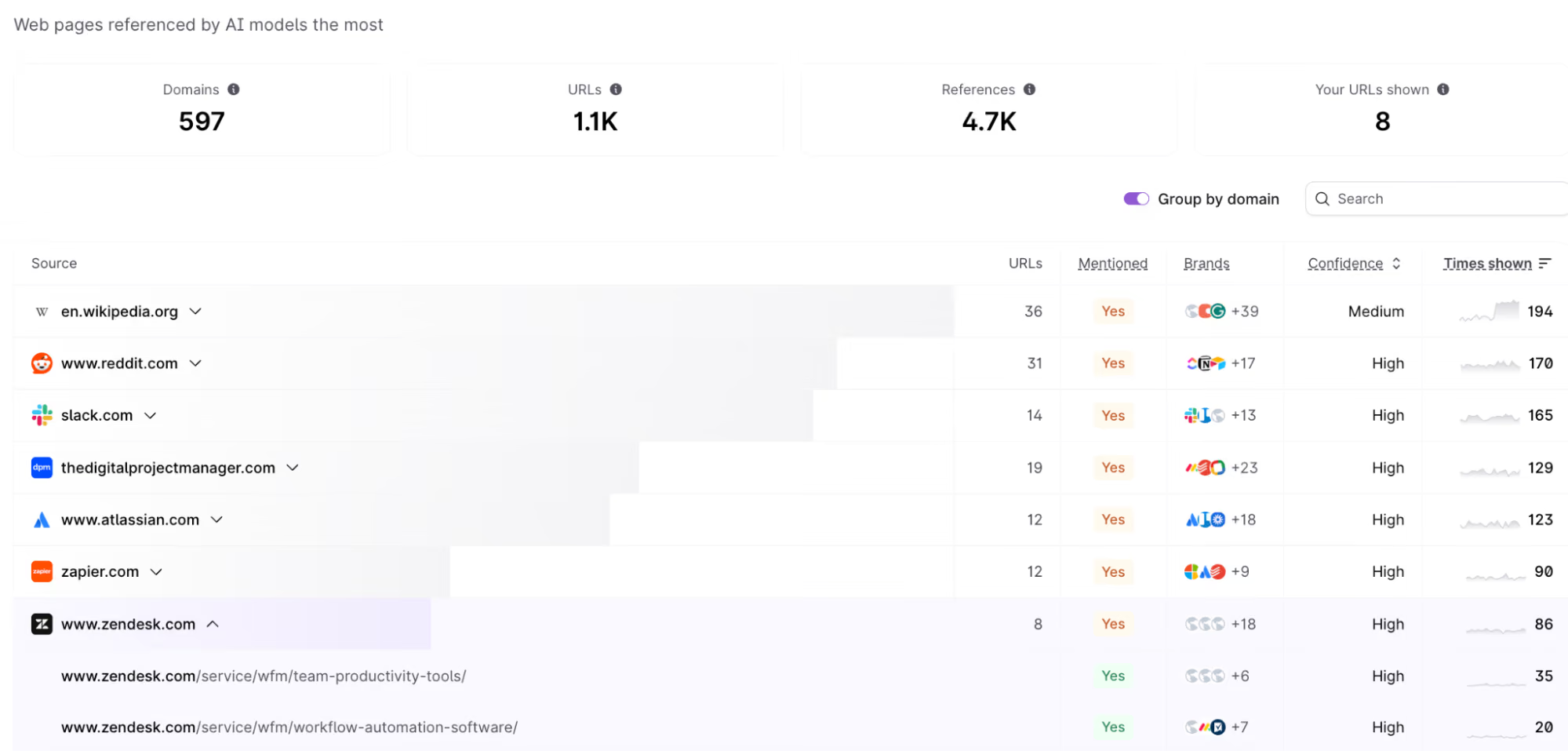
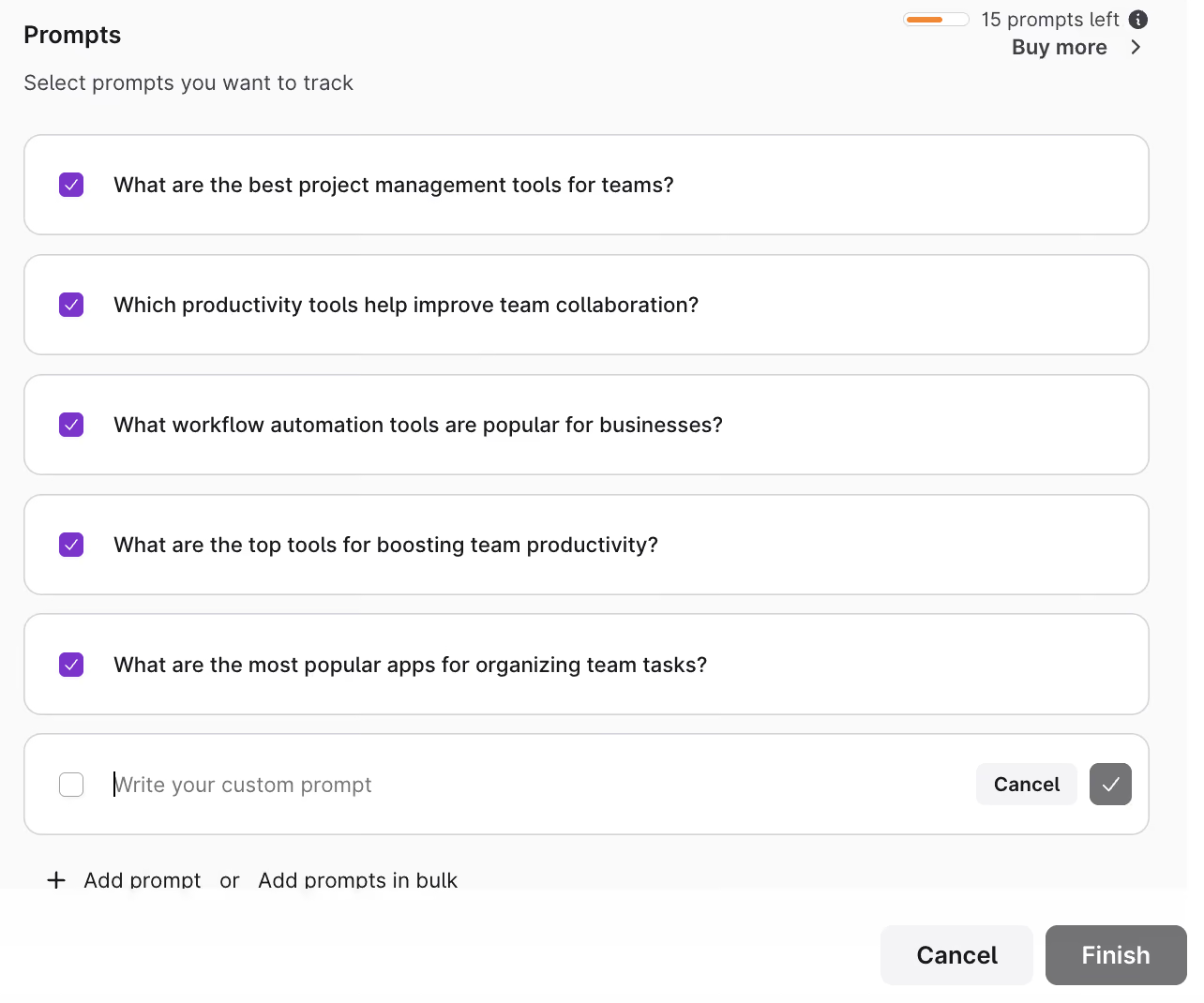
To get started with Surfer, prompt monitoring is the simplest, highest-leverage test.
Just the natural-language questions your customers ask, then watch which models reference you. If you’re not visible, you know exactly which prompts to target — and you can measure progress instead of guessing.
If you want your content to surface in both organic search and AI-generated answers, it needs solid structure, strong coverage, and clear signals that models can interpret.
Surfer gives you a practical way to optimize content for both Google and AI engines. The Content Editor analyzes top pages and shows you the exact terms, questions, and structural patterns they use.
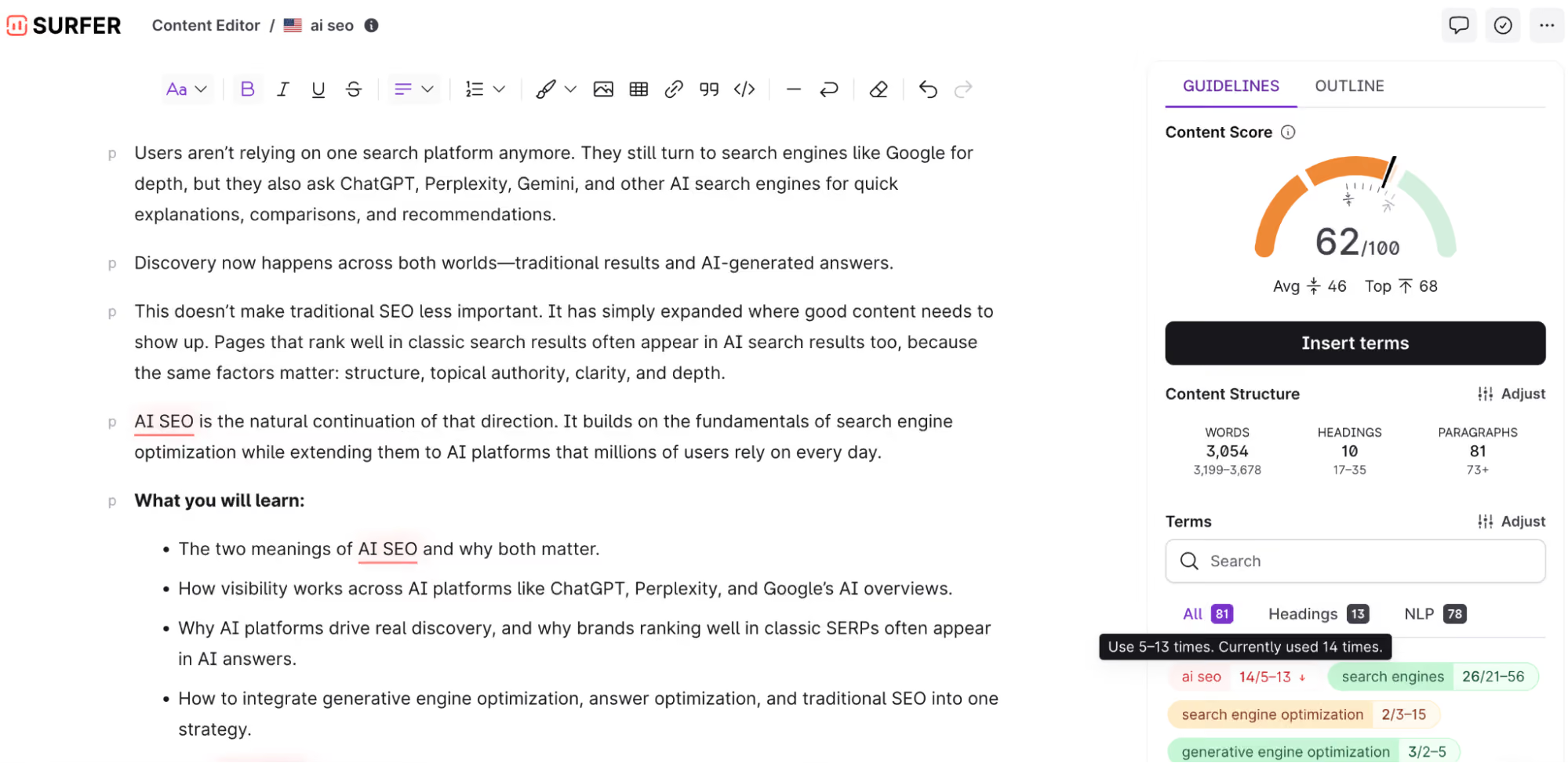
As you write, you get real-time suggestions on what kind of keywords to include and where there are content gaps — making your content clearer for readers and easier for AI systems to extract.
Plus, you get a Content Score, showing you how how well optimized your content is in the eyes of Google compared to your competitors.
The Topical Map is also a great feature for strengthening domain-level relevance. It highlights the topics you already have authority in and the ones you’re missing.
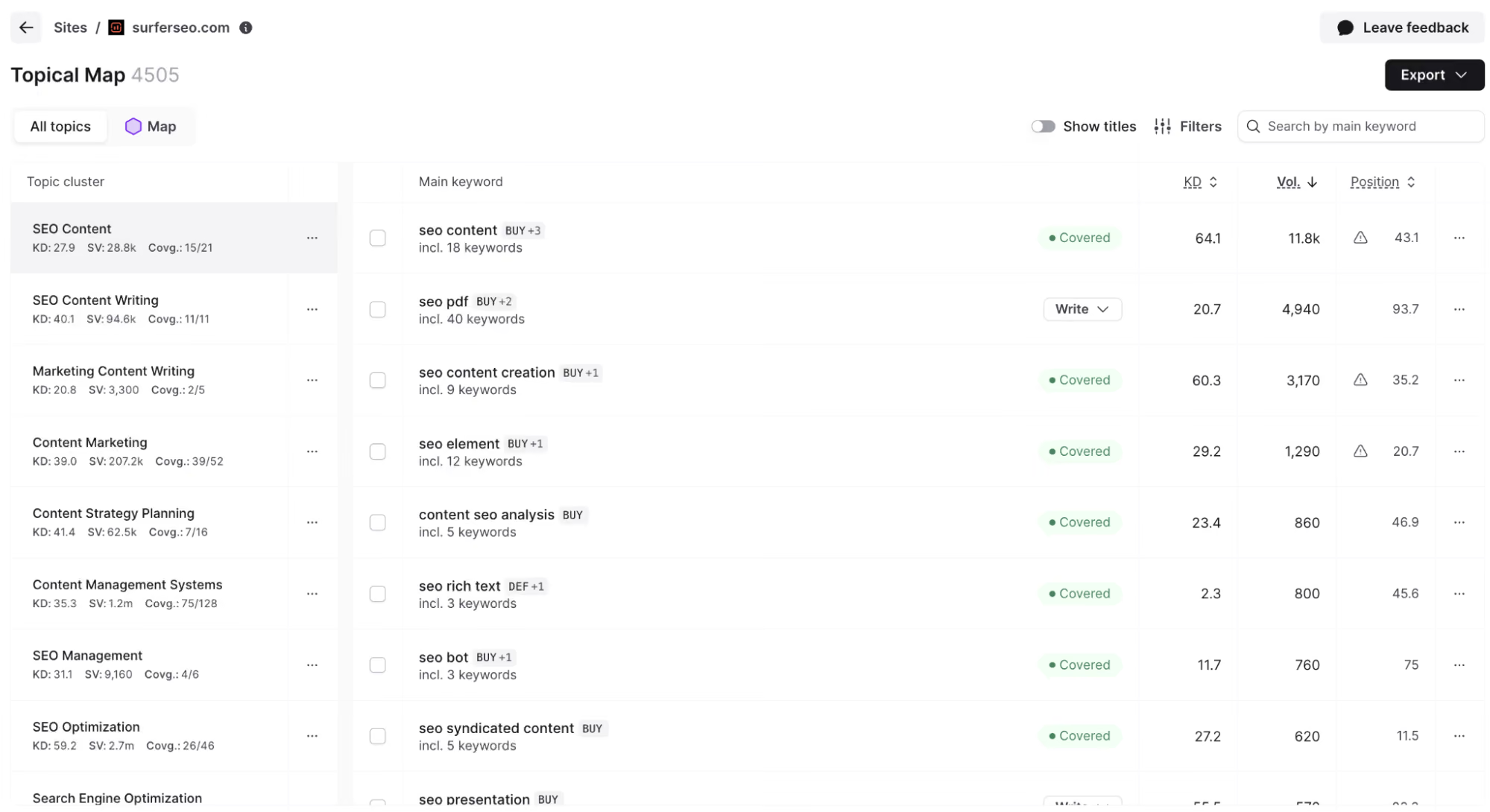
Since AI platforms lean toward sites with consistent topical depth, covering these related subjects improves your chances of showing up in both SERPs and AI summaries.
Here are some more AI content writer tools to help you get there.
Jasper: Structured drafts for AEO/GEO formats
Jasper speeds up early drafting, especially for long-tail and question-based queries. The Optimization Agent uses SEMrush data to build outlines that reflect real search intent and competitive patterns.
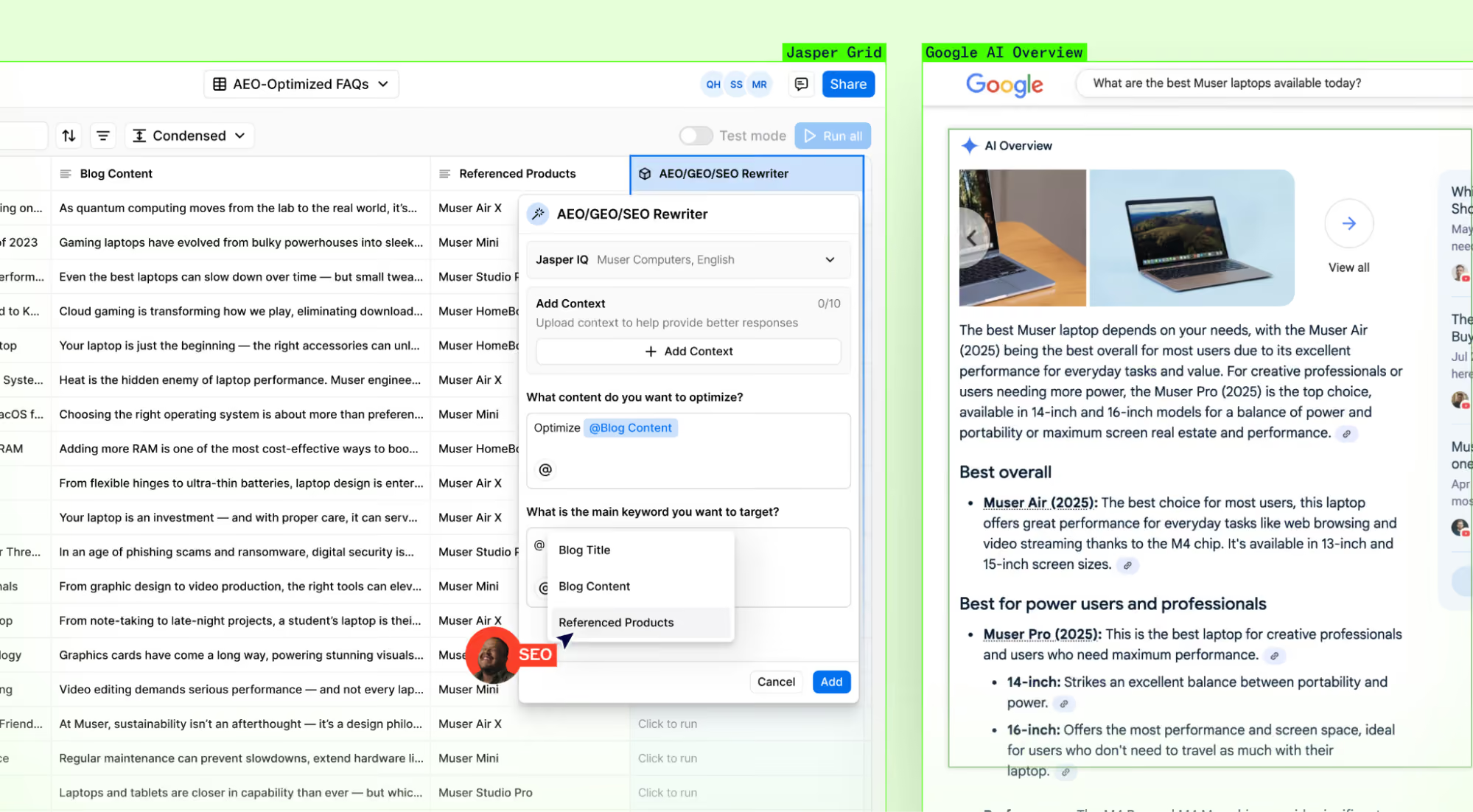
Its AEO/GEO-focused templates are perfect for creating “answer-first sections”, FAQs, comparisons, mirroring formats that appear frequently in AI-generated results. Jasper doesn’t replace editing, but it gives you a clean starting point that’s already aligned with how generative engines structure information.
Gumloop: Automated content workflow and maintenance
Gumloop isn’t exactly a content optimization tool but it’s great for enabling content workflow automation for tasks like research and creation.
This popular workflow automation tool can handle the operational side of AI SEO by generating briefs using SEMrush data, gathering research, monitoring competitors, and flag pages that need updates.
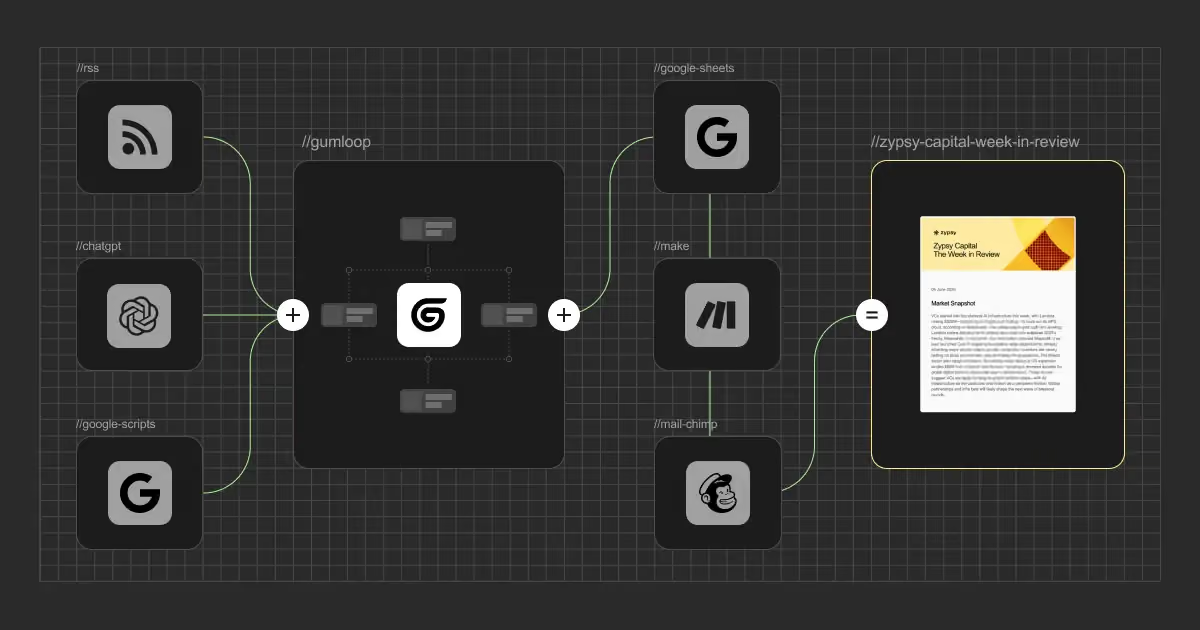
This matters because generative engines favor pages that are kept up-to-date. Gumloop keeps refresh cycles consistent and reduces manual effort, making it easier to maintain the content quality and freshness AI platforms expect.
Traditional SEO tools with AI features
Even with AI search evolving fast, traditional SEO platforms still anchor your strategy. Their newer AI-powered features help you understand intent, competitor depth, and authority — the same things AI engines rely on when deciding which sources to quote or summarize.
Here’s how traditional SEO tools are still helping with AI SEO:
Semrush
Semrush isn’t just for keyword volume and backlink data anymore. Its newer AI-enabled tools make it a powerhouse for intent mapping, content planning, and optimization.
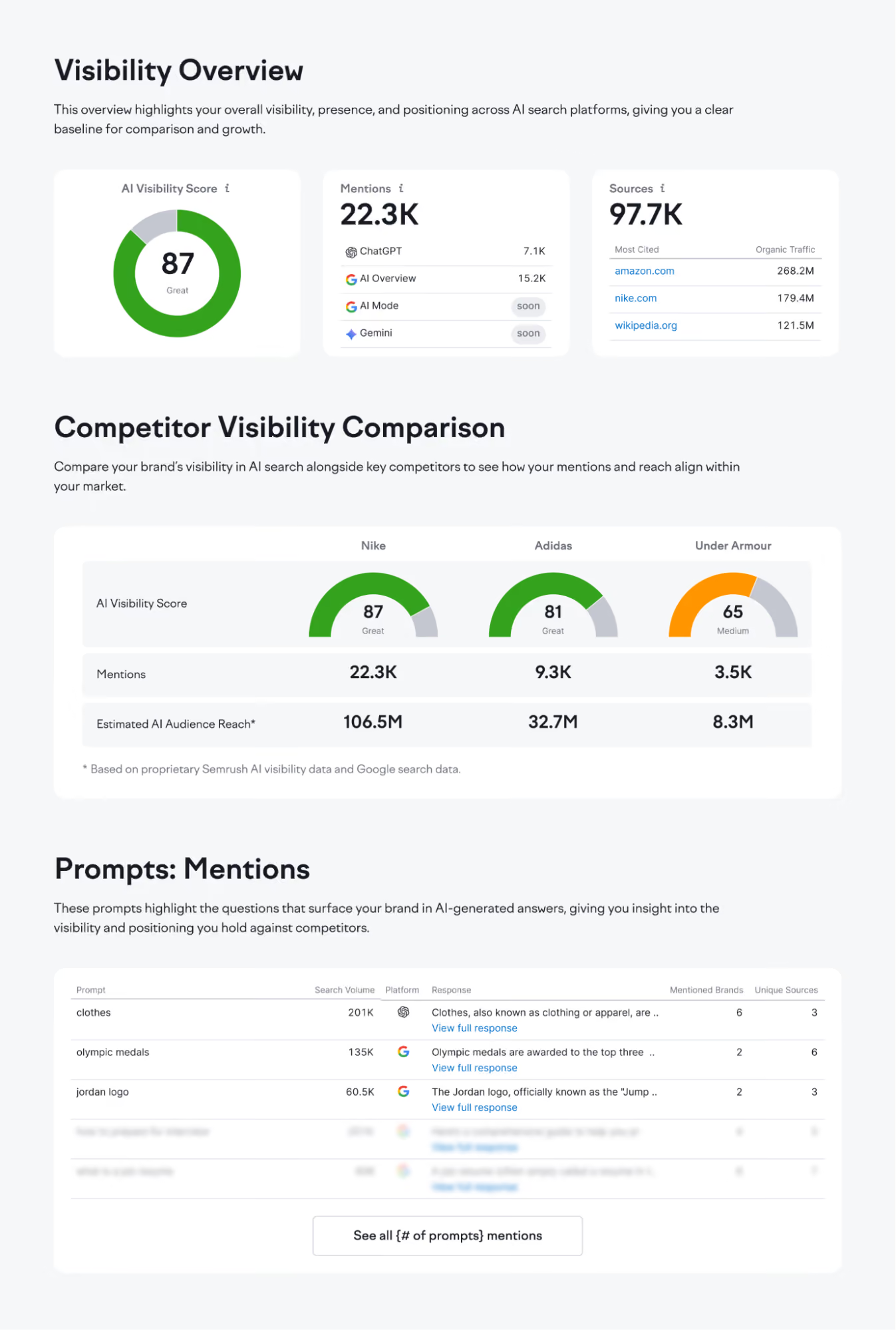
Its AI Visibility tool show which prompts your brand appears for, which domains AI systems pull from, and whether technical issues are holding your pages back. This helps you see the gap between your organic performance and your AI search results performance.
Then there’s the Copilot feature, which pulls data from your audits, rankings, backlinks, keyword gaps, and traffic trends, and turns all of it into clear next steps. Instead of digging through dozens of reports, you immediately see which SEO tasks to focus on for both traditional search and AI discovery.
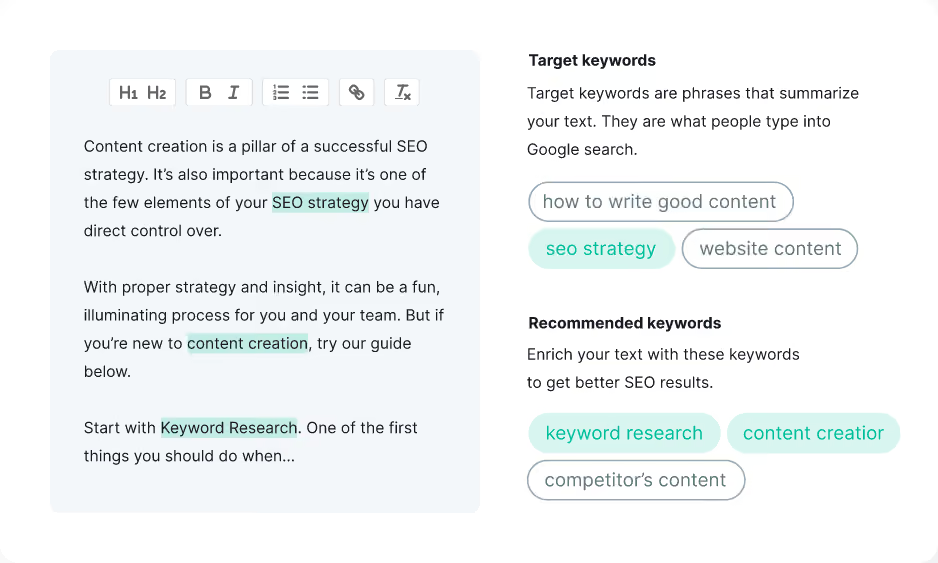
And while you're creating content, the SEO Writing Assistant gives real-time guidance on clarity, structure, readability, and missing subtopics — making your writing easier for both users and AI models to interpret.
Ahrefs
Ahrefs focuses on the parts of search engine optimization that generative systems still rely on: depth, credibility, and topical coverage.
The AI Content Helper evaluates your draft against what’s already ranking, points out missing angles, and suggests improvements that make your page more complete and easier for AI tools to reuse. It’s especially useful when you’re updating older pages or trying to strengthen content that AI search platforms consistently ignore.
Ahrefs’ Content Gap and backlink analysis help you see where competitors have stronger topical depth or more trust-building signals. That matters because both Google and AI-powered systems tend to lean on domains with broader coverage and cleaner authority profiles.
To get the full advantage, pair these traditional SEO tools with GEO-focused platforms—so you can strengthen rankings, expand topical authority, and track how AI engines actually use your content.
Measuring success in the AI search era
Traditional KPIs like rankings, CTR, and relevant traffic still matter—but they no longer capture everything. AI search introduces a new layer of visibility that GA4 or Search Console can’t track, because users often see your brand inside AI-generated answers without ever clicking through.
The new metrics that matter include:
- AI visibility rate: How often your brand shows up in generative answers for the queries you care about.
- Citation frequency: How frequently AI systems pull from your pages.
- Share of AI voice: Your visibility compared to competitors across tracked prompts.
- Brand mentions across AI platforms: How frequently your brand's name appears in AI-generated responses.
- Assisted conversions: Users who discover you via AI, then convert later through organic, direct, or branded search.
These signals matter because AI results influence decisions earlier in the journey. A user may not click immediately, but seeing your brand in a trusted AI summary still drives awareness and shapes later conversions.
Instead of focusing solely on clicks and monthly traffic, it’s time to track how often your brand actually appears in AI-generated answers. For example, what percentage of relevant AI responses include your content?
To get a complete picture, track both sides of search performance. Your website’s SEO metrics and AI visibility. Together, they show how your brand performs across the full modern search experience.
Start optimizing for AI SEO
AI SEO isn’t replacing traditional SEO, it’s simply extending it. To stay visible, brands now need to optimize for target keywords and AI search results simultaneously.
Here’s what matters moving forward:
- AI SEO builds on the same fundamentals: Strong topical authority, clear structure, trustworthy information, and content that solves real user needs.
- GEO and AEO reward early adopters. Once AI engines start citing certain domains for a topic, those sources tend to appear repeatedly.
- AI-driven search is accelerating fast. It currently influences ~6.5% of organic traffic and is projected to reach 14.5% within a year.
- Visibility now happens in two places: Classic search engine results pages and AI-generated answers.
To stay competitive, brands need to:
- strengthen topic clusters
- structure content for easy AI extraction
- track mentions and citation patterns
- maintain high-quality, updated pages
The shift is big, but the core principles haven’t changed: clarity, authority, and user value still drive results. Start optimizing for both worlds now, and you’ll be ahead of where search is clearly moving next.