Back in early 2024, Gartner predicted traditional search engine volume would drop 25% by 2026 as AI chatbots became the default answer layer. We're now in 2026, and that prediction is tracking close to reality.
Ahrefs found that Google's AI Overviews now reduce click-through rates for top-ranking pages by 58%. This is nearly double what they measured just a year prior. On top of that, Datos' clickstream data shows AI tools almost doubled their share of desktop activity between 2024 and 2025, while traditional search stayed flat.
If users are less likely to search on traditional search engines or click through to your site, it's even more important to be the brand the AI mentions.
So, in this article, I'll break down exactly how LLM seeding works and the strategies to help your brand become the one AI cites and mentions.
What is LLM seeding?
LLM seeding is the practice of publishing and distributing content across multiple trusted sources so that large language models (LLMs) like ChatGPT, Claude, Perplexity, etc. can find, understand, and cite your brand when answering user questions. The goal is to get citations and brand mentions in AI-generated answers.
To seed effectively, you first need to understand where AI responses come from. When a model answers a query, it's drawing from two distinct places:
- Parametric knowledge (or training data) — information baked into the model during training, absorbed from sources like Wikipedia, Reddit, and crawled web content. This is what the model already "knows." Take ChatGPT, for example.
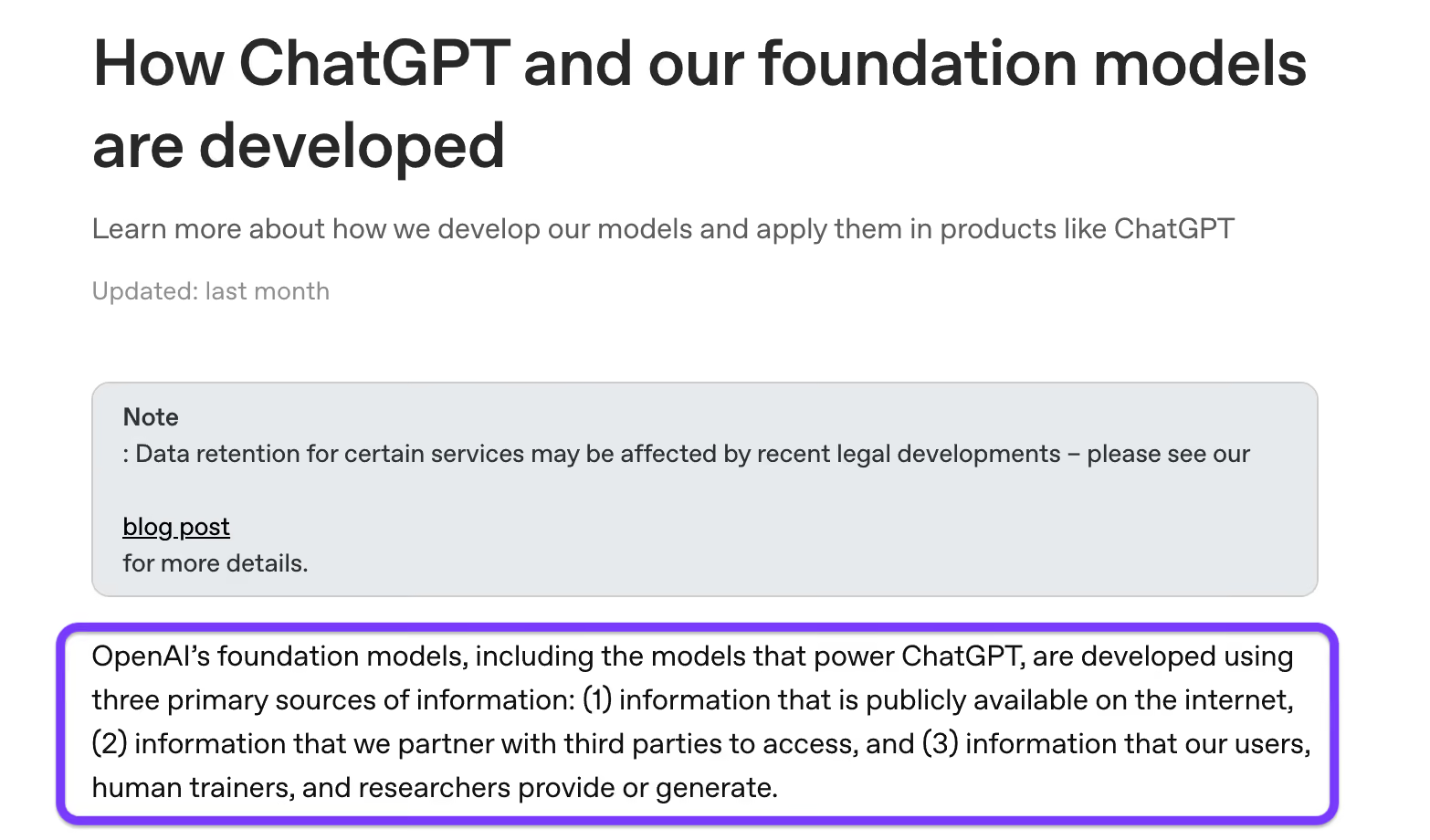
- Retrieved knowledge — real-time content pulled through retrieval-augmented generation (RAG), where the model performs a live web search to supplement its training. This is what the model goes looking for.
This matters because your seeding efforts need to work on both fronts: shaping what models have already learned, and showing up in what they actively retrieve in real time.
So why does this matter enough to build a strategy around? ChatGPT alone now processes over two billion and a half queries every day, and that figure has roughly doubled in under a year.
On top of that, Bain's research found that 60% of searches now end without the user ever clicking through to another site. And 42% of generative AI users are already turning to these platforms for shopping recommendations and purchase decisions.
These are exactly the high-intent moments where brands used to compete for clicks.
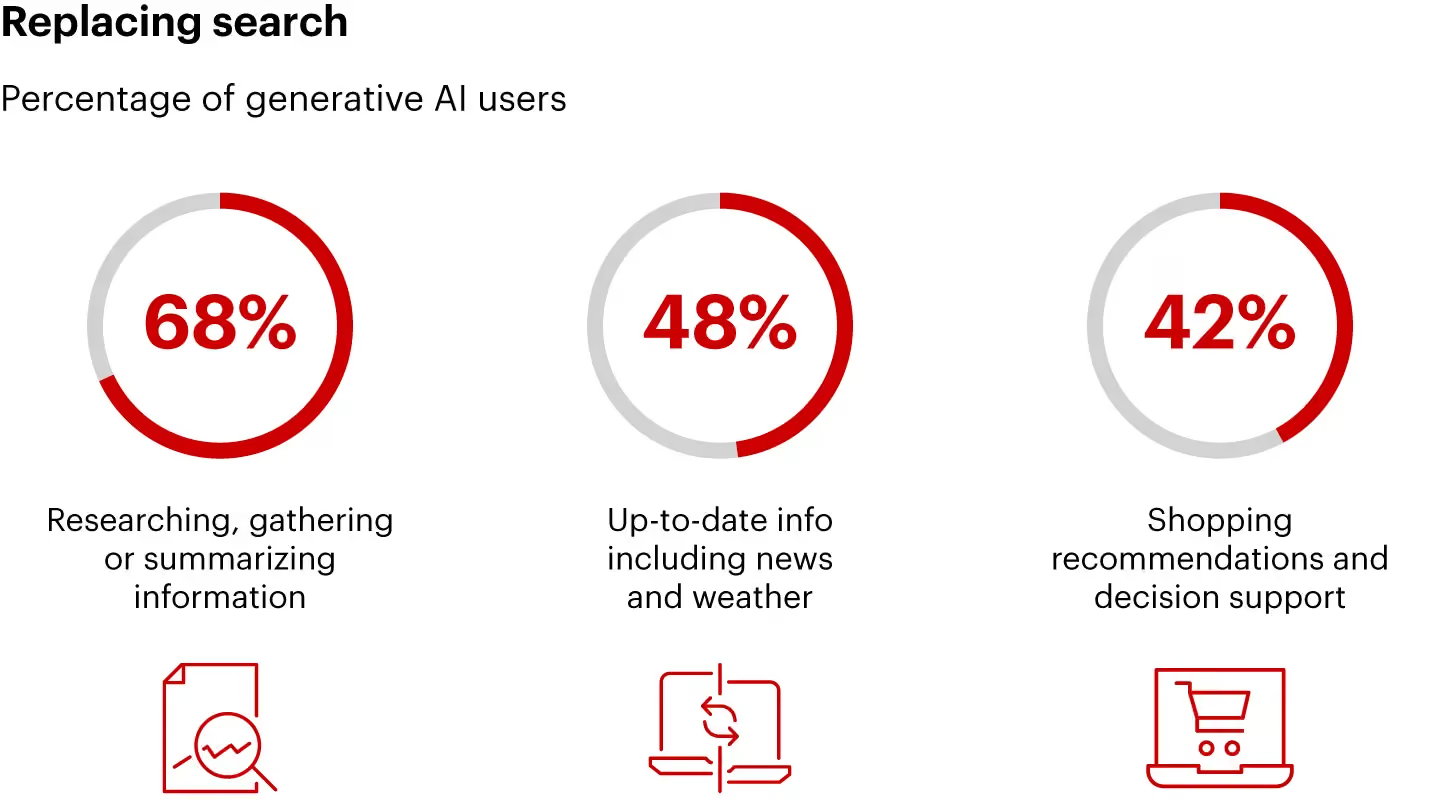
Image via Bain
I was surprised to see that the sources AI relies on are quite different from the pages that usually rank highest on Google.
According to Pew’s browsing-behavior study, the links shown in AI Overviews often come from sites like Reddit, Wikipedia, and YouTube, instead of the usual top-ranking pages.
The brands showing up in AI search results aren't necessarily the ones winning on search. So traditional SEO and LLM seeding can be two different games, and that's what the rest of this article gets into.
Does LLM seeding need its own strategy?
LLM seeding somewhat needs its own strategy, but I'd say it's more of a shift in emphasis than an entirely new discipline.
With traditional SEO, the core focus was always your own website: on-page optimization, site structure, and content quality. Off-page work like link building mattered, but for most brands, it was secondary.
What stands out to me is how little of this actually happens on your own website. Surfer’s analysis of 36 million AI Overviews found that the most-cited sources are mostly third-party platforms like YouTube, Wikipedia, and Reddit, not brands’ own pages. Pew’s browsing study shows the same trend toward community and reference sites.
It means the majority of the work happens off your site, in places you don't directly control. Think of review sites, niche forums, industry publications, community discussions, and social media platforms.
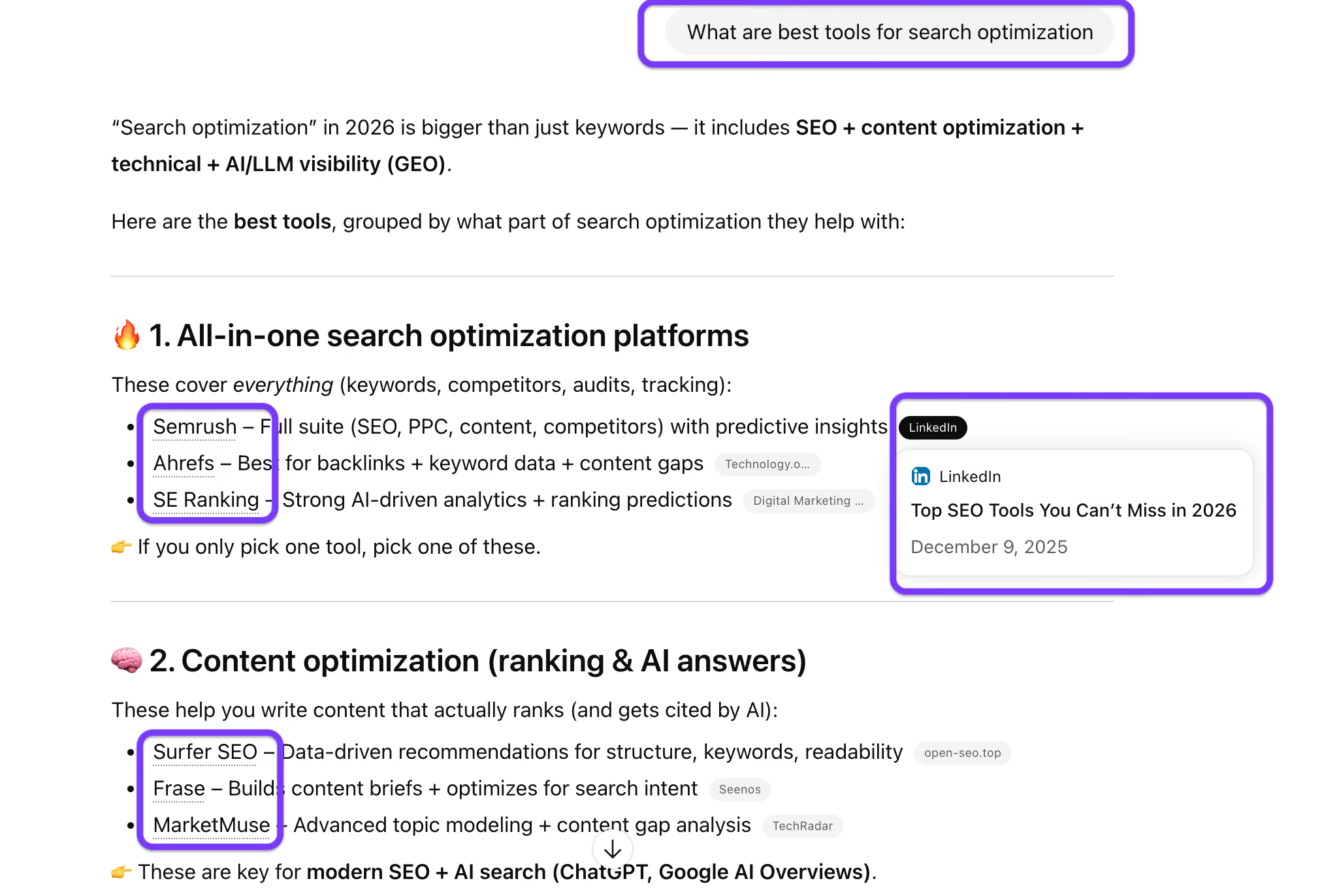
I tested this myself when I asked ChatGPT, "What are the best tools for search optimization?" The brands that showed up weren't cited from their own pages. The answer was pulled from a LinkedIn article, a TechRadar piece, and a Digital Marketing blog, which is a mix of third-party sources that together built the case for each mention.
That said, your existing technical foundations still matter. Crawlability, semantic HTML, clean site structure, and proper robots.txt ensure AI bots can access and parse your content. And if your technical SEO is already solid, you're not starting from zero.
But good technical SEO gets you into the consideration set. Getting from "accessible" to "actually cited" is a different challenge.
Separate the hype from what actually requires a dedicated workflow
Now, a lot of what gets labeled "LLM seeding advice" online is honestly just standard content strategy and digital PR with a new coat of paint. "Create great content and build authority" isn't new. That's what SEOs have always done, and it still matters.
I don't want to overcomplicate something that partly builds on what you already know.
What's different is the prioritization. Things like
- auditing your brand's visibility across AI platforms
- creating content in citation-friendly formats like comparison tables and structured FAQs
- seeding review platforms like G2
- tracking share of voice across AI models
Except for the last one, all of this is not foreign to SEOs. It's just that they've never been the main focus. Now they need to be for LLM visibility.
The Semrush case study is the clearest illustration I've come across of why this matters. LLMs were citing their blog content hundreds of times, yet simultaneously recommending competitors for product queries. Their content was fueling AI responses that pointed users elsewhere.
Once they ran a deliberate seeding campaign focused on product-focused content across third-party sites, affiliate partners, and YouTube, their share of voice jumped from 13% to 32% in a single month. Strong SEO alone hasn't been enough in this case. That's exactly why LLM seeding matters.
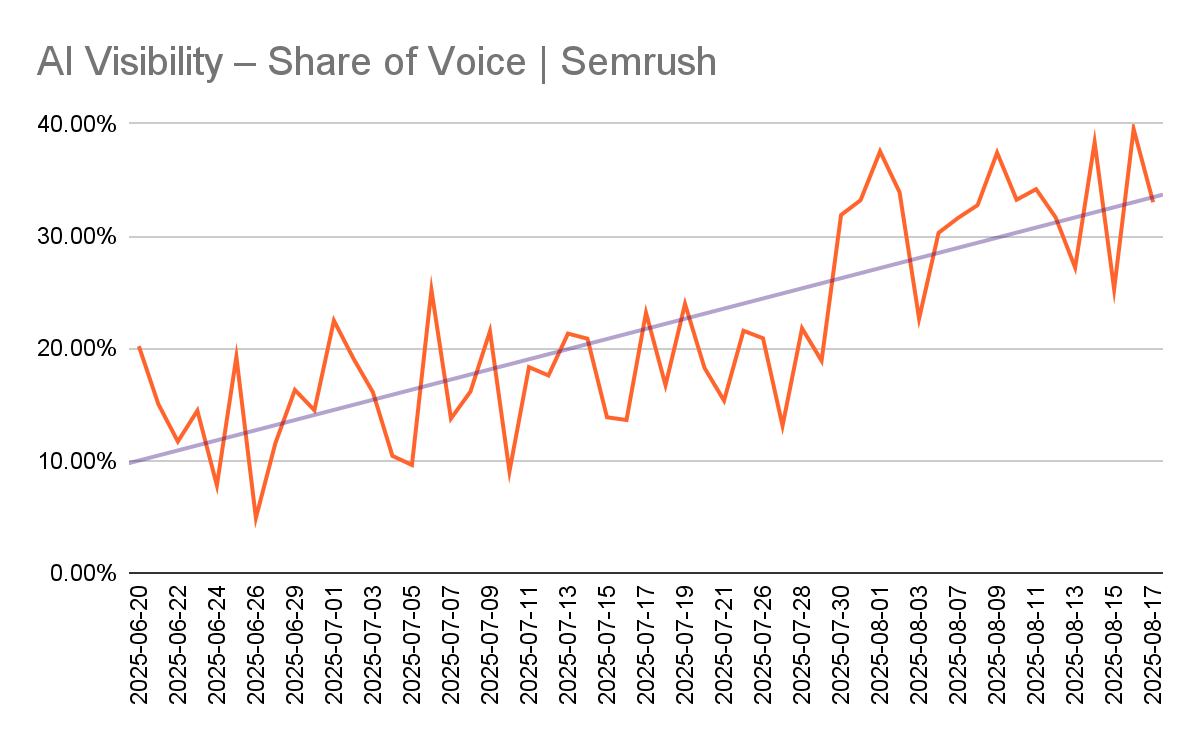
Image via Semrush
So my honest take is that you don't need to abandon your existing content marketing strategy to get started. But you do need to give these activities the dedicated attention they've never had before.
6 tips to ensure efficient LLM seeding
Now, let's move on to the actual tips that help you with LLM seeding.
1. Assess your current AI visibility and find citation gaps
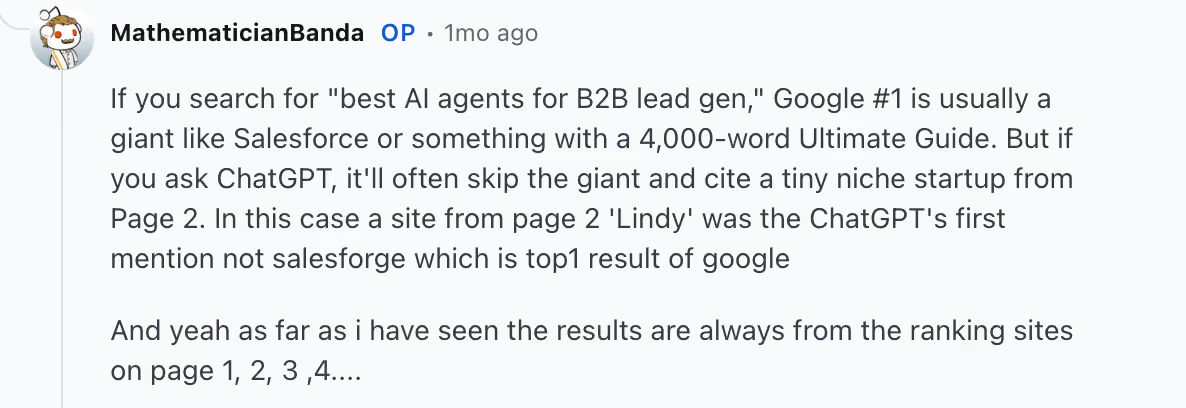
Before anything else, I'd start by just asking the AI directly to see where my brand stands. It's simply because ranking well on Google doesn't guarantee your brand appears on major AI platforms.
The disconnect between Google rankings and AI visibility is something I've seen come up again and again in Reddit threads and discussions on SEO.
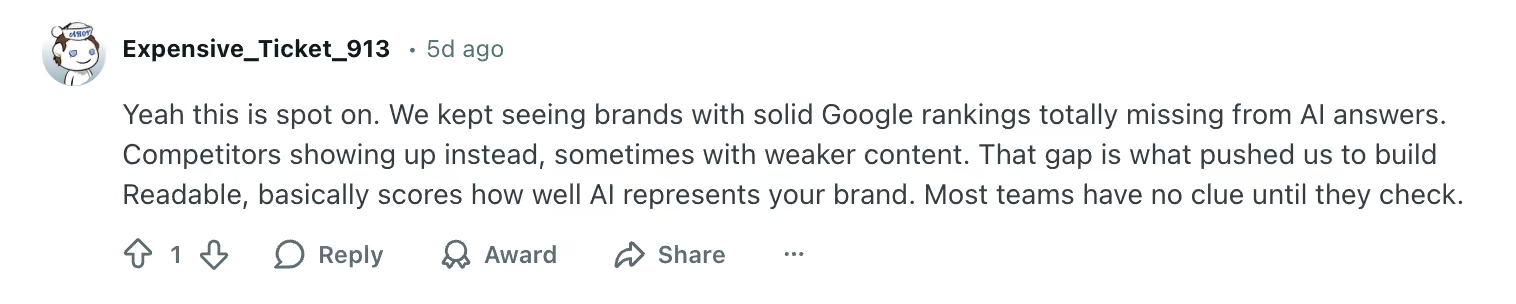
You're either not showing up, or a weaker competitor is getting cited ahead of you, or the AI is describing your brand in a way that doesn't reflect your actual positioning.
Therefore, the only way to see the full picture is by running an audit.
Open an incognito browser and query ChatGPT, Claude, Perplexity, and Gemini with relevant queries to your buyers. Organize them into three buckets:
- Unbranded category queries — "best [category] tools for [use case]." i.e., best project management software for startups
- Head-to-head comparisons — "[your brand] vs [competitor]", i.e., Amplitude vs Mixpanel
- Problem-specific queries — "how to solve [pain point your product addresses]", i.e., how to measure user retention
Run 3–5 prompts per bucket across each platform and log everything. Consider focusing on identifying whether you appear, where you rank relative to competitors, how the model describes you, and which sources it cites.
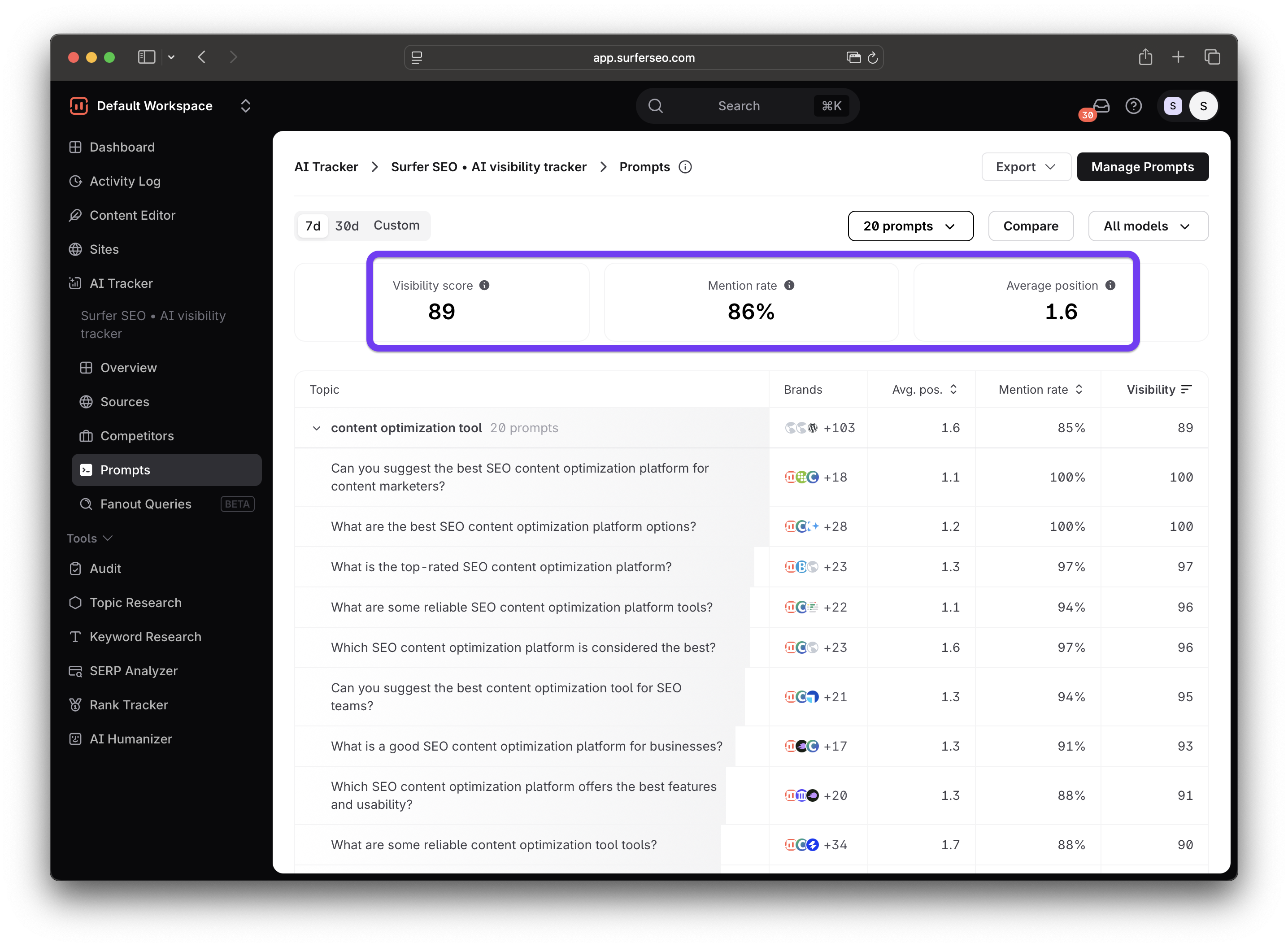
Handling this manually across four platforms and three prompt groups quickly becomes overwhelming, and checking once only gives you a brief look. Surfer’s AI Tracker automates this process.
You just import the prompts you want to track, and it shows your mention rate, your average answer position, and a combined visibility score across ChatGPT, Gemini, Perplexity, and Google’s AI features.
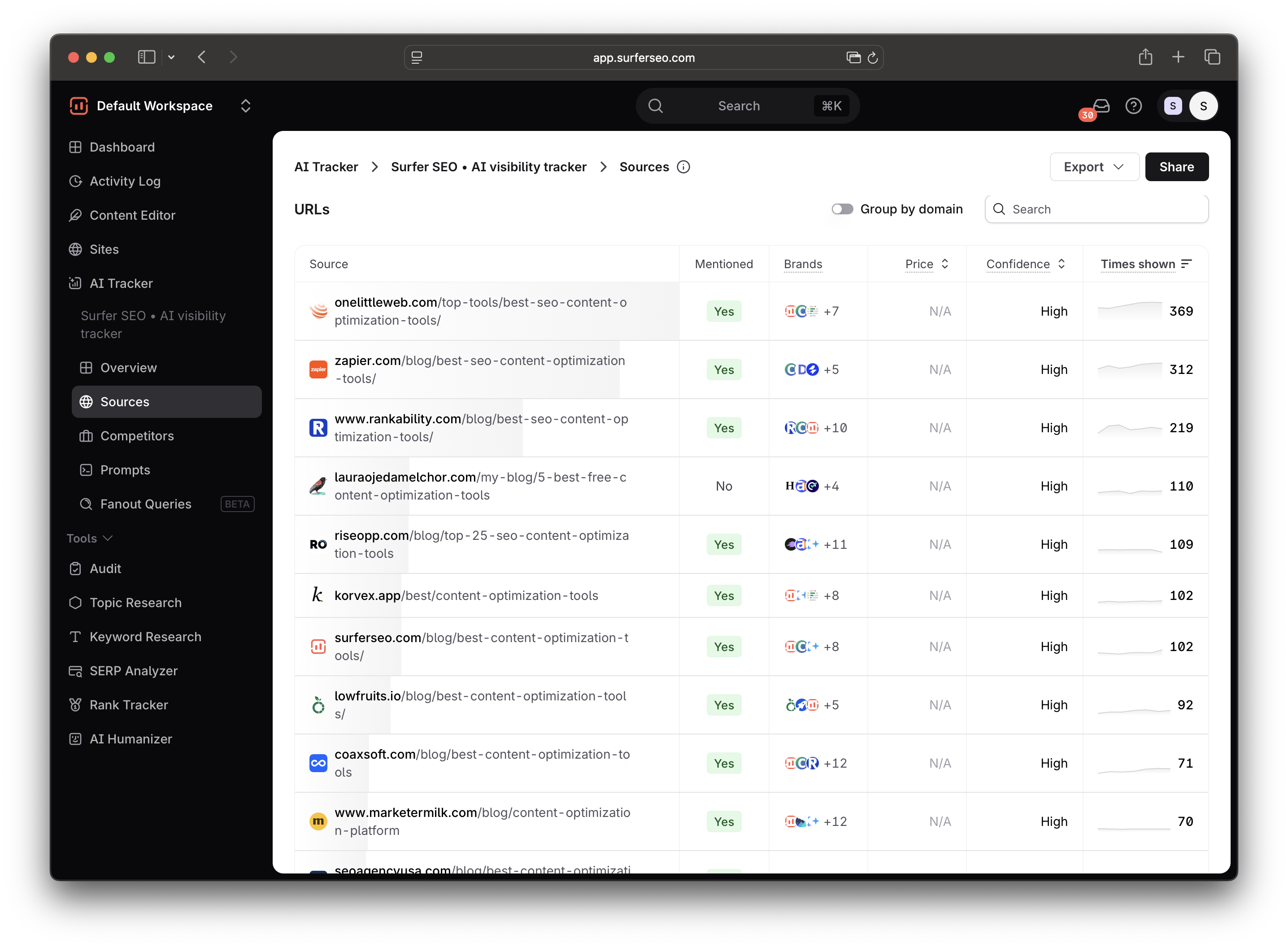
It also lists the exact sources each engine cites and highlights which competitors appear alongside you. This way, you get an ongoing baseline to measure your progress month after month.
2. Publish cite-worthy formats: comparisons, original data, and reviews
The next thing I'd focus on is the type of content you're publishing. Specifically:
- Comparison content — head-to-head breakdowns, alternative roundups, "best of" lists with structured entries
- Original research — proprietary data, surveys, benchmark reports with transparent methodology
- Reviews and social proof — third-party validation on platforms AI models actively pull from (i.e., G2, Capterra, etc.)
These three formats consistently earn the most citations, and the data backs it up.
- Omniscient Digital's analysis of over 23,000 AI citations found that 57% of branded query citations go to reviews, listicles, and social proof content.
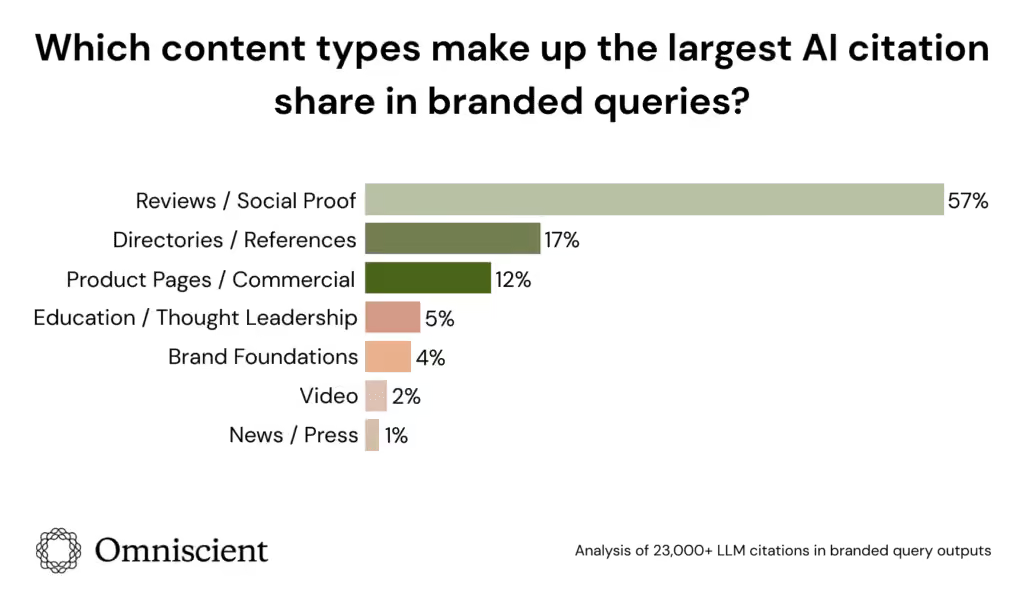
Image via Omniscient
A peer-reviewed study from Princeton and Georgia Tech found that adding statistics to content improves AI visibility by 41%. This is the single most effective optimization technique they tested.
Personally, I think the reason they work come down to the same thing: AI models are risk-minimizing systems.
They'd rather cite a number from a named study or a review from a third-party platform than repeat an opinion they can't verify. Give them something attributable and structured, and they'll cite it.
This means how you format matters just as much as what you publish. Lead with direct, quotable answers, use descriptive headings that match how people ask questions, and organize each section around one clear idea.
This is where Surfer's Content Editor really proves its value in your workflow. In the Write & Optimize view, it not only highlights the SEO entities you should include, but also points out what to add for AI search.
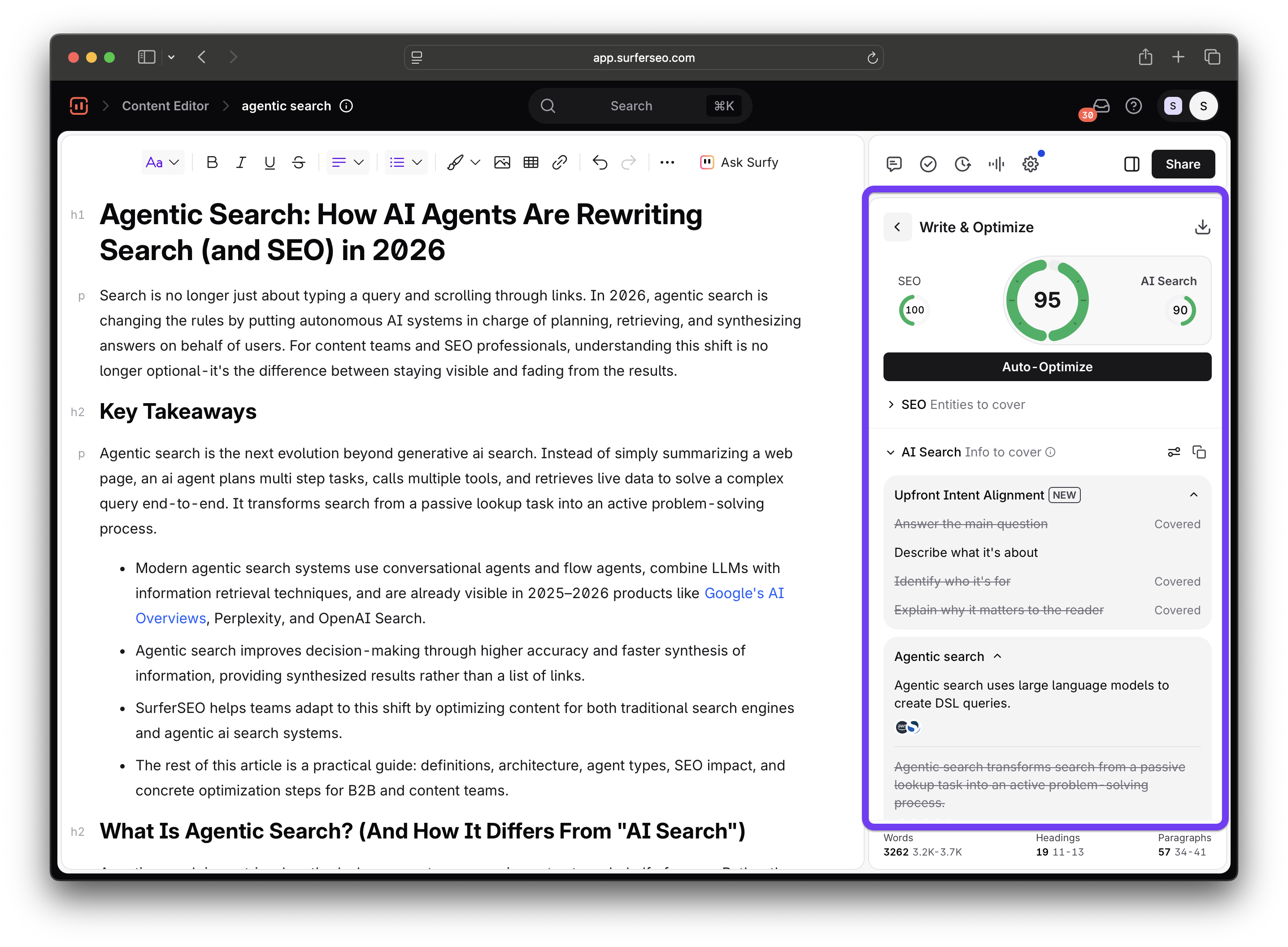
It shows you the key facts and entities that are common in already-cited pages on your topic, and compares them to what you have in your draft.
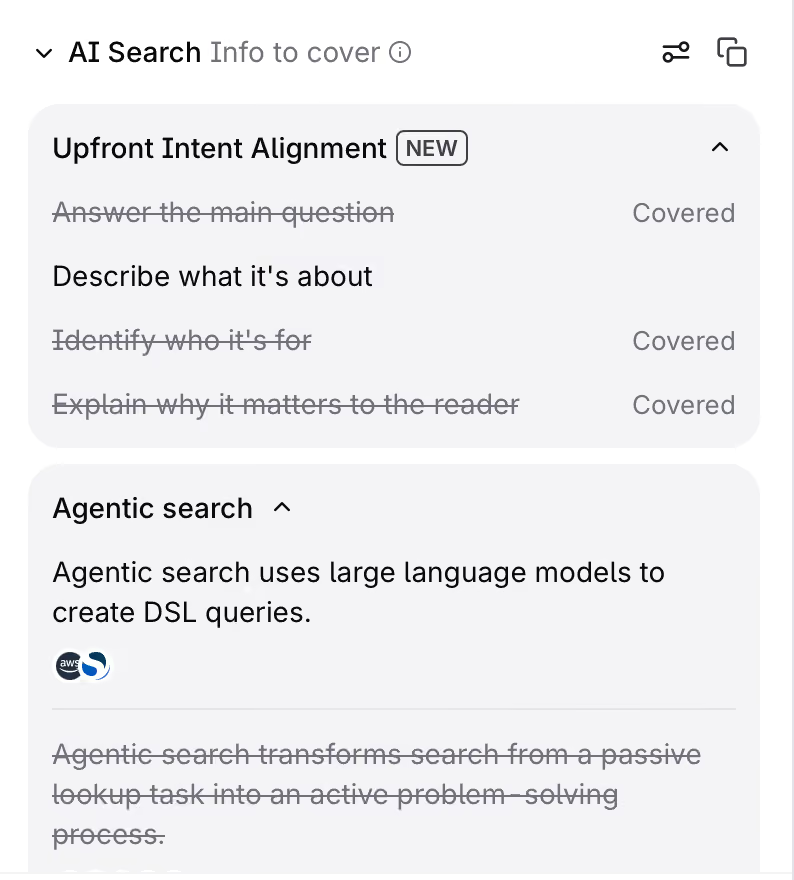
Instead of guessing if you have enough detail, you can spot any gaps and fill them before publishing.
3. Seed the platforms and channels LLMs trust most
Where you publish content matters just as much, because LLMs don't pull from everywhere equally.
In this case, I'd recommend investing your marketing efforts in channels such as YouTube, Reddit, and highly trusted review platforms like G2 and Capterra for maximum LLM pickup.
When I looked into which domains dominate AI citations, the concentration was more extreme than I expected. Surfer's analysis of 36 million AI overviews found that just three domains account for the majority of citations:
- YouTube — ~23.3% of all AI Overview citations
- Wikipedia — ~18.4%
- Google-owned domains — ~16.4%

That's nearly 60% of all citations concentrated in three places. Everything else, including your own site, competes for the remaining 40%.
Reddit sits at 9.37% in that same dataset, which might not sound like much until you look at the directional trend.
Tinuiti's Q1 2026 data shows Reddit citation share grew at least 73% across commercial categories, including technology and electronics, between October 2025 and January 2026. And for Perplexity specifically, Reddit accounts for 24% of all citations.
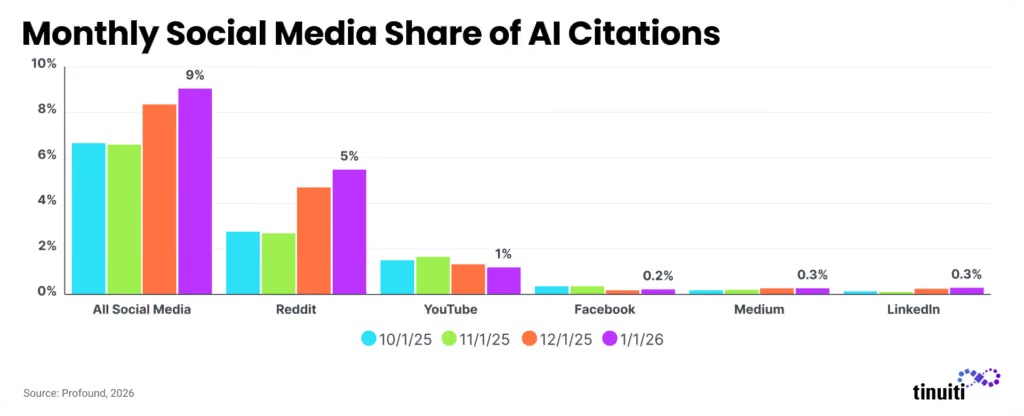
Image via Tinuiti
But for a very long time, Reddit has already dominated Google's product-related search results because users actively seek it out for authentic opinions. This is actually the broader point I keep coming back to. It's providing valuable content where buyers are already asking questions. The AI visibility is almost a byproduct.
The same goes for review platforms.
For SaaS brands, building presence on G2, Capterra, and Trustpilot has always been standard pipeline practice. Nevertheless, it turns out domains with active profiles on these platforms are also 3x more likely to be cited by ChatGPT.
4. Reinforce your brand entity with consistent messaging everywhere
What I mean here is less about where you publish and more about how consistently your brand shows up across all of it.
Surfer's study of 289,105 URLs backs this up with a 0.41 correlation between brand mentions on cited sources and AI recommendation frequency. And mentions in blog posts showed the strongest correlation of any content type.

The more consistently and specifically your brand is described across the web, the more confidently AI models cite it.
In practice, this means:
- Fill every information gap with specific, official content — a detailed about page, well-structured FAQs, comparison pages, and data pages that give models something concrete to cite
- Use consistent language everywhere — clear value proposition, same category description, same use cases across your site, review profiles, partner pages, and PR coverage
- Build presence on entity-anchor platforms — Wikipedia, Wikidata, Crunchbase, and LinkedIn are the sources AI systems cross-reference to verify brand identity
- Maintain Organization schema markup so AI systems can reliably parse your entity information
The last point I'd add is that this is ongoing work, not a one-time setup. As your product evolves, your canonical content needs to evolve with it. Those updates need to ripple out to your distributed presence across review profiles, partner sites, industry publishers, and earned media.
There’s a well-documented dynamic behind this that researchers call a “data void”. When there isn’t much reliable information on a topic, models fill the gap with whatever is available, which can include low-quality, outdated, or misleading content.
A peer-reviewed study in the Harvard Kennedy School Misinformation Review looked at this issue with Kremlin-linked disinformation. The researchers found little proof that chatbots were being intentionally influenced by planted content. Instead, the main problem was information gaps. When there were few credible sources, unreliable ones were more likely to appear in AI-generated answers.
The same thing happens with brands. If your brand does not clearly explain what it does, who it serves, and what it is not, AI models will fill in the blanks with whatever information they can find.
That is why information gaps can hurt your brand. Fixing false information wherever you find it is just as important as building your presence. This includes wrong details on third-party sites, old descriptions on review platforms, and inaccurate comparison posts.
5. Build your brand foundation and roll out a multi-channel strategy
All the tips above only work if your foundation content is solid and your presence is consistent across channels.
Think of it this way. Seeding Reddit, earning reviews, and publishing original research all have to point somewhere.
That somewhere needs to be a canonical page on your own site that clearly explains what you do, who it's for, how it works, and where you fit in the category. Implement clear headings, FAQ content in natural question format, and a value proposition that maps to real buyer jobs-to-be-done.
Once that's in place, use your audit findings to prioritize where to expand:
- No Reddit presence? That's urgent given its citation dominance
- No reviews on G2 or Capterra? Launch a review generation campaign
- Competitors dominating YouTube for your category? Produce walkthroughs or partner with creators
What I think gets underappreciated is that your content mix also needs to match where buyers are in their journey, not just what's easiest to produce. Omniscient Digital's analysis of 43,000+ LLM citations found the citation mix shifts dramatically by intent.
Educational blogs account for 70.1% of citations at the "problem unaware" stage. But as buyers move toward a purchase decision, social proof, such as listicles, reviews, and forums, dominates at 51% of citations.
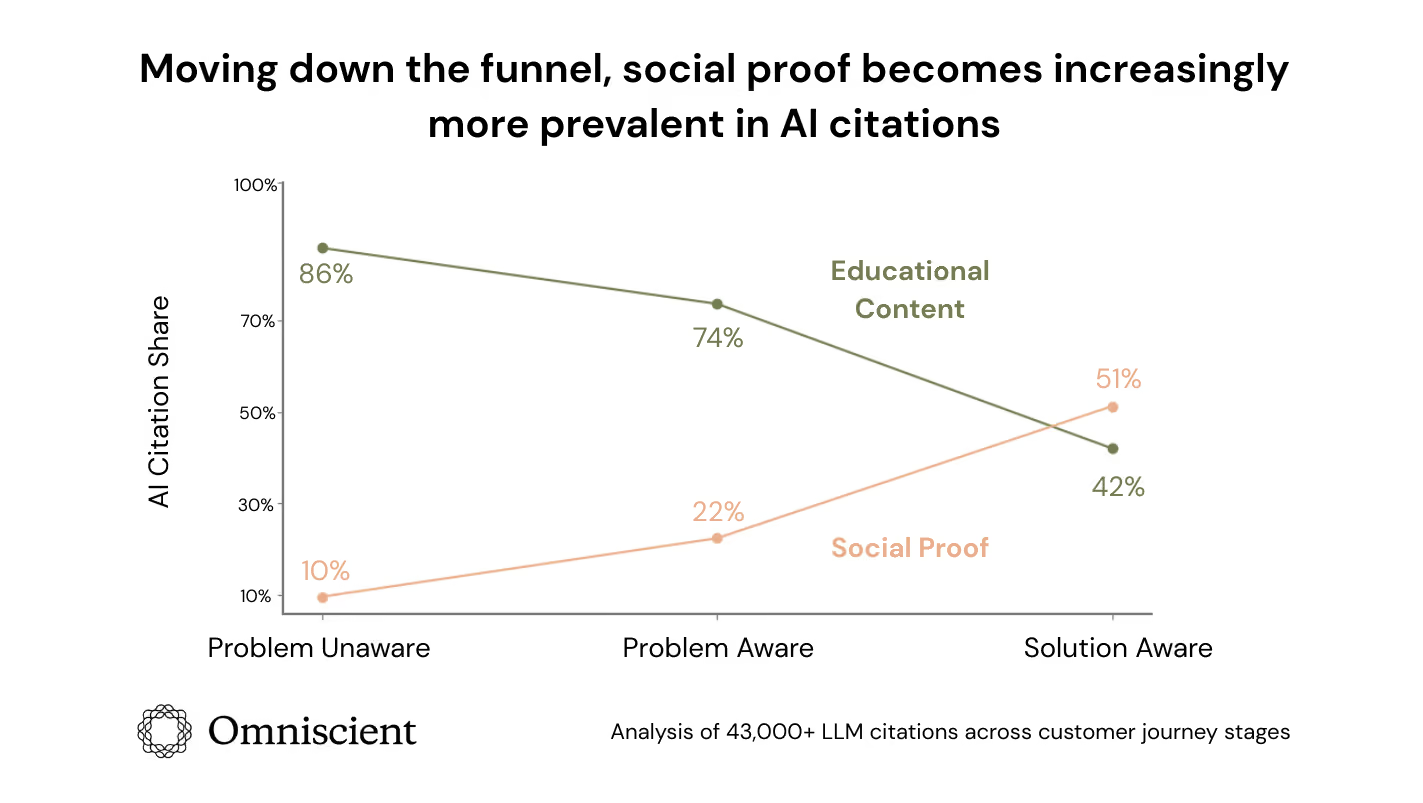
Image via Omniscient
Therefore, in practice, that means distributing across:
- Text — blog posts, guest articles, forum contributions across every intent stage
- Video — YouTube walkthroughs and creator reviews that earn citations closer to purchase
- Social — LinkedIn posts and X threads that build entity signals and community presence
- Reviews — G2, Capterra, and industry-specific platforms that drive citations at the decision stage
The last thing I'd say is to set realistic expectations.
This is a compounding strategy, not a campaign with an end date. Early signals like mentions appearing in audits, branded search upticks, can show up within 30–90 days.
But sustained citation growth requires consistent effort. The brands that win AI visibility aren't the ones that ran a seeding sprint. They're the ones who made this a permanent layer of how they show up.
6. Monitor AI mentions, branded search trends, and share of voice
The whole point of building this presence is to know if it's working, and measuring AI visibility requires a different lens than what most teams are used to.
To track what's gaining traction, I'd build a stack that covers a few different angles:
- Monthly manual prompt testing across ChatGPT, Claude, and other AI tools in incognito using the same prompts to track brand mentions and citations. This is still the most reliable signal of LLM seeding success
- Google Search Console branded query data — impressions versus clicks. Growing impressions alongside declining clicks is the signature pattern of LLM influence
- Google Analytics direct traffic trends over 3–6 month periods as a secondary confirmation
- Platform-level share of voice — your visibility can vary dramatically between models, and tracking at the platform level tells you where to focus distribution efforts
The biggest mistake I keep seeing is using traffic as the primary signal when it no longer applies, even for measuring traditional SEO efforts.
There are multiple reasons for that. Visibility in AI tools may or may not drive direct traffic at all, and that's actually fine. It can be the case where users see your brand in an AI answer, make a mental note, and search for you directly days later, skipping the organic click entirely.
If you're seeing growing branded search and direct traffic, AI is likely sending you brand awareness you're not fully crediting. It's worth checking before assuming your content is underperforming.
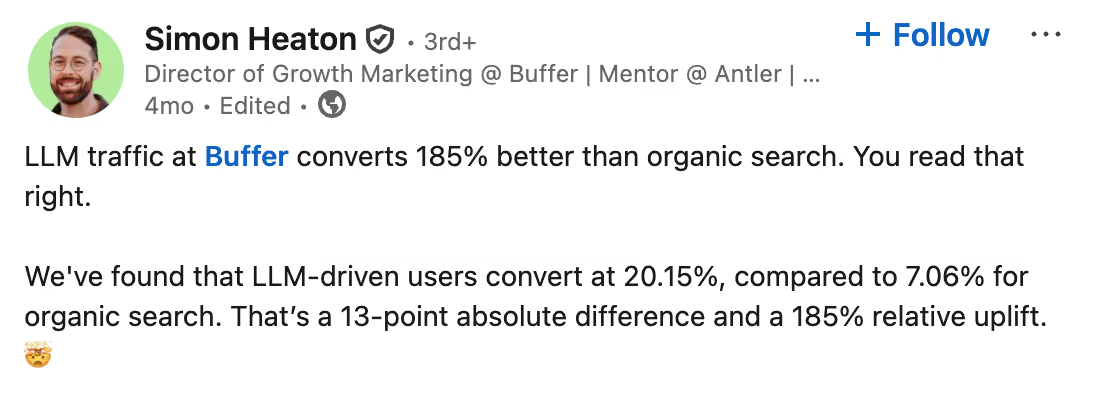
But when AI results do generate clicks, they tend to be unusually qualified, with conversion rates running significantly higher than organic search.
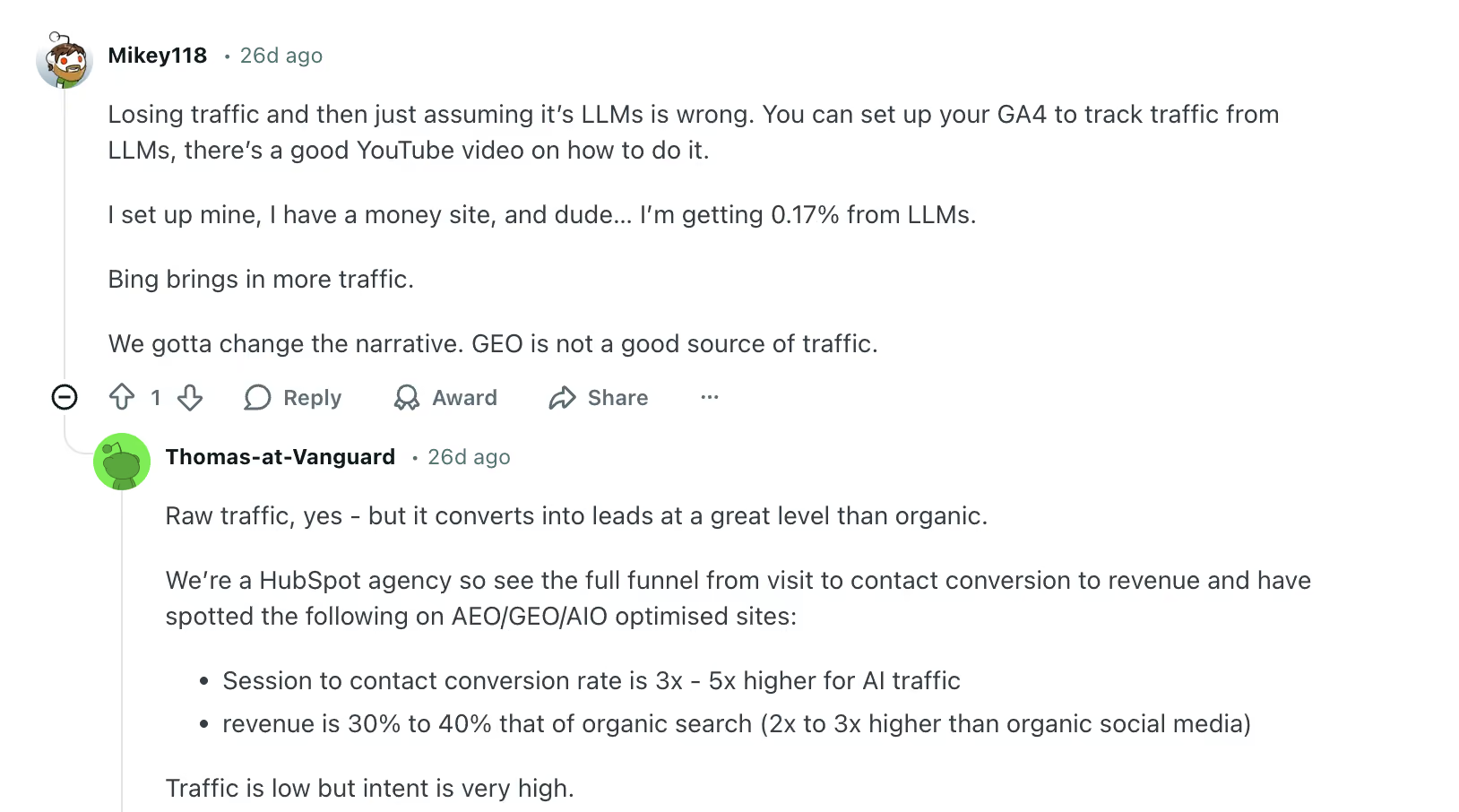
Buffer published their own numbers on this, and the 185% conversion uplift was significant enough to reframe how their growth team thinks about the channel entirely.
Another thing that's worth setting expectations on is how AI outputs and citations are non-deterministic and volatile. Research shows 40–60% of LLM sources change month to month.
Therefore, conducting a one-off audit will only provide you with a snapshot, not a trend. A fixed set of 20–50 buyer-intent prompts, run consistently across platforms and logged over time, is still the most reliable method available.
Turn visibility data into your next seeding priorities
You can think of everything covered in this article as a loop, not a checklist. You audit, you seed, you monitor, and then the data tells you where to go next. If a competitor consistently shows up for queries you should own, reverse-engineer where they're being cited and build more structured alternatives.
Something from our own research at Surfer that I think puts the long-term case well.
Pages that rank for multiple fan-out queries (aka the related sub-queries AI models generate when building an answer) are 161% more likely to be cited in AI Overviews than pages ranking for the primary query alone. The more ground your content covers across related queries, the wider the surface area AI models have to pull from.
That's the compounding mechanism, and it's why starting early matters.