Topical authority is your website's recognized expertise on a specific subject in the eyes of search engines. When Google sees that your site thoroughly covers a topic through interconnected, high-quality content, it is more likely to rank your pages above competitors who only scratch the surface.
Our analysis of roughly 253,800 search results found that page-level topical authority is one of the strongest on-page signals associated with higher rankings. It is often more impactful than overall domain traffic volume.
Below, we break down what topical authority is, why it matters, what Google has confirmed about it, and six strategies you can use to build it.
What is topical authority?
Topical authority in SEO measures how knowledgeable and trustworthy search engines consider your website on a given subject.
Google and other search engines evaluate your topical authority to gauge your expertise, which directly influences how your pages rank for related queries. A site with strong topical authority in its niche is far more likely to appear near the top of search results for terms within that niche.
The more comprehensive and helpful your content is on a subject, the more search engines will reward you with visibility and traffic.
Google's ranking systems rely on core signals from your website. According to its Search Quality Rater Guidelines, this includes a page's E-E-A-T score, covering experience, expertise, authoritativeness, and trustworthiness.
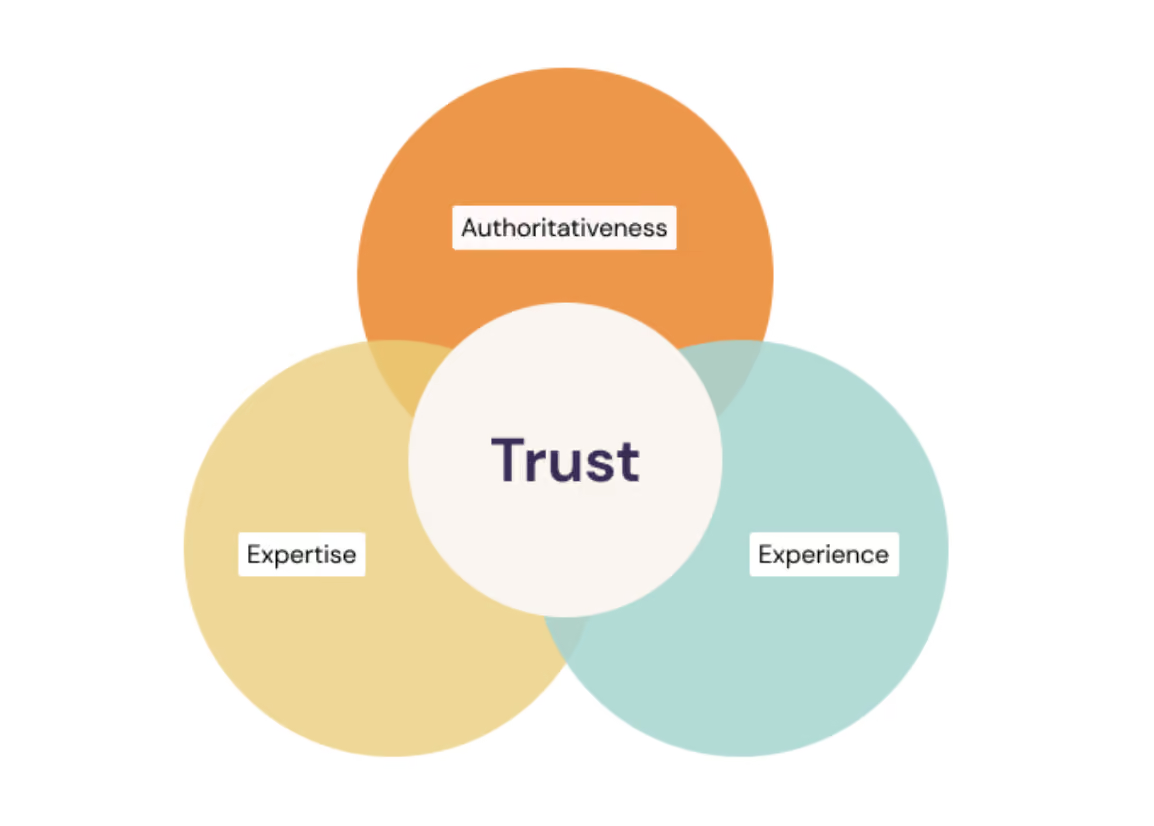
To earn topical authority, you need to demonstrate to both users and search engines that your site is a reliable, in-depth resource on a particular subject.
Take Sprout Social as an example. The company built its blog around one core subject: social media. The blog uses semantically related topics to cover the subject comprehensively, achieving topical authority through breadth and depth. More on semantic SEO later.
It covers a wide range of social media topics, including branding and creative, community management, influencers and social listening.
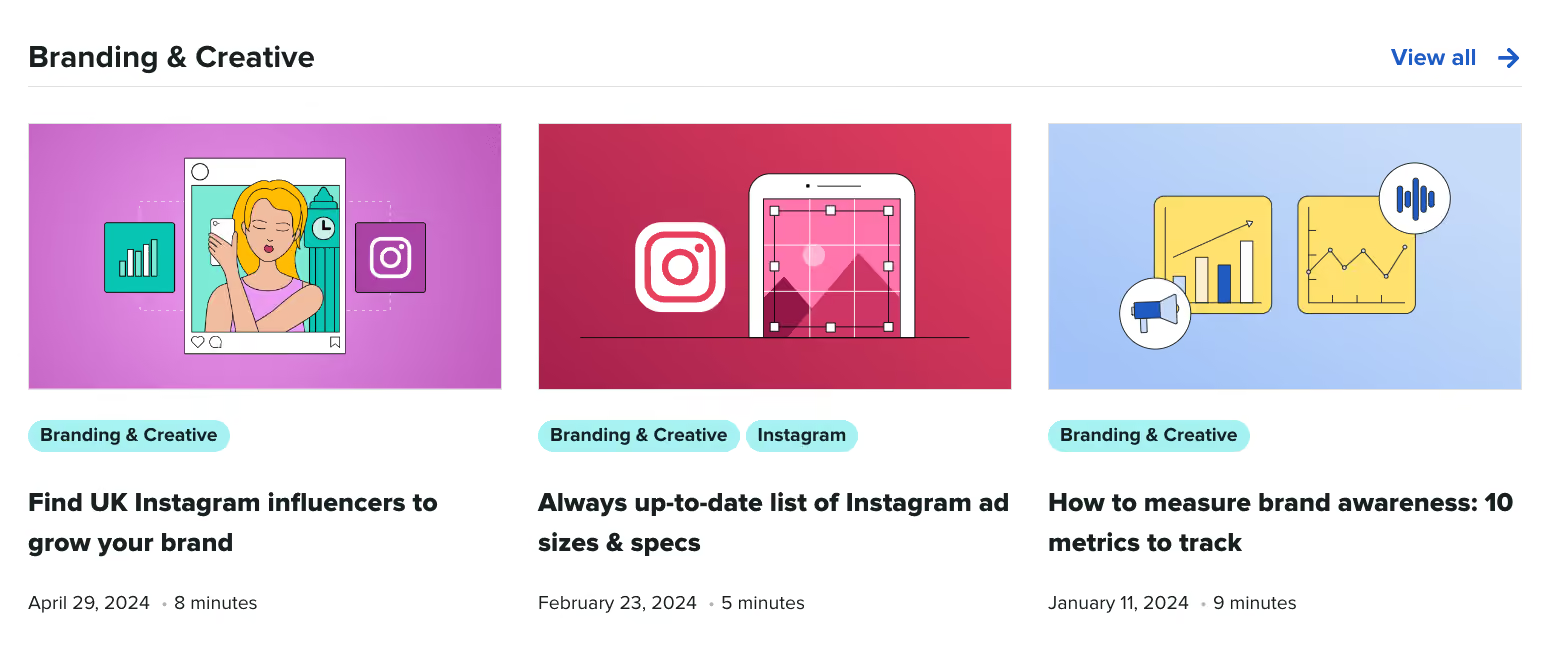
As you can see, Sprout Social doesn't focus solely on one area of social media, but instead uses a wide variety of resources to cover these topics and provide reliable information about social media marketing.
Topical authority vs. domain authority
There are two types of authority in SEO: topical authority and domain authority. While they are similar concepts, they are not the same thing.
Both play an important role, but whereas topical authority is used to demonstrate your expertise on a specific subject, domain authority provides a holistic view of your site's overall standing.
In other words, topical authority establishes your site as a reliable resource in a particular niche. Domain authority is a measure of your site's overall competitiveness in a broader digital sense.
A key difference is that you can build topical authority on a new site relatively quickly by publishing comprehensive content in a focused niche. Domain authority builds gradually through backlinks, site age, and overall online presence. This makes topical authority an especially valuable lever for smaller or newer websites competing against established players.
Both topical authority and domain authority contribute to your website's SEO.
Why topical authority matters for SEO
Topical authority is important for SEO because it affects how search engines regard and rank your website in search results.
When your site is seen as an expert on a specific subject, it gains credibility and trustworthiness, which are vital for higher search engine rankings.
That's why over 90% of SEOs consider topical authority an important part of their content strategy.

High topical authority can also lead to a better reading experience. Well-organized content with interconnected topics and subtopics provides a thorough informative source.
Note: When building topical authority, focus on a broad topic, rather than just going after all the keywords related to one specific subject.
Since the release of its Hummingbird algorithm update in 2013, Google has been a semantic search engine. That means it tries to understand the user intent behind search queries rather than just responding with keyword matches.
Using natural language processing, context clues, and user location, Google made its search more conversational and therefore, more accurate. Today, this extends beyond traditional search. AI-powered features like Google AI Overviews also favor content from sites with demonstrated topical authority.
To ensure your site appears for relevant search queries, Google must associate it with the topic it believes the user is searching for.
If you have a good content marketing strategy with many resources, a high degree of topical relevance, relevant subtopics and a natural internal linking structure, it helps Google understand and discover the content of your site more easily.
This helps establish your site as an authority and trusted source on the topic.
Here's an example of a website with topical authority.
Investopedia is a resource for financial planning and money management. Its content covers a wide range of topics, from information about the economy to market performance and banking information.

Together, this creates strong topical authority for all things money.
Topical authority can also be as or even more powerful than link building.
Improving topical authority is an economical and productive way to boost search engine rankings compared to the time-consuming nature and expense of generating backlinks which can cost up to $83 per link according to an AuthorityHacker survey of 755 link builders.
You don't need a huge SEO budget to build strong topic authority. In many cases, it's easier for smaller organizations to compete with enterprise-level websites with the same content.
Even though I previously mentioned that there are instances when topical authority can outperform backlinks, it's important to note that the two are even more powerful when combined.
A site with high topical authority is more likely to generate natural relevant backlinks, as the content is trustworthy and reliable.
It's also more likely to see increased social shares and improved brand trust from consumers.
What Google says about topical authority
Though it's often discussed in the SEO world, Google didn't coin the term "topical authority" and doesn't explicitly use it as a ranking factor.
In an exchange on Reddit, Google's SEO advocate John Mueller agreed that the term "topical authority" is essentially a rebranding of relevancy, which has long been part of search rankings.

In May 2023, Google released a blog post discussing topic authority specifically for news sites. This acknowledged the prioritization of local news sources, original reporting, and source reputation when ranking news stories.
Then in May 2024, a leak of Google's internal API documentation revealed several signals directly tied to topical authority. The leaked documents exposed attributes including siteFocusScore, which measures how focused a website is on a single topic, and siteRadius, which tracks how much individual pages deviate from the site's central theme.
Additional signals like siteEmbedding and pageEmbedding capture vector representations of a site's and page's overall themes. Together, these confirm that Google quantifies topical authority through multiple overlapping systems, not just relevancy keywords.
Whether or not Google uses the phrase "topical authority" publicly, its systems clearly measure the concept. The principle that your website must demonstrate expertise through comprehensive, quality content is backed by both Google's public guidance and its internal architecture.
6 strategies to build topical authority
Here are six ways to build topical authority in your niche which you can use as a template.
1. Pick your niche
The first thing you need to do is select the proper niche. You will want to look for something that is specific enough that there is a need for sufficient content, but not so specific that you've pigeonholed yourself.
Ideally, you'll want a topic that can be subdivided into more niche divisions.
For example, a topic like "personal finance for young professionals" provides many opportunities for subtopics. In contrast, the content you could develop for "investing in eco-friendly startups" is much more limited.
Instead, "investing in eco-friendly startups" can be a subtopic for "investing in startups."
If you're having a difficult time identifying your niche, rely on your industry experience.
- Which overarching themes do you keep encountering?
- Is there a broad idea of what many people's questions could fall under?
Conducting audience research is another great way to uncover niches that your business can use to achieve topical authority.
Koray Tugberk, the founder and owner of Holistic SEO and Digital, who is considered the thought leader in topical authority, provided the following case study about how Strike, an investing analytics platform, selected its niche:

As a SaaS stock trading platform, their niche is stock trading.
Covering topics under trading, market analysis, stock indicators and investing insights have helped them establish topical authority.
2. Find semantically related topics
Next it's time to find related ideas and build a content strategy.
To be considered an authority on a topic, it's important to have content addressing all, or at least most of, the subtopics included with it.
For example, take a look at the cooking site the Kitchn's navigation menu. You can see how they have several subtopics related to their main topic or niche, cooking.
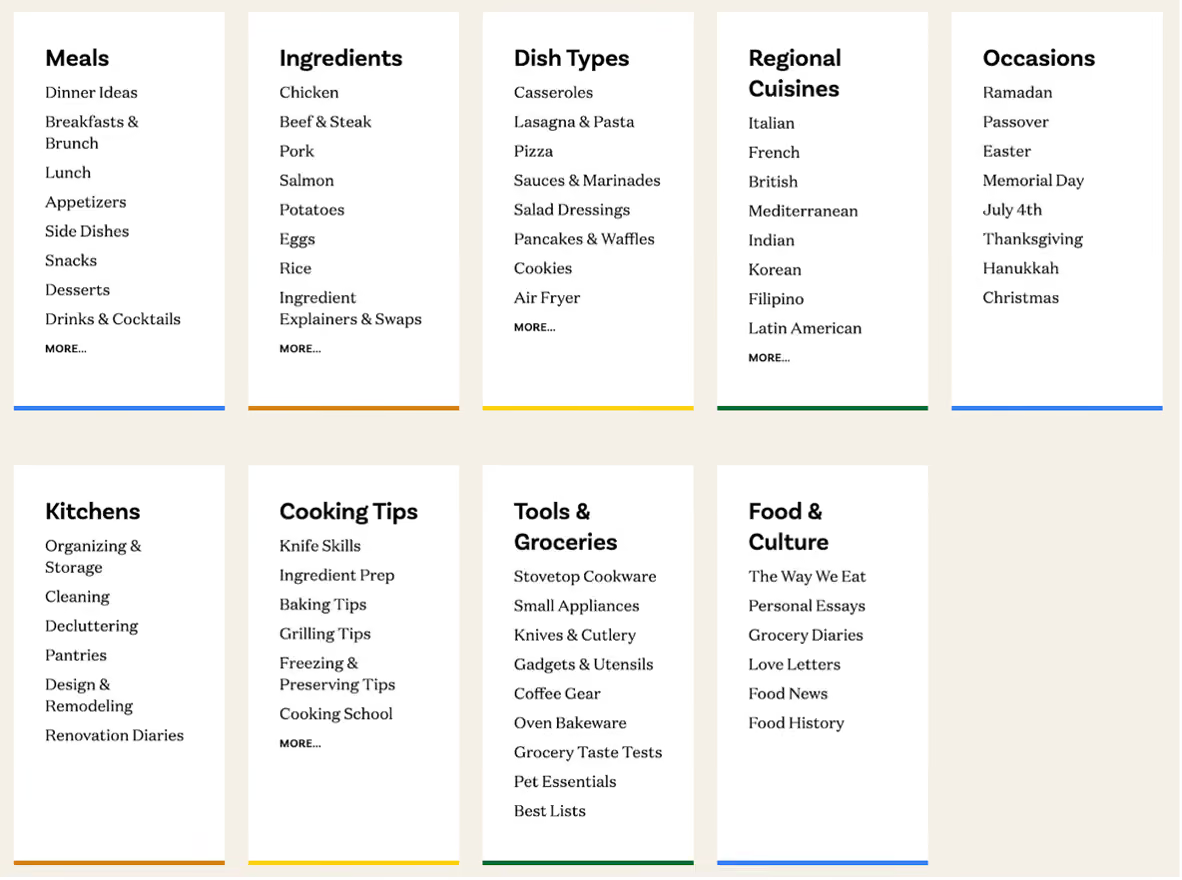
For example, subtopics like meals, ingredients, dish types and even cooking tools helps search engines understand their wide coverage of topically related terms.
If you are attempting to build topical authority for a cooking site, you'll want to have content addressing everything from regional to grocery shopping, cooking tips to kitchen organization.
You should perform extensive keyword research to identify new topics and ensure you're not missing major subtopics.
There are several ways you can do this, but the easiest and most common is with topical clustering tools.
Surfer can help you find semantically related topics if you enter a primary topic.
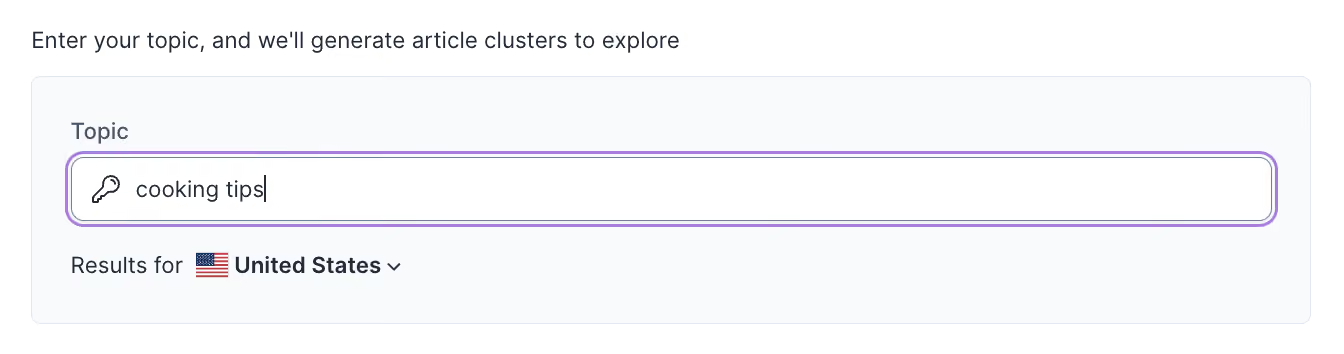
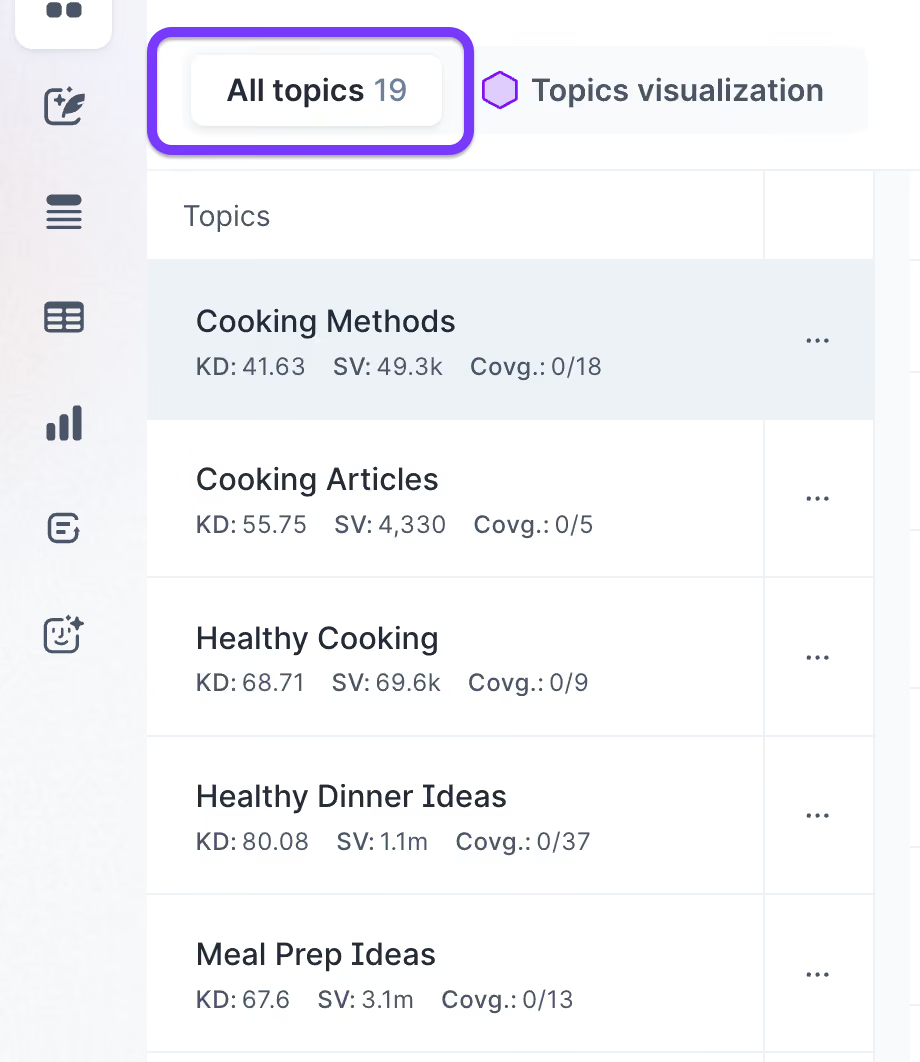
Surfer helped me generate 19 subtopics related to "cooking tips."
Here's a few of them.
Google search engine results pages (SERPs) are also an excellent resource. There are three sections you can use to identify seed keywords:
- Google Autocomplete is a feature that provides search term predictions as you type a query. This is a great way to discover relevant phrases that searchers are looking for.
- People Also Ask, or PAA, is a box on SERPs that shows questions related to the one you searched for. Analyzing the content of PAA can help you discover new content ideas to flush out your topical content.
- "People also search for" is another section on SERPs that shows related search queries others have performed on the topic. It's another great way to identify potential gaps in your coverage of a topic.
Make sure you're identifying a wide range of informational topics related to your niche, rather than just high-volume keywords.
While it's important to go after those relevant keywords, your topical authority is based on a broader spectrum and your overall expertise in the field.
3. Build topic clusters
Topic clusters are an SEO strategy in which a central pillar page covering a specific theme or topic serves as a hub around which related supporting pages featuring relevant topics are organized.
They've also been popularly called the hub and spoke model, and content hubs.
The use of topical clustering structures makes it easier for search engines to understand your content depth and simplifies navigation for human visitors.
This, in turn, helps match search intent and establish topical relevance.
To create your own topic clusters, you'll want to group topically related keywords based on their relationship to one another and the pillar page they fall under.
In fact, this page you're reading is a pillar page for the topic "topical authority."
Surfer automatically groups related pages under their cluster, so you already have topical clusters. The right panel houses the pages for our cluster example on the left.

For SEO professionals, an easy way to think about the pillar page framework is that contains your seed keywords, and supporting pages are based on related keywords.
For a pillar page example to see how a topic cluster works, see this Clique Studios page.

Supporting cluster pages around the main pillar page of web design link to related topics like website responsiveness, the design process, and accessibility.
Each of these pages works together to establish Clique Studios' reputation as an authority in the field of web design.
4. Aim for topical coverage
Once you have your pillar and supporting pages identified, it's time to map them out and start thinking about content creation.
Topical maps are the strategic organization of content into topics and subtopics.
It creates a visualization aid to help you track, understand and improve the depth and breadth of your site's content.
Surfer's topical map can show you your website's topical coverage.
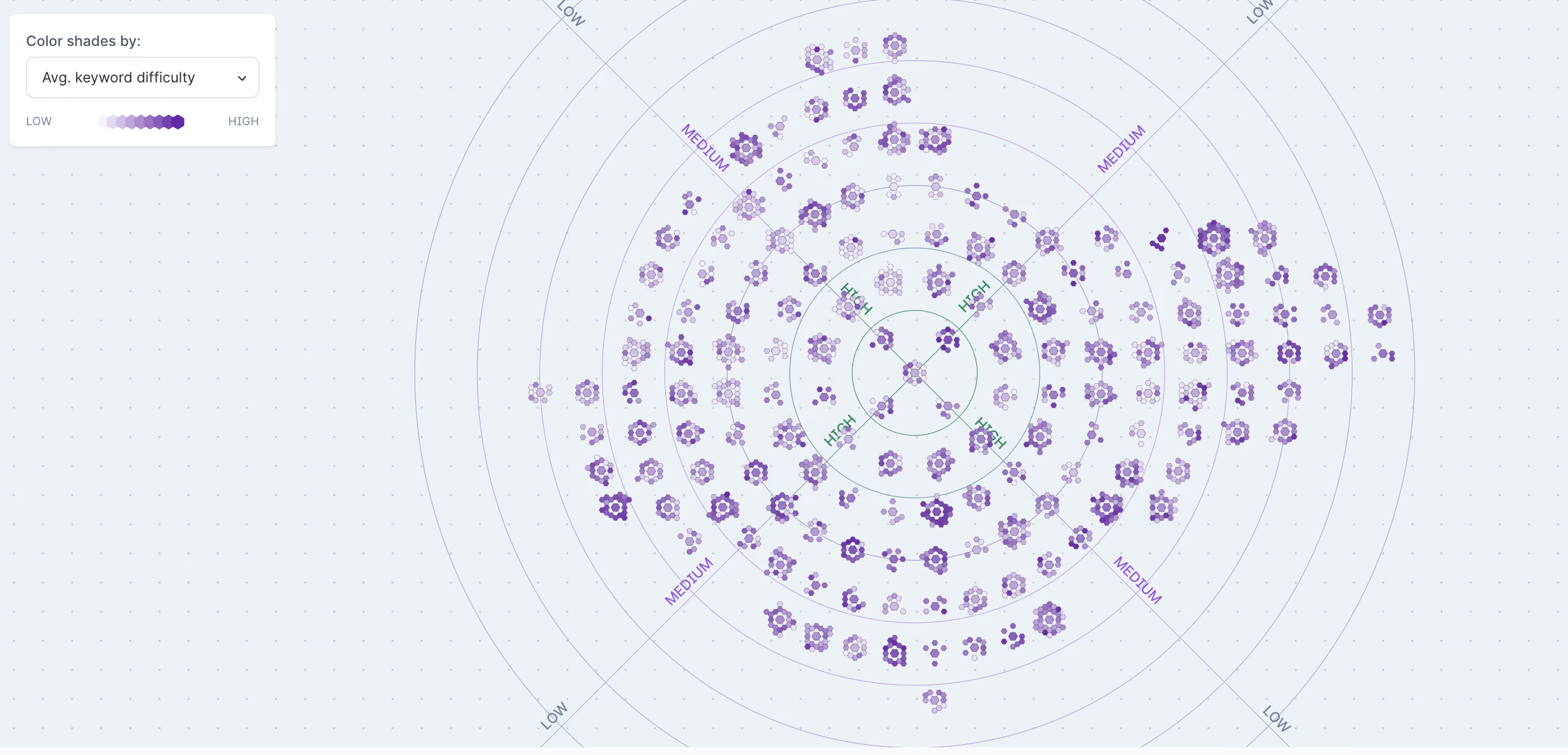
Keywords closer to the center are more relevant to your core topic, while color shades from light to dark purple indicate low to high keyword difficulty.
This can help you identify easier keywords for quick wins (light purple) and more competitive keywords requiring more effort (dark purple).
Start from the center to effectively cover around the core topic for your content strategy.
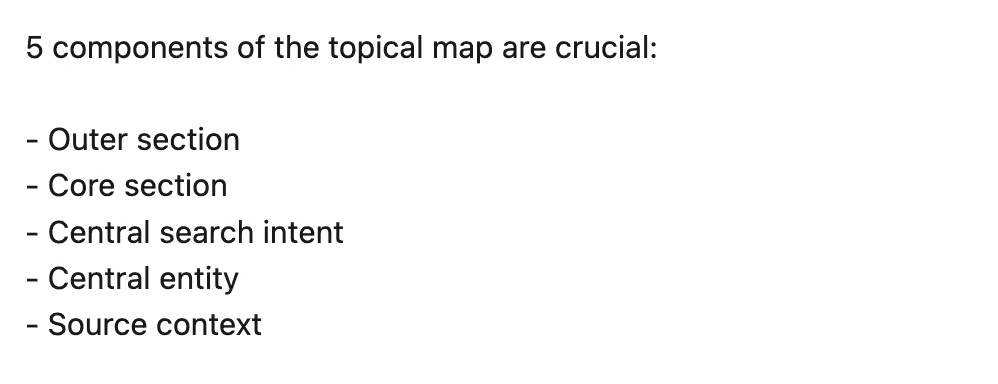
As explained in this LinkedIn post, Tugberk's clustering model creates topical maps based on five components that combine natural language with search.
Regardless of the topical mapping framework you use, it is essential you create in-depth, high-quality content to build topical authority.
Data supports this approach. Our analysis of 1 million SERP results found that topical coverage is the strongest on-page signal tied to rankings, outperforming traditional metrics like keyword density and word count.
This is an essential part of Google's commitment to helpful, reliable, people-first content as outlined in its Quality Rater Guidelines, which emphasize E-E-A-T, or experience, expertise, authority and trustworthiness.
To ensure you are achieving these goals on your pillar and supporting pages, consider the following steps:
- Choose a clear topic for your pillar page.
- Brainstorm ideas and perform keyword research to identify cluster pages that will build off and support the pillar.
- Work on creating in-depth content that speaks to your target audience, taking care to ensure that your content pieces address different search intents.
- Create high-quality content that is engaging and useful.
- Develop and implement a content distribution plan.
StudioBinder's pillar page on scriptwriting is an excellent example of topical mapping.
The main page provides a logical hub for different topics related to writing scripts, with obvious links to related subtopics.

If you're not comfortable with an extensive writing project or want to streamline the process, using AI to generate first drafts for your pages is a great way to expedite the process.
For example, Surfer AI can generate a 3700-word article in just 20 minutes, that is optimized for search engines and follows your instructions for tone of voice, and article type.
5. Implement internal links
Internal links are integral in establishing topical authority. But you can't just link between pages at random.
You need a logical information architecture that links relevant content together, which is again where content clusters come into play.
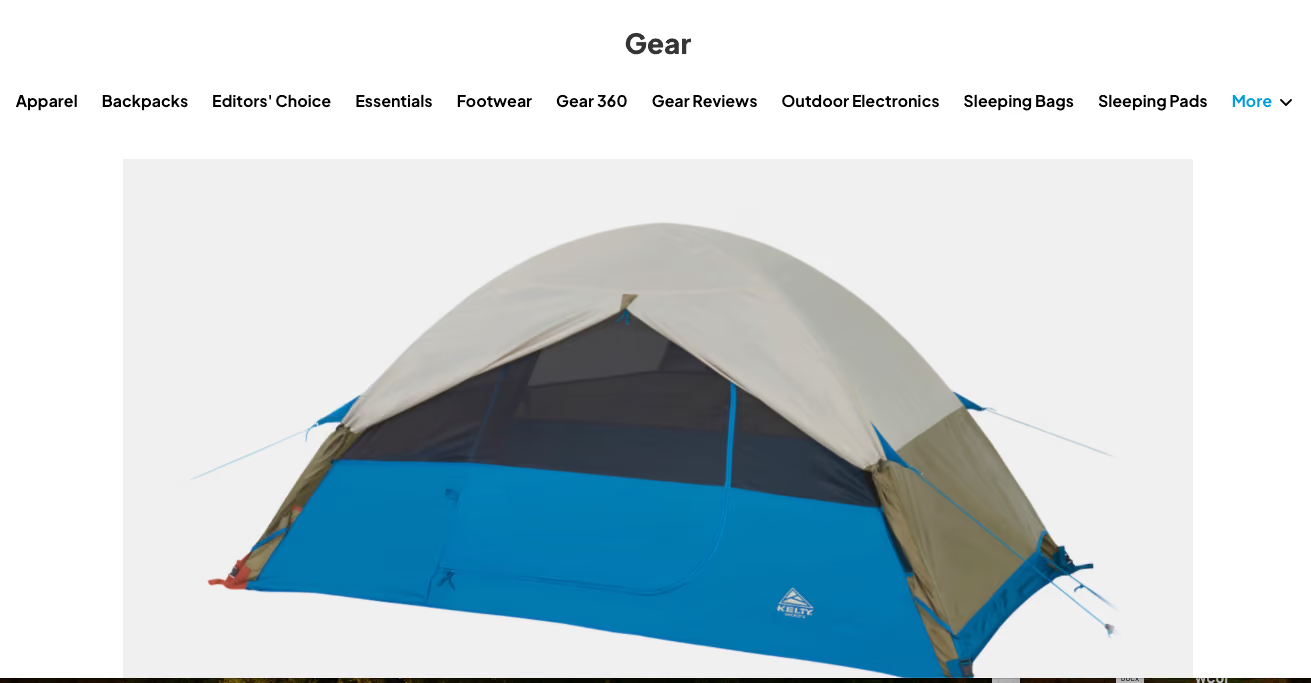
For an example of how this works in practice, look at Backpacker.com. To establish topical authority on hiking trips, this site is subdivided into several category pages, including Gear, Trips and Survival.
Clicking on the Gear link takes you to a pillar category page, featuring links to individual articles, as well as sub-pillar pages like Apparel, Backpacks and Footwear.
Backpacker.com also maximizes internal linking by using anchor text to provide links to relevant content.
For example, look at the natural way they've created a link to various product pages in an article about sun protection.

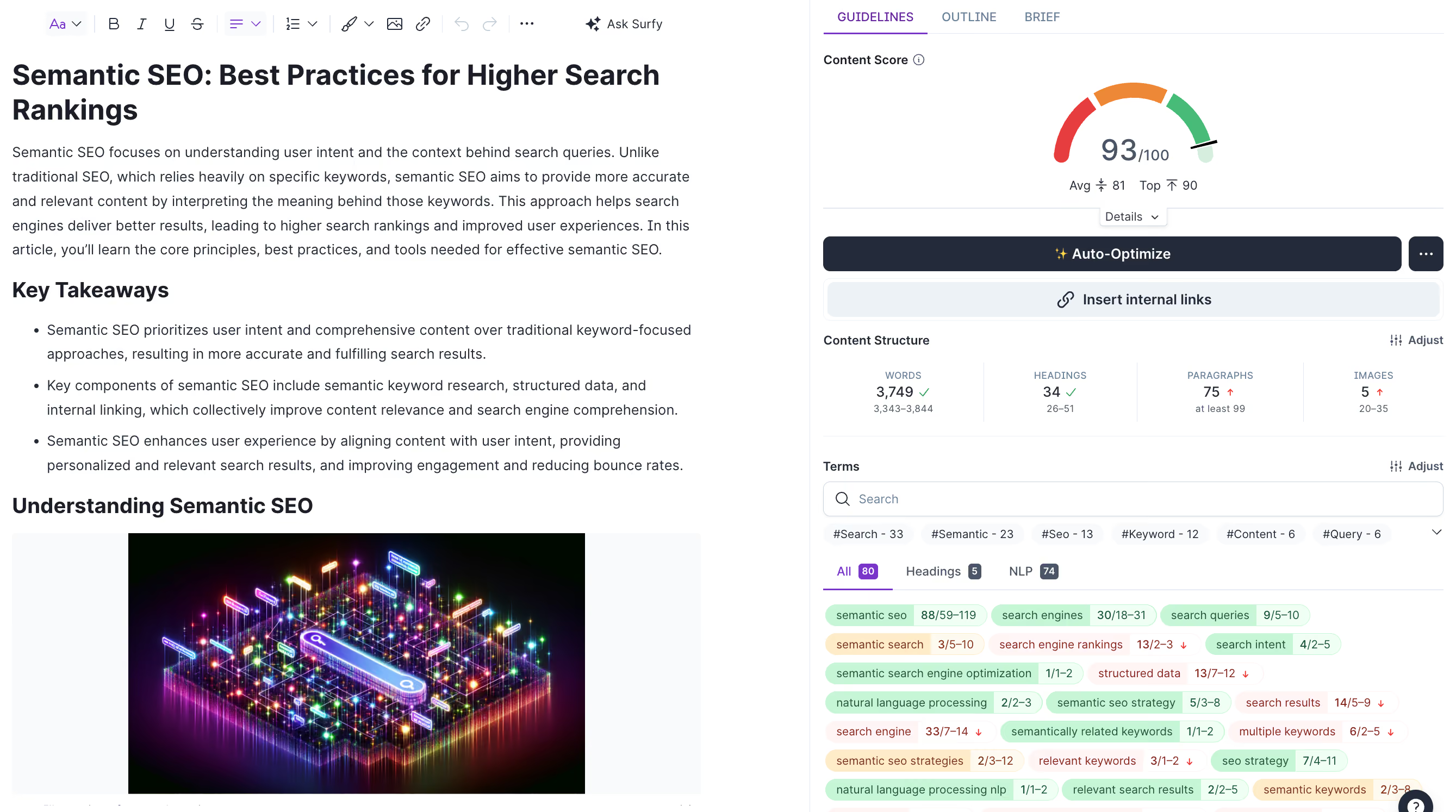
You can find relevant pages on your website to link to, or allow Surfer to automate this process for you with Surfer's Insert internal links feature.

Click the "Insert Internal Links" button and Surfer will automatically select anchor texts and insert relevant internal links into your article.
You can then review the added links.
6. Build backlinks
The content of your site is paramount for establishing topical authority, but link building is still important.
A strong inbound link profile can play a crucial role in establishing your expertise in a subject, if the linking sites are relevant to your content.
If you get a reputable site in a related field to link to your content, it will transfer authority and credibility to you, which in turn can boost your chances of ranking in SERPs.
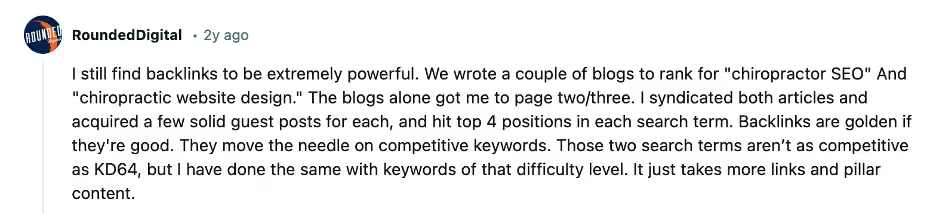
Look at this experience that a user on Reddit shared as an illustration of the power of backlinks.
There are a variety of ways you can generate backlinks, including:
- Writing shareable content: Create content with useful information that people interested in your niche will share with each other.
- Guest posting: Collaborate with another website to create content that benefits you both with a link pointing back to your website.
- Claiming unlinked mentions: Set up a Google Alert to be notified about brand mentions. Reach out to webmasters and ask them to add your link in the anchor text, if they're not already.
HARO, or Help a Reporter Out, was formerly an excellent source for finding expert quotes and generating links, but the Cision-owned brand was retired in 2024.
Topical authority and AI search
Topical authority does not just help you rank in traditional search results. It also determines whether AI-powered search engines cite your content in their generated answers.
Google AI Overviews now appear in 47% of all analyzed searches, and they preferentially cite sources that demonstrate comprehensive topic coverage. Pages cited in AI Overviews have 31% average fact coverage compared to just 24% for non-cited pages, according to our analysis of 57,000+ URLs.
This pattern extends to AI answer engines like ChatGPT, Perplexity, and Gemini. Sites that build topical authority across interconnected pages are more likely to rank for the "fan-out" queries these AI systems generate when constructing answers. You are 161% more likely to be cited if you rank for both the main query and its fan-out sub-queries.
Building topical authority is one of the most effective strategies for both traditional SEO and emerging AI search visibility.
This is sometimes called generative engine optimization, or GEO. The core principle is the same: create comprehensive, well-structured content that covers a topic from multiple angles, and both Google's traditional algorithm and its AI systems will recognize your expertise.
3 examples of topical authority
Here are some examples of sites that are doing topic authority right.
1. Mindbodygreen

Dedicated to wellness, mental health, fitness and nutrition, Mindbodygreen uses an extensive internal linking structure to cover a wide range of related topics.
Using pillar pages, it logically subdivides content into categories, which link to subtopics, many of which have their own sub-subtopics.
2. The Spruce

The Spruce focuses on home-related information, including decorating, gardening, entertaining and repair.
Using experts as content creators, it covers a broad range of topics, using a logical organization to brand itself as a go-to resource for all things house and home.
3. Boords

Storyboarding software provider Boords has built a reputation as a topic authority via its blog, which provides resources, news and tools for video professionals.
Offering valuable information, it focuses on the larger topic of storyboarding, while linking off to pages on subtopics like writing comic book scripts, formatting screenplays and storyboards from famous movies.
How to measure and track topical authority
At Surfer, your website's topical authority score is measured using several factors: the number of keywords it covers, the relevance and search volume of those keywords, their ranking positions, and their semantic similarity to the topic.
Our approach includes using the logarithm of search volume and setting a maximum score limit for clusters to prevent biases towards high-volume keywords, ensuring a balanced evaluation of domain authority across different topics.
There is no single universal metric for topical authority, but you can track it indirectly through several practical signals:
- Keyword coverage ratio: The percentage of relevant subtopics in your niche that your site has published content for. A topical map helps you identify gaps.
- Average cluster position: Track the average ranking position across all pages in a topic cluster, not just your pillar page. Consistent top-20 rankings across a cluster indicate strong authority.
- Topic share: The proportion of organic traffic you capture from keywords within a specific topic compared to competitors.
- Content coverage depth: Our ranking factors study of 1 million SERP results found that pages covering roughly 74% of relevant subtopics consistently outperform those covering only 50%.
Higher rankings and quality relevant links are usually a good indicator your site has more topical authority.
SEO influencer Kevin Indig proposes "Topic Share" as a practical metric to quantify topical authority, which measures the proportion of traffic a website attracts from keywords within a specific topic.
To calculate this, Indig suggests analyzing keyword traffic to determine a site's authority based on its rankings and traffic share for relevant keywords.
Build topical authority to rank higher
Topical authority is not a shortcut or a ranking hack. It is a long-term content strategy built on genuine expertise, comprehensive coverage, and thoughtful site architecture. The sites that rank highest in competitive niches are the ones that treat topics as ecosystems, not isolated keyword targets.
Start by choosing a niche you can realistically cover in depth. Map out every subtopic, build clusters of interlinked content, and fill gaps systematically. As your topical coverage grows, you will see compounding returns: higher rankings, more featured snippets, stronger backlink profiles, and increasing visibility in AI-powered search results.
The data backs this up. Sites with strong topical authority outperform those relying on domain traffic or backlinks alone. Invest in depth, and the rankings will follow.