
The AI visibility market is moving fast, but still new enough that no single tool has figured everything out yet. I’ve been wanting to see what Profound looks like beneath the hype, so I spent a few hours using the platform to see what it has to offer.
Quick version: Profound is a standalone AEO tool. Surfer AI Tracker combines SEO with AI search optimization.
Here’s what each one does well, where the workflows split, what you'll pay, and which one might make sense for you.
Surfer vs. Profound: features compared
Let’s get the similarities out of the way.
Both Surfer and Profound query the frontend interfaces of AI platforms, not APIs. This is an important distinction from other AI trackers because our research found only a 4% overlap in sources between ChatGPT's API and its web interface.
If a tool is tracking API responses, it's looking at a different dataset than what real users see and will affect the data’s credibility. You want an AI tracking tool that is looking at real answers generated in-app.
Both Surfer and Profound offer AI tracking and optimization features, with some variations. Let’s break them down.
Search everywhere versus answer engine optimization
You can see the differences in philosophy almost immediately.
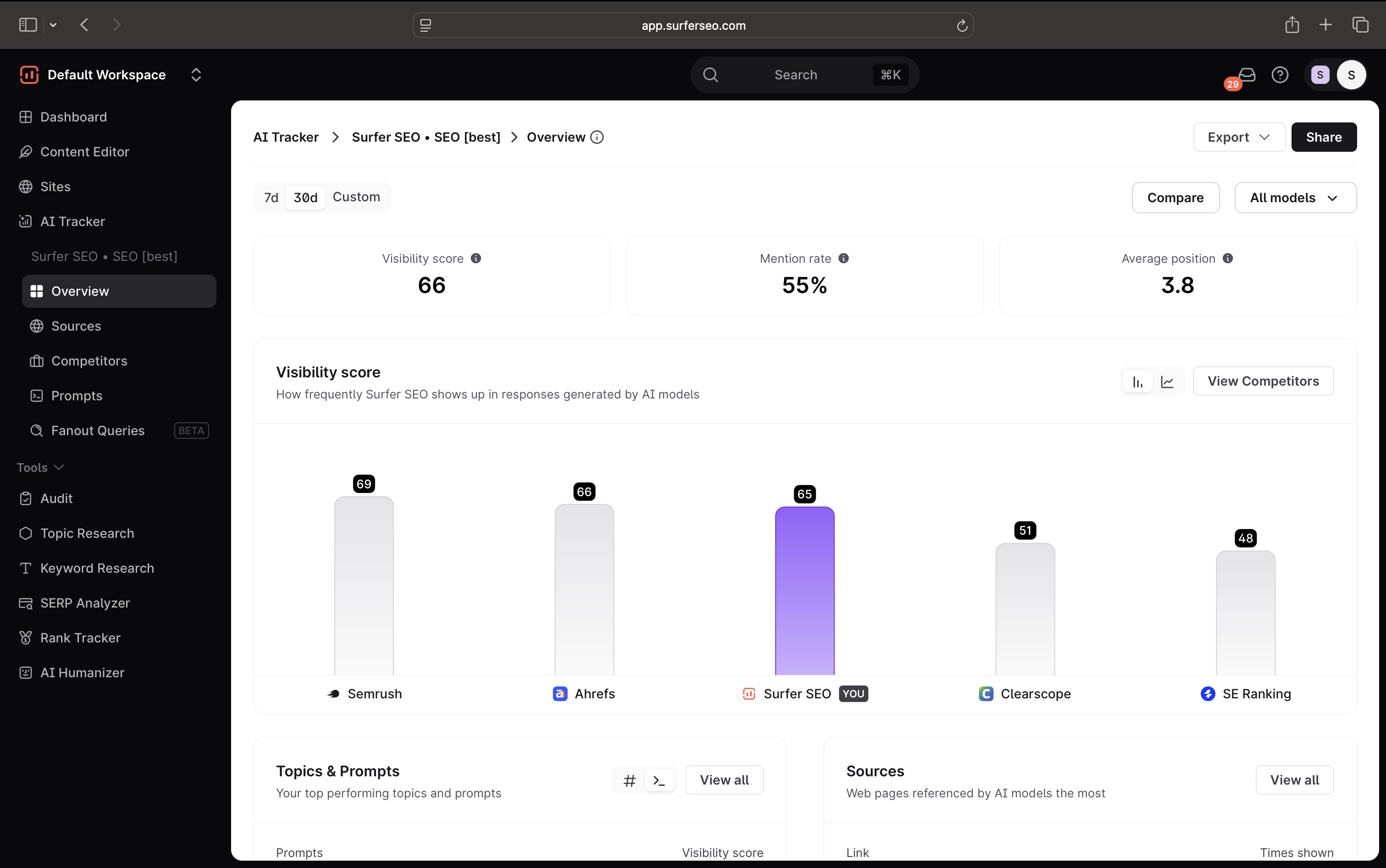
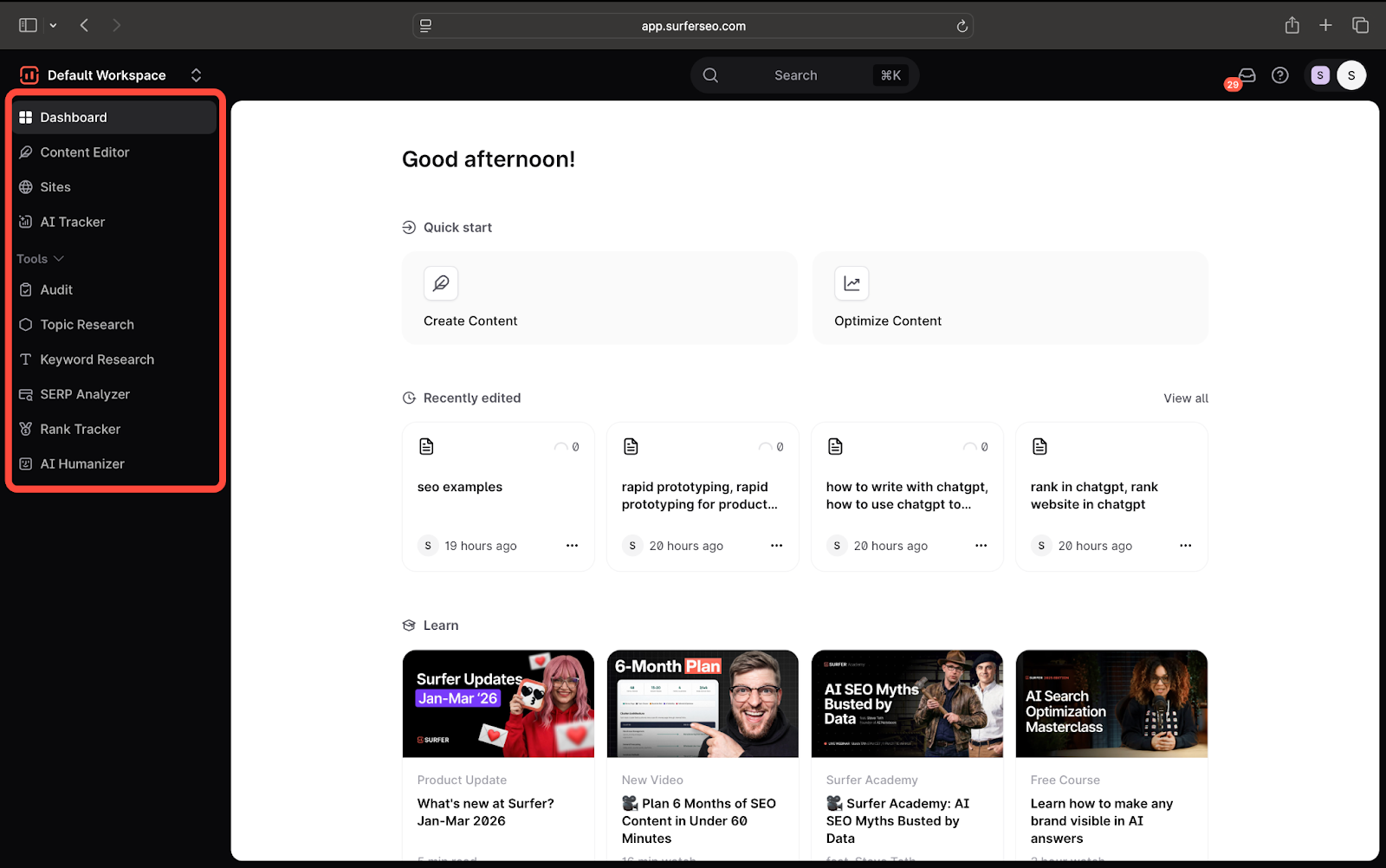
Surfer treats AI search optimization within the broader context of organic search visibility.
While Profound puts AI visibility front and center and is almost exclusively positioned for AEO. Its platform is aimed at answer engine tracking and optimization. Unlike Surfer, Profound makes no mention of keyword research, no rank tracking or on-page optimization.
I find this remarkable because we know that, at least for now, AI visibility overlaps significantly with traditional search engine practices.
And so anybody optimizing for AI search is also going to want to optimize for Google’s top 10 results.
I fail to see an immediate switch from SEO to just AI SEO. We may eventually get there, but is pretty early to call.
With Surfer, you get an entire suite of tools that cover analysis, research and optimization for traditional blue-link SEO, and AI models together.
Profound treats answer engine visibility as the entire product.
I suspect they’re prioritizing AEO for now and want to capture the market early and become a category leader, but will include SEO features later when they need to broaden user penetration.
Tracking brand mentions across AI models
Both tools offer several reports to monitor brand mentions in AI answers.
Prompt monitoring
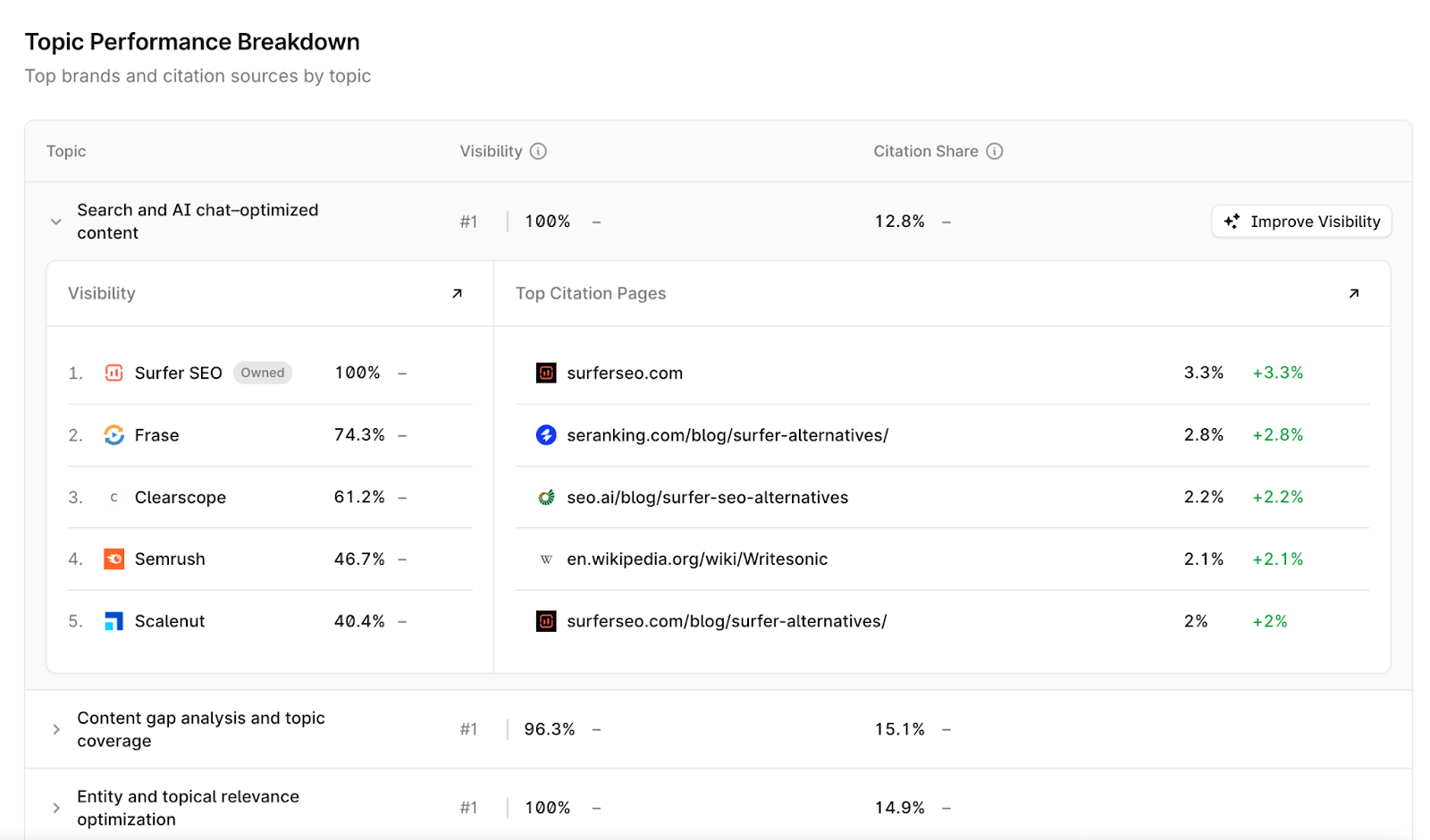
Surfer's AI Tracker checks prompts daily, running multiple queries per model and averaging results to display visibility, citations, and average position for your queries.
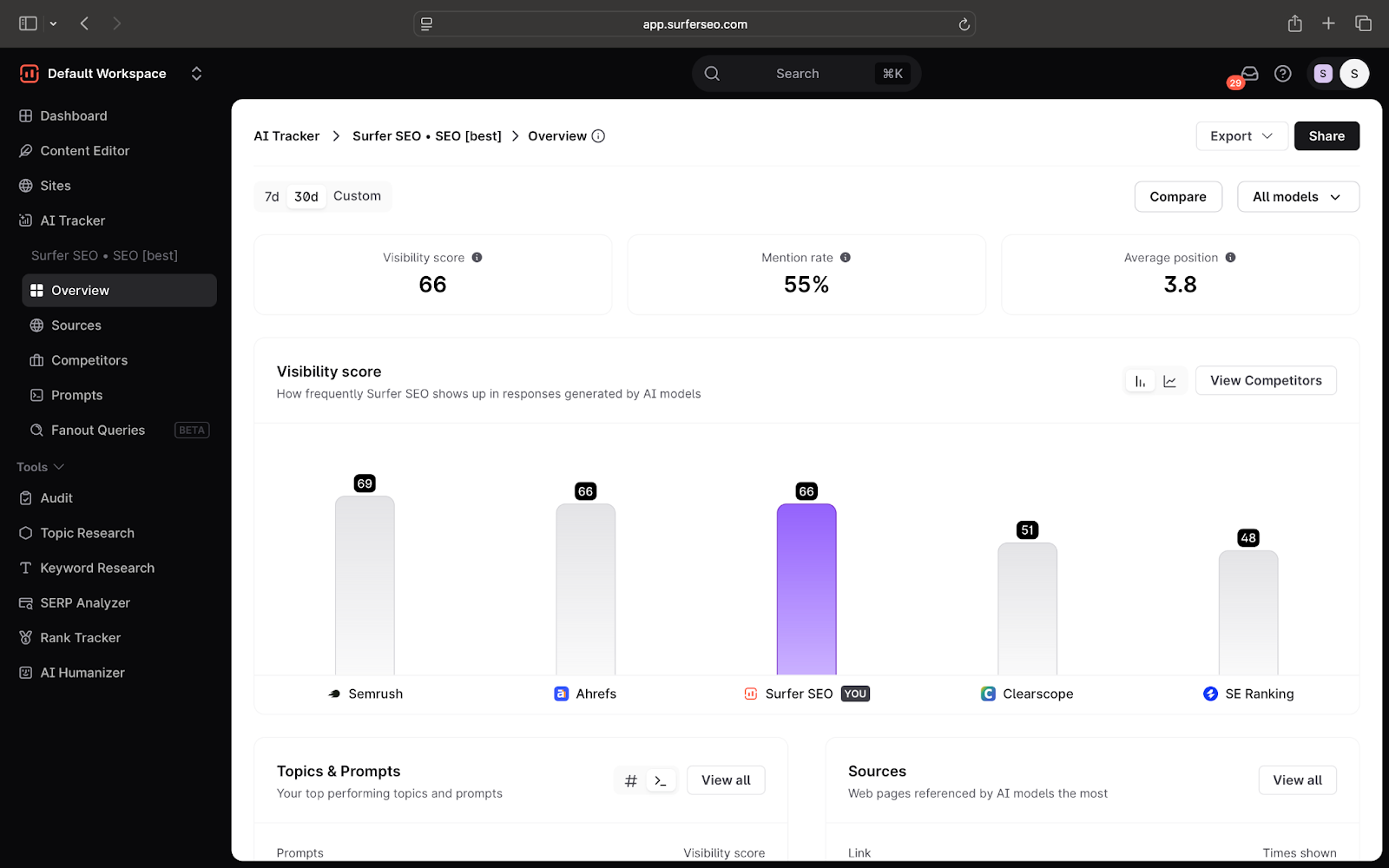
You can add and remove prompts within projects as your tracking needs evolve. Profound offers the same features, and, truthfully, there isn’t much to choose between the two tools when it comes to prompt tracking features.
Their morbidly named Executions report has more details on brand mentions and responses from the AI answers, along with citations.
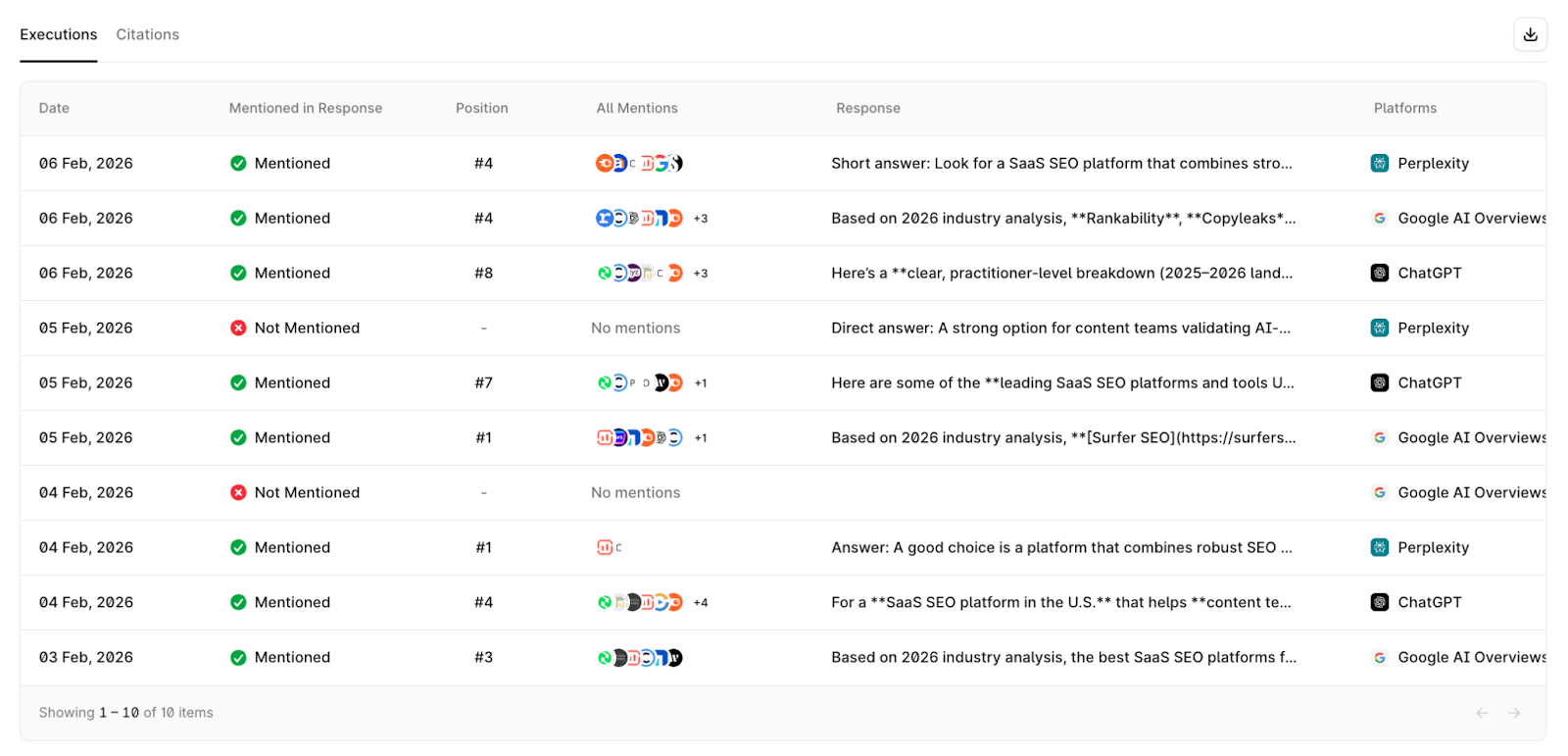
Surfer’s AI Tracker has the same reports, so you can see the exact answers and which sources drove each response.
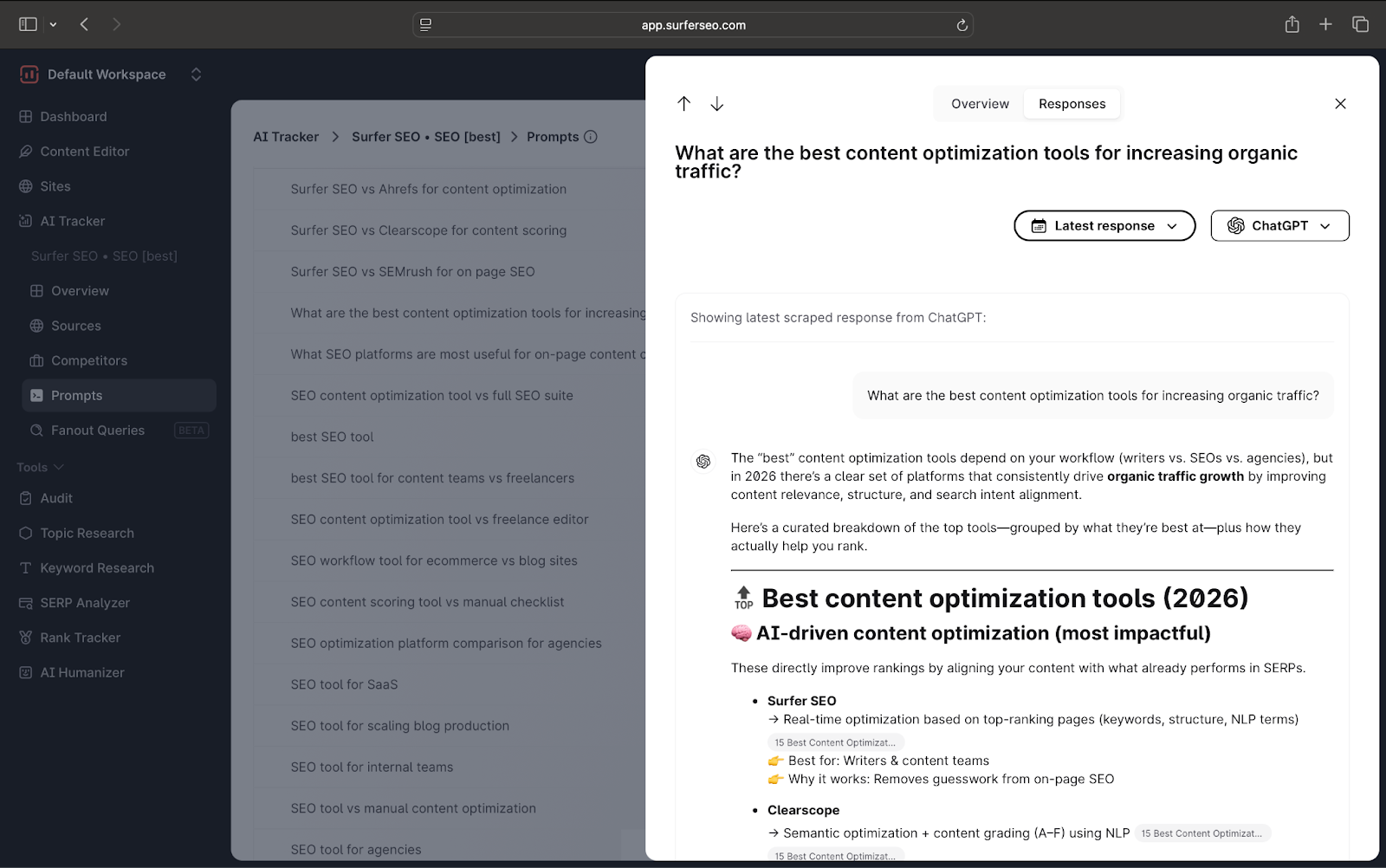
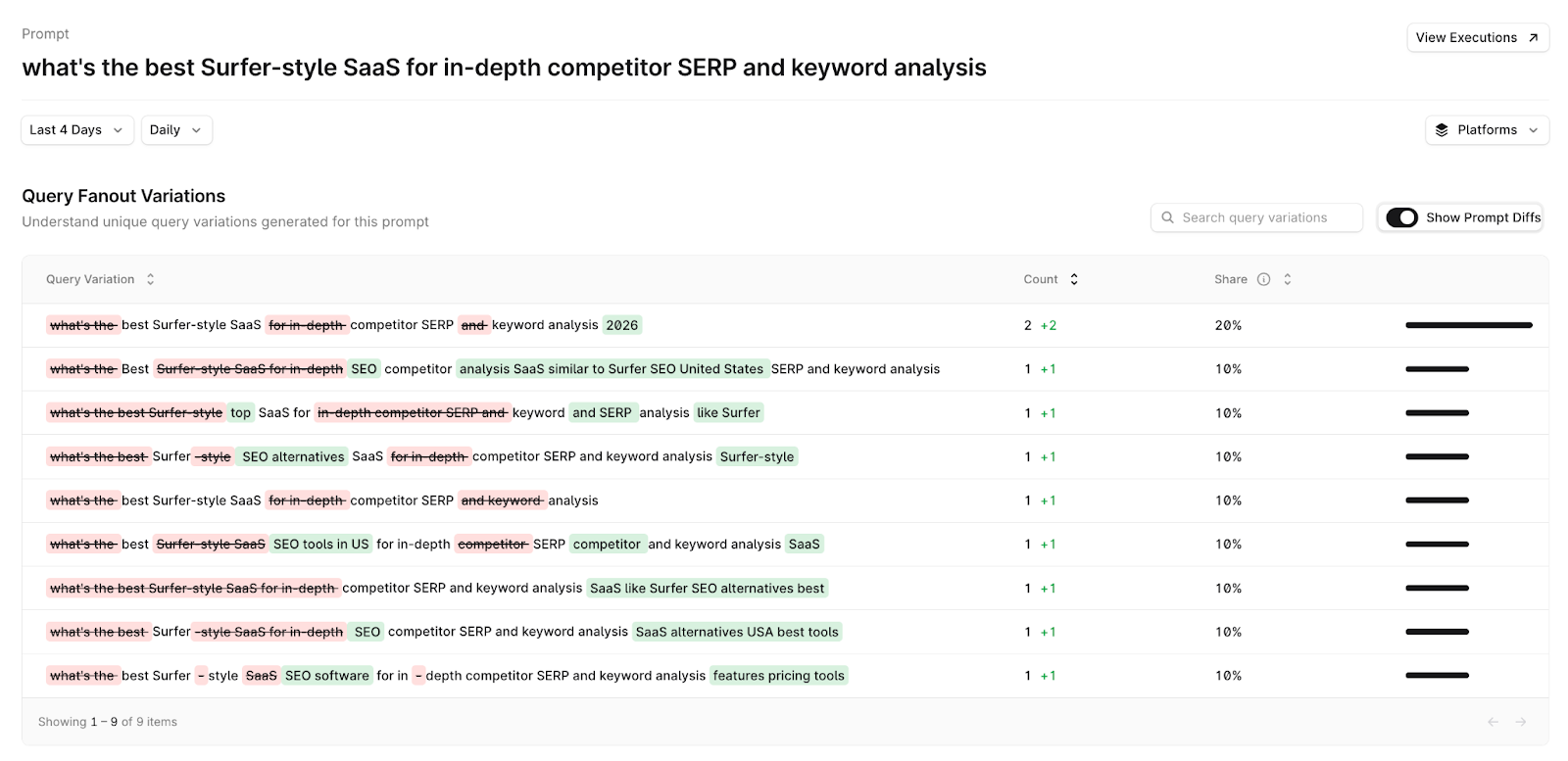
Both tools also show fan-out searches that the models ran internally.
I thought Profound's fan-out report was a helpful way to understand how AI platforms break prompts into subqueries. Seeing it illustrated like this is a helpful way to improve your prompt selection.
Prompt search volumes
I couldn’t test their much talked about feature because it is only available on the enterprise plan. And to be honest, much has already been said about this.
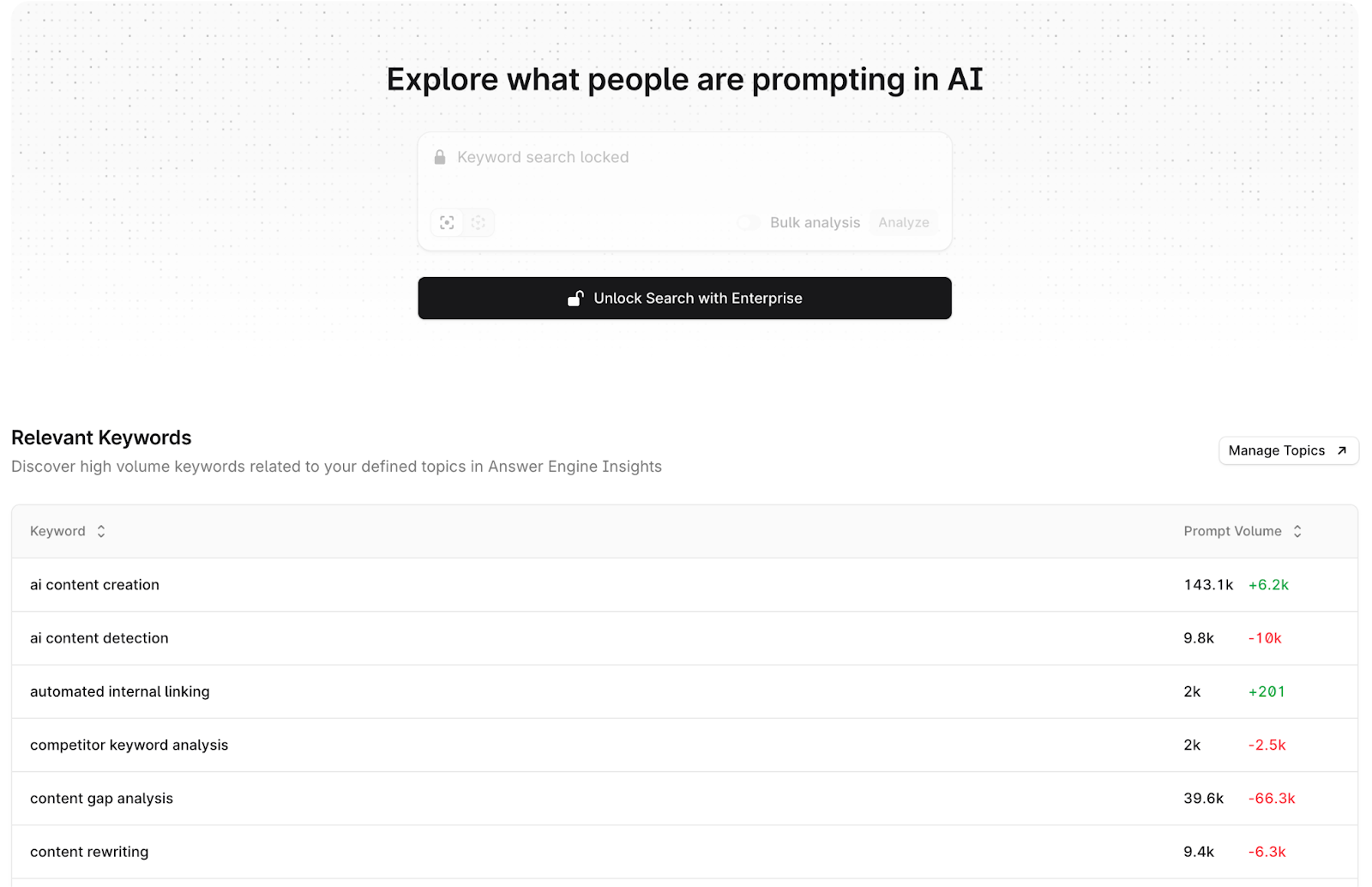
Just like keyword search volumes for SEO, this is clearly very helpful data if accurate.
It doesn’t need to be rooted in military-grade precision, but some of these numbers are way off the mark. And aren’t even directionally useful.
Take the above window for example.
There is no way that the prompt volume for "AI content detection", which has millions of Google searches, is lower than that of "content gap analysis," a term with significantly less search volume on Google.
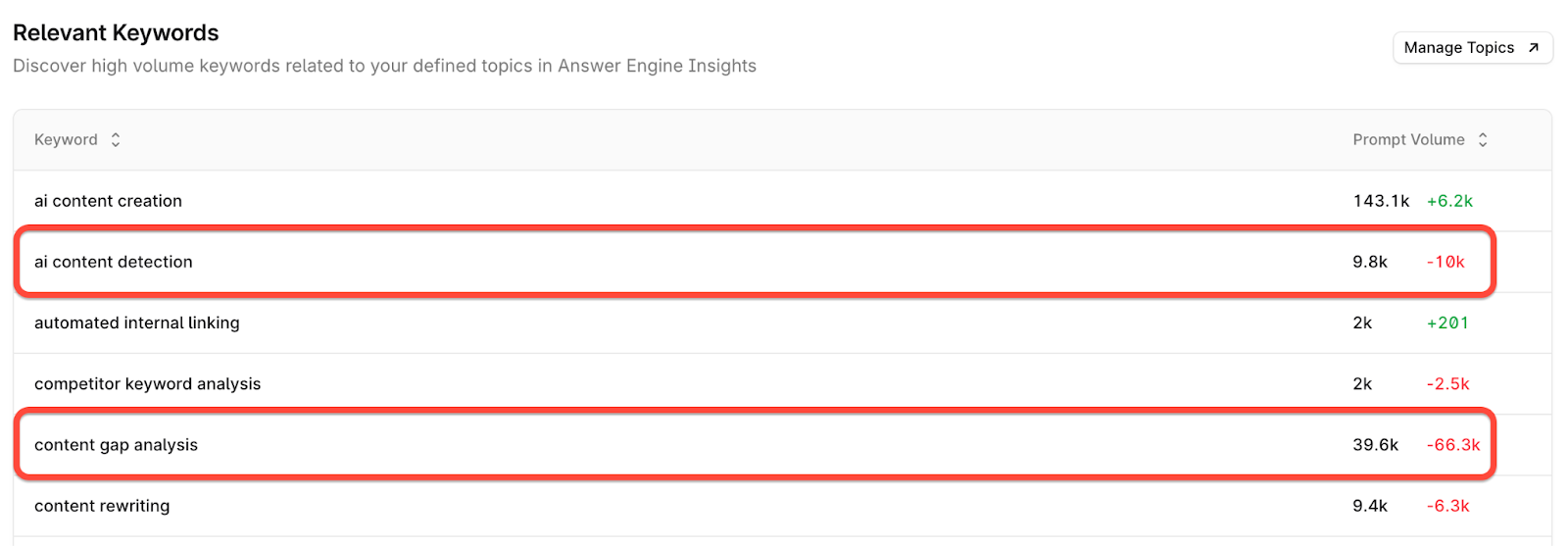
I’ll buy one of those ape/rabbit NFTs if it is. Although going by how much they’ve fallen, maybe I could buy a few and start a crypto fund.
Anyway, I digress.
To be fair, they may eventually be onto something, and everyone would love to get their hands on this data. I read somewhere that their data scientists took 8 months to build this product, so I don’t think we should be dismissive.
But it’s also important to be transparent, and it’s not credible enough at this point.
Here is Profound addressing prompt search volumes in their words.
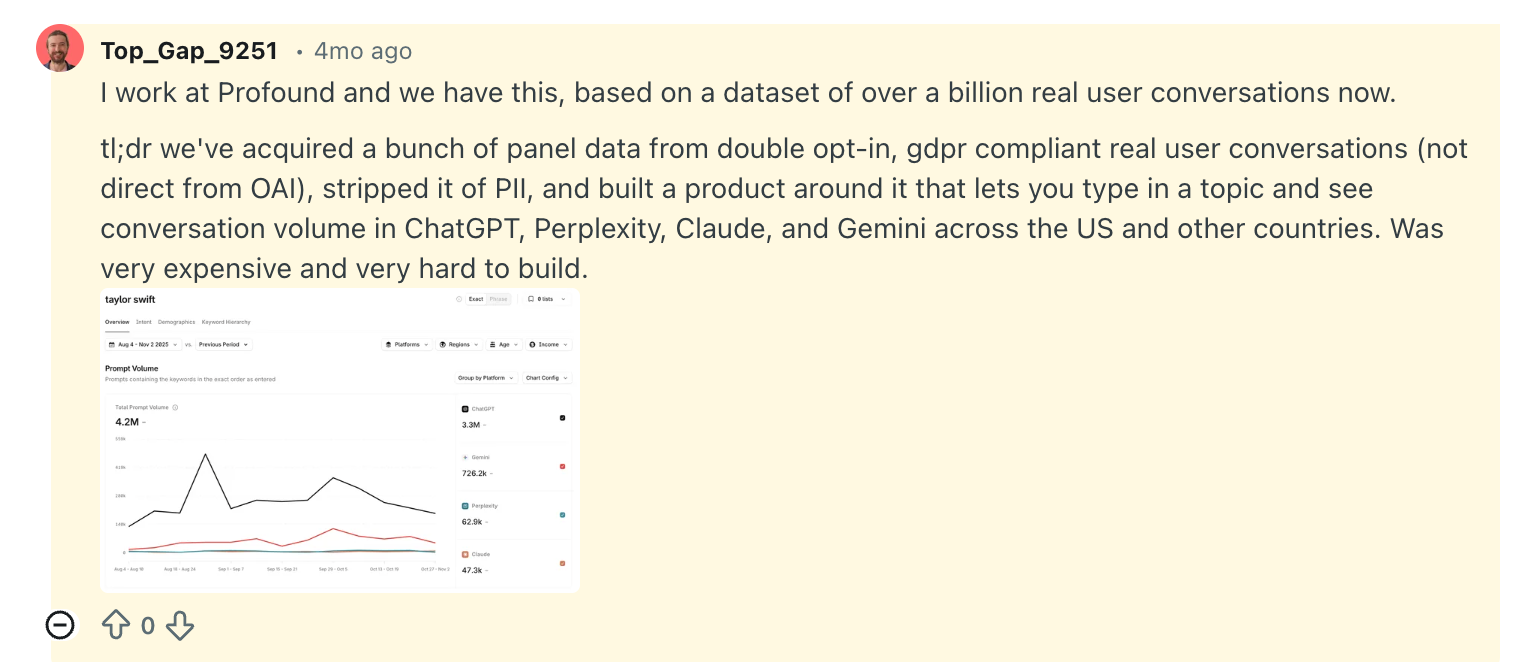
It could be an interesting signal but we’ll have to wait.
Surfer doesn’t offer an equivalent feature at this time because of the many challenges with reporting this data accurately.
Citations and sources
Both tools show you which sources AI models are pulling from when they mention (or don't mention) your brand.
Surfer's Sources dashboard shows which domains LLMs cite most across your tracked prompts. This is useful for identifying guest post targets, partnership opportunities, and content gaps.
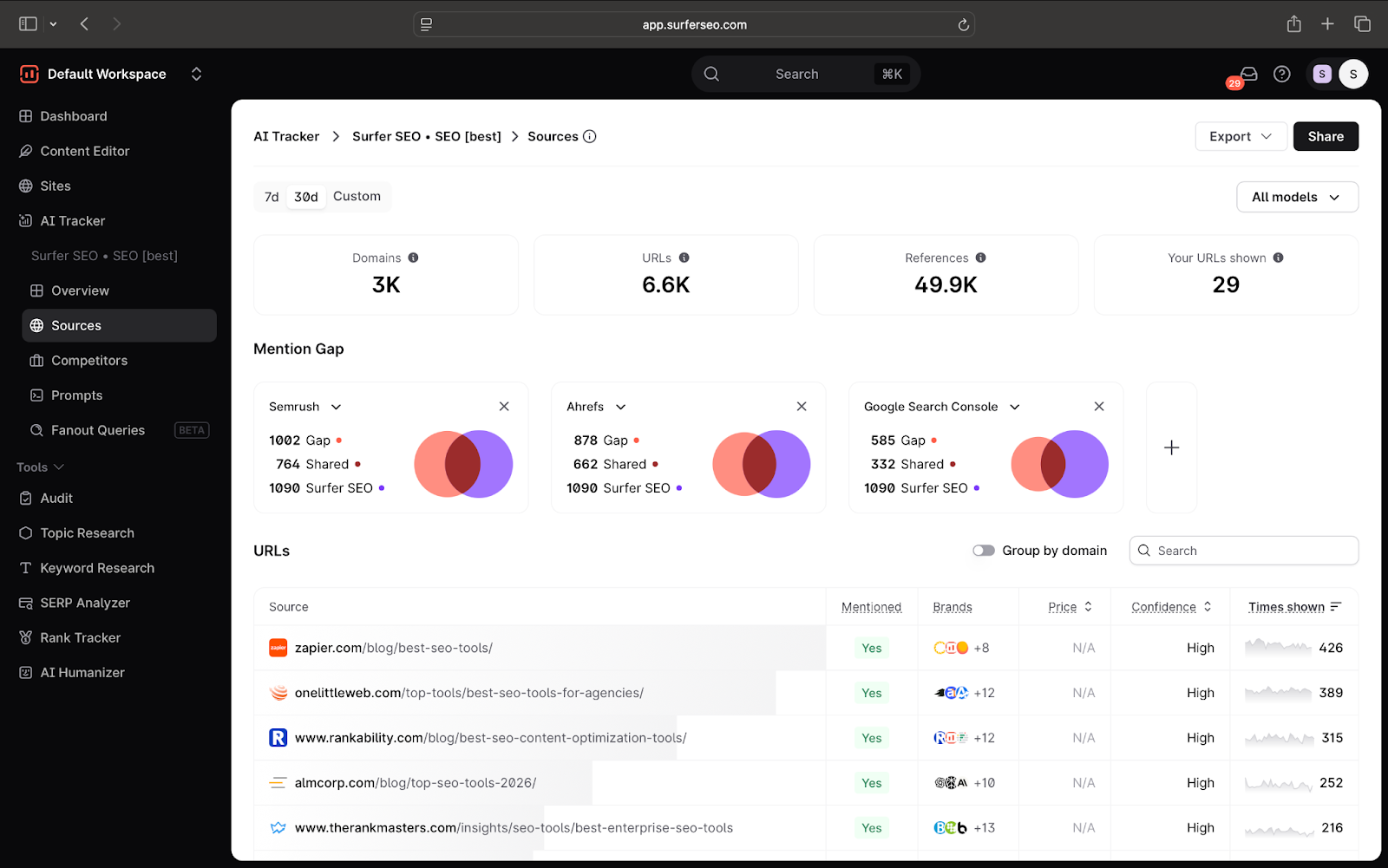
Because it connects directly to Surfer’s content optimization tool, you can move from insight to action in one simple workflow, but more on workflows later.
Profound's Citations report offers a category-level breakdown to quickly see which content types are cited most.

There's also a Watched Pages feature that lets you monitor specific URLs to see how they perform in AI search. I can see this being useful for teams that have invested heavily in specific cornerstone pages and want to track their AI citation performance over time.
I do think the 2D/3D citation relationships visualization is cool, but I’m not sure how much actionable value it offers.
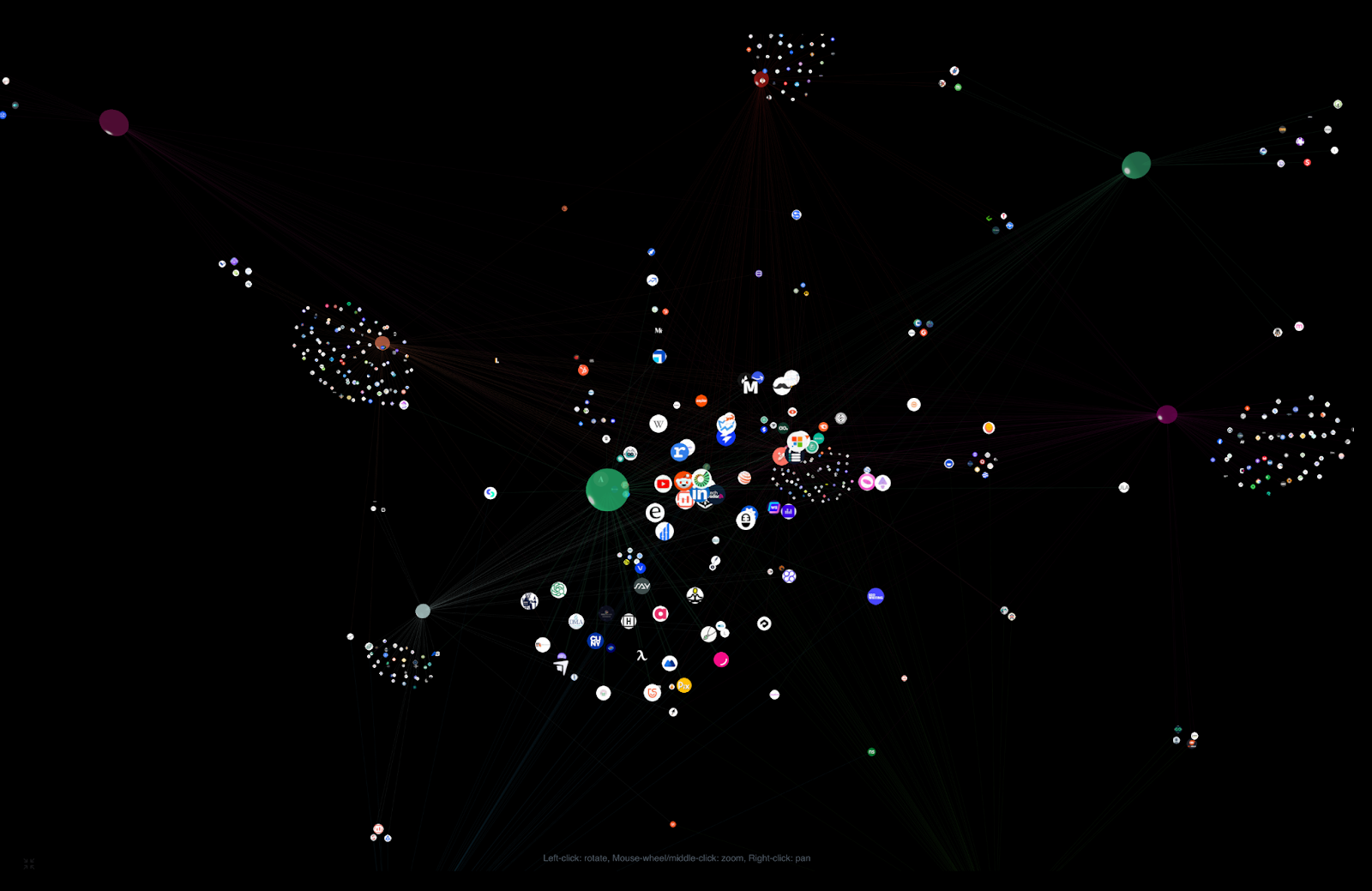
Admittedly, I did spend a bit spinning it around, though. A neat nod to their R&D teams.
Competitor mapping
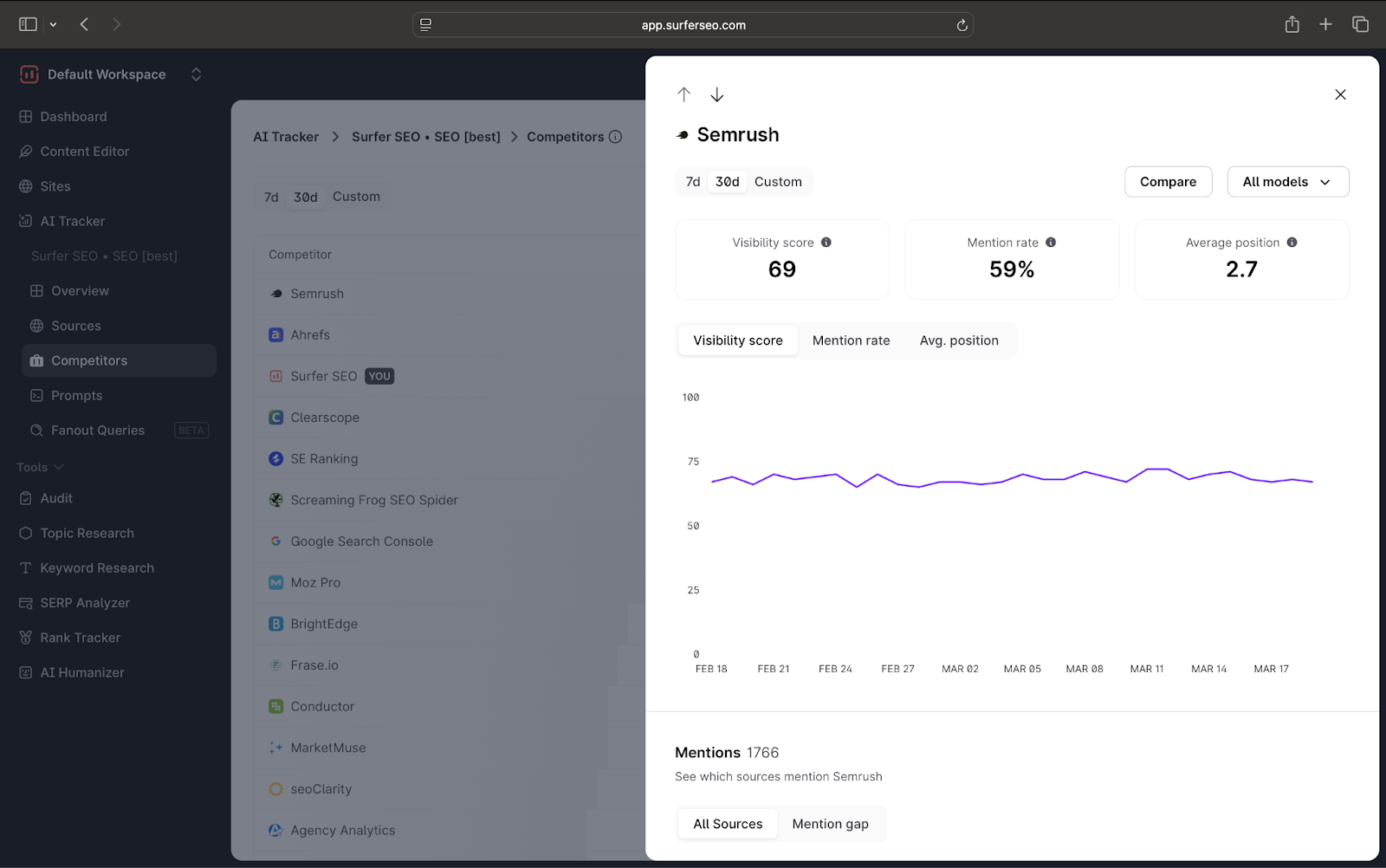
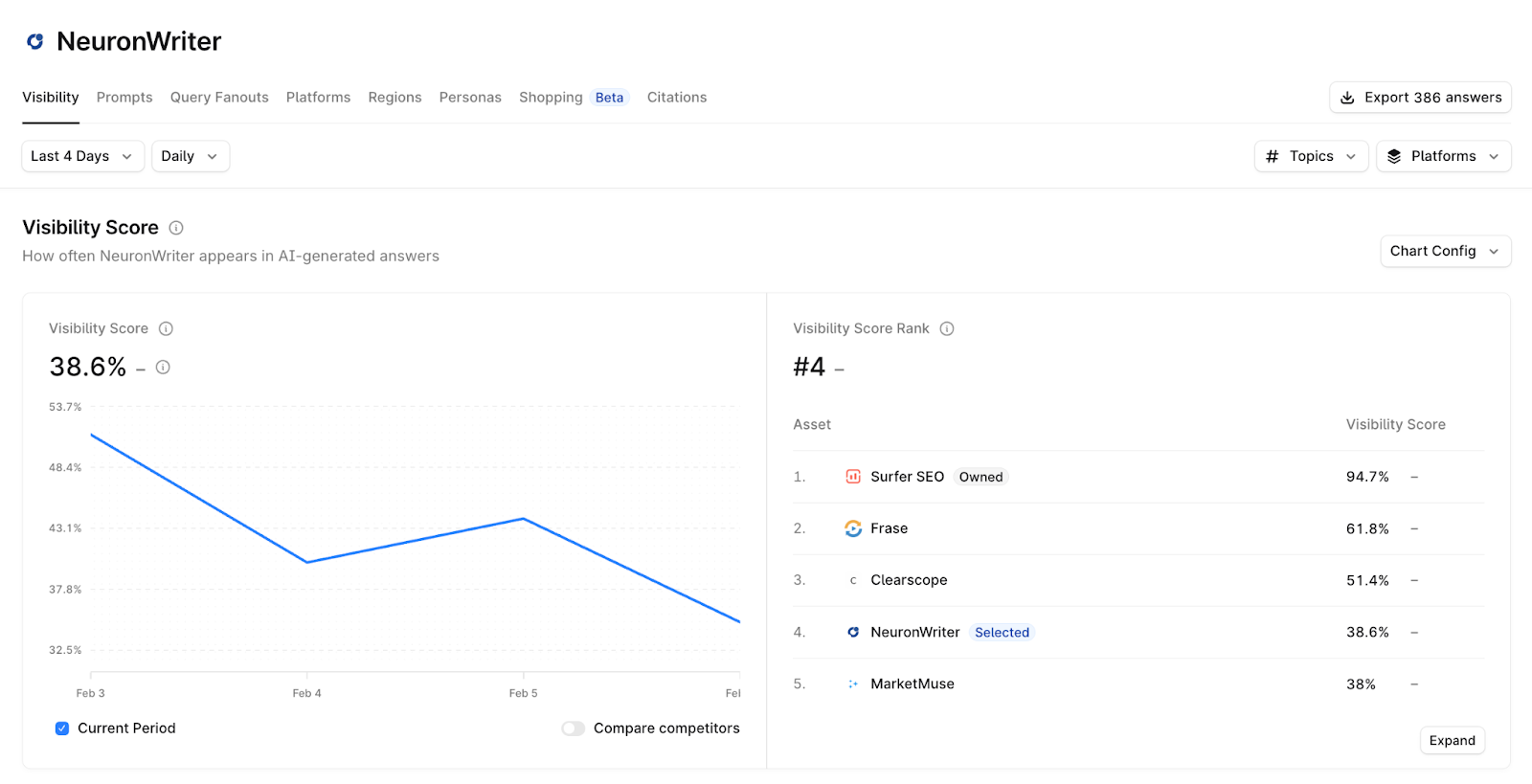
Both tools show share-of-voice and competitor visibility metrics, with slight differences in reporting.
In Surfer, clicking on any competitor opens their full report.
Profound has a similar dashboard as well.
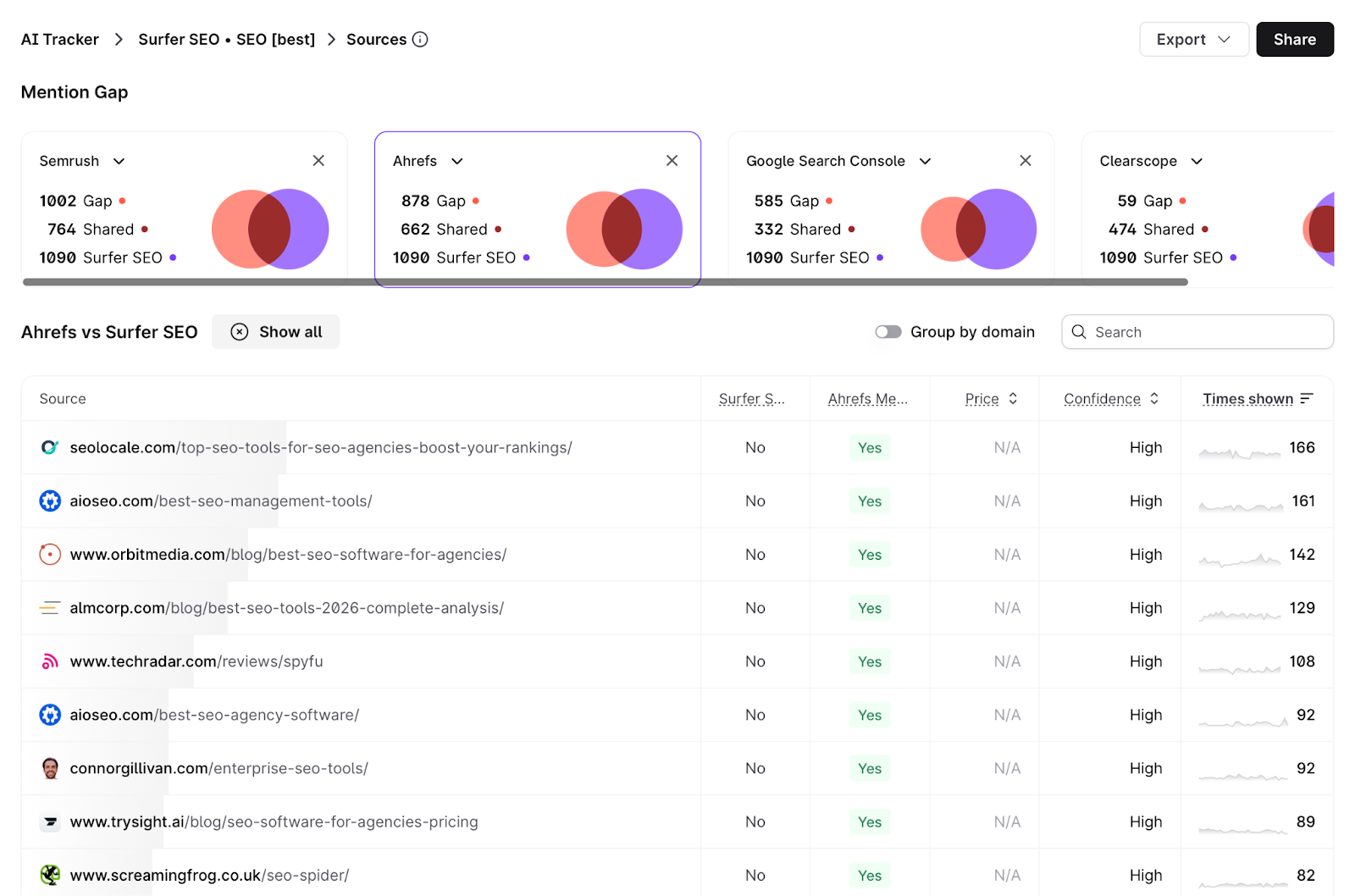
One thing Surfer does that I didn't find in Profound is to surface mention gaps between you and competitors. These are pages AI models are already citing that mention your competitors but not you.
It's a useful list for finding outreach and content collaboration opportunities. For example, here’s a snippet of cited pages that mention Ahrefs but not Surfer.
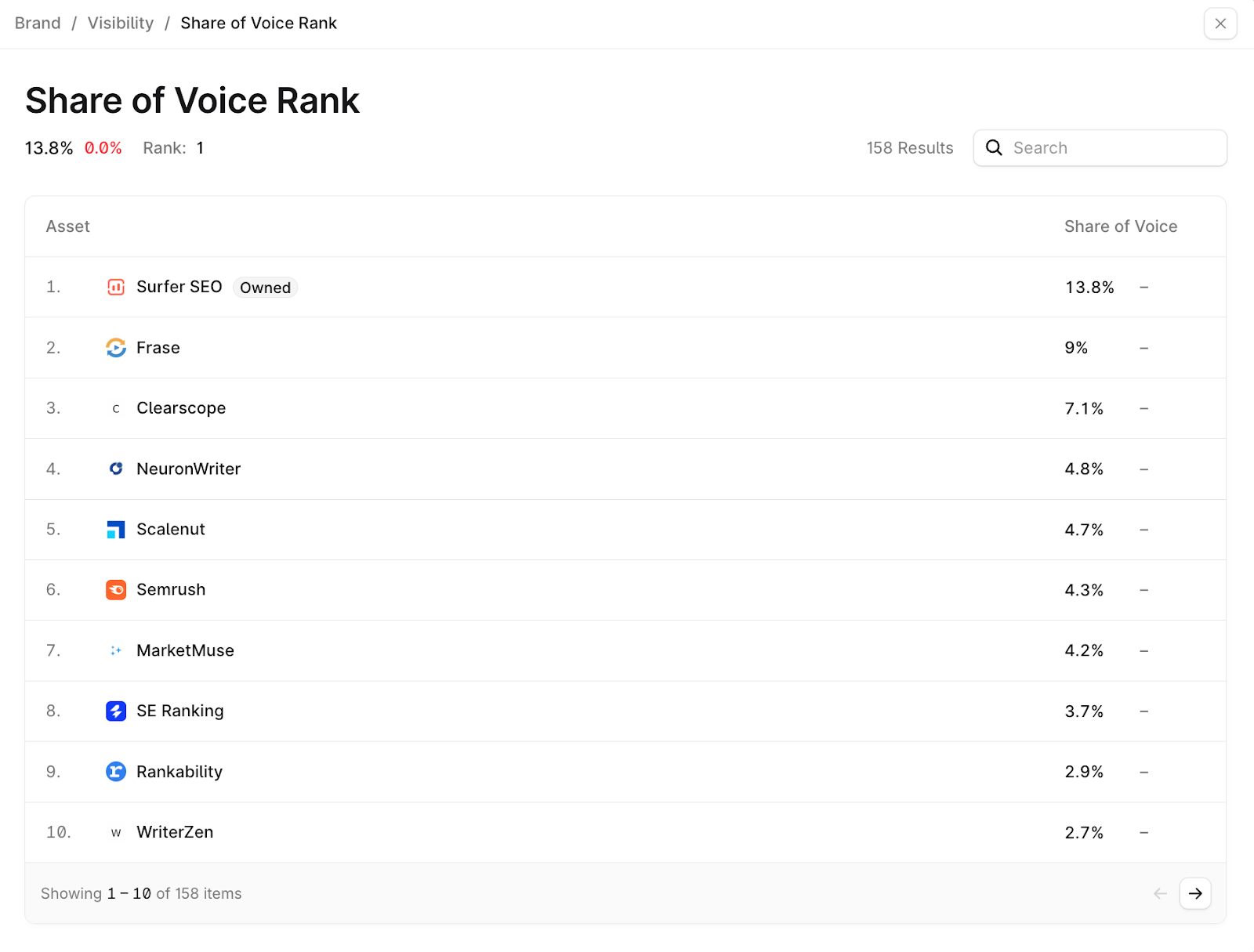
Profound does have a Share of Voice report that can be particularly useful when presenting to stakeholders. It’s a simple way to track category leadership and quickly spot new entrants climbing up the AI vis ladder.
Sentiment analysis
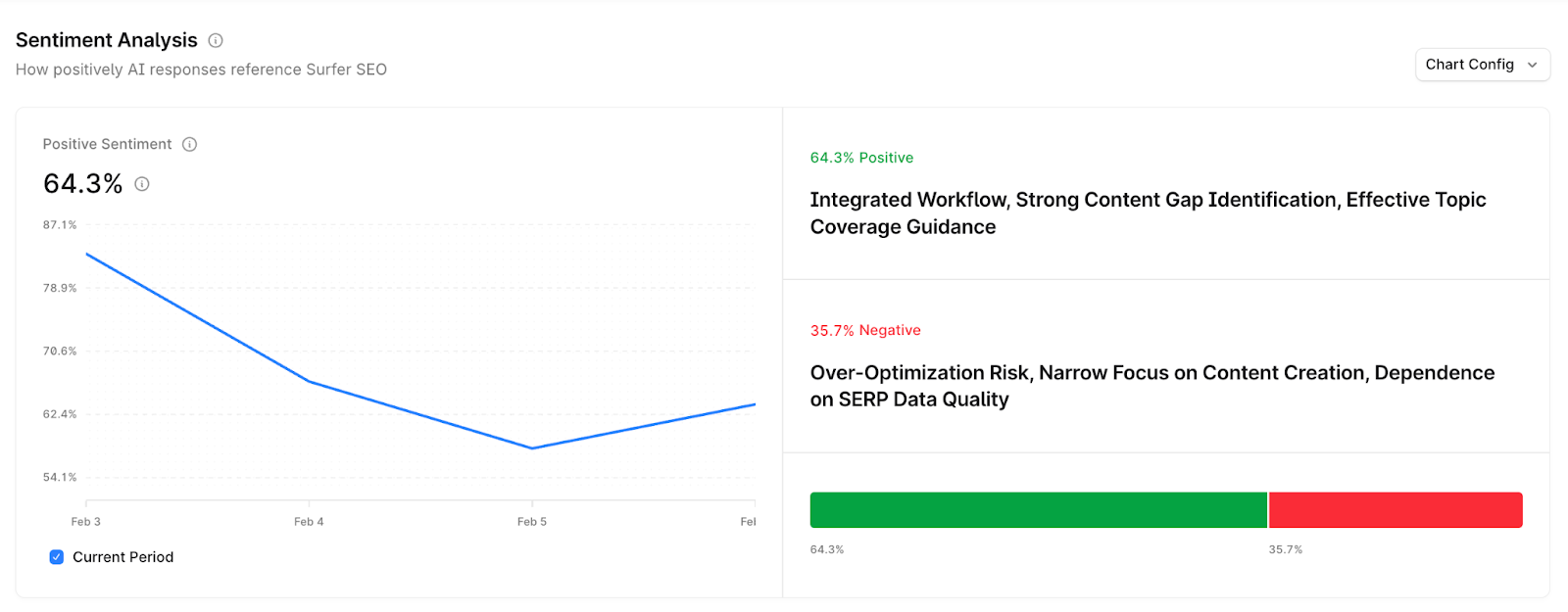
Both Surfer and Profound include sentiment tracking, showing whether brand mentions are positive, negative, or neutral.
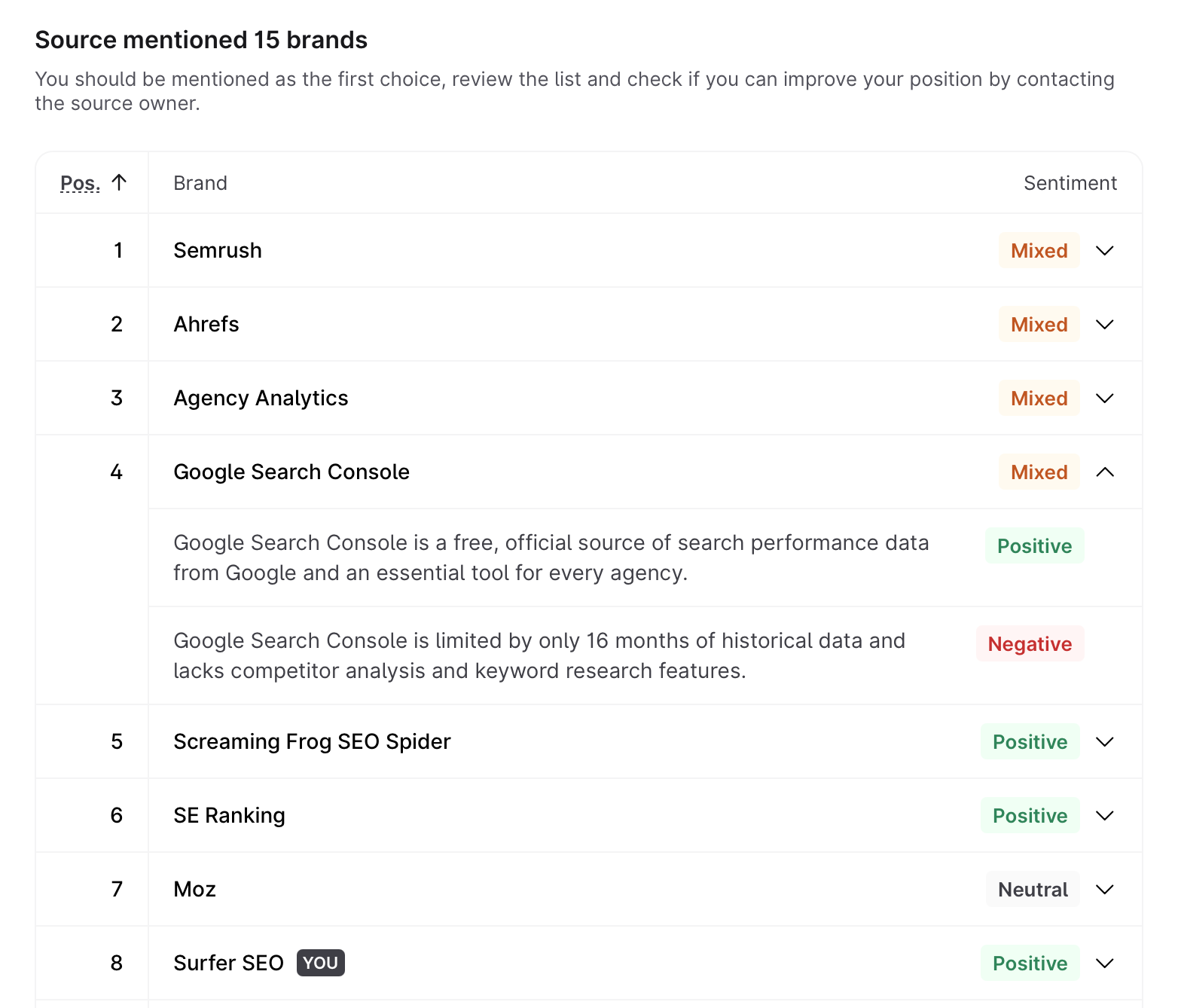
Profound goes deeper here, summarizing the narrative beyond labels. For example, it surfaced that AI models were perpetuating a specific myth about Surfer, which is the kind of insight that can help you decide where to focus corrective efforts.
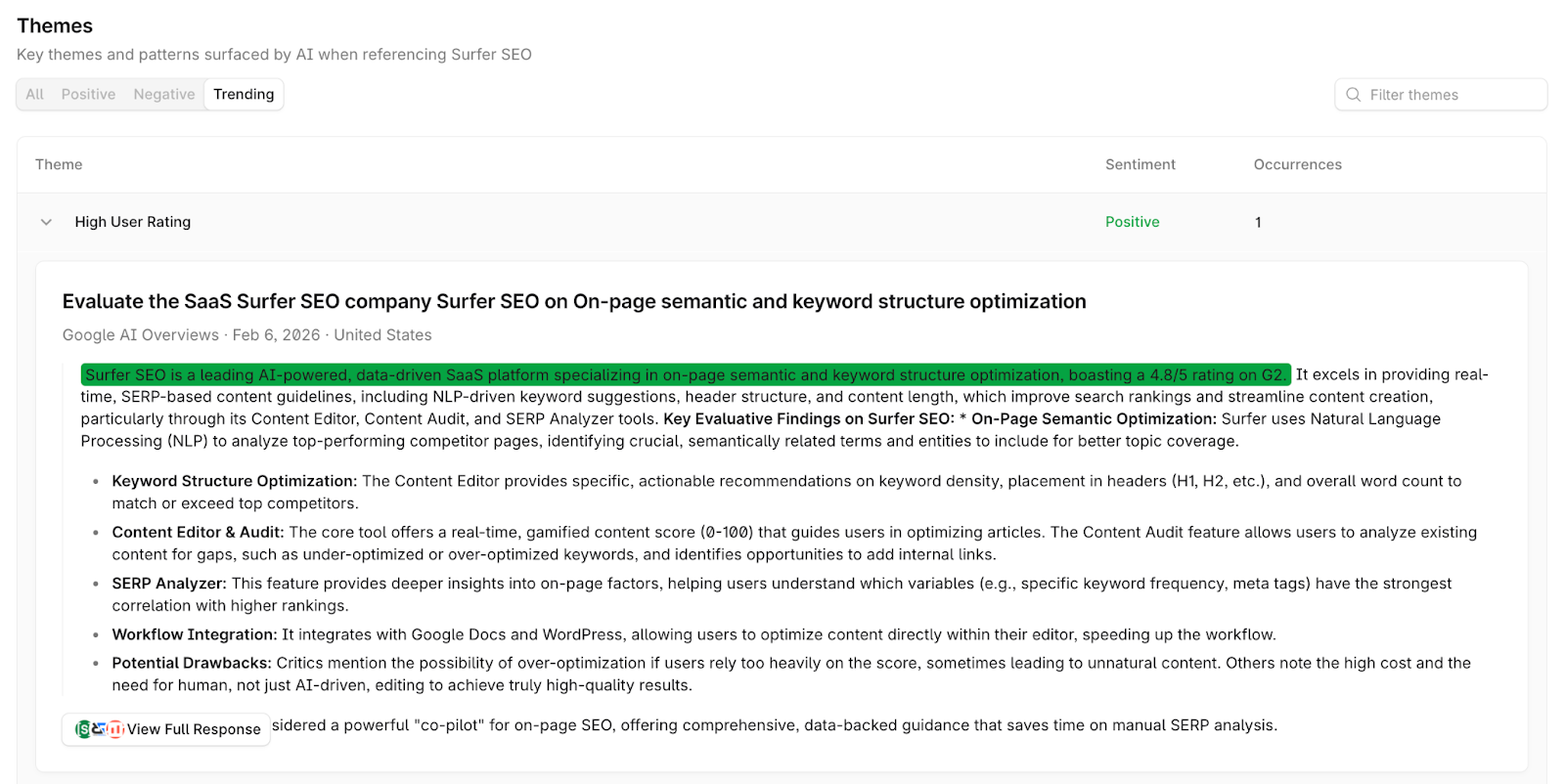
It also shows the actual AI responses alongside sentiment scores and citation sources, so you can trace a negative sentiment all the way back to the content that's driving it. That's a useful point for PR and brand teams.
Comparing each tool’s optimization workflow for visibility
This is where I found the most differences between the two tools show up.
Surfer's workflow connects tracking, research, and content publishing for search visibility.
The AI Tracker shows your brand’s presence in AI-generated answers across LLMs, telling you exactly where to focus your efforts, whether that's optimizing your content or getting mentioned on highly cited third-party pages.
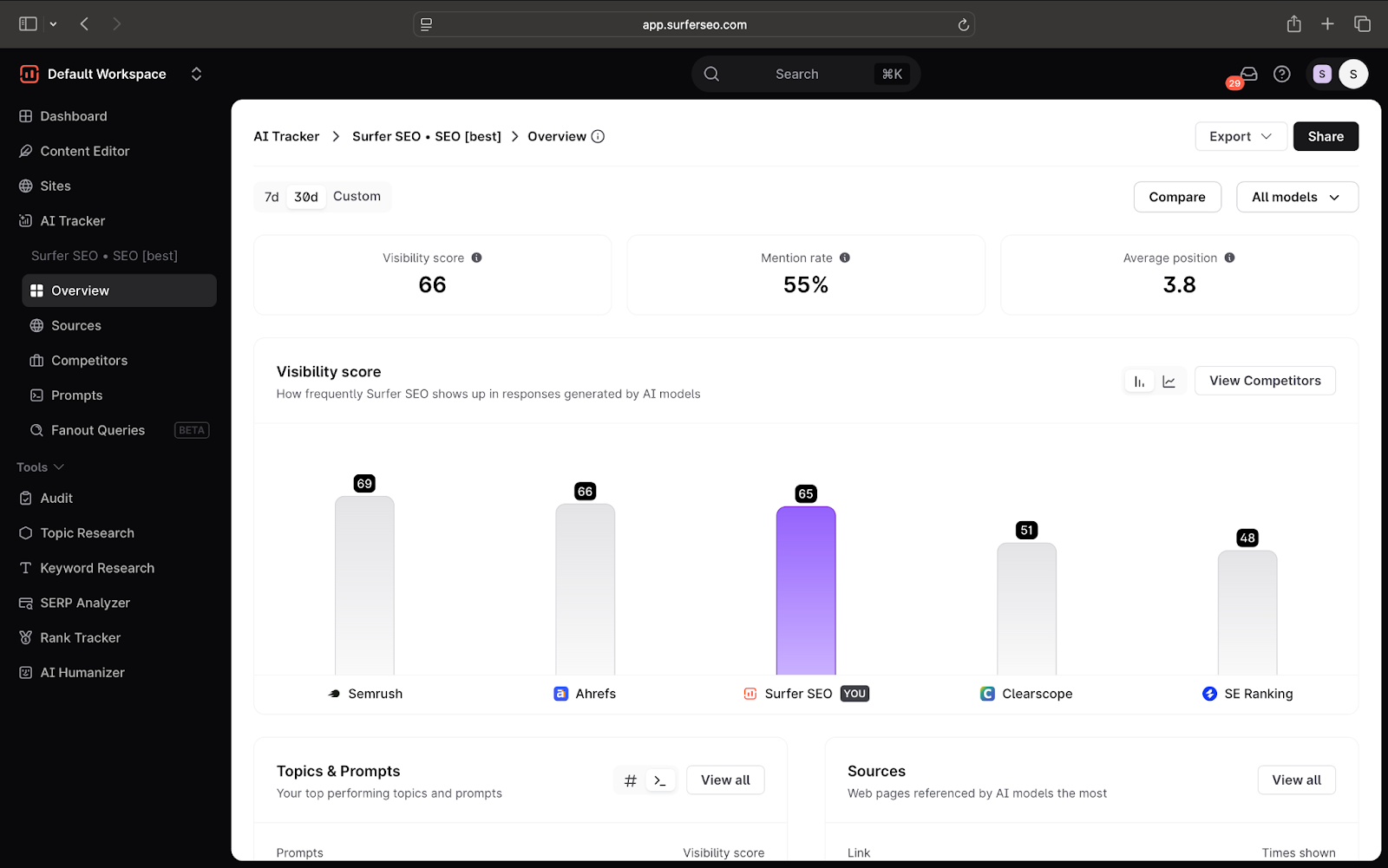
You can identify a visibility gap in AI Tracker, open the Content Editor tool, and write or generate a piece guided by Surfer’s Content Score, optimizing for both traditional SEO and AI-generated responses.
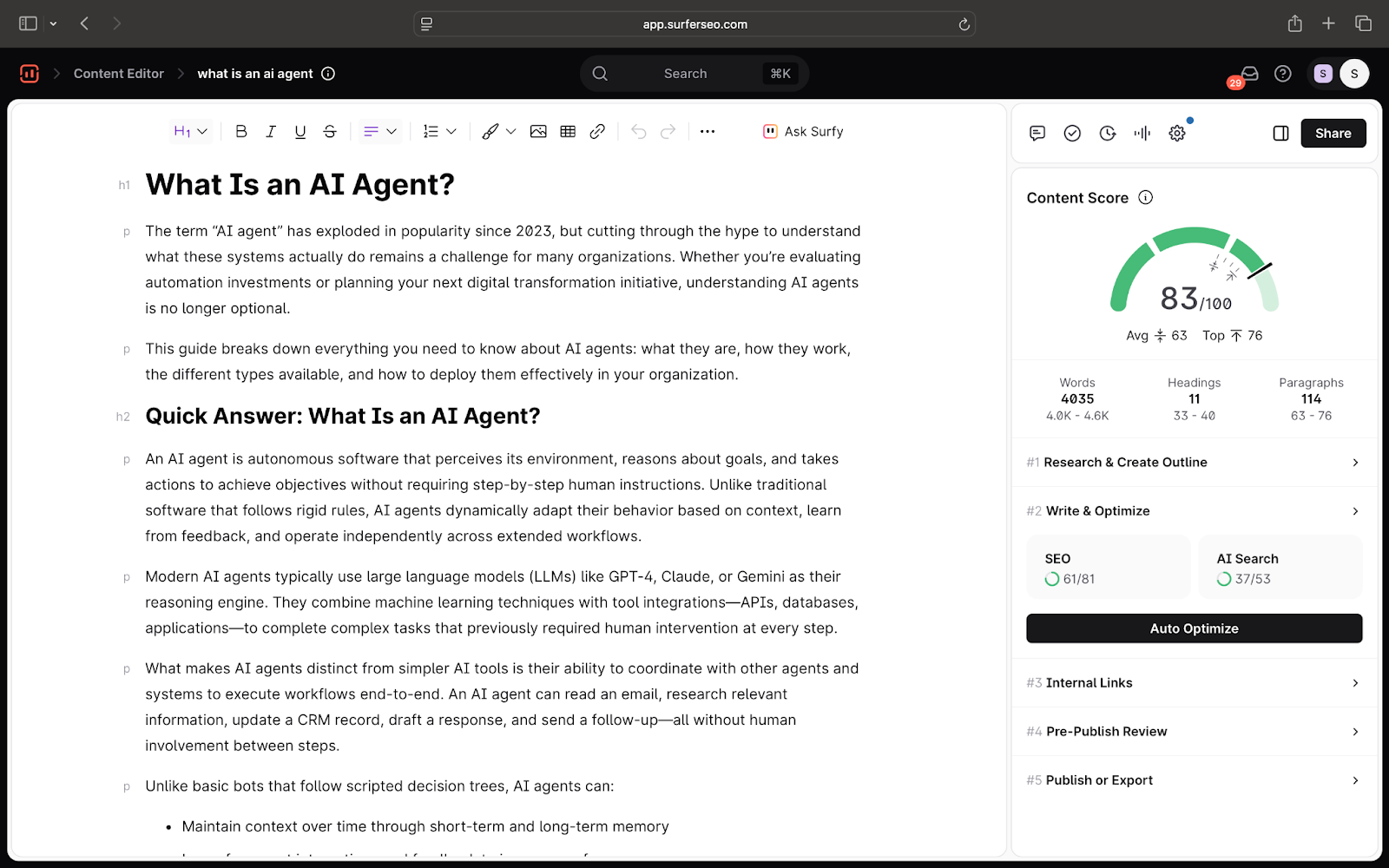
When you're done, you can use integrations to publish directly to WordPress, Google Docs, or Webflow.
From there, you can track whether citations and brand mentions increase. That feedback loop is further strengthened by Surfer’s SEO tools.
Surfer's research shows that pages ranking for 4+ fan-out queries get cited over 3 times more often than pages ranking for just one. Tools like Topical Map help you create that cluster coverage, so your AI visibility improves with every article you publish.
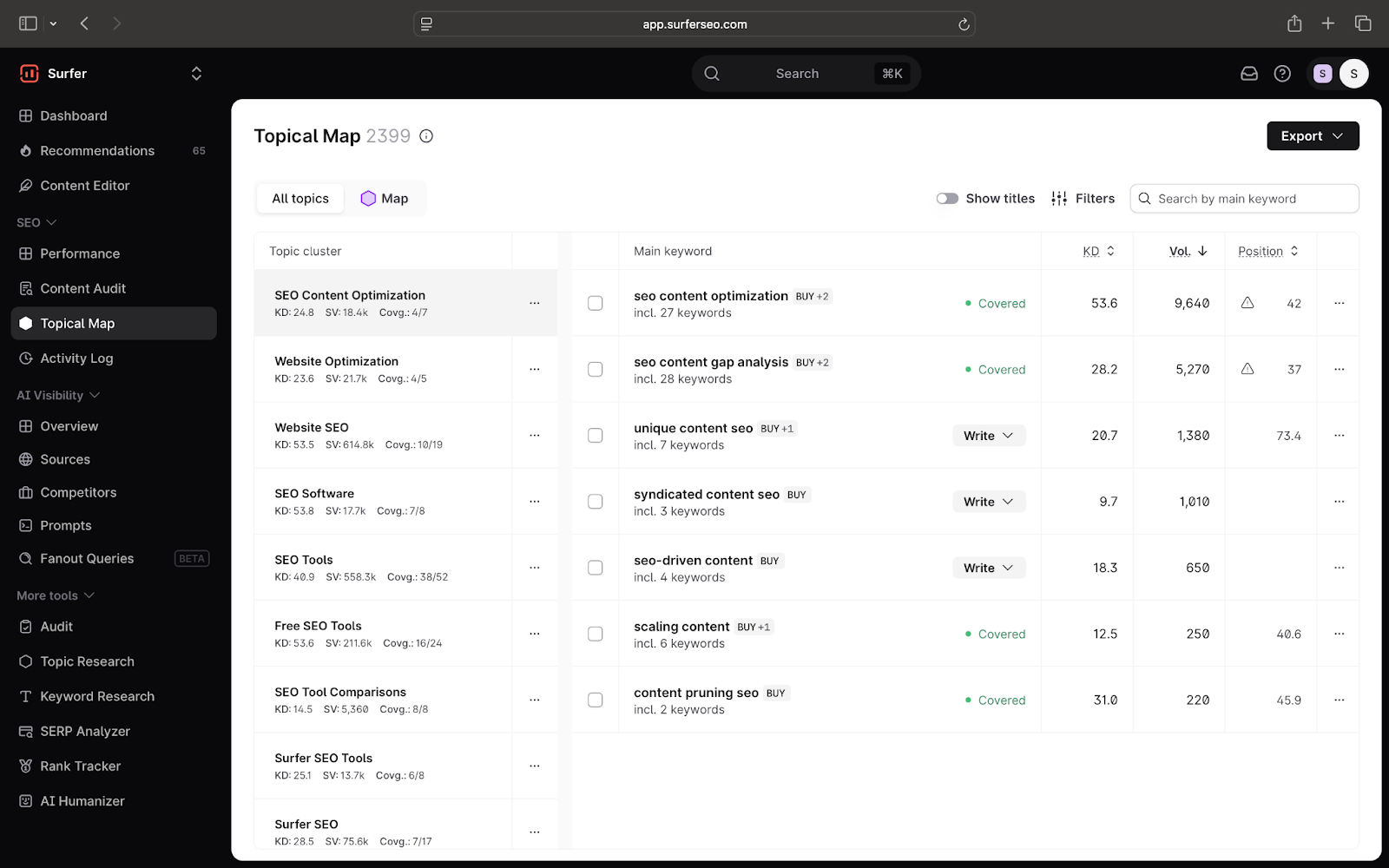
Surfer’s workflow is designed for you to get all your work done within the ecosystem. You are optimizing for search visibility, not just SEO or AEO or GEO.
Have your cake and eat it too.
Profound’s workflow is fundamentally different.
Profound's workflow is positioned exclusively around answer engine optimization. You start with answer engine insights, which identify where your brand is missing or under-represented. You then generate content briefs and article drafts tied to specific prompts.
To write or optimize a piece of content, you first have to pick from prompts you're already tracking. To be honest, this threw me off.
Profound didn’t allow me to enter a new topic directly, which felt restrictive.
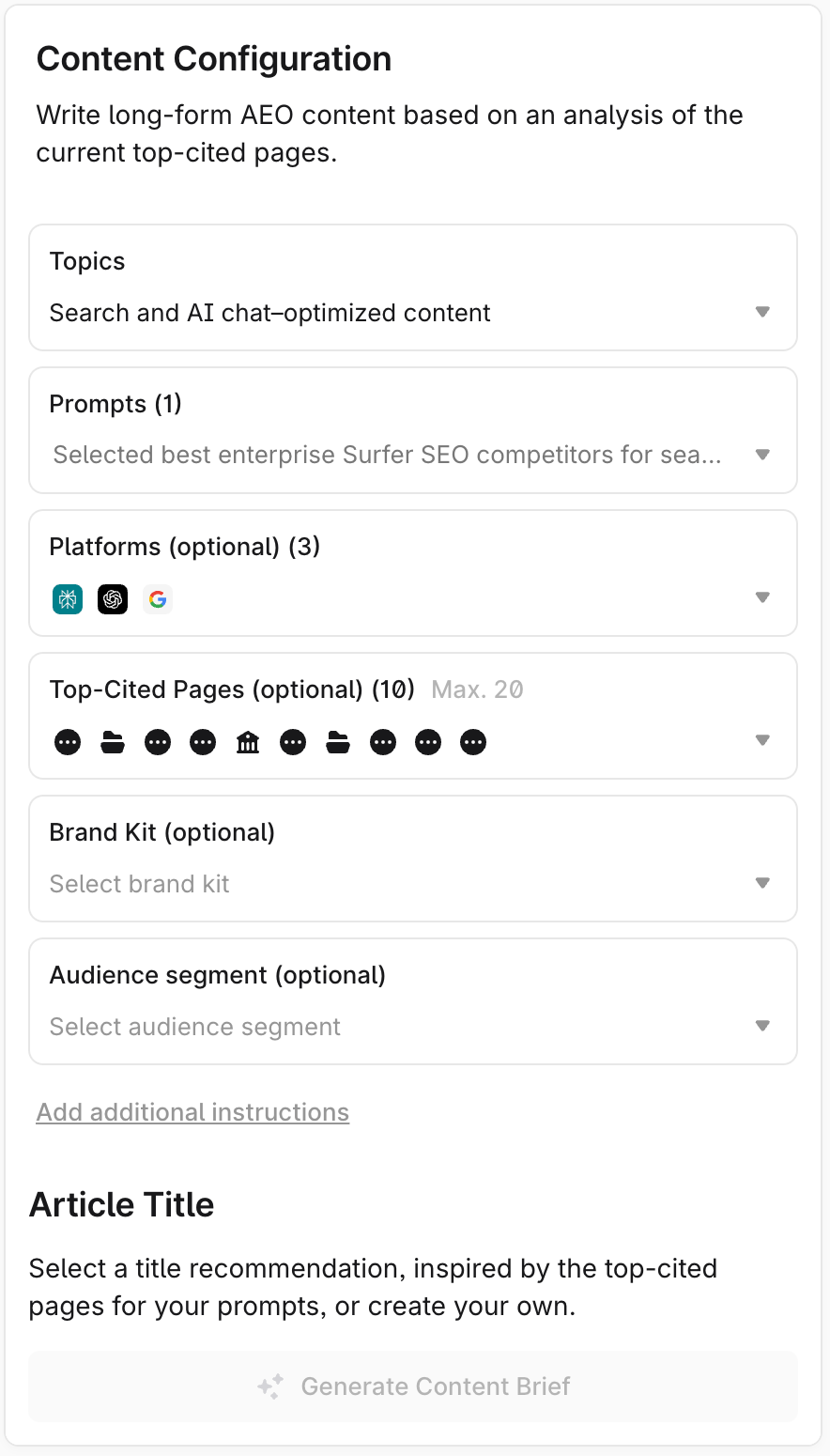
I’m not particularly enthused about this workflow. It means you have to invest in tracking a prompt before you can even begin creating content for it.
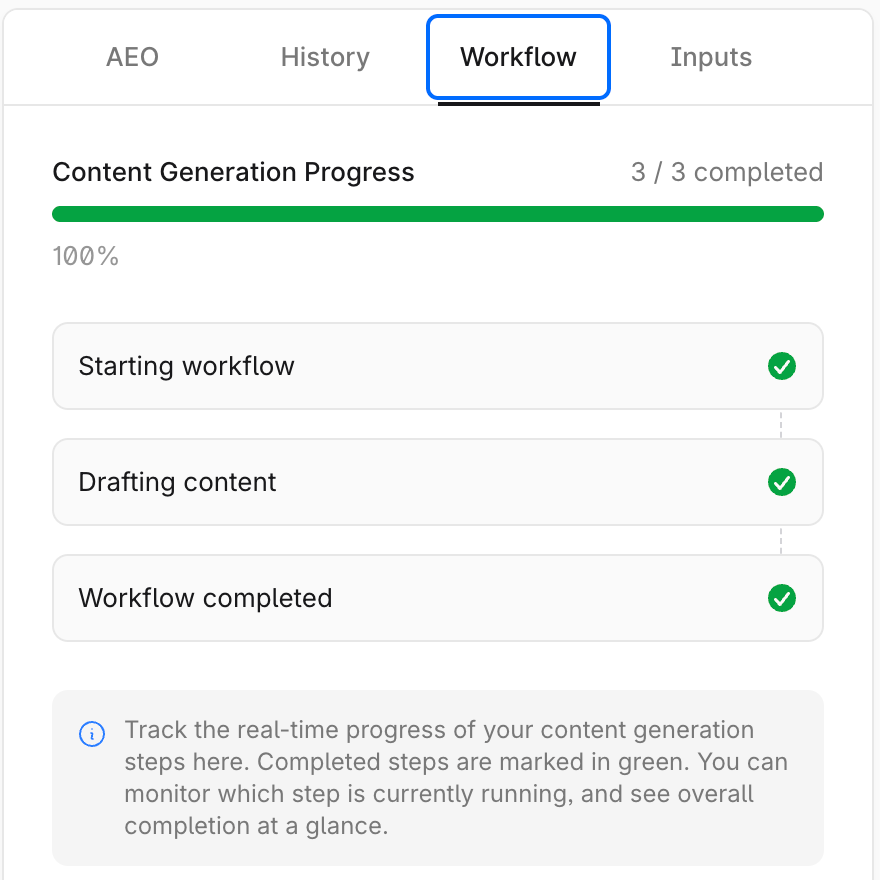
That said, the rest of their content generation workflow was smooth, and I genuinely liked the progress dashboard, keeping me updated at all times.
The UX was fluid and it seems like this part of the app was prioritized for user experience because some of the other areas don’t feel as complete.
I tried the "Smart Suggestion" template and found the brief to be a decent starting point. Like Surfer’s brief, it called for specific talking points rather than generic AI information and included answered FAQs, sources, and internal link candidates.
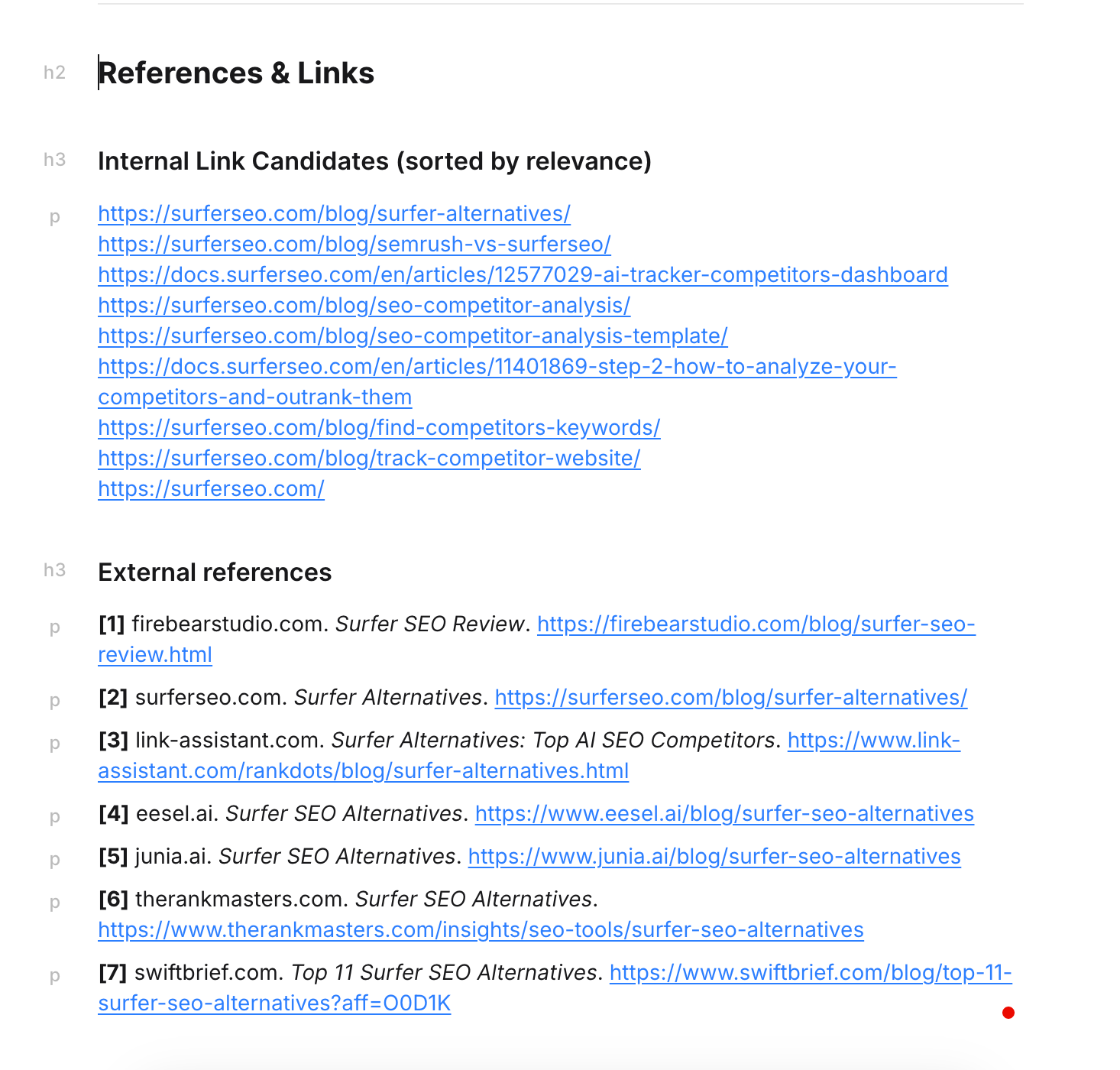
The article itself was typical AI-content, so it would need human editing.
I didn’t see any CMS integration with Wordpress or other platforms, so you will need to copy-paste content.
Like I pointed out before, Profound’s entire workflow is for AI visibility, and there was no mention of SEO related terms like keywords, search volume, etc.
I do think most users would prefer to blend both into a single workflow rather than approach them separately.
The Opportunities tab was less impressive. I clicked through the recommendations for a couple of existing articles and they felt generic: variations on "add subheadings," "cite data," "use schema markup."
This seems very much like a feature still in beta and doesn't really draw from any platform-specific data that Profound may have.
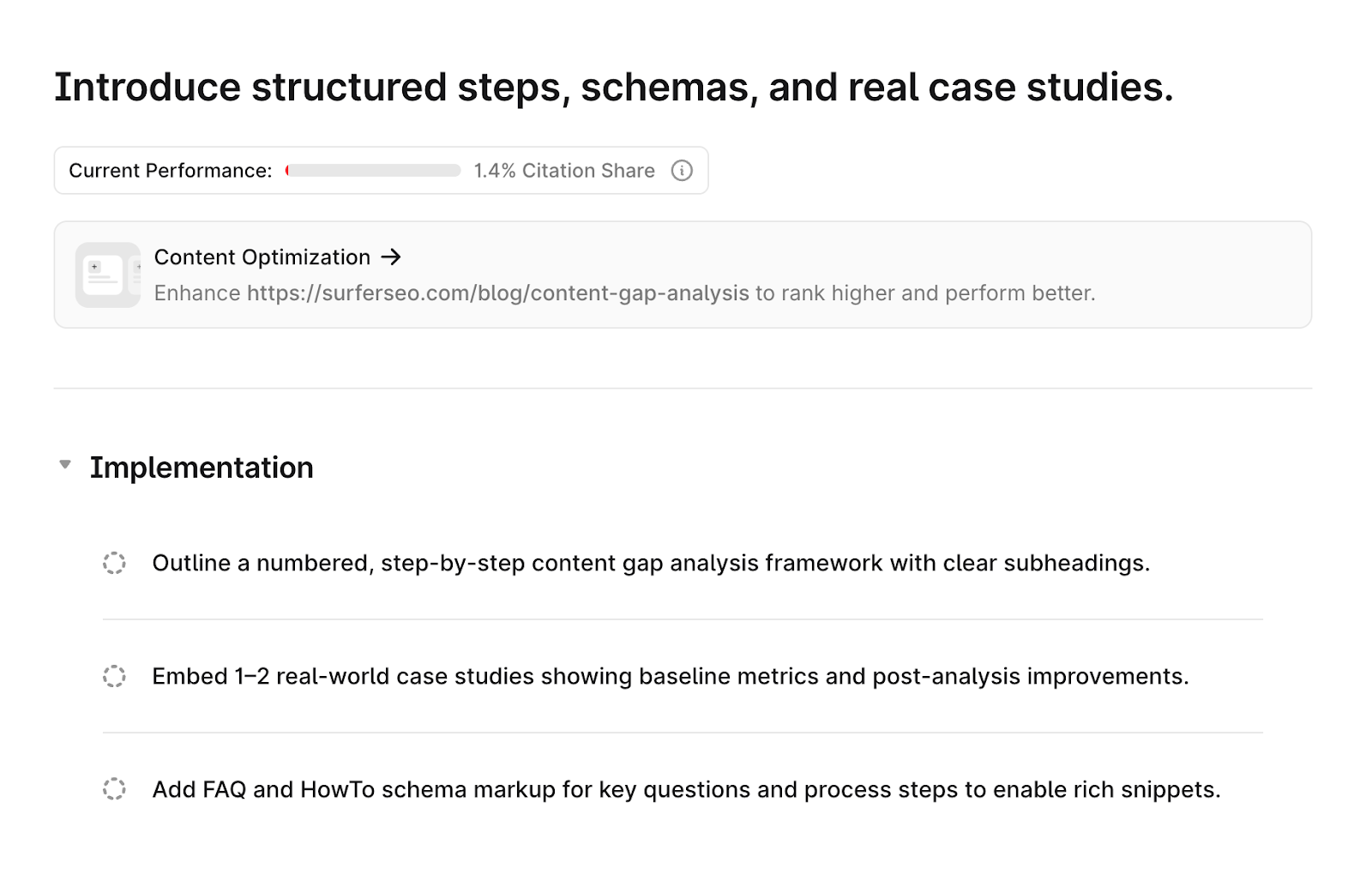
The idea behind auditing your content for improvement is sound and something Surfer does well because users are presented with specific points.
For an apples-to-apples comparison, I audited the same article on content gaps and was graded 35/56 on how well optimized the article is for AI visibility.
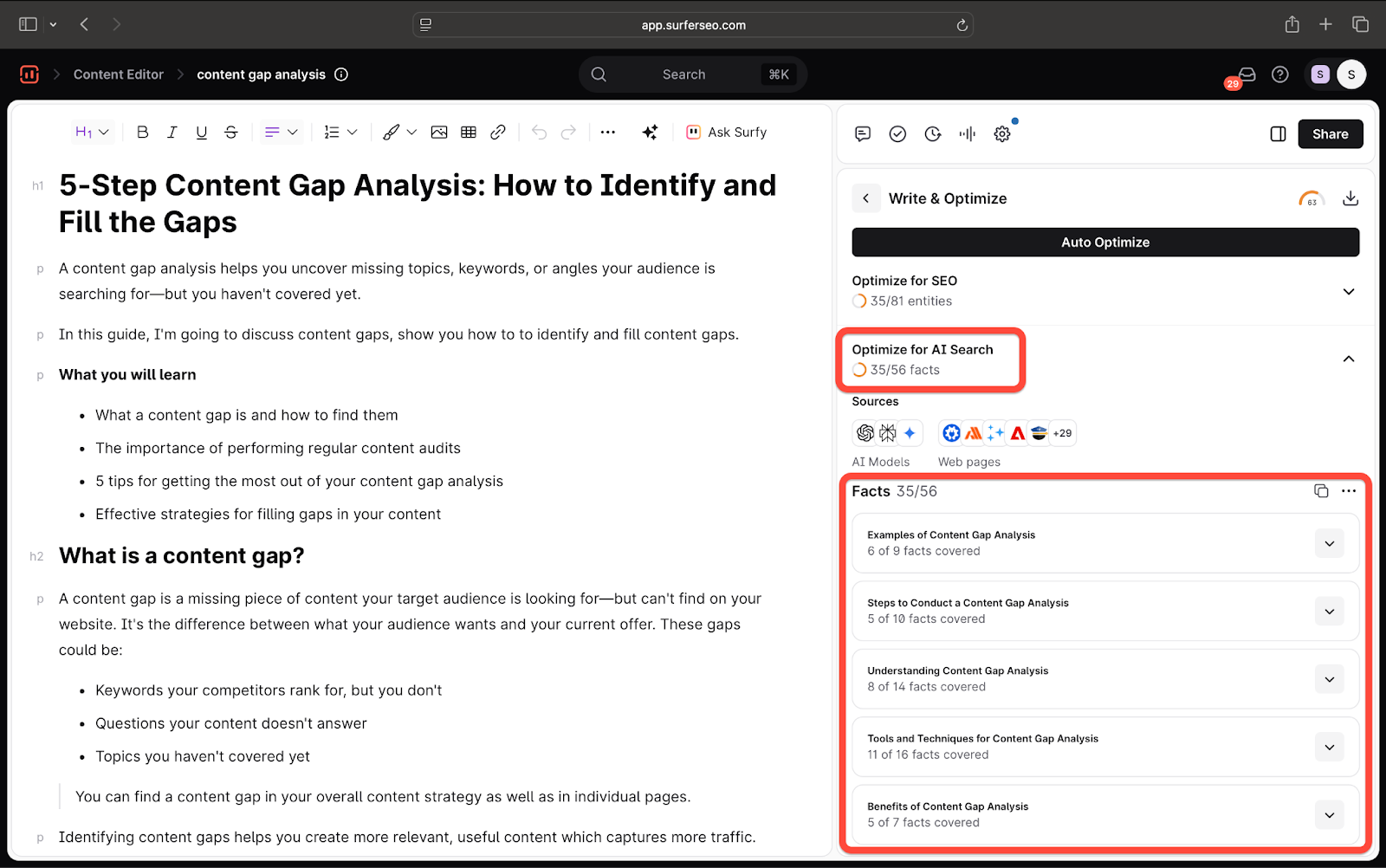
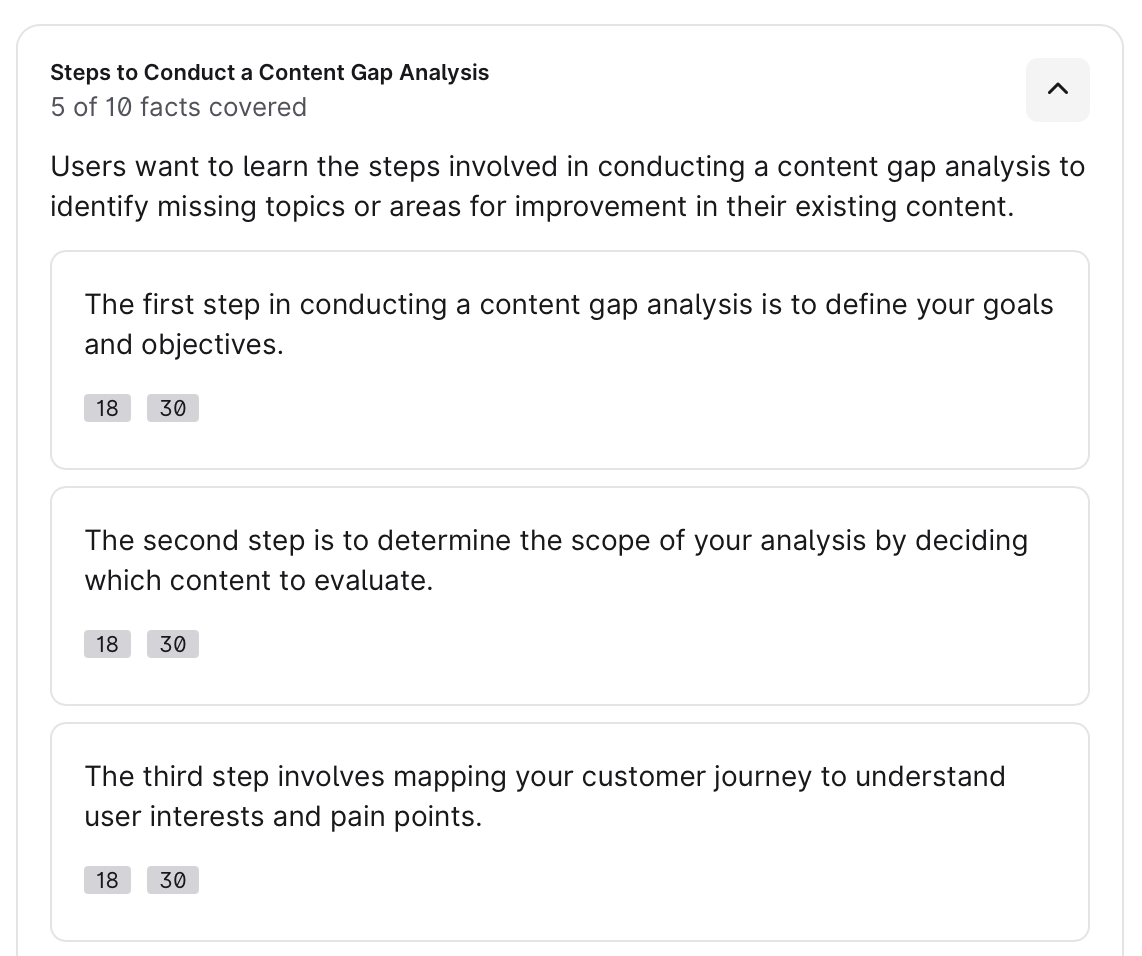
But Surfer went a step ahead and included the key points to add to improve the article’s chances of showing up in AI answers.
Automation with agents
Profound promises agent-led marketing automation. Unfortunately, at the time of testing, agents were locked out of my $399 monthly plan and I couldn’t test them first-hand.
My observations here draw from their marketing material and claims.
Profound’s agents seem to replicate the entire research-to-publishing workflow that a human editor would do for search or answer engine optimization.
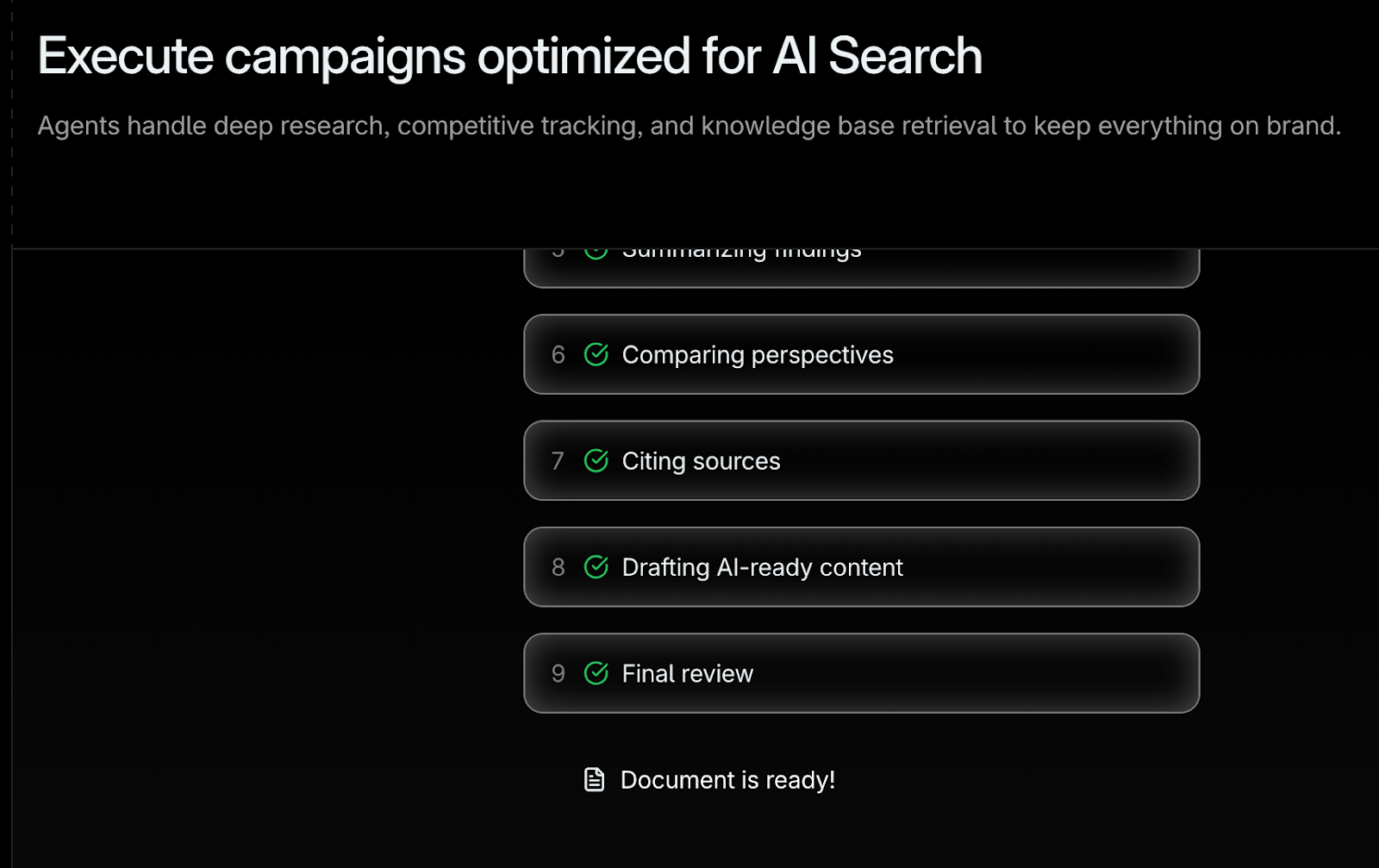
Which is, of course, very helpful.
Except that Surfer has been doing the exact same thing for a while now. We don’t call it an agentic workflow because to us, an agent is an autonomous worker capable of going beyond research, analysis and content generation.
Surfer automates your research-to-publishing workflow by analyzing, researching and generating content for search visibility. That automation is what’s happening behind the scenes while you wait for your content.
We just preferred to credit Shakespeare instead of AI agents.
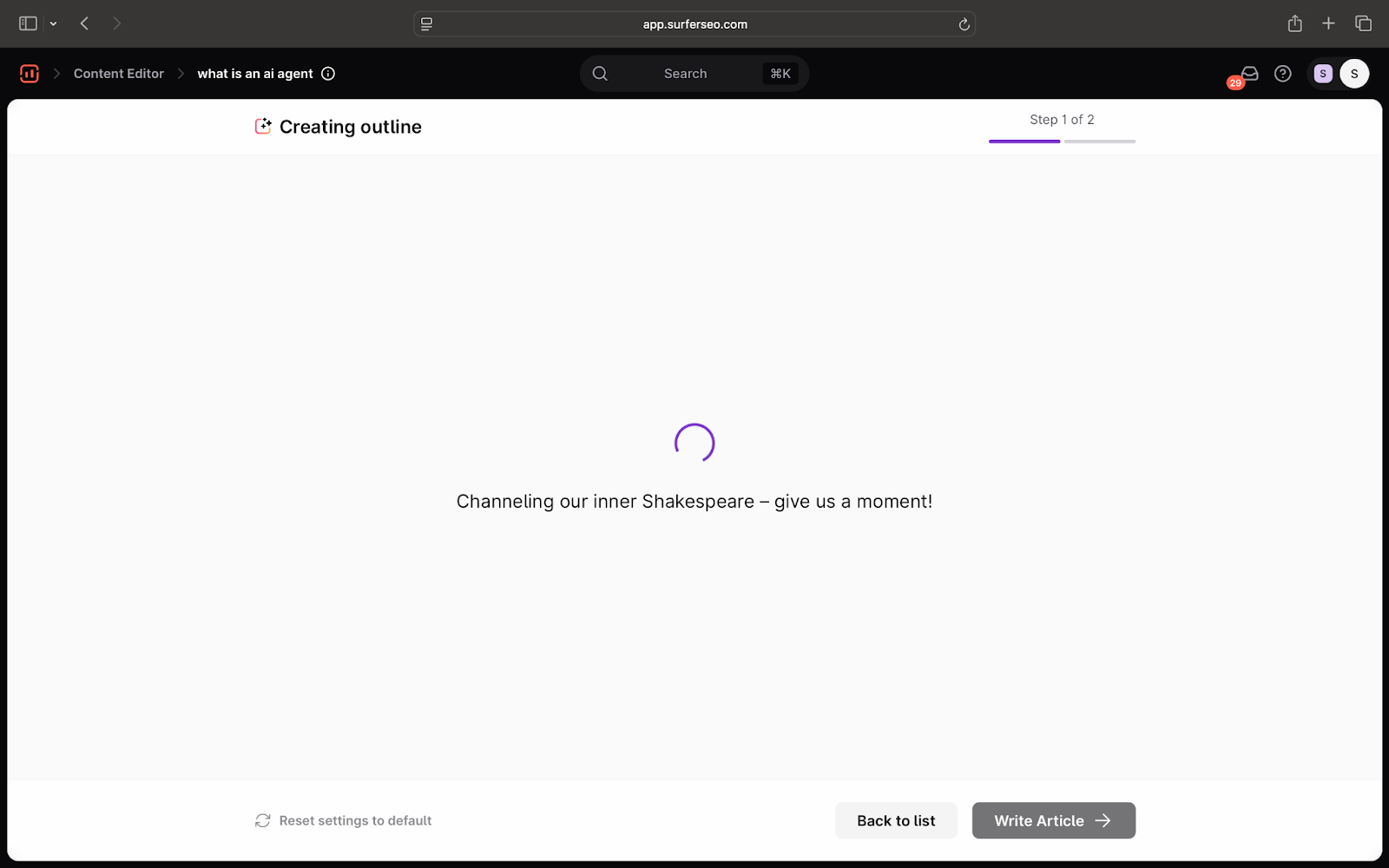
As of testing, I did not see anything profound about agents but let me know if you get a chance to test a true agentic operator first-hand.
See what I did there? ’tis low-lying fruit, c’mon.
Some disclaimers
Agent analytics required permitting access to our data, so I skipped it. The reports do look very interesting though, because they will include insights into AI bots – analytics tools that depend on JS and cookies aren’t able to track this as of today.
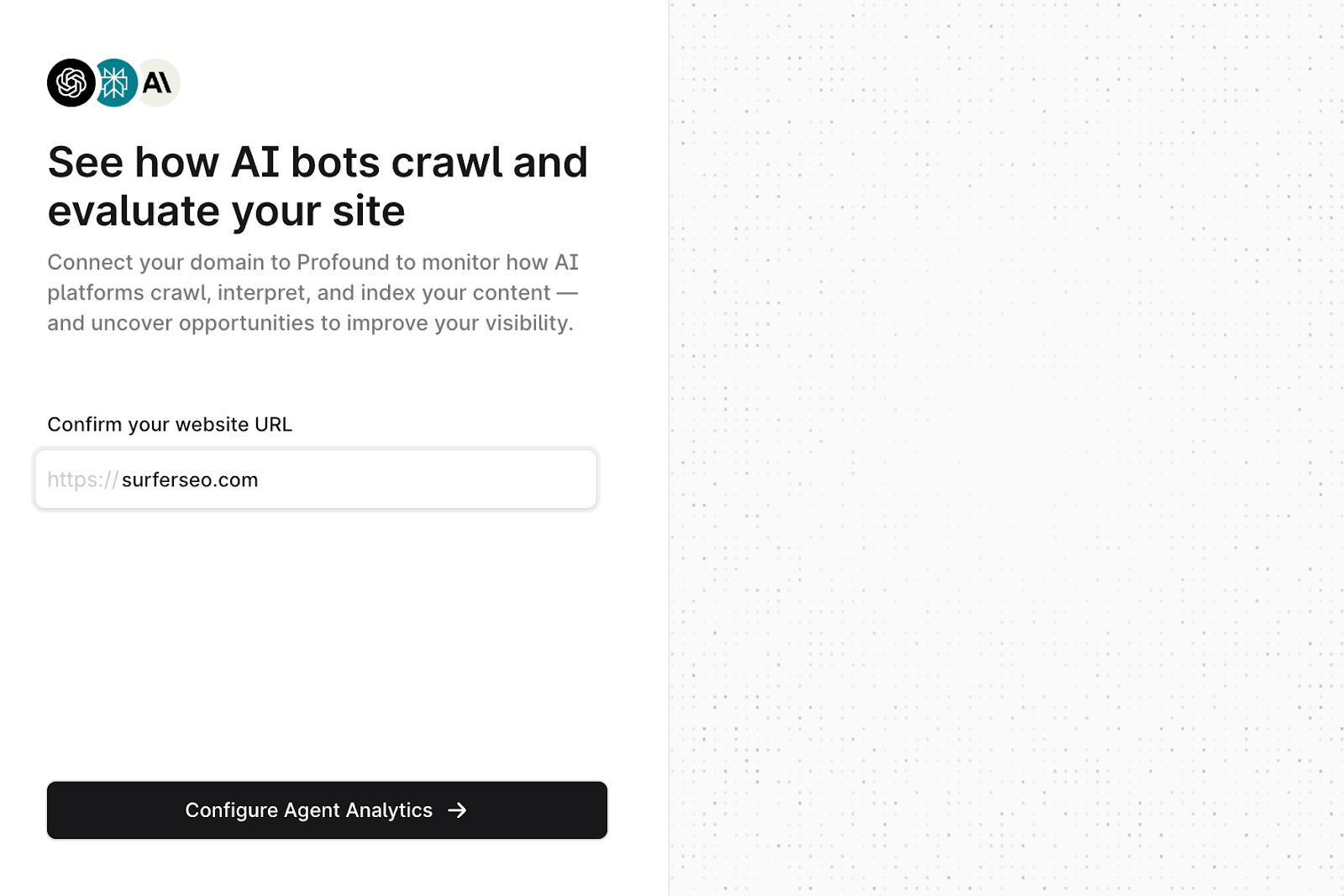
This is server-side tracking that connects to CDN providers to pull server logs showing how AI crawlers interact with your site.
I'm curious about accuracy and how much of the analysis layer is genuinely novel versus what you'd get from reading your server logs directly, but the convenience of having it in one place has clear value.
Personas, Regions, Shopping were in beta at the time, so I couldn’t access them. Plus, some of these required an enterprise plan that would need a demo.
I tested Profound in February and they’re moving rapidly, so some features may have improved/changed.
Pricing comparisons
As of March 2026, Surfer’s Pro plan allows you to track 50 prompts across 5 AI platforms and optimize 360 pages for AI visibility in addition to Surfer’s suite of SEO tools.
That means that for a monthly total of $182, you can detect or humanize AI content, audit pages, perform keyword and prompt research, build topical clusters and optimize for traditional search results along with AI generated answers.
The plan also includes 5 team seats, data exports and CMS integration. There are other higher or lower plans based on your needs.
Surfer’s enterprise plans start at $999/month.
Profound pricing
Profound's equivalent Growth plan is billed at $332/month and helps you track 100 prompts across 3 AI search engines and optimize 6 articles. The price is close to Surfer’s top plan – $299/month when billed annually that offers all the bells and whistles you can ask for.
Since Profound is only positioned for AI visibility, you’ll need to buy a separate SEO tool stack. Enterprise pricing is demo-walled but reported to start at $2,000 to $5,000+/month.
Which tool is right for you?
This may come down to three things:
- how you/your team thinks of AI visibility
- what your budget looks like
- if we’re friends
Not necessarily in order.
Pick Surfer if you are optimizing for both SEO and AI visibility
Surfer is ideal for growth teams and agencies who need to optimize for search visibility on all fronts. Choose Surfer if you want AI visibility integrated with SEO analysis and optimization in one platform.
You can track visibility gaps, create optimized content, and publish to your CMS, all without leaving the tool. The platform is beginner-friendly with minimal onboarding and blends SEO and AEO into a seamless single workflow.
Your team doesn’t have to be a set of SEO wizards, and anyone can use and benefit from Surfer.
Budget-wise, Surfer currently offers significantly more functionality per dollar.
Pick Profound if AI visibility is your primary job
Choose Profound if your company treats AEO as a dedicated channel, separate from SEO. If your primary job is understanding AI perception across models and reporting those insights to stakeholders, Profound makes sense.
You’ll be able to make the most of their platform if you have a dedicated team for AI search visibility and currently employ a workflow that is different to SEO practices.
The prompt volumes dataset is Profound's most unique asset. Understanding what real users are typing into ChatGPT and other platforms is critical, but the numbers appear wobbly at the moment, so do your due diligence because if your team can't trust the data consistently, you'll underuse it.
And while Profound offers AI monitoring depth, remember that you'll still need separate tools for search engine optimisation. Unless of course, you think SEO is dead.
They're both competent tools that will help you achieve your AI visibility goals, so I dont think you can go wrong either way. Choose the tool that most closely fits your existing or preferred workflow.
[Updated as of Feb 2026.]




.avif)