If you get lots of search traffic to your website but few customers, there could be a problem with your SEO funnel, or a lack of one.
An SEO funnel guides users from the query stage to the conversion stage.
An incorrectly set-up funnel is like sending users down random side streets rather than pointing them smoothly to the destination with a pre-planned route. They might convert eventually, but there is a much easier, structured way to ensure more people reach the destination.
When you set up an SEO funnel correctly, you help guide users through the buyer’s journey.
This article explains what an SEO funnel is, the benefits, how it differs from a traditional marketing funnel, and tips to optimize your funnel as part of your SEO strategy for success.
What is an SEO funnel?
An SEO funnel is the journey a user takes from their first visit to your website to becoming a customer. A user can join the funnel at various stages, just as a train has many stops but one final destination.
For example, a user might find your website when searching for an answer to their query, “the benefits of investing.”
This is their entry point into your funnel. Your content then guides and funnels them to the next stage, whether that’s a guide to investing for beginners, an email sign-up, or a free trial to your investment platform.
The beginning of a funnel could also include an LLM mention to a query in ChatGPT, even if it does not explicitly link to a piece of content. It could plant a seed, build your brand, and eventually lead them to enter your funnel.
All SEO funnels are different but they follow similar rules and principles, which I cover in this article.
How the SEO funnel differs from the traditional marketing funnel
The SEO funnel is often confused with a traditional marketing or sales funnel. A marketing funnel is a model that tracks how a user moves from awareness to purchase decision or conversion across all channels, including social media, email, events, paid ads, and organic search.
Its ultimate goal is to guide prospects through the three funnel stages:
- Awareness
- Consideration
- Decision
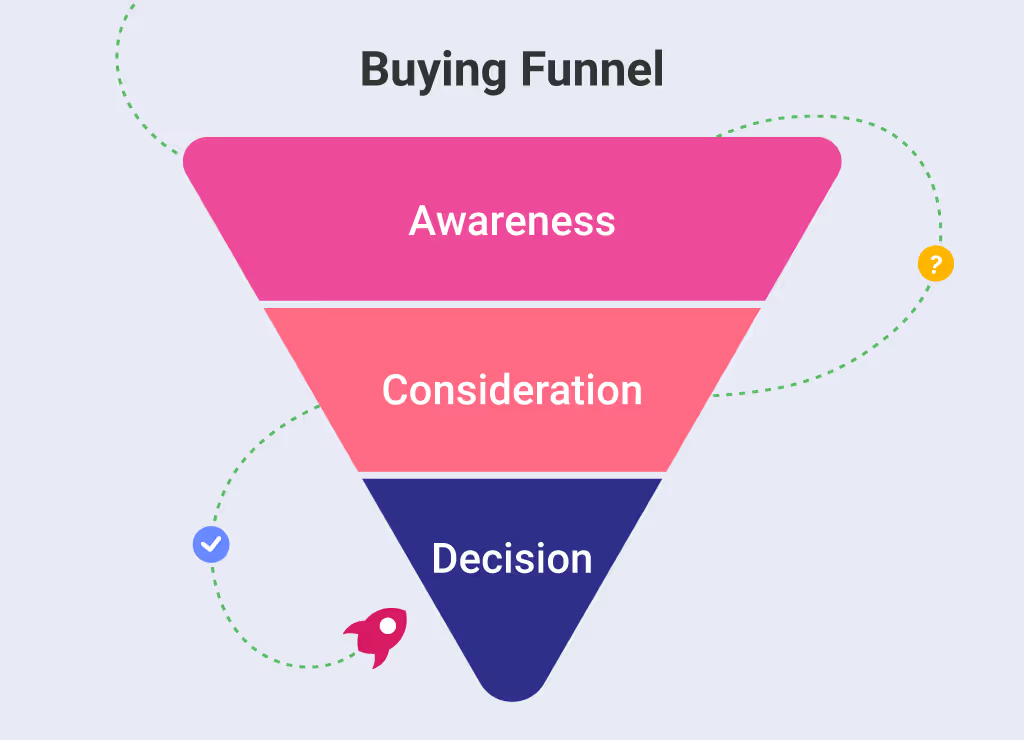
It does not matter where the user finds you; they enter into the funnel and begin their user journey.
In comparison, an SEO funnel is exclusive to search engine optimization. Instead of mapping content across multiple platforms and even in-person, it focuses specifically on search.
Traditionally, an SEO funnel would focus on optimizing content for search engines like Google. It now includes optimizing content for AI overviews and large language models (LLMs), such as ChatGPT and Perplexity.
Think of an SEO funnel like placing a microscope on the user's search journey. It’s how they discover, engage with, and convert through your online content.
What is the purpose of a search funnel?
The purpose of a search funnel is to guide prospective customers through the buying process.
It utilizes the same hierarchy as a traditional marketing funnel, but with a greater focus on each stage (awareness, consideration, and decision), through the SEO lens.
At the beginning of the funnel, readers typically encounter educational content, including blog posts or guides.
Meanwhile, the middle of the funnel targets the consideration stage, which might include comparison pages, guides, or case studies. The decision stage includes high-intent relevant queries, along with product and landing pages to drive conversions.
Each stage of the funnel helps move the user to the next stage.
How to create an SEO funnel
To create an SEO funnel, start by understanding your target audience's customer journey.
Map out key questions, keywords, and objections they are likely to face on their buying journey.
Ask your sales or customer service team which questions they answer most frequently, and browse Reddit and other forums to better understand user problems in your specific niche.
When starting to craft a sales funnel, this can be messy.
Think of it like a brain dump—get everyone down on paper or into a Google Doc, then start matching the pieces together to see how they fit into your content strategy and funnel.
Below, I explain the funnel's stages and how to create content for each.
Top of funnel (TOFU)
At the top of the funnel is the awareness stage. This is when prospective customers first discover your content.
When focusing on SEO, this will likely include blog content and guides with an emphasis on educational content, answering various user queries.
For example, let’s say you run a kitesurfing business.
Possible blog content in the awareness stage may include:
- Is kitesurfing hard for beginners?
- What’s the difference between kitesurfing and kiteboarding?
- Am I too old to learn to kitesurf?
- Can you kite surf if you can’t swim?
- What do you need to start kitesurfing?
I like to use a Google Sheet to organise content ideas. You can also add the search intent and any additional columns needed.
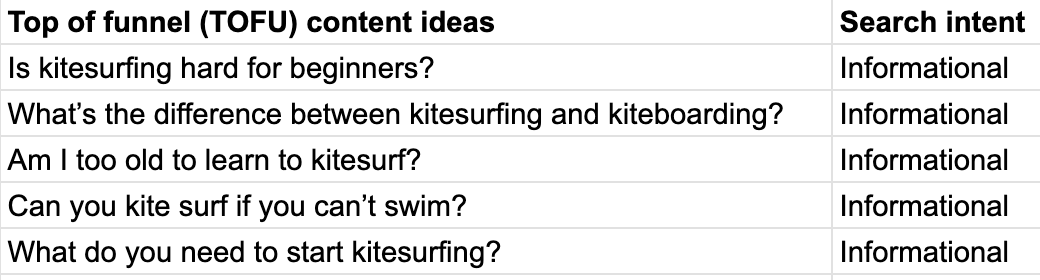
The goal of this content is to get prospective customers to enter the funnel.
By answering their queries, you begin to appear as an authority on kitesurfing. They are starting to trust you.
When creating content at the top of the funnel, or in the awareness stage, avoid being sales-y. Readers want to learn something new. They don’t want sign-ups, pricing, pop-ups, or other distractions interrupting their experience.
Keep your top-of-the-funnel content educational and easy to follow, with minimal distractions.
Naturally link to conversion or mid-funnel content in the text or at the end of the post, but avoid overdoing it.
Middle of funnel (MOFU)
Think of middle-of-the-funnel content as a bridge that connects awareness to decision stages.
At this stage, your target audience already knows they are interested in kitesurfing and now wants to find out how and where to learn.
Example content may include:
- How to choose the right kitesurfing school for beginners
- What to expect in your first kitesurfing lesson
- How long does it take to learn kitesurfing?
- Where to learn kitesurfing

MOFU content is the consideration phase. Guide readers by answering questions and possible objections.
It can also include webinars and other content that require sign-ups, which will ultimately lead them to the conversion phase at the bottom of the funnel.
During the MOFU stage, readers are likely assessing different options. In my example, there would be different kitesurfing schools for beginners. So, ensure you highlight what sets you apart in your content.
Bottom of funnel (BOFU)
The bottom of the funnel is when readers are ready to make a decision. They are evaluating their options, comparing prices across product pages and service pages, and seeking reassurance before they buy or take the next step in the conversion process.
Bottom of the funnel content using my Kitesurfing example would likely include:
- Kitesurfing cost
- Kitesurfing lessons near me
- Where to go kitesurfing
- Kiteboarding package

For my kitesurfing example, this will also include local SEO keywords. If you are creating an SEO funnel for a brick-and-mortar business, you will likely need these as well.
For example, relevant keywords might include:
- Kitesurfing Arizona
- Kitesurfing lessons in Sydney
- Kitesurfing rental
- Where to learn Kitesurfing in Florida Keys
In the final bottom-of-the-funnel stage, remove as much friction as possible. Make it easy to convert.
In practice, this means having simple, easy-to-follow call-to-actions, simple booking forms, and transparent pricing. The goal is to make the path from search to conversion as smooth as possible.
Post-purchase
The post-purchase or conversion phase, also known as the advocacy stage, is often forgotten.
Many websites use an SEO funnel, but it's linear and one-directional.
Instead, try to think of your marketing funnel more like a flywheel.
You can re-engage customers post-purchase with new content or re-engage readers who did not convert the first time going through the funnel.
For example, one user reads your "How to Start Kitesurfing" article, signs up for a webinar, attends, but does not convert. They do not book a kitesurfing session.
At this point, you can send them promotional content (not spam) with articles and videos to continually help and engage the customer. They then either re-enter the top of the funnel and work their way through it, or skip the first two phases and convert when it’s convenient for them.
Remove the expectation that all users will follow your SEO funnel linearly or convert the first time. Many users will never convert. However, you get more opportunities to re-enter users into your flywheel at various stages of the funnel.
How to optimize your funnel for conversions
Optimizing your SEO funnel for conversions means making it as easy as possible for users to move from one stage to the next.
Focus on reducing friction at each touchpoint and ensure content is aligned with each stage of the buyer’s journey. This is not something you will get right the first time, and it is not a one-and-done process.
In fact, you will get better results by tweaking your content and using conversion optimization techniques, including running split tests to see what performs best and actually moves users through the funnel.
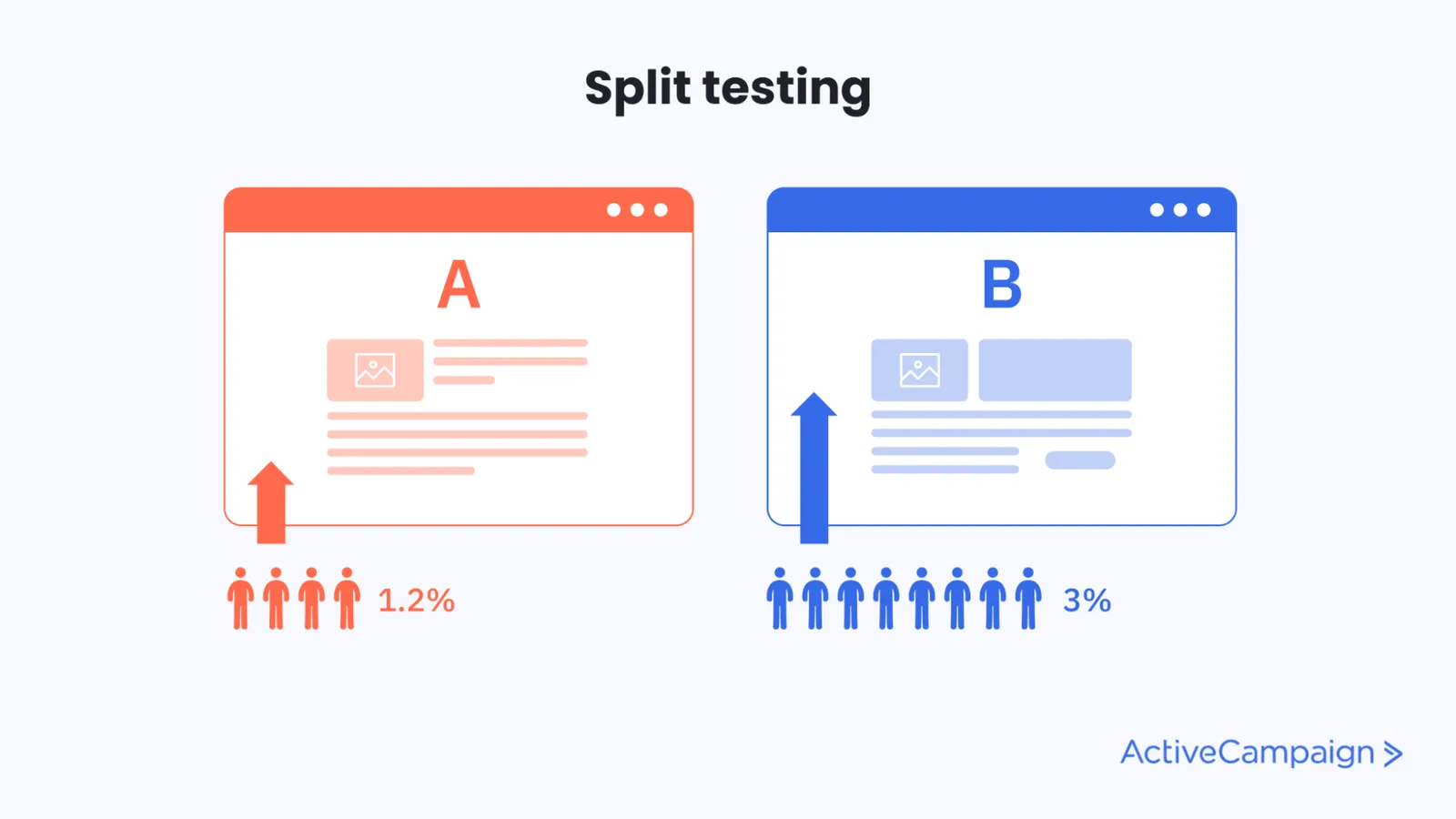
Example conversion optimization techniques for each stage of the funnel include:
- Tweaking copy (making it more persuasive)
- Adjusting user intent
- Using simple forms
- Adding social proof to MOFU and BOFU content (testimonials, case studies)
- A/B testing headlines, buttons, and layouts
- Offering free trials and downloadables (at different stages of the funnel)
- Optimizing internal linking between pages to effectively guide users through the funnel while improving SEO
- Analyzing user behavior and making changes where needed
For more content optimization advice, read my content optimization strategy guide.
Measuring SEO funnel performance
There are many ways to measure your SEO funnel performance to help you get the most out of your SEO efforts.
Many marketers make the mistake of focusing only on ranking pages, not optimizing for conversions.
You can have excellent SERP results and land high-volume specific keywords, but if you are not converting users, you’re wasting your marketing budget.
Here’s how to measure SEO funnel performance at each stage of the funnel.
TOFU measurement
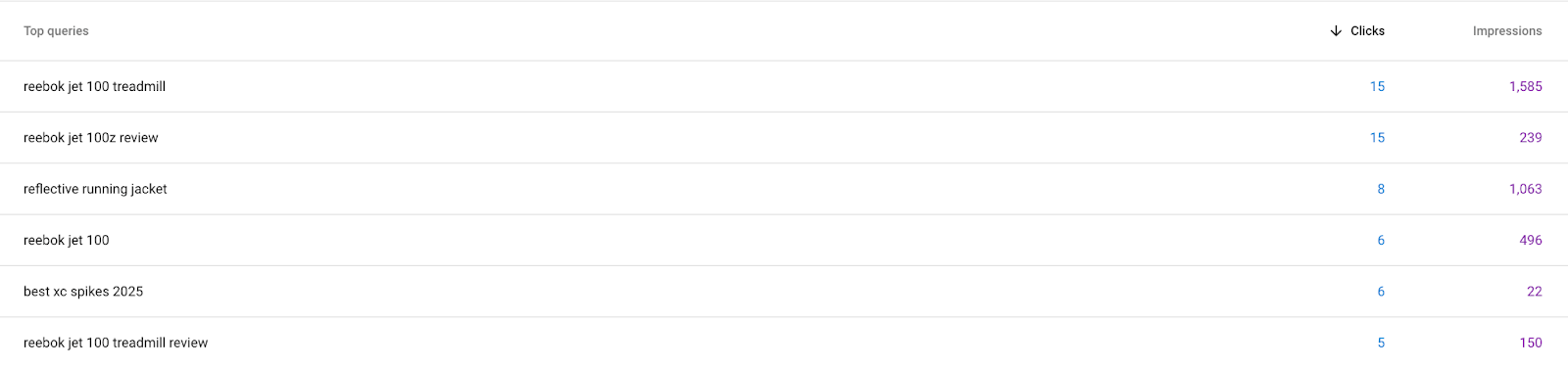
At the top of the funnel, the most basic way to measure SEO performance is search visibility. You can use tools like Google Search Console (GSC) to track various metrics like impressions, how your search queries rank, and how many clicks they receive.
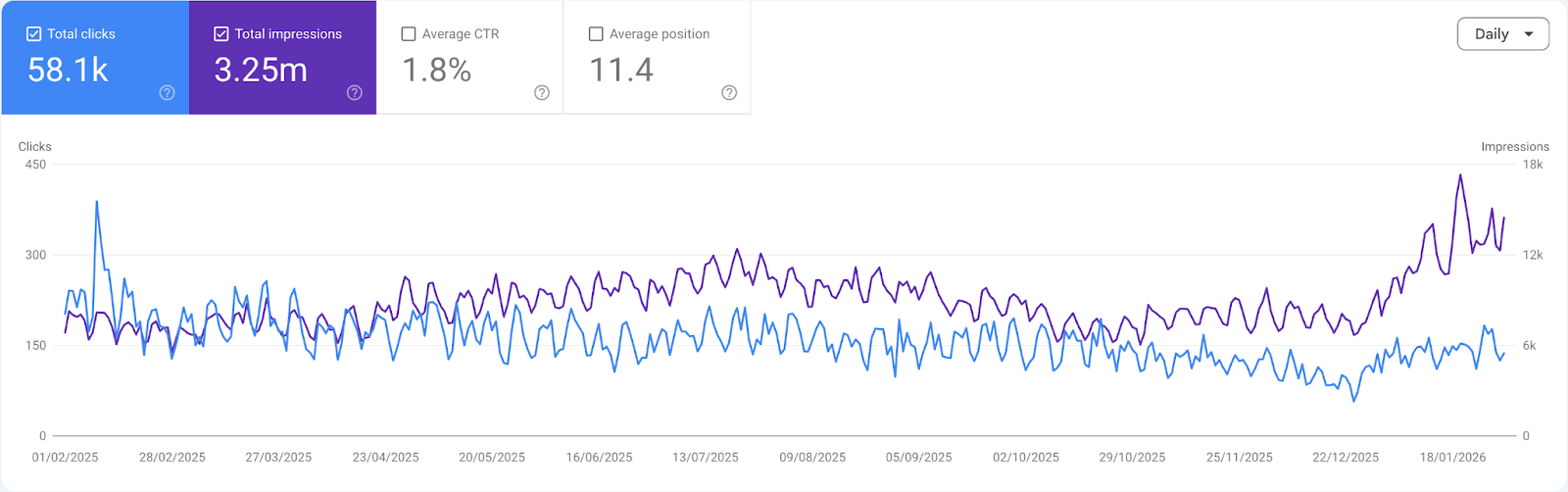
You can also see how individual pages, queries, and blog posts rank, including clicks and impressions, and the keywords you rank on that page using search console. This can be a great tool for further optimization.
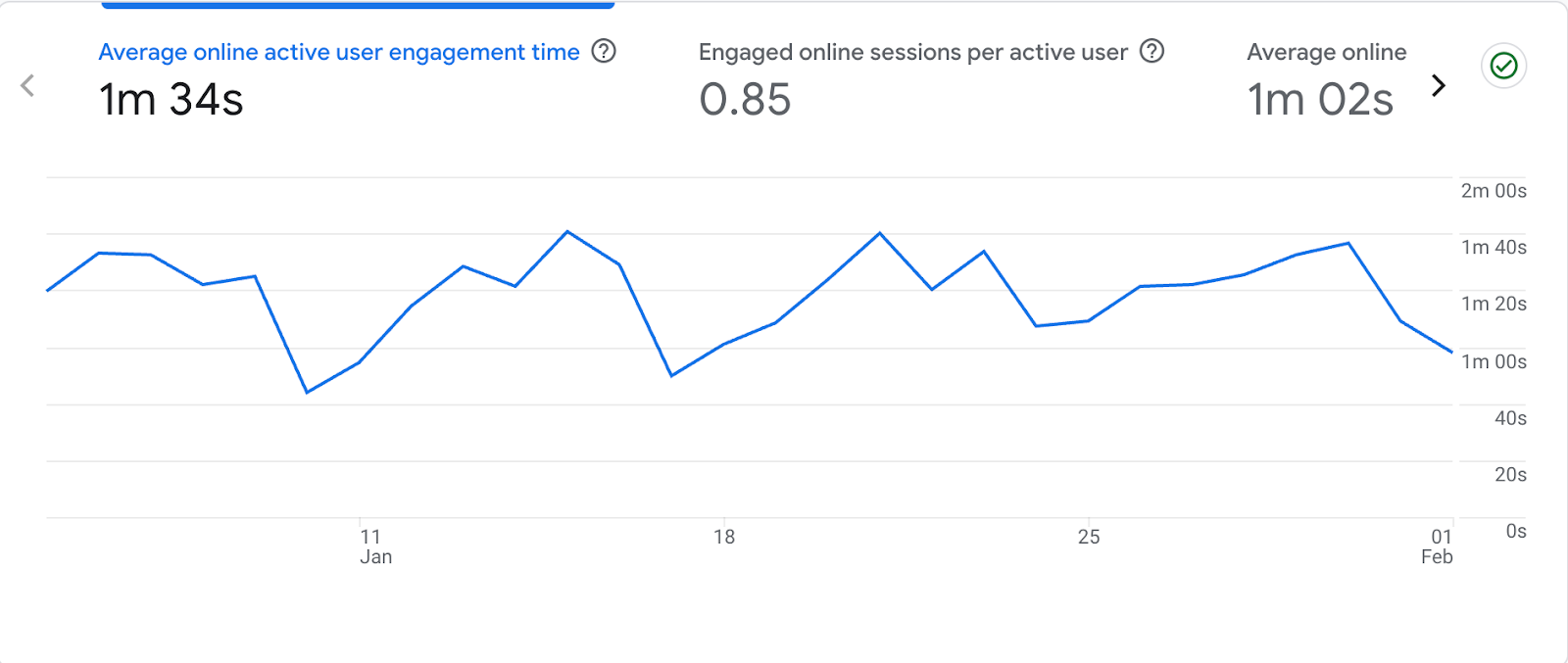
Google Analytics gives you another layer of search visibility. You can find time spent on the page, bounce rate, and other engagement metrics. You can access this in GA4 by navigating to the engagement tab and clicking overview.
MOFU measurement
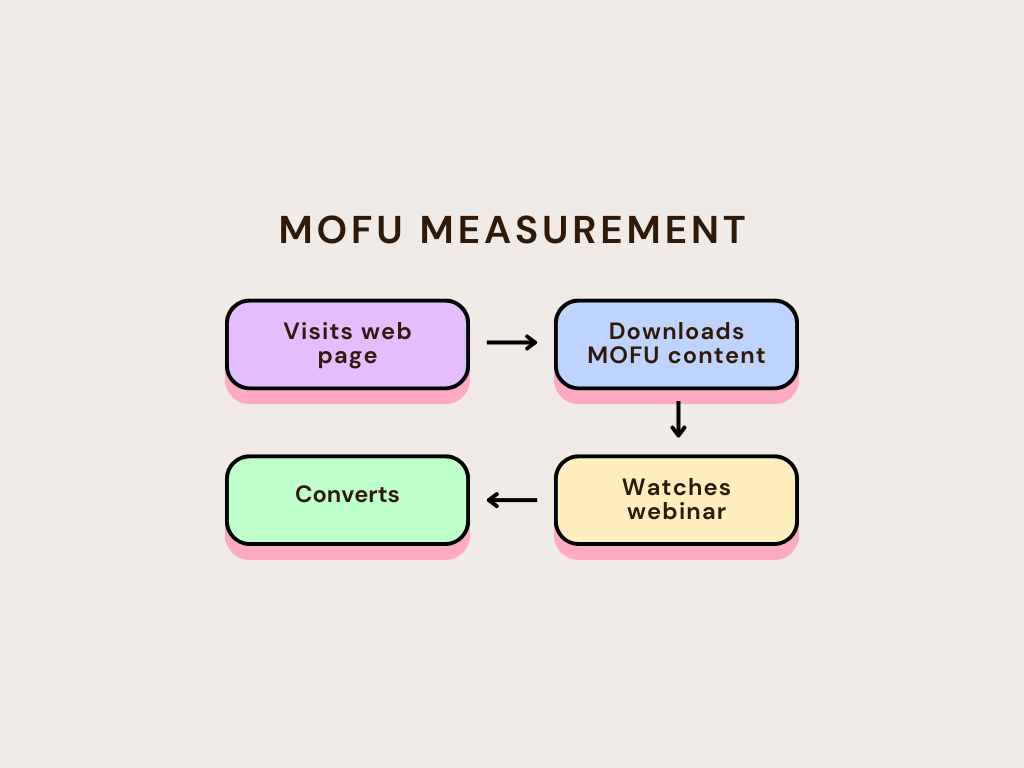
In the middle of the funnel, you can track the same metrics used at the TOFU. However, for more accurate insights, track ebook downloads, webinar and newsletter sign-ups.
You can also track click-throughs to certain pages (like a download page) using Google Analytics.
Tracking downloads and sign-ups gives you deeper insights and lets you measure engagement, rather than wondering which stage prospective buyers are at in the SEO funnel.
For deeper educational content, time spent on page shows how committed and invested a reader is and possibly how close they are to moving to the conversion stage of the marketing funnel.
However, long guides can also see lower-than-expected time-on-page metrics because users are looking for the answer to a particular question (which you have covered under a single heading).
Just something to keep in mind.
BOFU measurement
People are less likely to find your conversion pages, like a pricing or booking page, through search. However, it is still possible, especially if you rank for competitive bottom-of-the-funnel keywords, like location-based booking or pricing queries.
Measurement isn’t just about ranking and clicks; it’s about action.
A more obvious measurement is the point at which a conversion took place. Did they make a purchase? Or take the necessary action indicated on your landing pages?
You don’t just want to see the conversions, you want to understand how they converted. Did they start with a guide, sign up for a webinar, and then make a purchase?
The better you understand the user journey, the more you can lean into what’s working and avoid what doesn’t work quite so well.
Creating and optimizing an SEO funnel lets you go beyond surface-level analytics, such as web impressions and clicks, and see which content performs best and how to guide a user through the entire buyer journey.
Key takeaways
- An SEO marketing funnel guides users from initial search query to conversion, helping turn visitors into customers
- A traditional marketing funnel focuses on broader marketing efforts, while an SEO funnel is exclusively focused on search optimization (which now includes AI optimization)
- The funnel has three main stages: TOFU (awareness), MOFU (consideration), and BOFU (decision), with content tailored to each
- Post-purchase or advocacy follows the BOFU stage, re-engaging users and turning them into repeat customers
- Instead of a funnel, think of it like a flywheel—people may leave at any time, but can be re-engaged and reintroduced into the funnel
- Optimize your funnel for conversions and track success by measuring analytics, like email sign-ups, e-book downloads, and purchases
- You can also use standard SEO metrics, including page views, organic traffic, page position, and time spent on page, to tweak content as needed