Search engine optimization best practice checklists and how-to guides are certainly useful, but most don't provide quantifiable results and the exact steps needed to achieve them. This post aims to fix that.
You'll learn about real-life case studies covering SEO examples from major companies in action, what they did, whether they failed or succeeded, and how.
The case studies below are hand-picked to showcase examples of SEO strategies spanning across all disciplines and niches: from small technical and on-page SEO tweaks for brick-and-mortar stores to large-scale content strategies for B2B SaaS and B2C brands.
1. Structured data and rich results
Jobrapido, a global job search engine and aggregator, demonstrates the impact structured data can have on a website's traffic volume and quality.
Structured data makes pages more likely to rank across Google search features beyond the traditional blue link: rich results, knowledge panels, and enhanced listings. This is done through predefined HTML code snippets that tell search engines about the types of content a webpage includes and how to index it accordingly.
Jobrapido used the JobPosting schema markup to optimize its web pages for enhanced listings and attract more applicants. Here's what the result looks like:
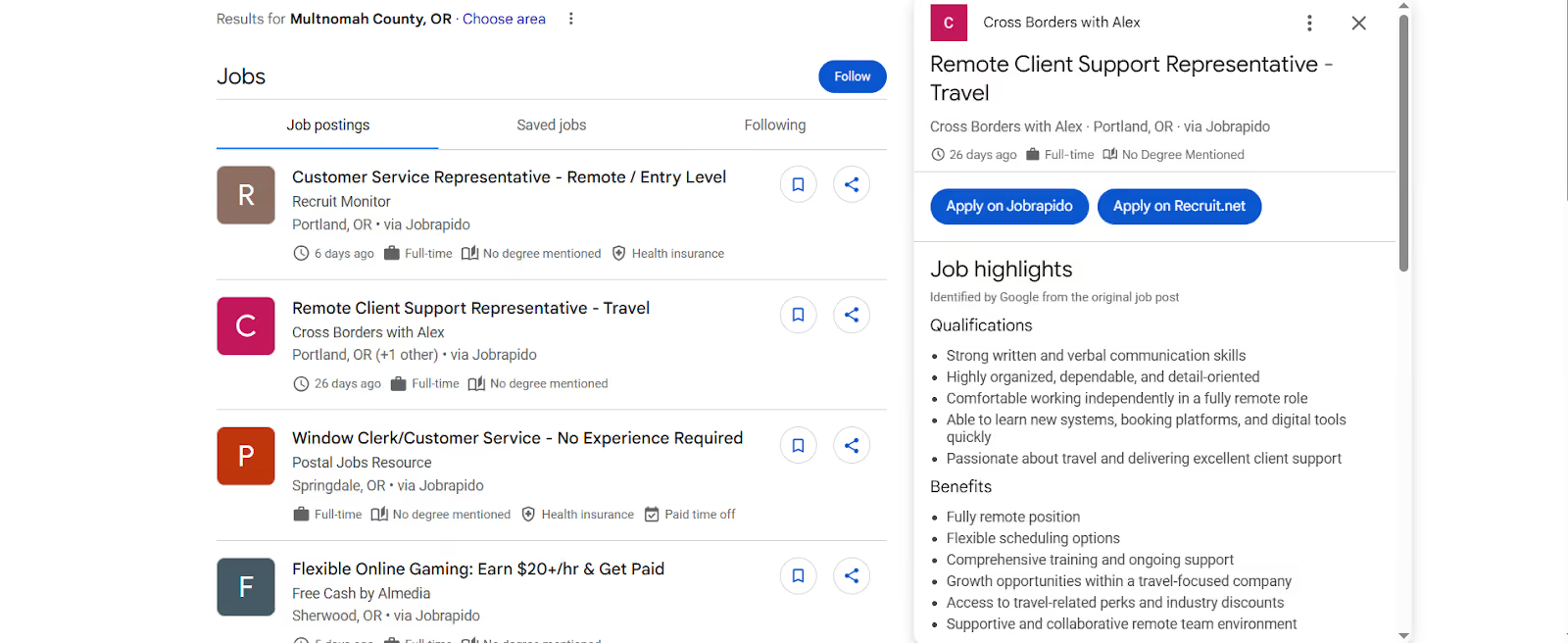
Its listings display under a dedicated Job Postings SERP section, just above organic search results. That means the company occupies significantly more SERP real estate, which directly contributes to boosts in qualified traffic.
Jobrapido's case study drives this point home. The company experienced a staggering 182% growth in organic traffic, 395% boost in registrations from organic search, and 35% decrease in bounce rates.
Plus, achieving these results wasn't so difficult. Quoting Jean-Pierre Rabbath, Jobrapido VP of Product:
"In fact, adding the job markup for us was really easy and allowed us to get the best of the job experience on Google Search rather quickly."
To illustrate, here's what the listing above looks like behind the scenes:
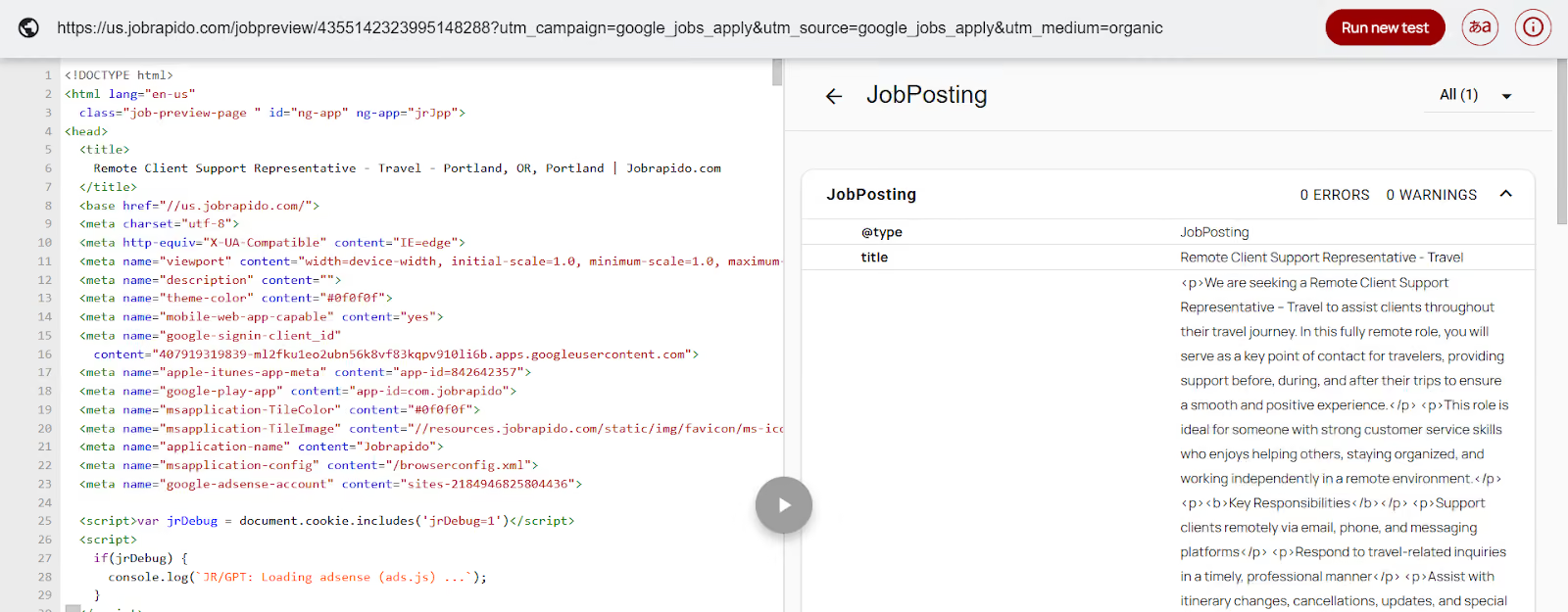
Ranking on organic search listings was just a matter of using the appropriate schema markup type and formatting the page properly.
Don't overlook this step. Structured data is one of the most predictable and well-documented SEO strategies you can adopt.
The fact that Google Search Central itself published the case study above shows how failproof this strategy is. Google Search Central also includes a library of all the structured data types: what they mean, which SERP features they rank for, and how to implement them.
Jobrapido takeaway: Don't overlook structured data optimization. It's probably one of the easiest, most foolproof ways to boost search visibility.
2. Ecommerce SEO
Lectric eBike perfectly encapsulates why you should prioritize traffic quality over volume, especially if you run an online store. Many Ecommerce SEO strategies rely on informational blog posts to increase traffic volume.
It works, but users landing on your blog posts are interested in learning more about a topic related to your products or services—not in purchasing your actual products.
Lectric eBike understood this and adjusted its SEO strategy to focus specifically on high-purchase intent traffic.
According to SEJ's case study, the company's commercial traffic rose from 37,000 to 210,000 monthly visitors. That's a 467.5% increase in purchase-ready visitors each month.
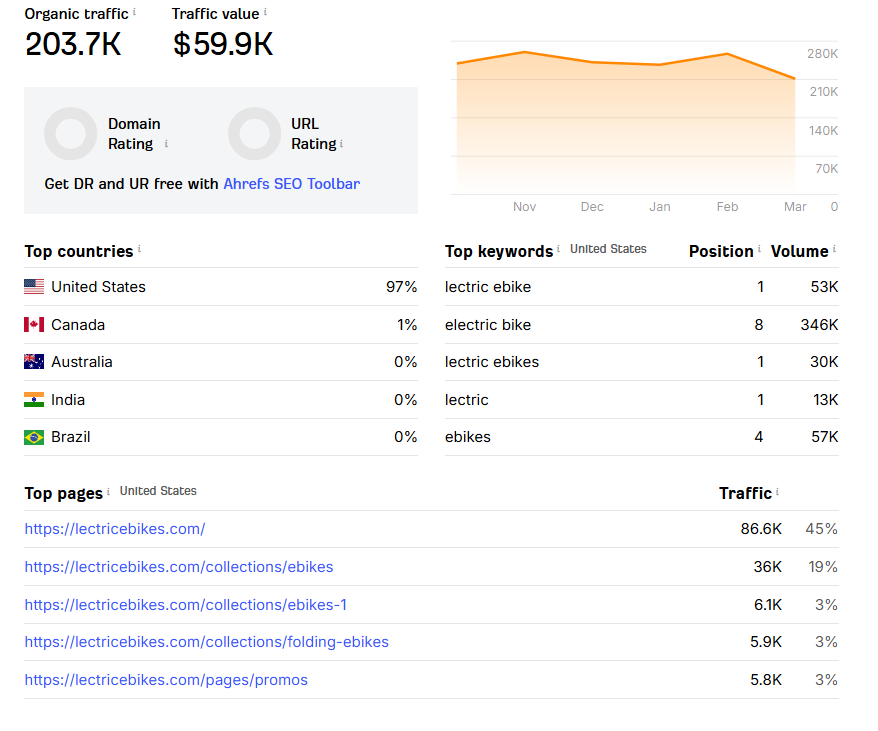
The store's main traffic drivers are lower-volume branded keywords and high-volume, general search terms like "electric bikes" and "ebikes". Both keyword types signal high commercial search intent, where users type in search terms with the specific intention to buy products.
But the problem with the latter keyword type is competition.
Many businesses in the same niche will target the same search terms, which makes ranking more difficult. That's one reason why Ecommerce blogging is a thing: it helps online stores target lower-volume, long-tail keywords to bypass competition.
Still, Lectric eBike demonstrates that it's possible to rank high for high-volume search terms.
Here's how they did it:
- They mapped the buyer's journey across awareness, consideration, and decision stages.
- They built a digital PR strategy targeting each buyer journey stage through external brand mentions and backlinks.
As a quick example, here's what happens if I type "electric bike" in the search bar, a high-volume keyword.
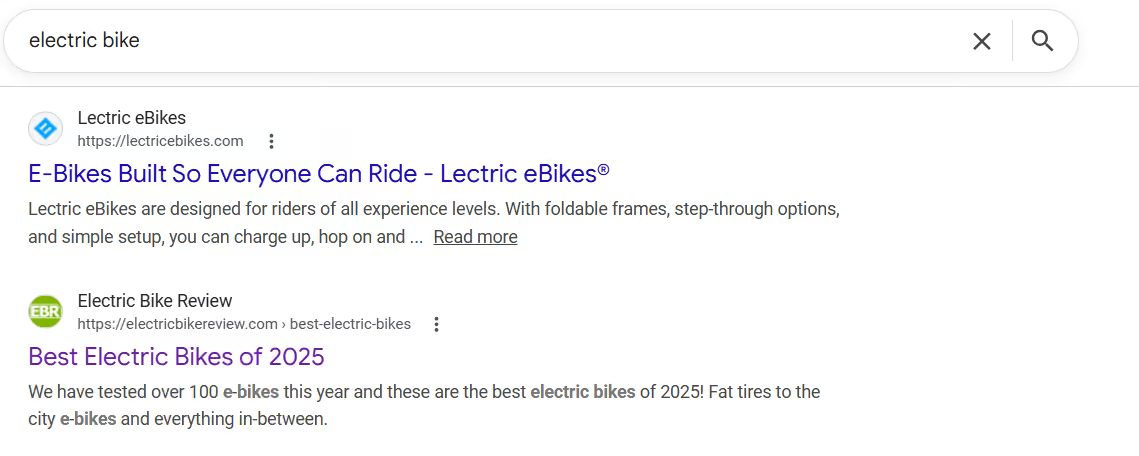
Lectric's home page takes the top spot in organic listing, while an ebike roundup-style blog post from Electric Bike Review takes second place. The blog post targets audiences in the consideration stage, where users evaluate their options before making a decision.
If I click on the blog post, I'll see that one of Lectric's products is mentioned.
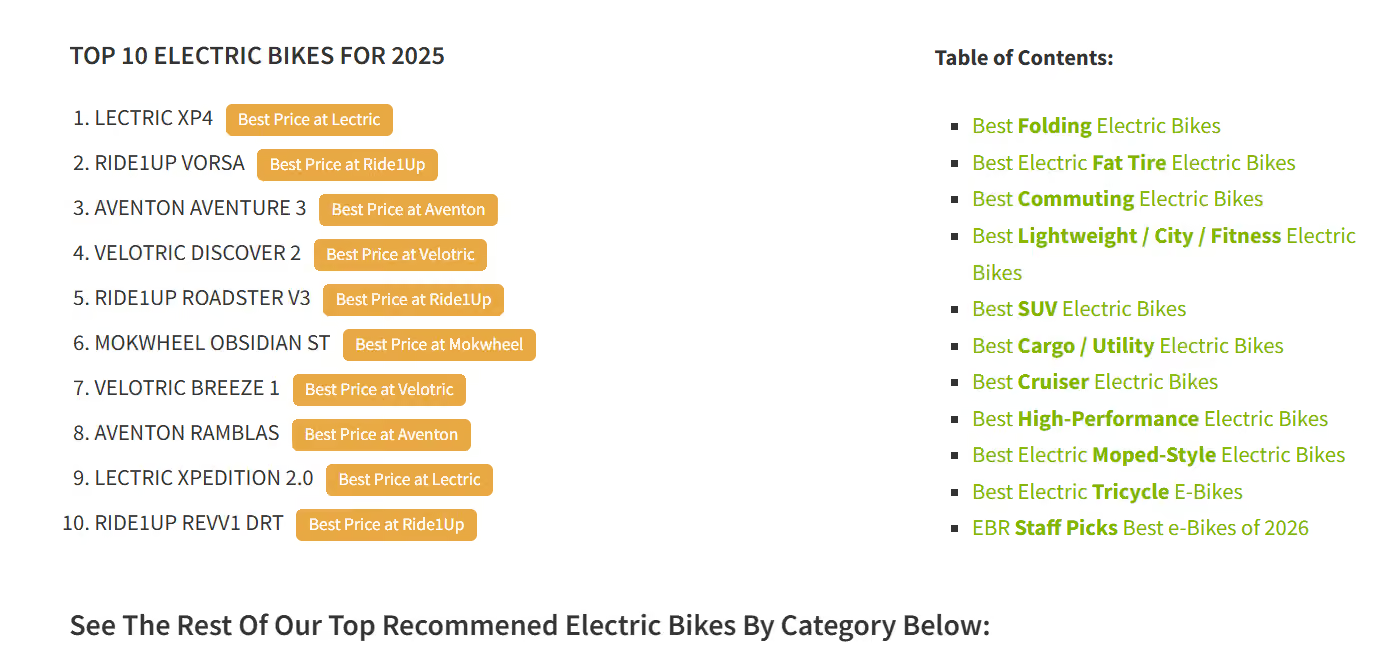
That's a highly relevant brand mention from an authoritative source. Besides the backlink itself, the product mention also boosts brand awareness and image.
Going back to the SERP, the same idea applies to the PAA box: it includes a Lectric-specific question while the generated answer links to a YouTube product review.
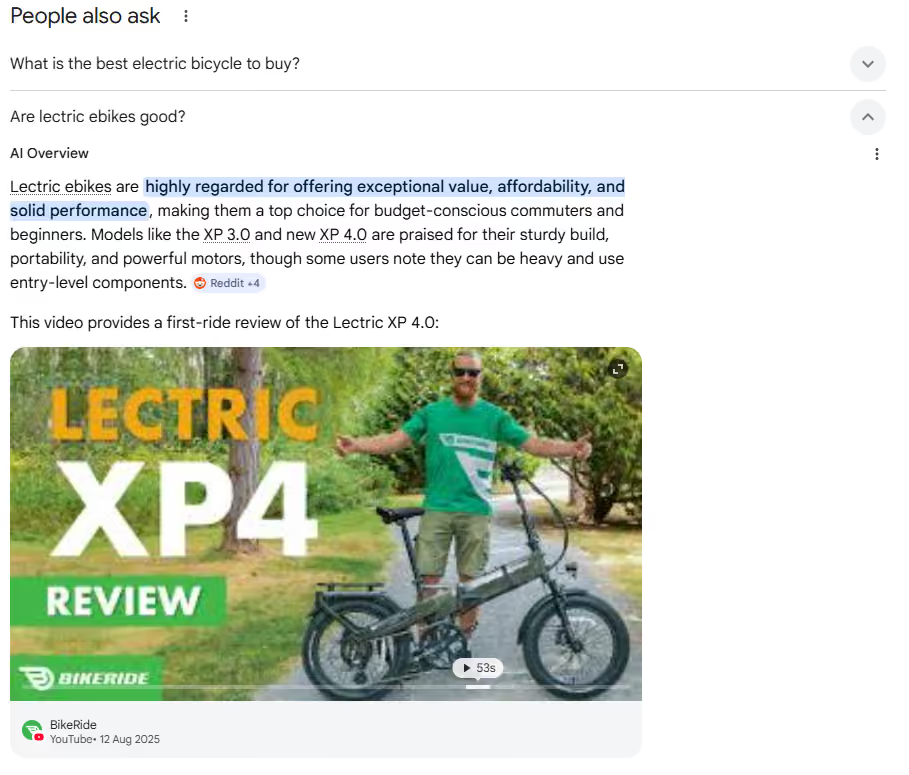
In other words, Lectric eBike gets a lot of brand mentions and high-quality backlinks from external sources.
This signals to search engines that the company is an authority in its niche, so they'll naturally push it up the rankings, for high-competition keywords included. The extra visibility also increases brand awareness, which ties in to healthy oncoming traffic from branded keywords.
Still, it's worth noting that Lectric eBikes didn't start from scratch.
The company was already established in its industry before its SEO strategy shift. Its strategy helped the company amplify existing commercial momentum, not generate demand from nothing
Lectric eBike takeaway: Always align your business objectives, content, and SEO strategy with your audience's search intent. Blogs should focus on informational intent. Online stores should target commercial intent. There's no reason to attract high site visitor volumes if your content doesn't satisfy those visitors' needs.
3. Content-led SaaS growth
Even if Lectric eBike shows online stores don't necessarily need a blog to succeed, a proper content strategy is still highly recommended in most other cases, especially in the B2B SaaS industry.
Unlike B2C funnels, B2B sales cycles are often longer and more logic-driven. B2B products/services often require significant investments, so nudging prospects towards purchase decisions needs a lot more convincing.
A well-developed content strategy helps companies establish themselves as industry thought leaders, educate target audiences about their pain points, and earn trust through value-packed posts.
Surfer does a good job at this. The company focused its content marketing strategy around educating audiences in the platform's core niche: SEO and content optimization.
The result?
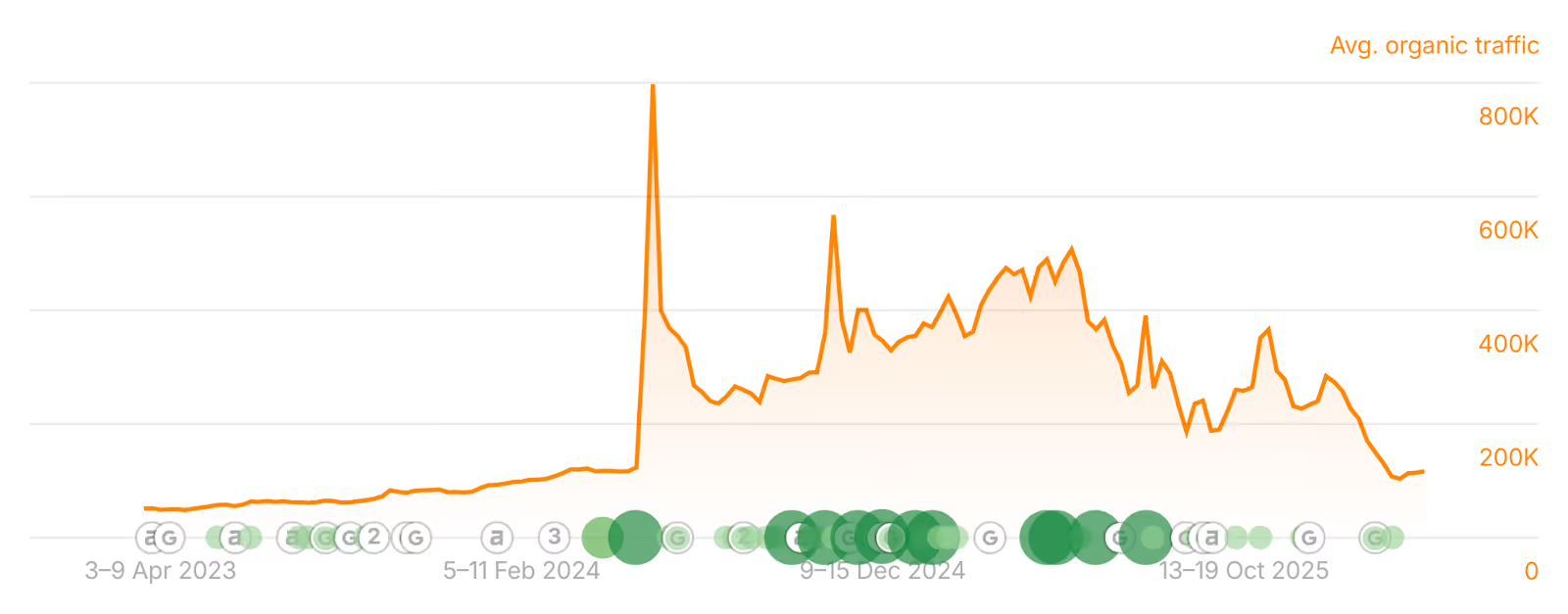
Surfer 11X'd organic traffic in two years. And most importantly, its SEO content marketing strategy contributed to around 25% of the company's revenue. That means organic growth directly ties to trial signups and purchasing customers.
Surfer demonstrates that content-led SEO in SaaS compounds when every piece of content serves the product's topical niche and provides genuine utility. Surfer's value-driven content attracted links and built topical authority because it was useful to practitioners.
If you're in a similar niche, make sure your content strategy:
- Does target informational intent: Each visitor arriving through search represents a potential customer with a specific problem to solve, already actively searching for solutions. Informational content helps these users better understand the problems they deal with, how to address them, and where you help.
- Includes well-developed topic clusters: You must focus on all topics and subtopics related to your niche. This helps establish yourself as an industry authority, both from a reader and search engine perspective.
- Tailors to all buyer journey stages: Informative posts and how-tos for the awareness stage, product roundups and comparisons for consideration stages, case studies and whitepapers for decision stages. This ensures content attracts multiple user segments and has the framework needed to drive readers from one funnel stage to the next.
It's worth noting that Surfer's organic traffic later declined as Google rolled out AI Overviews and the broader SaaS SEO landscape saw lower organic numbers.
This doesn't mean the strategy failed, but reflects a structural shift in how Google distributes traffic.
Many content-led SaaS companies saw organic traffic decline as AI-generated answers began capturing clicks that previously went to organic results. But content remains important.
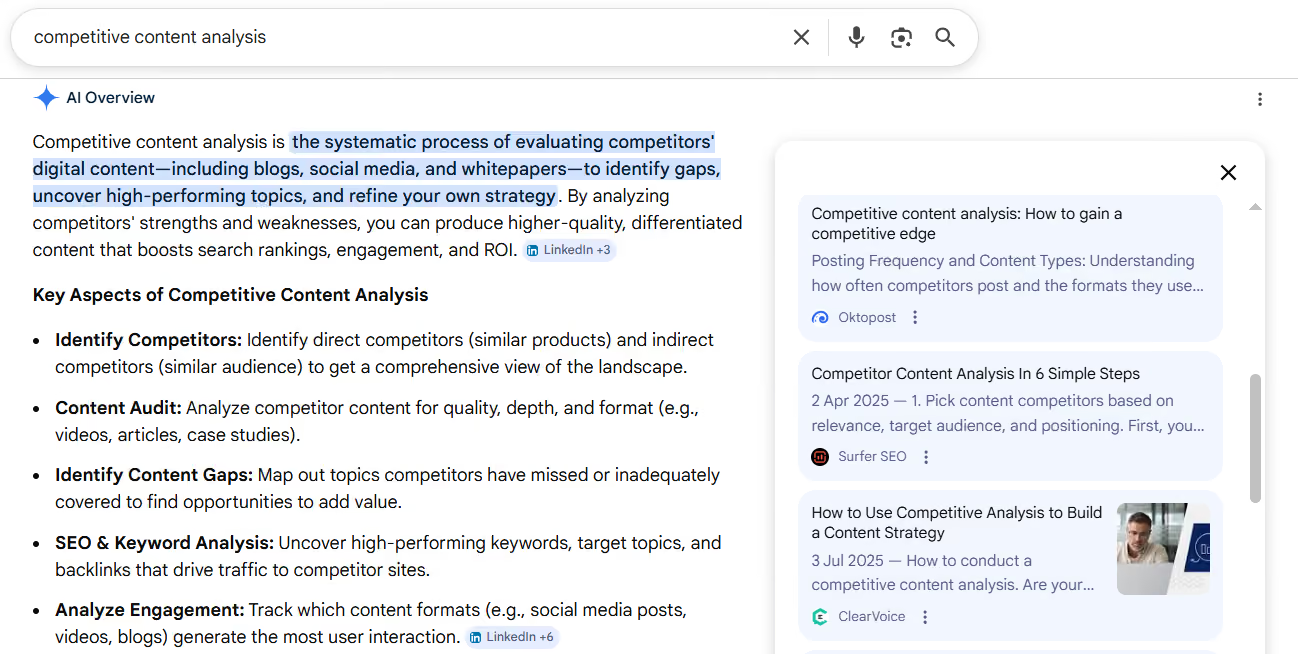
Companies that built real authority through content are better positioned to be cited in AI answers than those that relied purely on keyword targeting. Ranking in AI-generated answers is just as (if not more) important for visibility and trust as in organic search results.
Surfer takeaway: Educational content does help companies spotlight themselves as industry thought leaders, win their audience's trust, and boost search visibility—especially in the B2B sector.
4. Local SEO for a small business
Well-developed SEO strategies are often linked to large-scale companies, but Edelweiss European Bakery & Cafe, a small Florida-based local business, demonstrates that small businesses with tight budgets can also achieve excellent SEO results.
Based on SEMRush's case study, the local bakery's website experienced a 460% increase in mobile traffic in just seven months. Mobile visitors currently make up 70% of all of Edelweiss's website traffic.
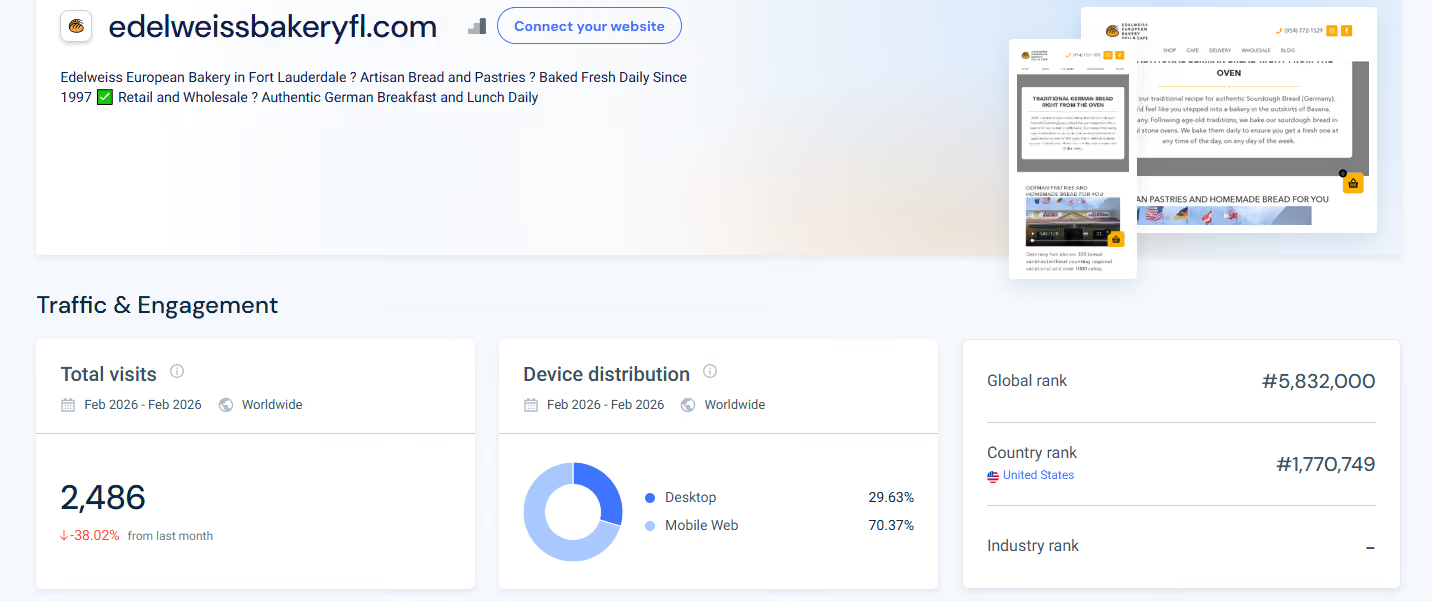
That's great for business. Mobile users looking up businesses locally likely intend to visit the physical stores in question. Proper mobile optimization equates to extra foot traffic and sales.
This huge traffic boost came from otherwise simple SEO practices, including:
- A few simple technical and on-page SEO fixes, like site structure, page speed, meta description optimization, and a homepage redesign.
- Link building to ensure the bakery gets mentioned across local outlets.
- A Google Business Profile rehash and local directory listing optimization to boost local SEO efforts.
- A simple content strategy covering value-driven blog posts, like food recipes, for extra site traffic.
- Setting up eCommerce-like product pages to encourage online orders.
As such, small businesses with limited resources can still achieve meaningful lifts by getting the basics right: Google Business Profile optimization, local keyword targeting, mobile-friendly site structure, and consistent NAP (name, address, phone) data.
The practices listed above don't require dedicated marketing teams.
For example, consistent NAP data just involves ensuring the business name, address, and phone numbers are the same across all platforms your business shows up on: Google Business Profile, local directory listings, review sites like Yelp, and your website.
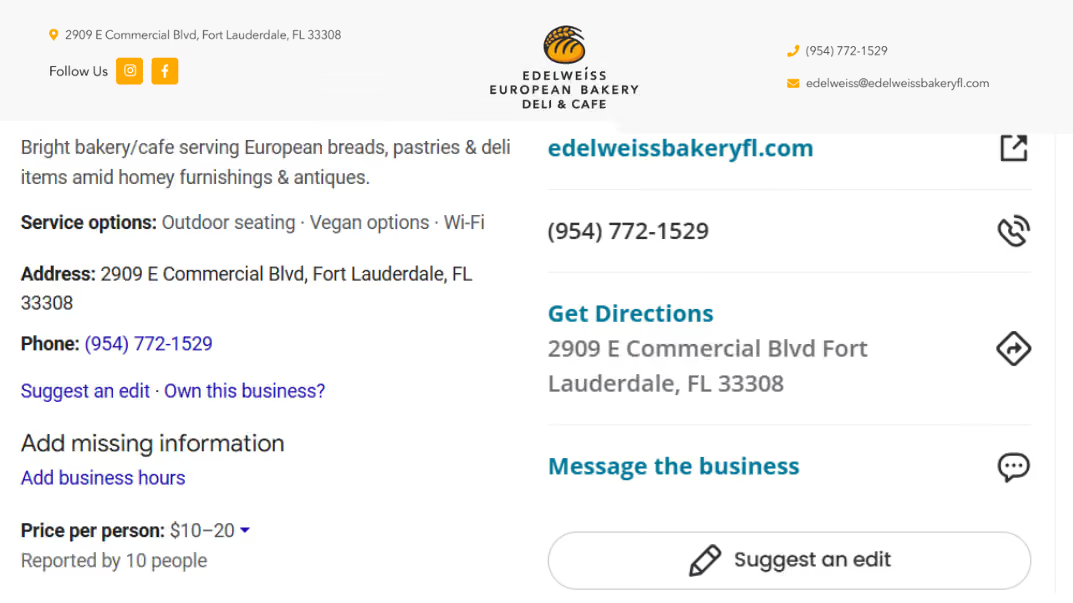
Otherwise, Google may flag your business as suspicious and hinder local rankings.
Edelweiss European Bakery & Cafe takeaway: SEO is not only an enterprise game. Small businesses with limited resources can also achieve meaningful lifts by getting the fundamentals right.
5. Site reputation abuse and parasite SEO
This is a how-not-to example.
Parasite SEO is a generally considered black hat SEO tactic that uses high-authority, third-party sites to publish content targeting competitive keywords.
The idea behind parasite SEO is to leverage the third-party site's high domain authority to rank content around competitive keywords faster than it would via a smaller, low-authority website.
But it can lead to severe SEO penalties further down the road.
In September 2025, Google's Quality Rater Guidelines formally added "site reputation abuse" as a spam category.
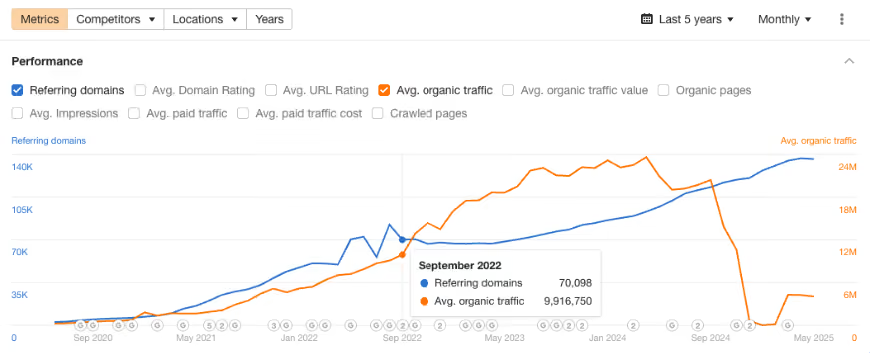
Case in point, Forbes Advisor was involved in parasite SEO practices. Despite the initial gains, the site got manually penalized in September 2024 by Google following site reputation abuse, which caused Forbes Advisor to lose around 20 million monthly visits.
Here's how the strategy works, according to Lars Lofgren, who investigated Forbes Advisor's parasite SEO case in detail:
"So I figured out who's running the affiliate program on Forbes. It ain't Forbes. It's a completely separate company called Forbes Marketplace, Forbes only owns 40%. Forbes Marketplace has been so successful that it's currently trying to buy Forbes itself."
To put it differently:
- Forbes Advisor was operated by Forbes Marketplace, a separate entity that runs affiliate content under the Forbes brand.
- Forbes Marketplace leveraged Forbes Advisor's high domain authority to publish affiliate content (unrelated to Forbes Advisor's core niche and expertise) and secure high SERP rankings and huge traffic volumes.
- Revenue generated from Forbes Advisor affiliate link clicks went directly to Forbes Marketplace.
The type of affiliate content pushed on Forbes Advisor involved keywords like "best CBD gummies," "best pet insurance," or "how to get rid of roaches."
These keywords had high search volumes, but obviously had nothing to do with Forbes Advisor's editorial expertise. This strategy initially worked. Quoting Lars Lofgren once again:
"From nothing to over 20 millions search visits per MONTH in less than 4 years."
Of course, Forbes eventually got caught and severely penalized. By mid-2025, the site had recovered only around 4 million visits, roughly 17% of its former peak.
Forbes Advisor takeaway: Domain authority is not a free pass. Google is increasingly willing to act against sites that use established brand reputation to rank content that would not perform on its own domain.
6. Digital PR and link-driven authority
You can still use authoritative third-party websites ethically, however. Combined digital PR and targeted link-building help companies associate themselves with high-authority publications for SEO ranking boosts, while well-placed backlinks attract high purchase-intent traffic.
Here's how it works:
- Digital PR campaigns boost brand awareness and visibility by spotlighting companies across reputable sites.
- Targeted link-building campaigns drive readers from these reputable sites to conversion-oriented company pages.
- Both factors combined demonstrate to search engines that the company's website is trustworthy and relevant to audiences, which will push it up the rankings.
A Queensmith's case study showcases this combined strategy's effectiveness. The London-based jeweller created newsworthy content and published it across reputable websites, like The Telegraph, Grazia Magazine, and Marie Claire UK.
Here's a post snippet from the Telegraph, for example:
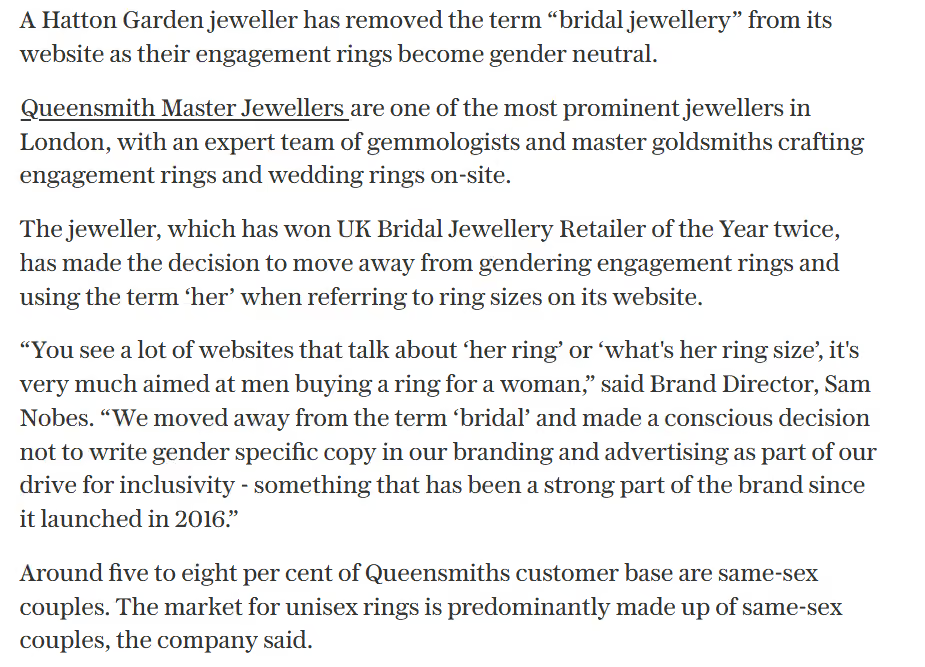
The entire post highlights Queensmith's emphasis on unisex rings and gender-neutral philosophy, which strongly resonates with particular audience segments.
The hyperlinked text leads to Queensmith's homepage.
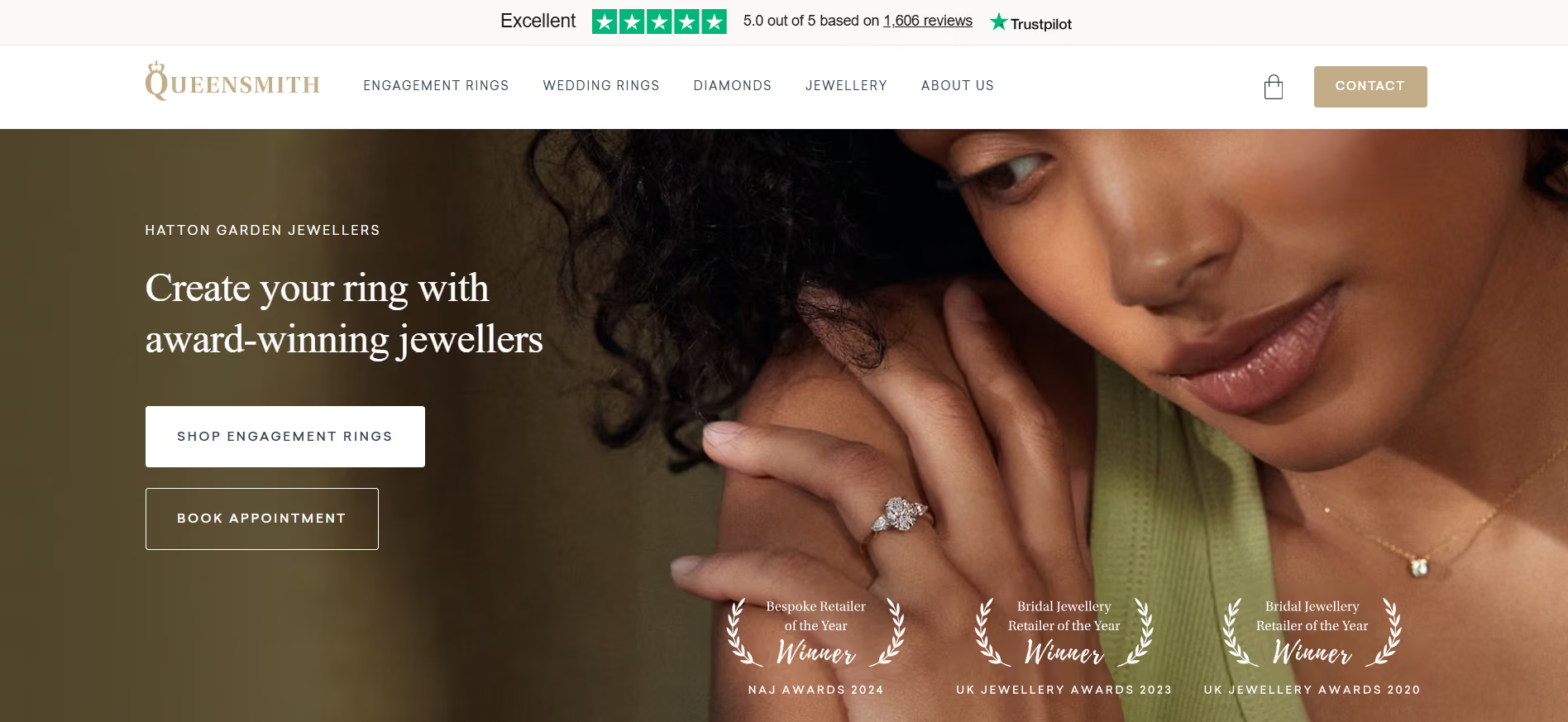
The homepage is designed to maximize conversions through trust badges, well-written copy, and prominent CTAs.
As such, the Telegraph article generates a lot of interest and enthusiasm among specific audiences, while Queensmith's homepage captures those sentiments and tries to turn them into monetary conversions.
This strategy helped Queensmith exceed an average monthly revenue of $1 million and triple site visitors in around eight months.
Queensmith takeaway: Don't treat link-building as a standalone practice. Couple it with a digital PR strategy to multiply the benefits — increased site authority, brand awareness, and high-intent site traffic.
7. Off-topic content consequences
Google wants you to publish content around topics you demonstrate you have genuine, first-hand experience to ensure you provide value-driven pieces to searchers. That means detailed posts and topic clusters built specifically around your core product offering and niche.
SEO-first, surface-level posts that veer off-topic just to maximize traffic as much as possible will likely get penalized. Case in point, Google's November and December 2024 core updates hit HubSpot's blog hard: traffic dropped by 80% in a few months.
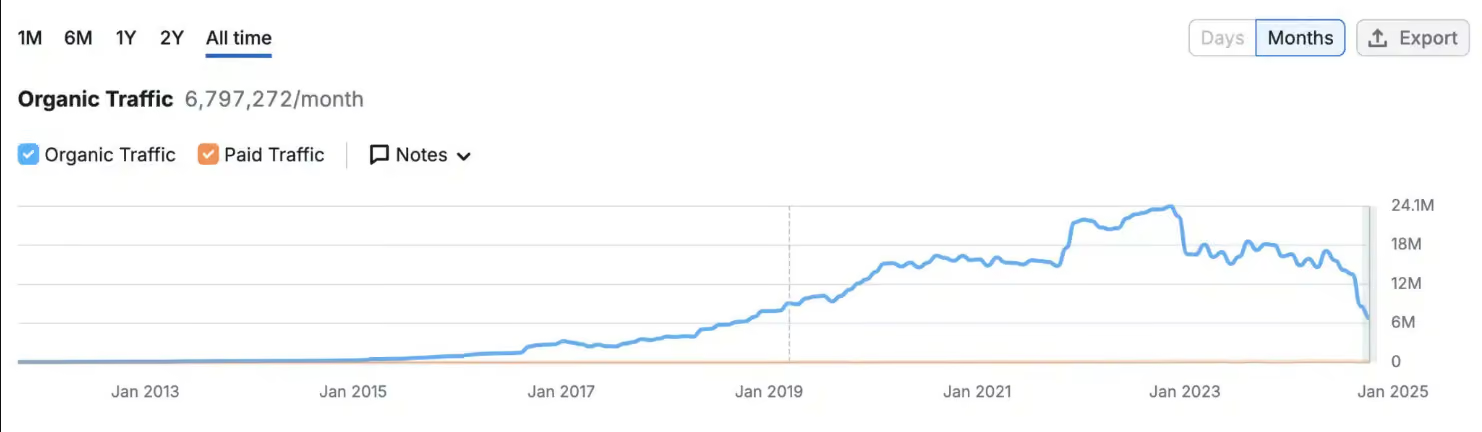
The main reason why was likely because HubSpot's blog was rather heavy on high-level topics like "famous quotes," "resignation letter templates," and "small business ideas."
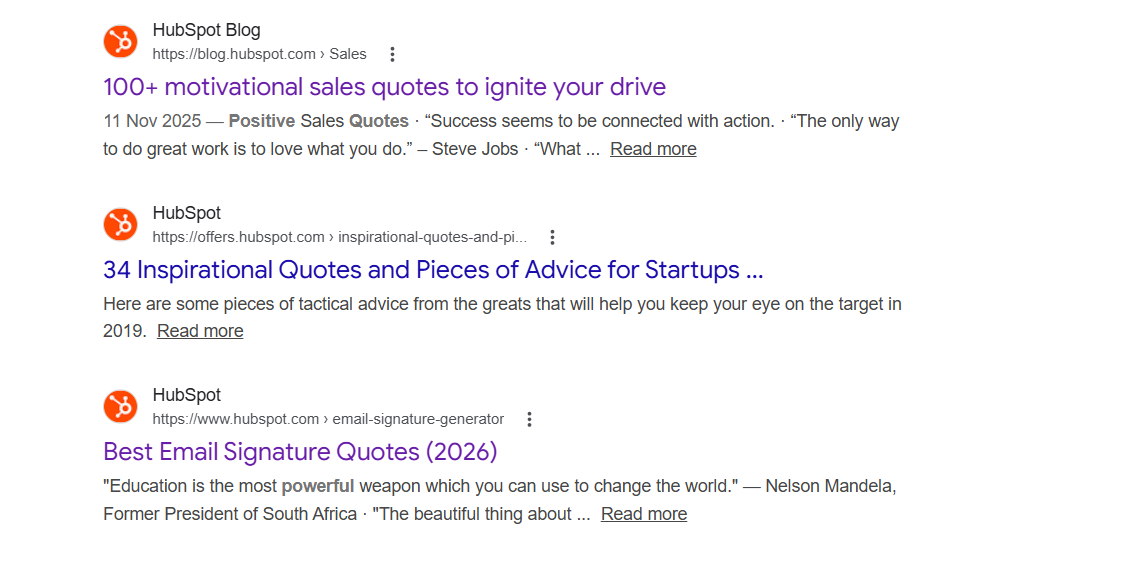
Aside from some entertainment value, these topics didn't do much to solve core audience painpoints, highlight HubSpot's core expertise, or tie to HubSpot's primary products (CRM, marketing automation, or sales software), so they got penalized.
This traffic drop marks Google's shift in priorities: it now rewards depth and expertise in a site's core subject area while deprioritizing content that exists primarily to capture search volume.
As HubSpot itself explains in this blog post:
"You have to have a highly differentiated point of view, highly differentiated data, and a clear reason why you’re uniquely qualified to share your story. Without that, you’ll struggle to be successful long-term.
When SEO first emerged, a lot of effort was spent on developing broad coverage. But with AI, coverage is no longer the problem. Today, what people need is depth. They need high-quality, expert-backed takes on their questions."
HubSpot takeaway: Develop well-thought-out content clusters related to your niche and focus your entire content strategy specifically around them. Domain authority earned in one subject area does not automatically transfer to unrelated topics. HubSpot's main product domain remained relatively stable, while the blog (the vehicle for an off-topic content strategy) absorbed the losses.
8. Editorial SEO at scale
To further illustrate the importance of value-driven, niche-focused content with high editorial standards, have a look at Byrdie's case study: a wellness and beauty blog generating most of its revenue through affiliate marketing.
Although some affiliate sites are commonly associated with high-volume, low-depth content, Byrdie stands out through its rigorous editorial standards and emphasis on topical depth.
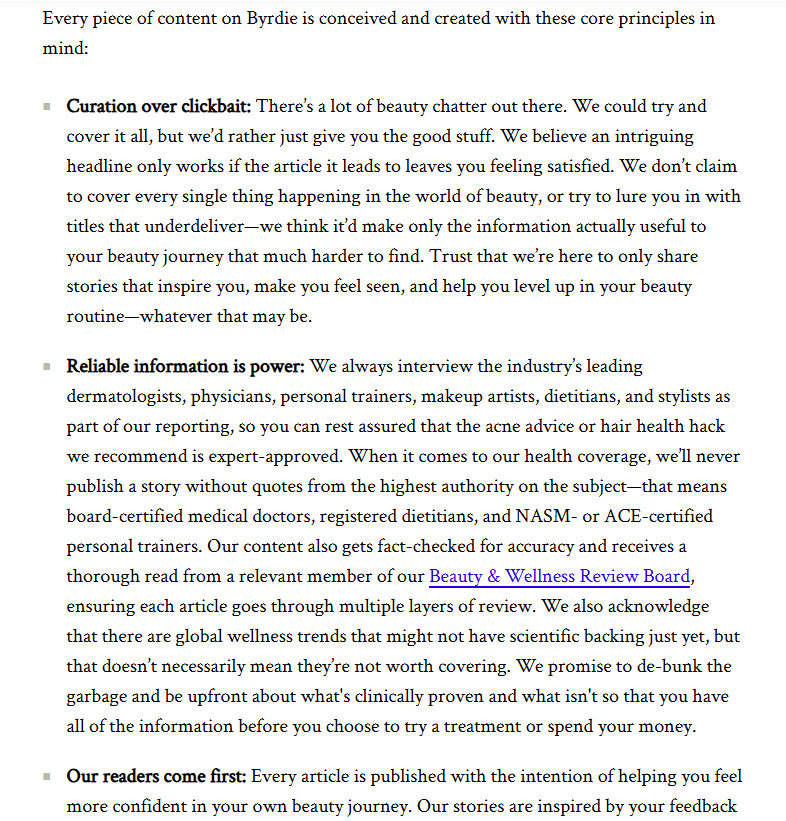
The website even has an in-house review board with industry experts to ensure content is as close to reality as possible — that's Google E-E-A-T guidelines gold.

Byrdie's expertise-centric, user-first approach helped it become a massive authority in the beauty niche and outrank billion-dollar beauty brands like L'Oréal, Estée Lauder, and Sephora in organic search.
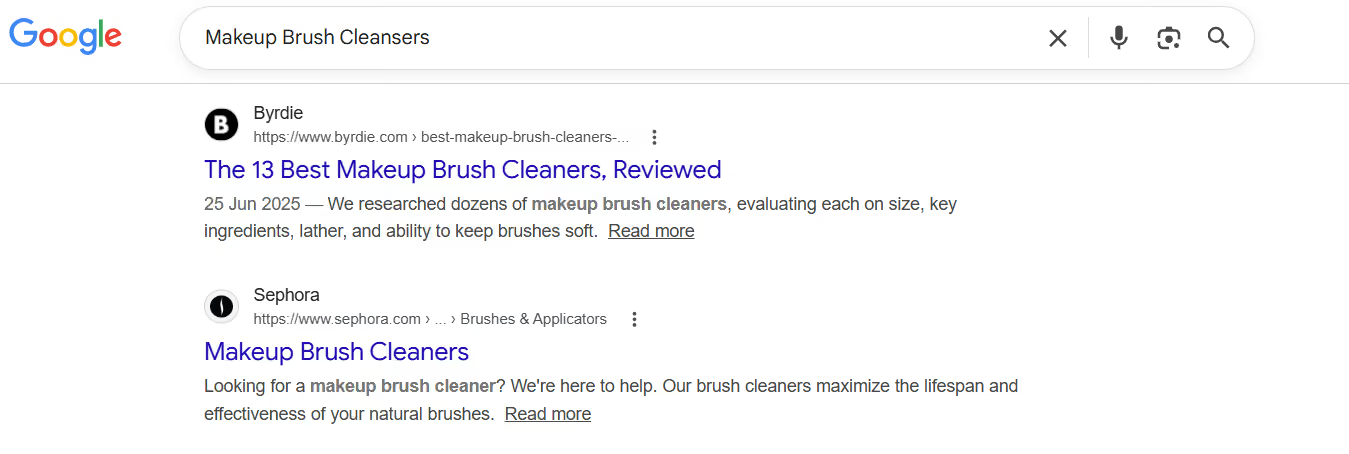
Case in point, Byrdie achieved 88.9% of annual visits from organic search and 1,753% market-share growth in hair styling.
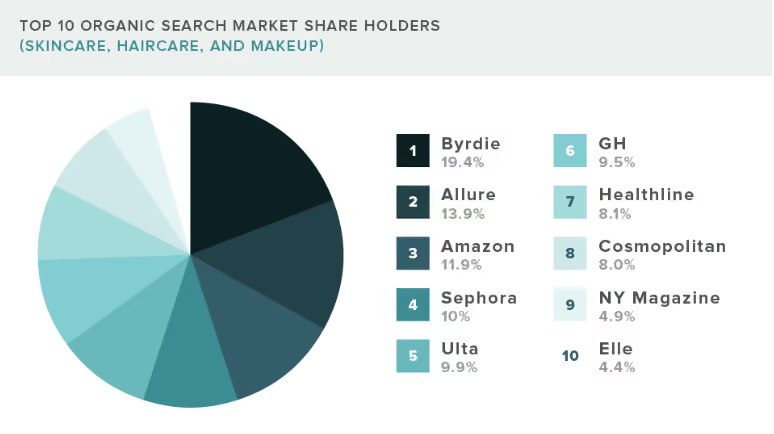
That's because Google favors long-form educational content and informational assets over transactional product pages even for product-related beauty queries.
This structural advantage is why publishers like Byrdie can outrank brands with vastly larger marketing budgets.
Byrdie takeaway: Once again, Byrdie shows that proper content can drive huge revenue and traffic numbers, as long as it's user-first: you want to solve genuine audience painpoints and demonstrate you're highly qualified to talk about the topics you cover.
9. Authority-driven SEO without outreach
Examine.com reinforces the importance of industry authority and expertise. According to an Ahrefs case study, the nutrition and research database essentially puts its link-building strategy on autopilot.
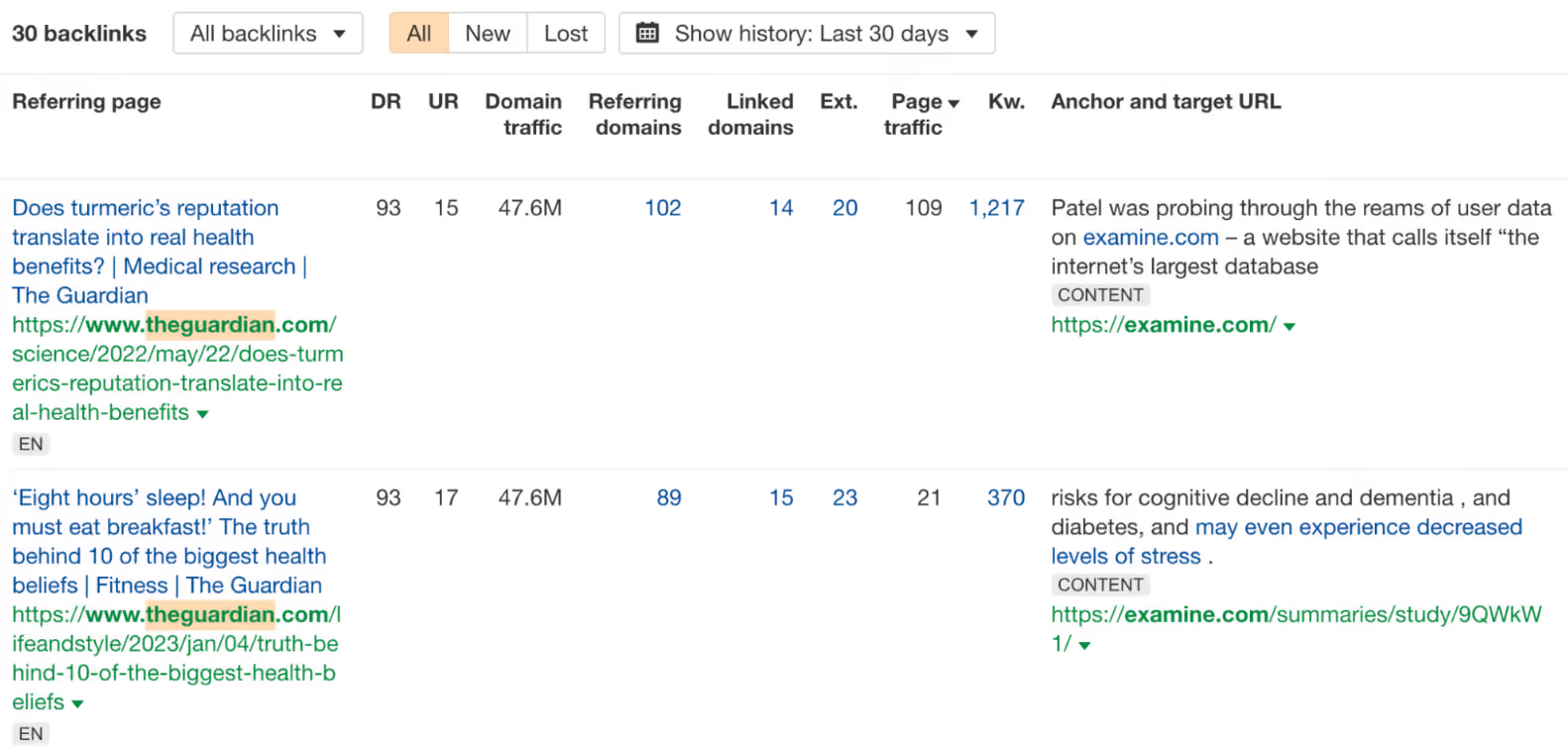
Examine.com is a backlink magnet from massive publications, including The Guardian, The New York Times, and Forbes, all without any outreach campaigns whatsoever.
Like Byrdie, Examine.com's content strategy involves inputs from industry experts and researchers.
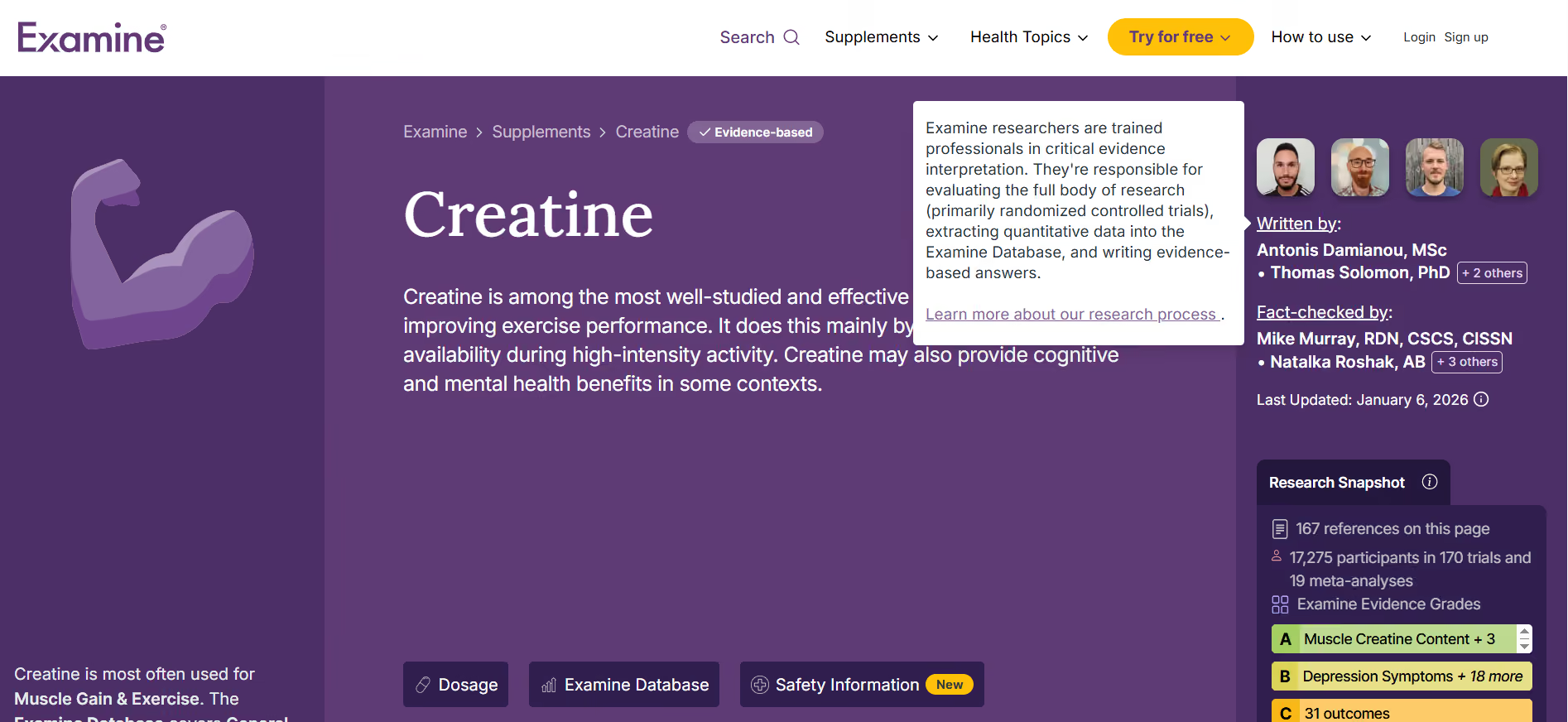
The website employs researchers with PhDs in physiology, neurobiology, and nutrition who analyze thorough research reports and summarize over 150 studies per month for easier public consumption. The researchers' ample industry experience helps the website create state-of-the-art content with unique data and insights.
Journalists and bloggers naturally reference Examine in their own content, simply because Examine's emphasis on expertise made it the best available source on the topic.
Examine's strategy was so successful, the website recovered from a 90% traffic drop and rebuilt to over 1 million monthly visitors following a 2018 Google Health Core Update.
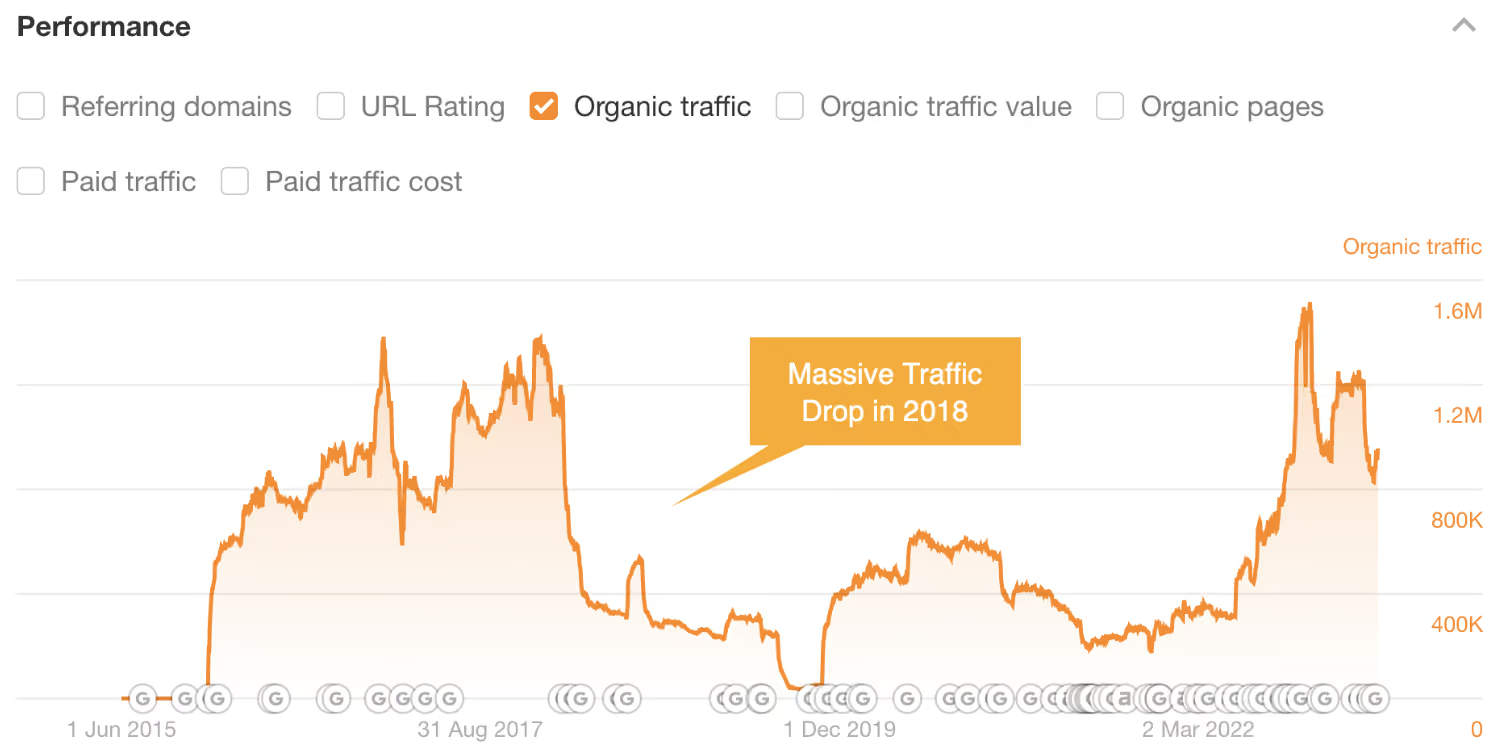
Cross-referencing HubSpot's massive traffic losses with Examine.com's recovery, it's also safe to conclude that genuine subject-matter authority creates resilience against algorithm updates.
Examine.com takeaway: Authority-first SEO means investing in genuine expertise and unique data over outreach volume. Content made through proprietary research and in-house industry experts is the absolute key to becoming a top resource in your niche and attracting high-quality backlinks. Yes, such strategies are harder to build, but also significantly harder to displace.
10. Local SEO and demand capture
The Amsive case study on OppLoans shows that local SEO is not a brick-and-mortar business-only practice. Digital companies serving multi-location audiences can also benefit from it: financial services, healthcare, legal, and other service-based industries.
Such industries are subject to local laws and regulations. This makes audiences more likely to trust a company (even if digital) that demonstrates familiarity with regulations tied to their specific area.
OppLoans understood this and developed a series of conversion-oriented pages tied to local keywords. To illustrate, here's what happens if I type "low credit score loans in Michigan" in the search bar:
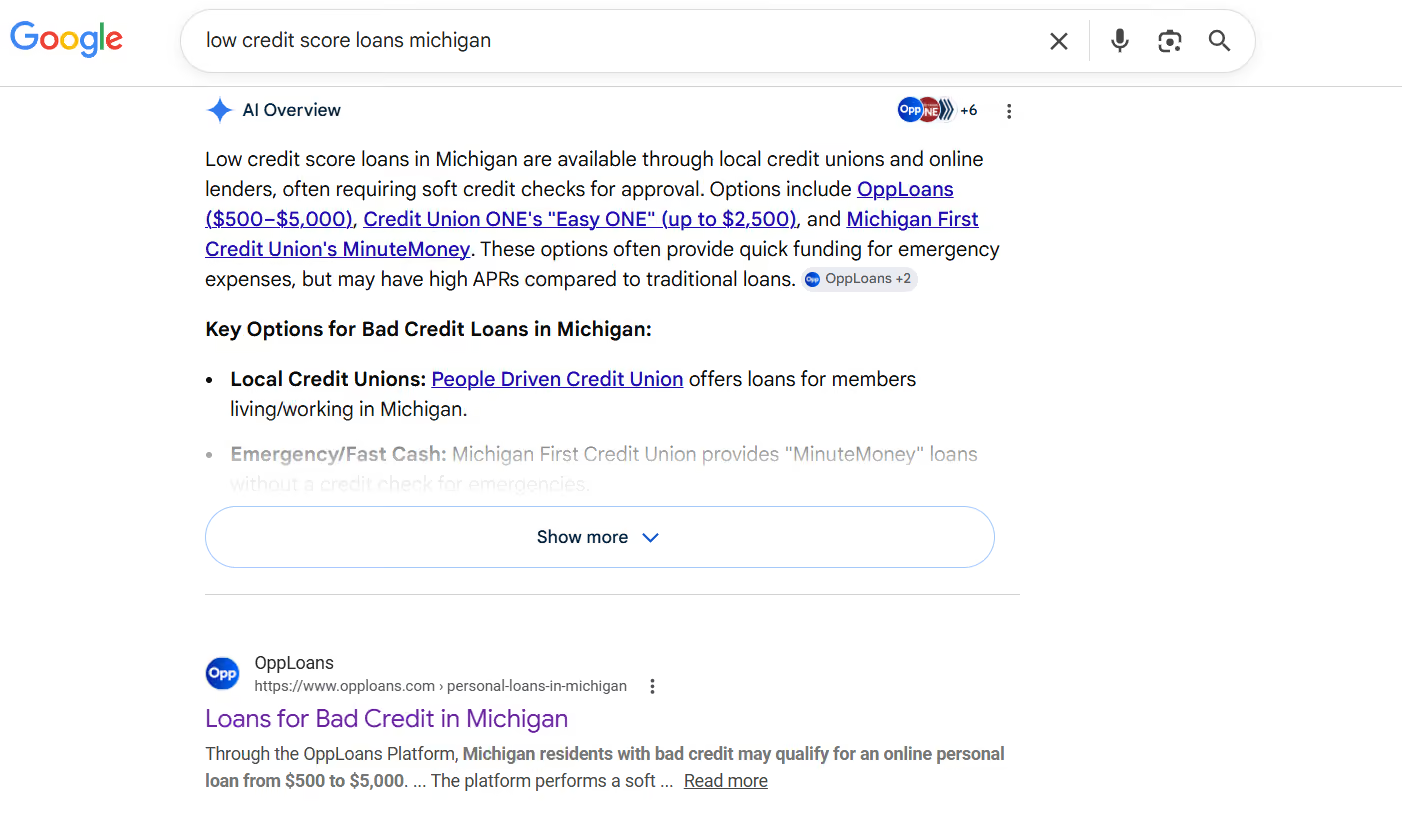
OppLoans gets mentioned in AI Overviews and takes the second spot in organic search results. Here's how the local-optimized page for this particular keyword looks:
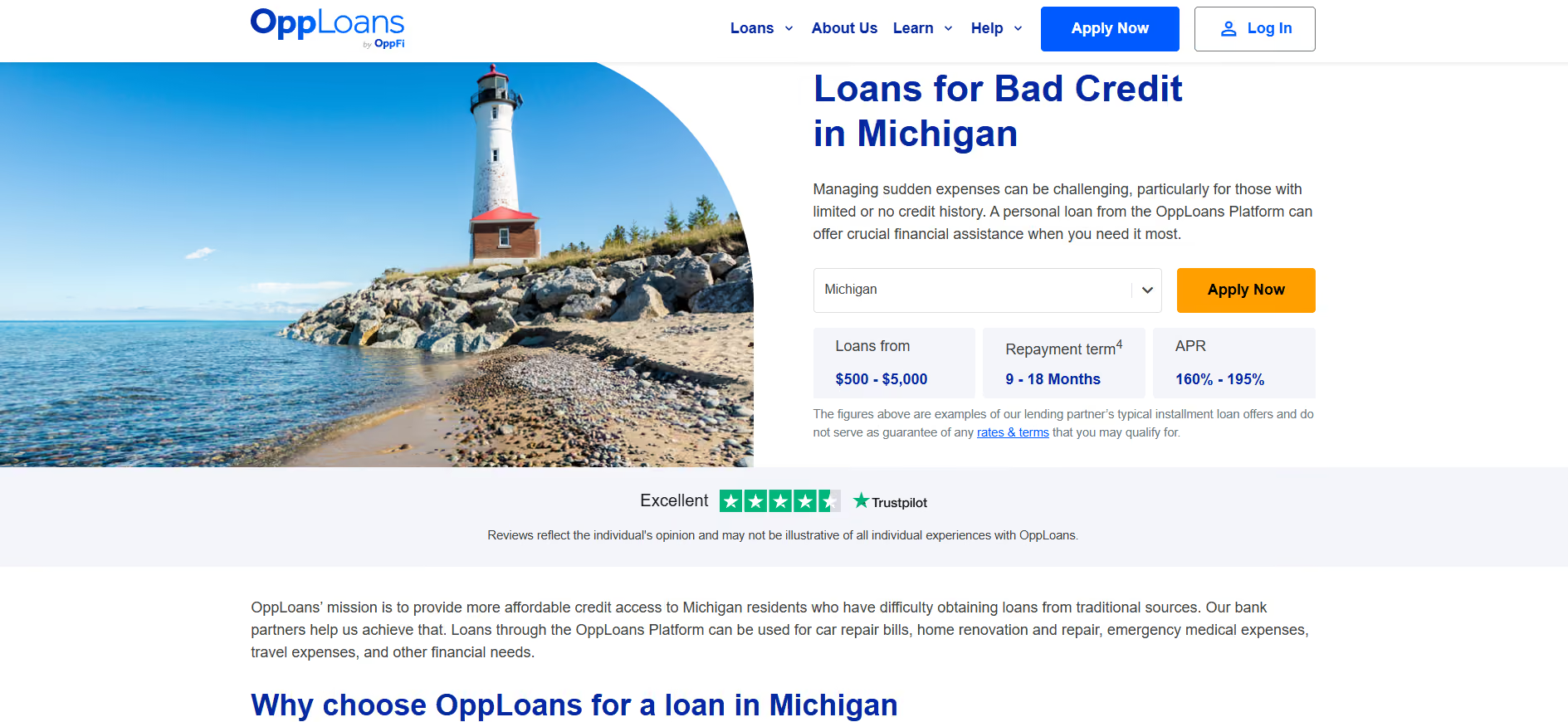
The above-the-fold section's copy mentions Michigan to reassure visitors from this local area landed in the right place. The webpage also includes extra Michigan-specific information below the fold.
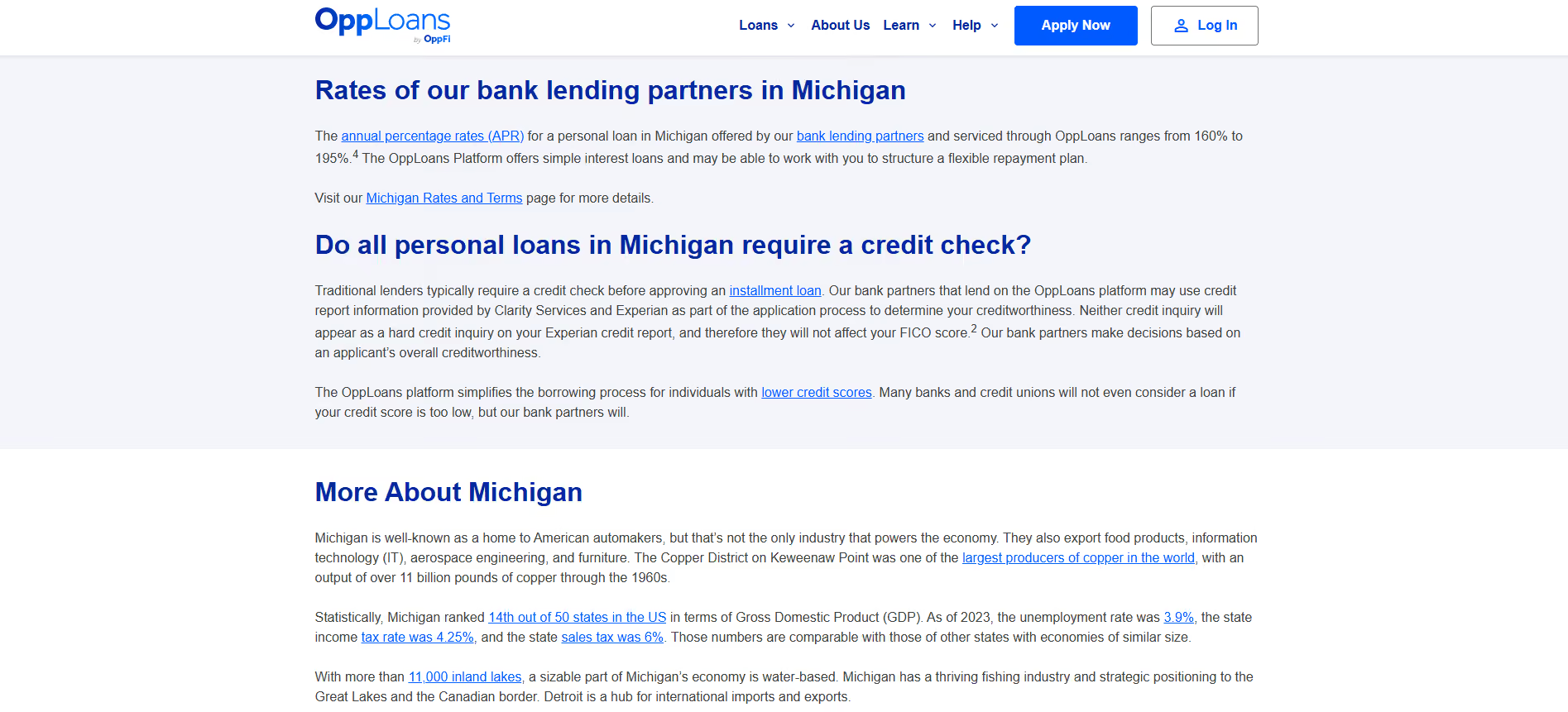
This strategy helped OppLoans achieve a 35% conversion rate from local SEO pages. Other notable metrics include a 263% boost in year-over-year blog sessions and an 88% YoY growth in page-one keywords on core pages.
Their results make sense: when search queries combine a specific need ("low credit score loan") with a local modifier ("near me" or a city/state name), the user is deep in the decision funnel. A well-designed local page might be just enough to nudge these users to convert.
OppLoans takeaway: Local SEO strategies can also work for digital companies. Displaying familiarity with local-specific laws, regulations, and requirements creates a sense of security for regional audiences.
11. Technical SEO recovery and indexation
Impression Digital's case study on EMIS shows that well-developed content strategies with proper search intent targeting won't matter if search engines can't find, index, and rank that content in the first place.
EMIS, a business intelligence company, was dealing with technical SEO issues, mainly due to the site's size: the structure was so complex that search crawlers found it hard to navigate and index in its entirety, while duplicate content left all pages containing the same content unindexed.
The site contained around 6,000,000 URLs. Search crawlers allocate a particular budget when examining and indexing websites: 6 million pages for a site are too much for crawlers to handle, leaving loads of EMIS webpages in the dark.
As such, the company implemented a couple of fixes:
- Created a sitemap report to identify pages with low crawlability
- Created a custom sitemap and crawled it with a bespoke Screaming Frog SEO Spider configuration
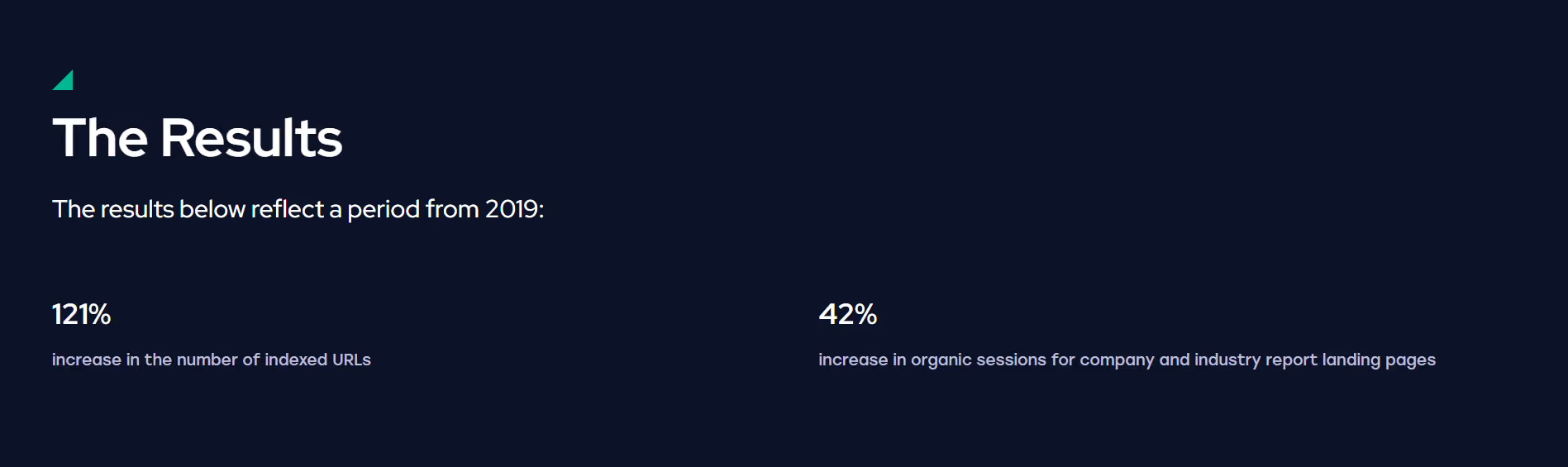
These fixes helped EMIS boost the total number of crawled pages by 121% and increase organic sessions by 42%.
EMIS Takeaway: Technical SEO should be your baseline, especially if you run a large website. You need to ensure search crawlers reach and index all web pages. Website traffic may bottleneck otherwise.
12. AI-generated content at scale
Tailride's self-reported case study serves as a reminder to use AI-generated content cautiously.
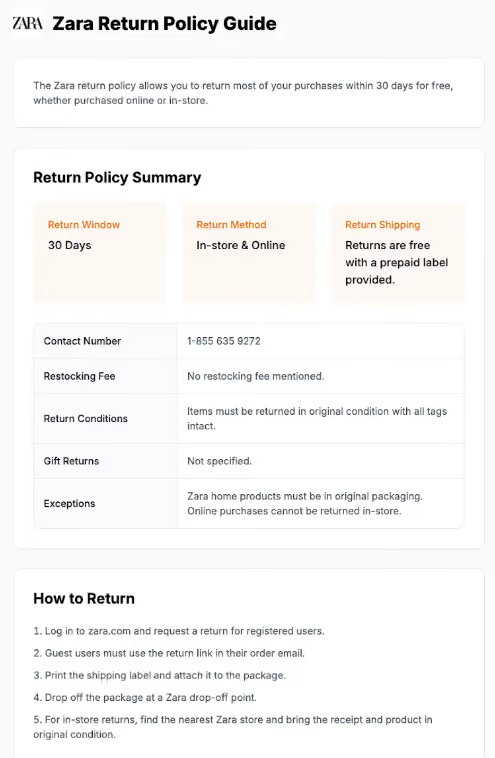
The invoicing company published 22,000 AI-generated pages as part of a programmatic SEO strategy: most of these pages were built around return policies for major retailers like Zara and Adidas, SWIFT codes, and financial term definitions.
The idea behind this strategy was to generate pages around long-tail keywords, like "Zara return policy," en masse, and boost organic traffic.
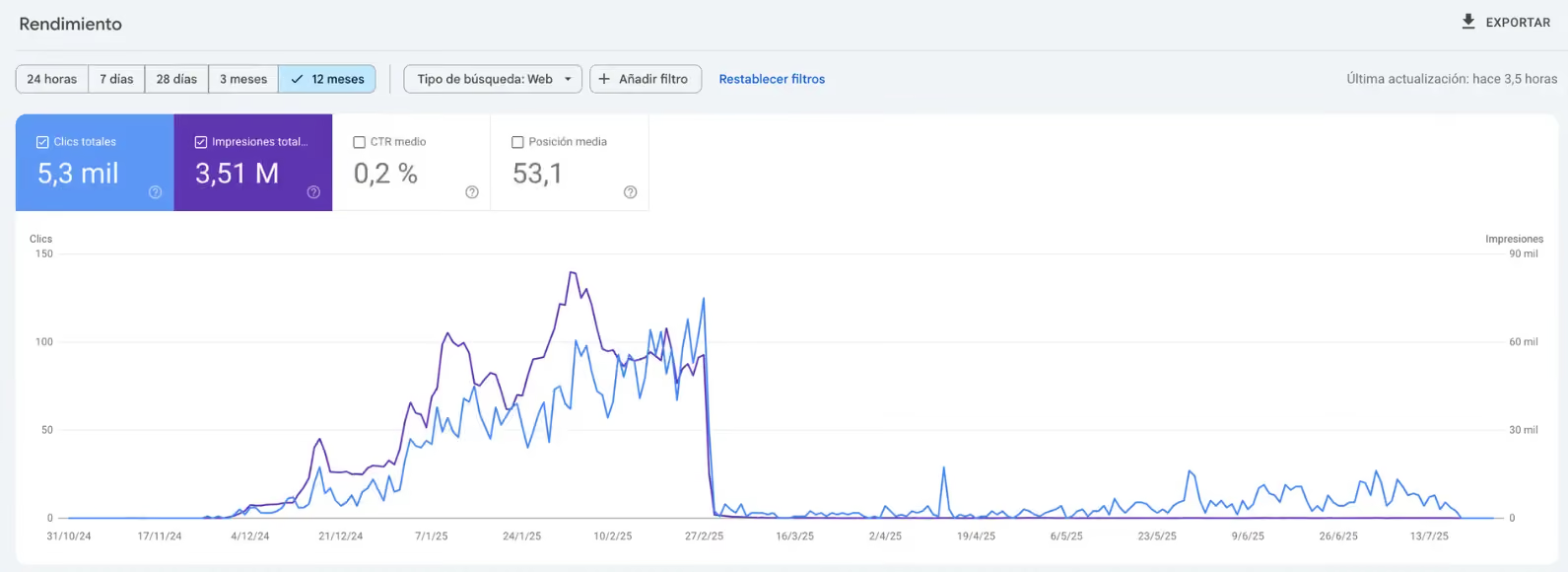
The strategy initially worked, but traffic tanked three months later.
This might be because Tailride's programmatic strategy fell under Google's spam policies, specifically, scaled content abuse. Here's how Google defines the term:
"Scaled content abuse is when many pages are generated for the primary purpose of manipulating search rankings and not helping users. This abusive practice is typically focused on creating large amounts of unoriginal content that provides little to no value to users, no matter how it's created."
The following quote from the case study written by Tailride's founder further solidifies this conclusion:
"We didn't build trust. To Google, we probably looked like a spammy site trying to game the system."
As per Google's Search Quality Rating Guidelines, the search engine won't penalize AI content specifically, but it will penalize content that doesn't provide value to readers and is generally considered low-effort.
Raw AI content with no human input or editorial oversight can fall in this category. In Tailride's case, the strategy:
- Lacked originality: It used near-identical templates across thousands of URLs.
- Had surface-level content: Each page averages around 200 words, offering readers no real insights.
- Targeted keywords unrelated to the company's core products: Search terms like "forever 21 return policy" had nothing to do with the company's invoicing software.
Tailride soon readjusted its strategy to adopt a more user-oriented approach, and noticed ranking boosts soon after.
Tailride takeaway: AI content generation is not a problem, but AI content generation without editorial standards, topical relevance, or quality differentiation is. Google's core updates specifically target scaled content abuse, and Tailride hit every marker. This case study is particularly valuable because the founder himself documented what not to do.
What these examples reveal about sustainable SEO
All the strategies that brought positive results had one thing in common: they were genuinely helpful to users in one way or another. Structured data, authority-first content, local SEO, technical SEO, and digital PR tied to commercial pages all focus on providing solid user experiences and satisfying the target search intent.
Tactics like parasite SEO, off-topic content farming, and AI-generated pages without editorial standards do the exact opposite. They extract value from Google's ranking system without adding corresponding value for users.
It's safe to assume sustainable SEO is about building genuine topical authority, solving real user problems, and maintaining technical standards that make it easy for search engines to discover and value the right pages.
The companies in this article that succeeded and managed to recover after major algorithm updates because they built assets worth ranking.