Likes, shares, comments, and other forms of engagement act as indicators of credibility and relevance, helping search engines understand what content resonates with users. While not a direct ranking factor, strong social signals can improve visibility, drive organic traffic, and enhance brand authority. In this guide, you’ll learn what SEO social signals are, how they impact your online presence, and practical strategies to boost rankings through social media engagement.
What are social signals?
Social signals are engagement indicators on social media platforms such as likes, comments, and shares. They reflect how audiences interact with your content.
Social signals come in many forms, reflecting different types of user engagement. Each social media platform has its unique set of engagement metrics that contribute to your overall visibility.
Major social media platforms showcasing social signals prominently include:
- TikTok
- X
- Threads
Each platform has its unique set of engagement metrics and user engagement metrics across multiple platforms that contribute to your overall social media visibility.
Common examples include likes on Facebook, shares on Instagram, and comments on LinkedIn. Different actions, same goal: getting people to interact with your content and spread it further.
When users engage with your content, it boosts your social media visibility and contributes to your brand’s credibility and reputation online.
The more people engage with your posts on social media, the more chances you have to increase your website's visibility in search engine results pages. When social media users engage with your content, it can resurface in their feeds, giving it extra visibility and potential website traffic.
This increased visibility can lead to more visits to your website, signaling to Google and other search engines that your content is valuable and relevant.
Are social signals a SEO ranking factor?
Let’s get one thing straight – social signals are not a Google ranking factor. There are thousands of variables affecting social media algorithms, and tying them to search engine rankings would be impossible.
Not to mention, likes, shares, and followers can easily be bought or faked. If Google relied on them directly, rankings could be gamed.
There’s also the unpredictability of social media algorithms. This is how some valuable content gets buried, and questionable content gains traction. Huge social media accounts can amplify their posts and get the advantage that has nothing to do with the quality of the content.
Also, search and social serve different purposes. Social engagement doesn’t always reflect relevance to a search query. This is also why some content performs better on social media than in search.
So, can social media benefit SEO at all? Yes, by distributing and amplifying your content to expand your online reputation and visibility.
Here's what Google says about social signals, confirming it's not a ranking factor:

This shows that it's still worth investing effort into improving your social signals because, despite not being a direct ranking factor, they play a significant indirect role in boosting your website’s overall SEO performance.
Why are social signals important for SEO?
Social signals are important for SEO because they reinforce the relevance of your content. Search engines consider them as a form of citation, similar to backlinks, which can influence organic search rankings.
In fact, some mentions can be found directly in Google, displayed as snippets.
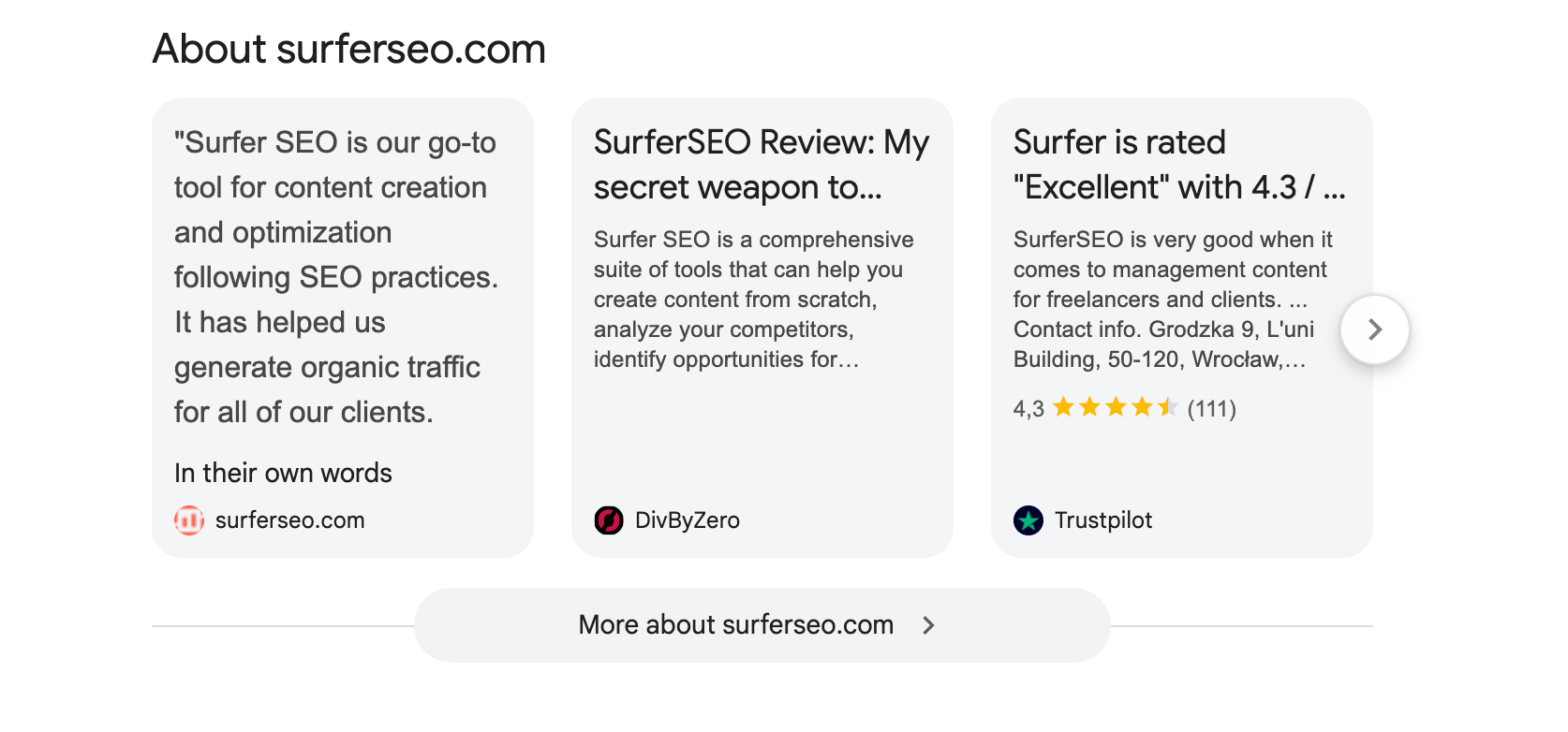
The number of social shares, likes, and relevant user interactions encourages more user engagement, boosting overall online visibility. This contributes to the website's quality and relevance, which can impact SEO efforts.
Also, social signals are considered by search engines as indicators of a website's authority, making them a crucial factor in SEO. For instance, high engagement on social media can lead to more backlinks, which in turn improve domain authority.
Google also displays special SERP features for some searches, which highlight content from social media sites. There’s also a video feature that displays relevant content from social platforms, including YouTube, Facebook, and TikTok.
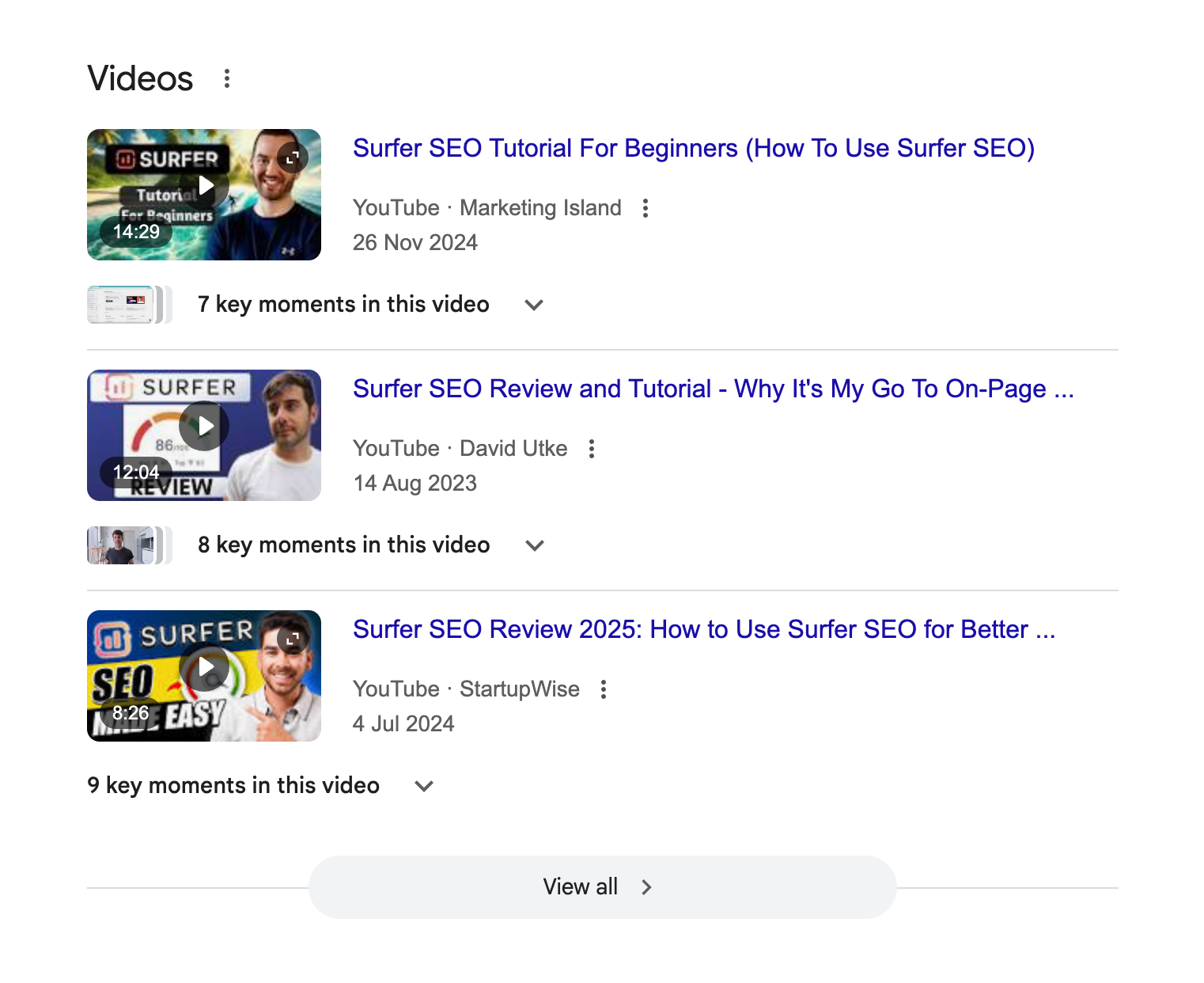
As you can see, social signals from relevant social media platforms can truly boost your brand’s online presence in Google and drive more organic traffic to your website.
How social signals benefit SEO
Understanding how social media impacts SEO can further enhance your marketing strategy. Here are some major ways social media engagement benefits search engine rankings:
Boosting organic traffic
Social signals play an indirect but powerful role in driving more organic traffic to your website. When people engage with your content through likes, shares, comments, or saves, it naturally gains more visibility and reaches new audiences. Some of your new followers will click through to your website, boosting referral traffic.
The benefits don’t stop there. Higher engagement also improves your brand’s credibility and encourages content sharing beyond social media, for example, through blog mentions or backlinks. Over time, these secondary signals make it easier for your content to rank higher in search results.
To maximize this effect, focus on creating content that sparks conversation and encourages sharing. Adding strong visuals, clear calls-to-action, and platform-specific formatting makes your posts more engaging and increases the likelihood of attracting clicks to your site.
Additionally, user engagement on social media contributes to lower bounce rates. Engaging content tends to generate higher social signals that can strengthen your SEO. Creating compelling social media posts that drive traffic to your website, you can improve your page’s organic search ranking and boost your overall online visibility.
Enhancing brand awareness
Every like, share, or comment increases the chances of your content being seen by new audiences, helping your brand reach beyond its existing followers. As people interact with your content, algorithms recognize its relevance and continue to promote it. This creates a cycle of visibility, strengthening your brand presence.
High levels of engagement also build social proof, signaling credibility and trustworthiness to potential customers.
This is why some websites use this to their advantage by prominently displaying a count of social metrics on content pages. Here's an example of a blog post on Backlinko website where they use this feature:
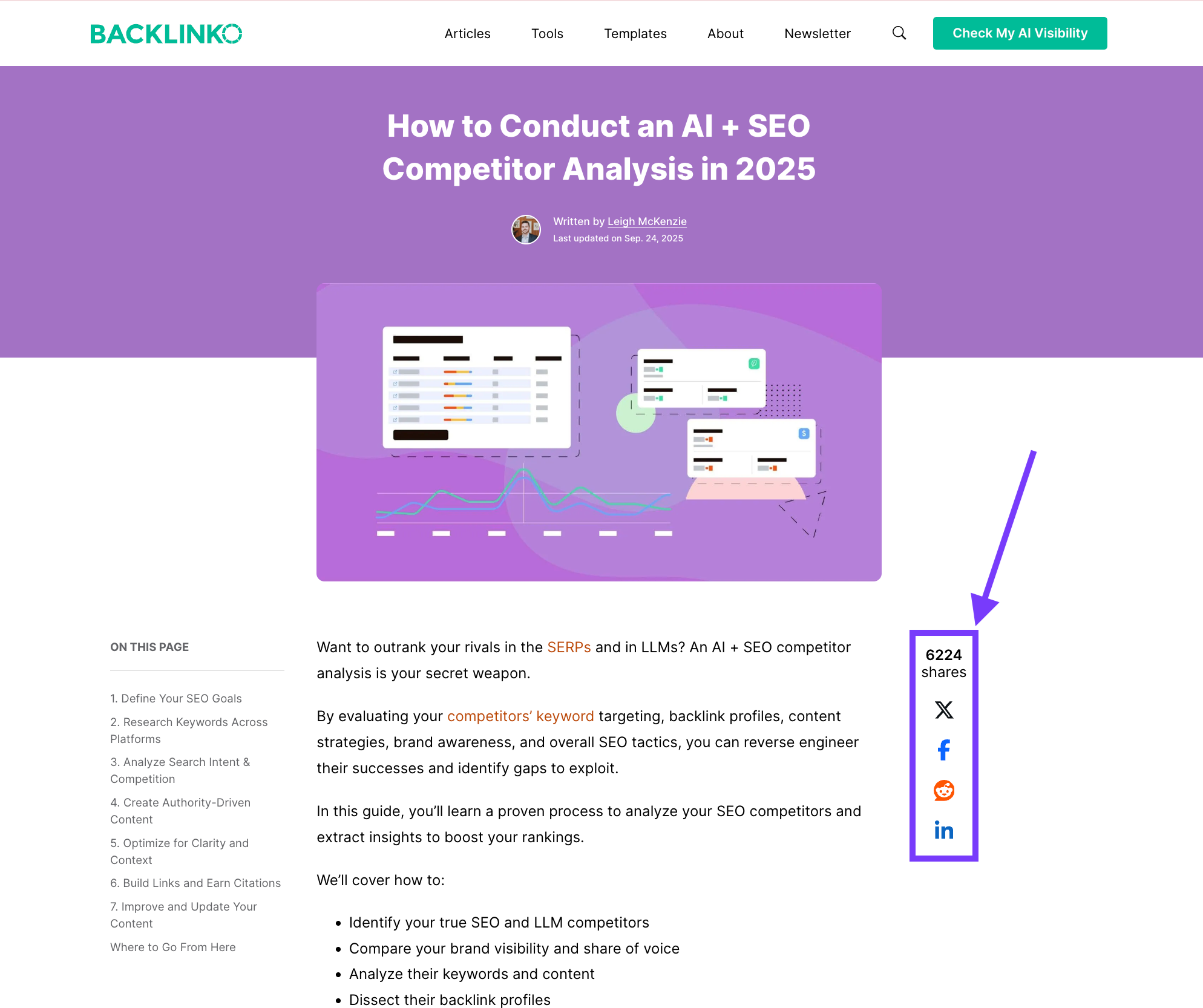
When users see others actively engaging with your posts, they are more likely to perceive your brand as worth following. Over time, this consistent exposure makes your brand more recognizable across social and search platforms.
To fully leverage social signals for brand awareness, focus on producing shareable content that resonates with your target audience, whether that’s educational posts, entertaining videos, or thought-provoking insights.
Improving local SEO
Social signals can help your business appear more prominently in location-based searches. Engagement on social media signals to search engines that your brand is active, relevant, and trusted among the locals. This can influence local search rankings, particularly for businesses with physical locations or services targeting specific areas.
Platforms like Facebook, Instagram, LinkedIn, and X allow users to tag locations, leave reviews, or engage with content with the tagged location.
Here's an example of an Instagram account of a popular spot in New York City. Almost 40 thousand posts were tagged at their location.
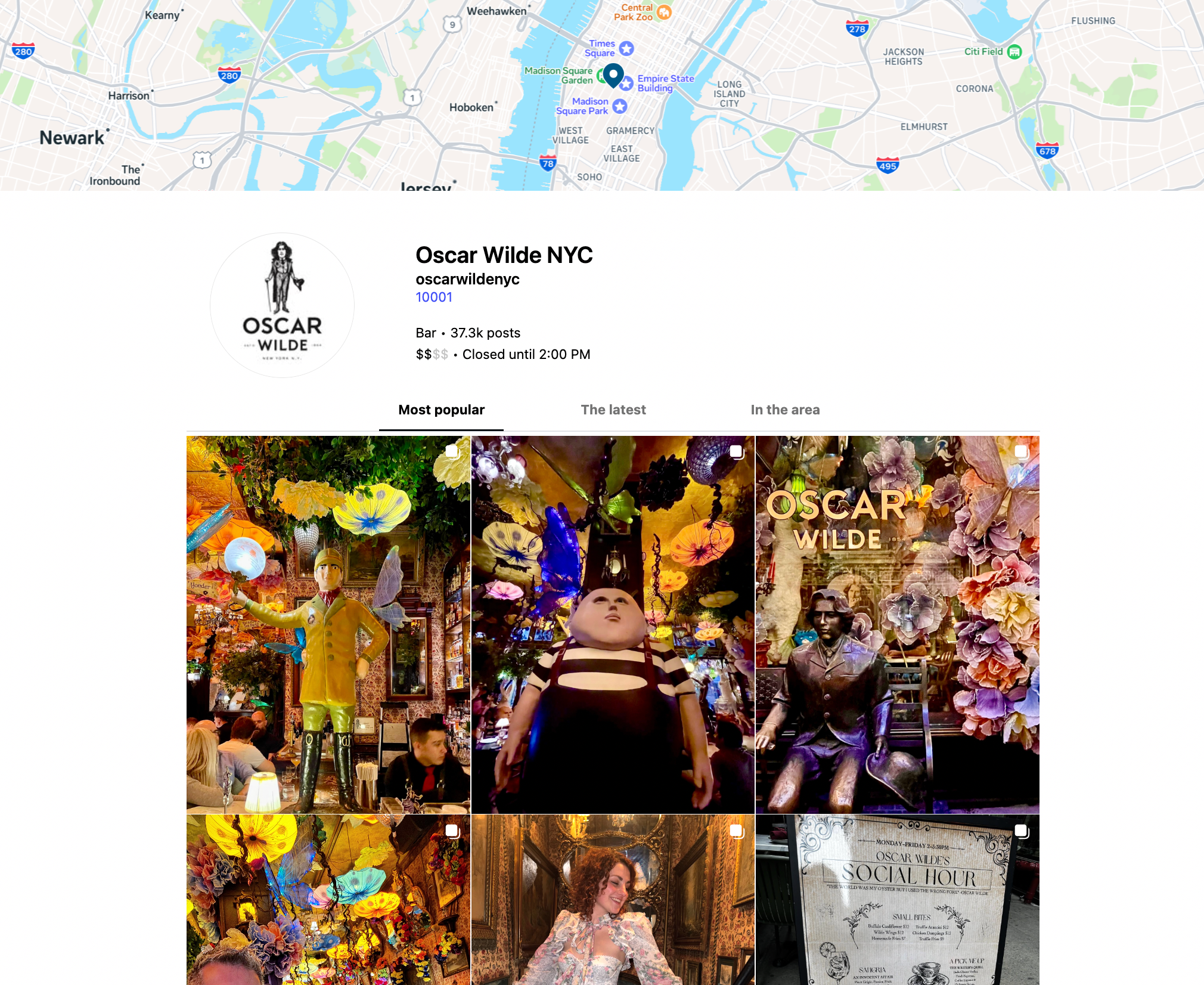
High engagement on these posts boosts your social visibility and drives more local traffic to your website or physical store. Encouraging user-generated content, check-ins, and local hashtags can also amplify this effect.
Additionally, integrating social signals with other local SEO practices, such as optimizing Google Business Profile listings, creating localized content, and gathering genuine customer reviews, strengthens your overall local presence.
Generating quality backlinks
Social signals can indirectly help your website earn high-quality backlinks, which are key in search engine optimization. The more engagement your content gets, the more bloggers, journalists, or industry websites will discover it and link to it as a credible resource.
Highly shareable content, such as informative guides, infographics, videos, or research reports, attracts social engagement and backlinks. Every interaction on social media acts as a signal of content value, signaling to other content creators that your website is authoritative and worth referencing.
A great example of a content piece with significant backlink potential is the Surfer study on AI overviews. It has 630 pages linking to it, and the infographics from this blog post are a great social media content material, such as this one:

To maximize backlink potential, focus on creating link-worthy content and actively promoting it across relevant social channels. Encourage sharing, engage with communities in your niche, and make your content easy to cite and reference. Over time, social signals can amplify your reach, attract backlinks naturally, and strengthen your site’s authority in the eyes of search engines.
Boosting content distribution and lifespan
Social signals can significantly extend the reach and longevity of your content. High engagement pushes your post in front of new audiences, giving it a broader distribution than organic reach could achieve. This ripple effect helps your content live longer on social platforms and circulate online long after it’s posted.
Take, for example, this blog post about word count. It goes in-depth about content length and how it affects content quality and rankings.
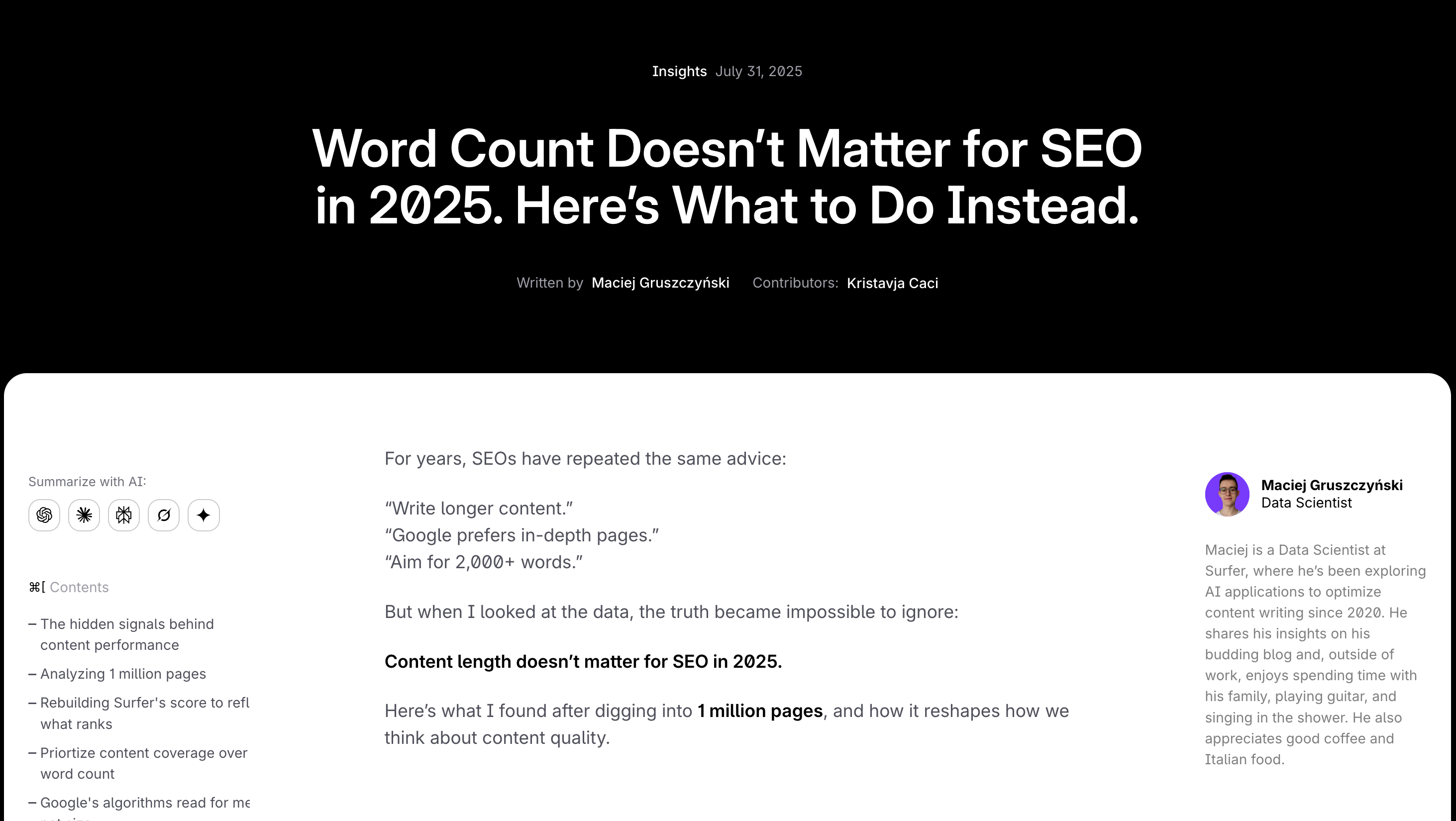
But some people might not have seen this post. That’s why we published a video on our LinkedIn with the study’s findings. For some, this may be a more digestible and engaging way to absorb information. And, it helps to extend the content’s lifespan.
<iframe src="https://www.linkedin.com/embed/feed/update/urn:li:ugcPost:7361400276831870976?collapsed=1" height="895" width="504" frameborder="0" allowfullscreen="" title="Embedded post"></iframe>
When users engage with your content, algorithms continue to show it to more people. As a result, high-performing posts can remain visible for days, or even weeks, after publication. This extended lifespan increases the chances of attracting new followers, generating backlinks, and driving sustained traffic to your website.
To get the most out of your content, make it easy for people to engage! Use catchy headlines, visuals people actually want to share, and clear calls-to-action. The more your audience interacts, the longer your content continues to bring value, long after it was first published.
How to improve social signals?
Improving social signals isn’t rocket science. It’s all about creating content people love, keeping your profiles polished, and actually talking to your audience (not just at them). In the next sections, we’ll break down exactly how to make it happen.
Create engaging content
User engagement is a two-way street: you provide valuable content, and your audience responds with likes, comments, and shares. To make this work, your content must be genuinely useful and engaging.
To create high-quality content, focus on topics that educate, entertain, or spark thought – that’s the kind of content that really clicks. The more relatable and human it feels, the better.
Don't forget to add visual elements such as eye-catching images, short videos, and infographics. They play significant roles in creating quality content and encouraging shares.
Here's an example of a post with eye-catching visuals and a catchy headline:
<iframe src="https://www.linkedin.com/embed/feed/update/urn:li:ugcPost:7336381304516599808?collapsed=1" height="567" width="504" frameborder="0" allowfullscreen="" title="Embedded post"></iframe>
They can turn a good post into one people actually want to share, which will boost your visibility across platforms.
Collaborating with influencers or partnering with other brands can expand your reach and credibility. Find relevant partners in your niche that your audience would love to see you collaborating with.
Engaging your followers in content creation is another great tip for inspiring interactions. Encourage them to create user-generated content to spark authenticity and help build a strong online community.
Maintaining a strong social media presence and regular posting, which generates brand awareness and ensures that your social media strategy remains top-of-mind for your audience.
Optimize social media profiles
Your social media profiles should clearly reflect your brand by including relevant information such as your niche, industry keywords, and what you offer.
A well-optimized profile strengthens the connection between your brand and its content niche. This makes your profiles more discoverable to both users and search engines.
This will make connecting your profile and brand to the niche you actively create content in easier. As a result, you will improve your overall social media visibility and drive more organic traffic to your social media pages.
To optimize your social media profile effectively:
- Include relevant information, keywords, and branding to enhance online visibility.
- Link social media profiles to your website to encourage seamless navigation between platforms.
- Tailor content to specific platforms to increase engagement rates and improve user interaction.
Here's an example of a well-optimized Instagram profile, using relevant keywords:

Each social media platform has a unique audience and algorithm, so be sure to align your content and profile information to match the social media site. For LinkedIn, for example, business-oriented long-form posts are more effective if you want to engage a more professional audience.
Engage with your audience
The best way to generate social signals is to have a dedicated audience. Even if you create the best content in the world, people won’t care unless you make them feel welcome and heard.
That’s why building a strong community around your brand is one of the most effective ways to encourage user engagement. When followers feel connected to your brand, they are more likely to interact with your content by leaving likes, comments, and shares.
To foster this engagement, focus on interactive content and two-way communication. Be active in your comment section by responding regularly, just like in the example below.

Ask questions, create polls, encourage followers to share their thoughts in the comments, or host live sessions to spark real-time conversations.
These strategies help deepen long-term audience relationships, which can create a sense of belonging and trust that strengthens your online community. In turn, increased engagement will improve your visibility across social platforms, generate more social signals, and support your SEO performance.
Measure the impact of social signals
To understand how social engagement affects your visibility and SEO, it’s crucial to track and measure social signals. Social media analytics tools make this possible by providing real-time data on how your audience interacts with your content.
Some of the most important metrics include:
- Follower growth – shows how your audience base is expanding over time.
- Likes and comments – indicate direct engagement and interest in your content.
- Audience reach – measures how many people are seeing your posts.
- Response rate – reflects how effectively you interact with your audience.
Together, these indicators reveal how well your content resonates and how effectively you engage with your community.
You can use built-in analytics from platforms like Facebook, LinkedIn, or TikTok, and pair them with Google Analytics to see how social activity translates into website traffic and conversions. This combination offers a complete picture of how social signals support your SEO efforts.
By tracking social signals, you can identify the types of content that resonate best with different audience segments, enhancing your overall digital marketing strategy to improve content distribution success.
Key Takeaways
- Social signals are engagement metrics that affect online visibility and SEO.
- Social signals, including likes, shares, and comments, show audience engagement and content quality.
- High engagement on social media can lead to more backlinks and better domain authority, which can indirectly boost search engine rankings.
- Effective strategies for increasing social signals include creating engaging content, optimizing social media profiles, and actively engaging with the audience to build community relationships.
- Social signals function like citations, similar to backlinks, helping search engines evaluate content credibility.
- Examples include Facebook likes, Instagram shares, and LinkedIn comments, all reflecting audience interaction.
- More engagement equals more visibility, as social signals can drive organic traffic and improve search rankings.