Google has spent years talking about “helpful content,” E-E-A-T, and originality. But now it’s getting much more specific about the kind of content it actually wants to surface.
The phrase showing up across Google’s recent guidance is “non-commodity content.”
From the May 2026 AI optimization guide to Danny Sullivan’s presentation at Google Search Central Live in Toronto, Google has started explicitly distinguishing between commodity and non-commodity content, citing exactly what counts as “quality” content.
Since AI Overviews are getting very good at summarizing generic information, users can get the answer directly on the SERP without ever clicking through. That puts content that simply repeats the same information as every other page at a clear disadvantage.
So what exactly does Google mean by non-commodity content? How do its systems evaluate it? And what does creating non-commodity content actually look like in practice?
Let me break all of this down for you in this blog.
How to identify commodity vs. non-commodity content
Google describes non-commodity content through its uniqueness, specificity, and authenticity, often derived from first-hand knowledge or original research that cannot be easily replicated.
And if you look closely, these are really more granular versions of the same signals behind E-E-A-T and the Helpful Content system.
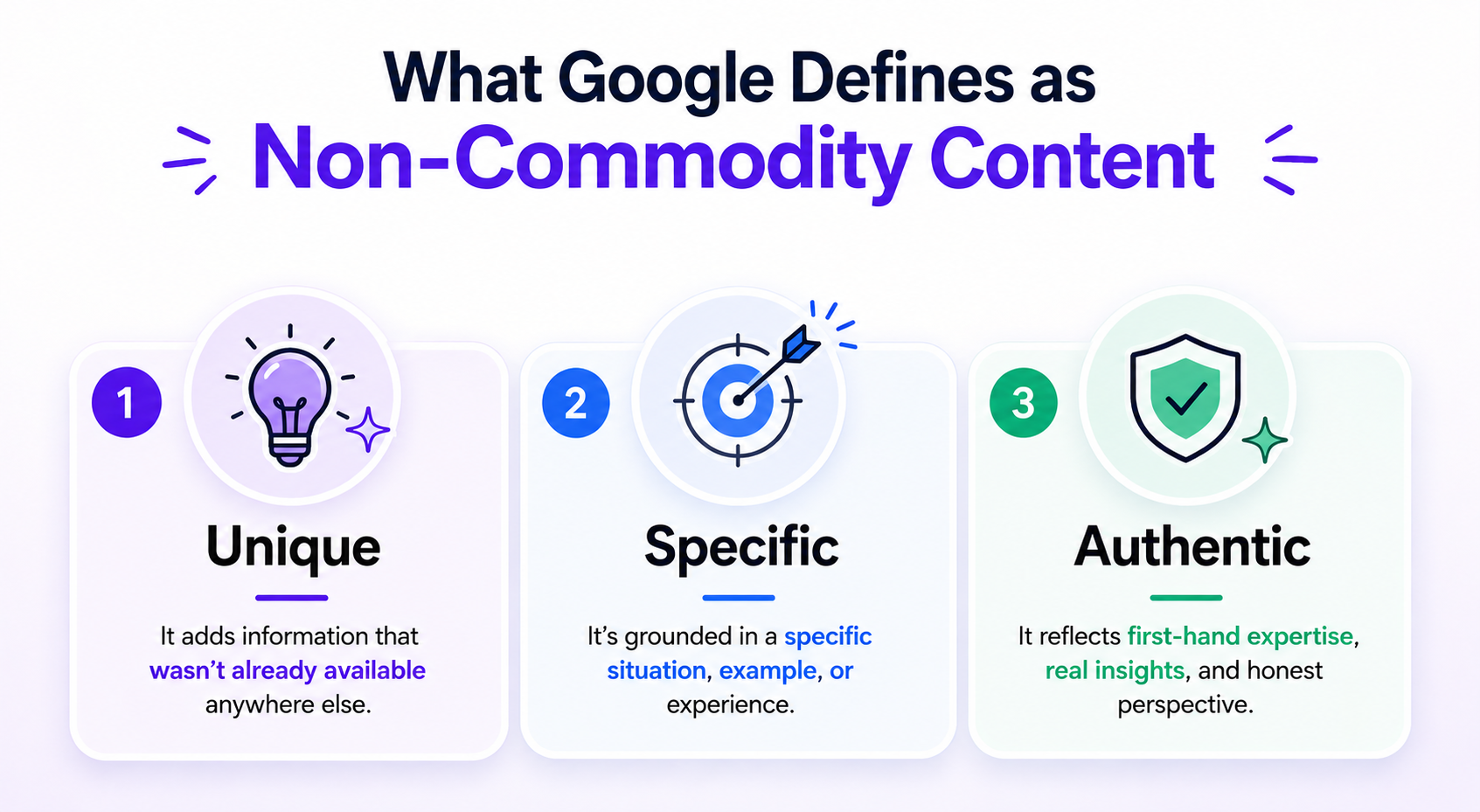
Across its AI optimization guide, the same pattern keeps showing up. Google wants content that adds something original, focuses on real-world experience, and goes beyond the kind of generic information AI systems and search engines like AI Overviews can easily reproduce.
Here’s what that looks like:
1. Unique: bring a viewpoint others can’t replicate
In this context, “unique” doesn’t mean publishing a controversial opinion or trying to sound different for the sake of it. Google is talking about content that brings a viewpoint, dataset, experience, or insight that other pages can’t easily reproduce
Google’s AI optimization guide puts it pretty clearly,
“Our AI systems take a look at a variety of sources, so it can be helpful to have a unique viewpoint that stands out.”
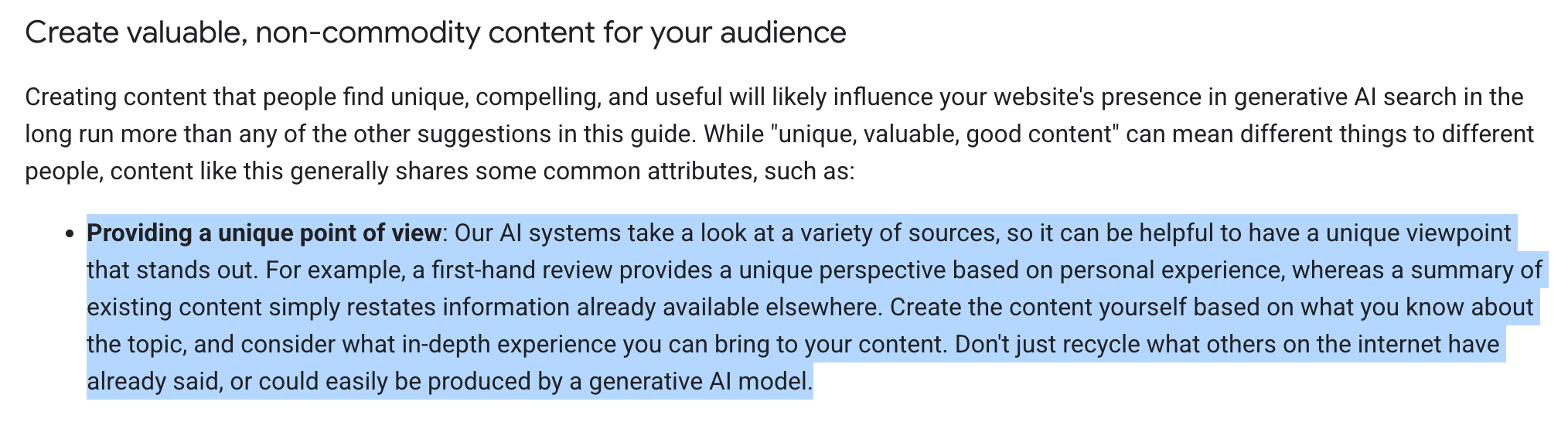
The guide goes even further by telling creators to build content around what they personally know about a topic and the experience they can bring to it—not to recycle what’s already ranking on search engines.
In short, Google is explicitly contrasting non-commodity content with generic AI-generated content. In its own words, creators should avoid publishing content that “could easily be produced by a generative AI model.”
If someone can create the same article by summarizing the top-ranking SERP results and running them through ChatGPT, it’ll most likely be considered as commodity content.
What Google seems to value instead is information that comes from somewhere harder to replicate,
including:
- Direct experience
- Proprietary data
- Original research
- Actual testing
- Subject matter expertise
- Lived experience
- Professional judgment
For example, a running store owner analyzing real customer wear patterns has a unique perspective. An interior designer documenting stain tests they conducted for a client has proprietary insight.
But someone rewriting generic advice recycled from other pages does not offer a unique viewpoint.
2. Specific: cover one real situation, not generic advice
According to Google, non-commodity content talks about “a specific instance, situation or thing, not general rules, steps or generic information.”
That distinction is important because most commodity content is written to apply broadly to everyone. It covers standard advice, common knowledge, and generalized best practices. The problem is that this kind of content often stays surface-level because it avoids getting too narrow or detailed.
Specific content does the opposite. Instead of trying to cover every possible scenario, it zooms into one real situation, one real decision, or one real outcome. Ironically, that’s often what makes the content more useful. Readers can learn from concrete examples far more easily than from abstract advice.
This is exactly what Danny Sullivan demonstrated at Google Search Central Live in Toronto.
In one example, he contrasted commodity content like “7 Tips for First-Time Homebuyers” with a much more specific piece: “Why We Waived the Inspection (And Saved $15k): A Look Inside the Sewer Line.”
The latter describes a real bidding war where the agent personally inspected the sewer line, identified PVC piping, and used that information to make a strategic decision.
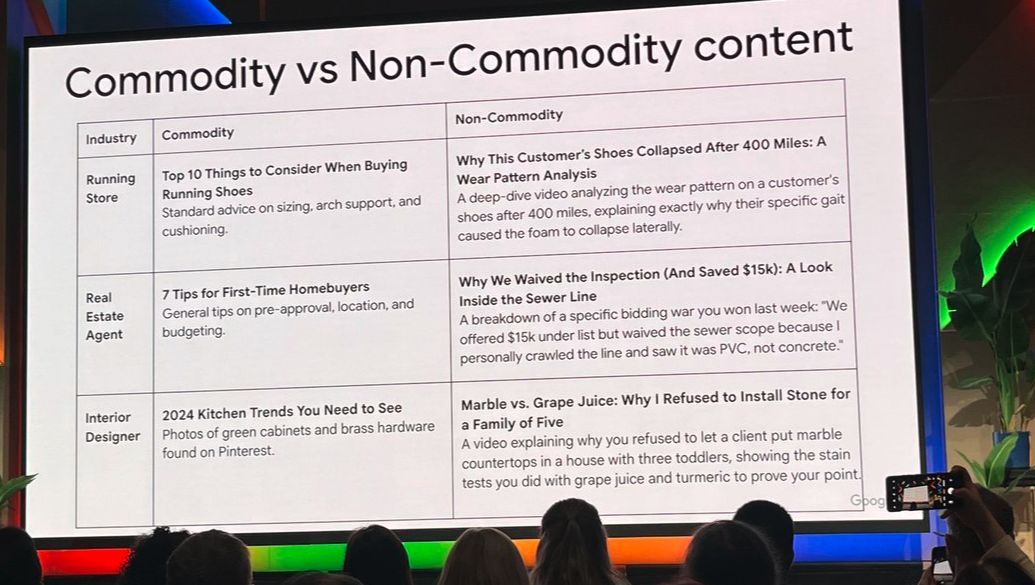
The same pattern shows up across all the examples Google shared.
The commodity versions focus on general advice. The non-commodity versions focus on one verifiable situation with real-world detail.
And that’s also what makes this kind of content harder for AI systems to replicate. A generative model can produce endless generic advice about buying a home. But it can’t invent a firsthand account of crawling through a sewer line during an actual inspection.
3. Authentic: demonstrate first-hand experience
Google defines authentic content as content that “demonstrates first-hand knowledge or expertise.”
Google isn’t asking creators to simply claim expertise by throwing in a byline. It’s looking for evidence that the experience actually happened. That proof often shows up through small but believable details like:
- Original photos or videos
- Real test results
- Dated anecdotes
- Named examples
- Observations from the field
- Details that only someone directly involved would know
Google’s AI optimization guide explains this clearly,
“A first-hand review provides a unique perspective based on personal experience, whereas a summary of existing content simply restates information already available elsewhere.”
One of the strongest examples came from Google’s commodity vs non commodity content slide shown at Search Central Live (also shown in the previous point).
For an interior designer, commodity content was “2024 Kitchen Trends You Need to See,” filled with Pinterest-style inspiration. Whereas the non-commodity version was far more grounded: “Marble vs. Grape Juice: Why I Refused to Install Stone for a Family of Five.”
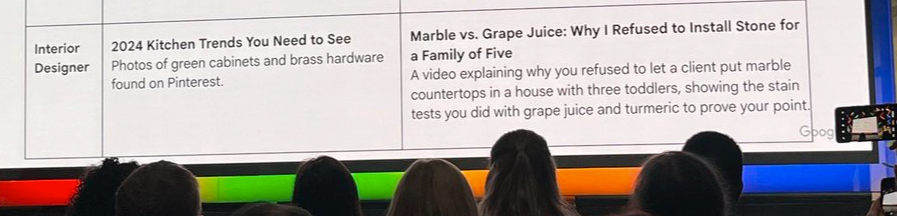
The latter example included actual stain tests using grape juice and turmeric to show why the designer advised against marble countertops in a home with young children.
That example captures how all three traits work together.
The viewpoint is unique because it comes from direct client experience. And it’s specific because it focuses on one family and one design decision. Plus, the authenticity comes from the proof itself—real world testing, the observations, and the details that couldn’t come from generic research alone.
In short, Danny Sullivan’s presentation points to an obvious distinction between what Google considers commodity vs non-commodity content for SEO.
Every non-commodity example is built around a specific situation, told by someone who was actually involved, with details that could only come from first-hand experience. The commodity versions, on the other hand, could have been written by anyone after spending 10 minutes on Google.
Why Google is prioritizing non-commodity content now
Google’s shift toward non-commodity content is really a response to two things happening at the same time:
- AI Overviews are getting very good at summarizing generic information
- and search behavior is becoming much more conversational and specific
If a page just repeats the same advice already available across dozens of other pages, Google can often pull that information directly into the SERP. The user gets their answer without needing to click through.
We can already see how this is affecting traffic patterns. One randomized field experiment showed that when Google AI Overviews appeared, organic clicks dropped by 38%. At the same time, zero-click searches went up from 54% to 72%.
And since AI has lowered the cost of producing commodity content to nearly zero, anyone can generate generic guides on various topics quickly, which led Google to raise its quality bar for indexed content.
At the same time, users are moving away from short keyword-style searches and asking longer, more natural-language questions.
Google’s VP of Search, Liz Reid, said the company has seen “meaningfully longer queries” and more conversational searches with AI Overviews. She also explained that people are moving away from “keywordese” and describing what they actually want in more detail.
And searches containing 11 words or more increased from 3.27% to 5.37%, while conversational queries jumped from 5% to 20%.
This means that generic surface-level articles built around broad keywords with high search volume often struggle to answer nuanced questions, follow-up questions, or highly specific situations.
Google hinted at this direction back in May 2025, when John Mueller wrote in an official Search Central blog post:
“Focus on making unique, non-commodity content that visitors from Search and your own readers will find helpful and satisfying.”
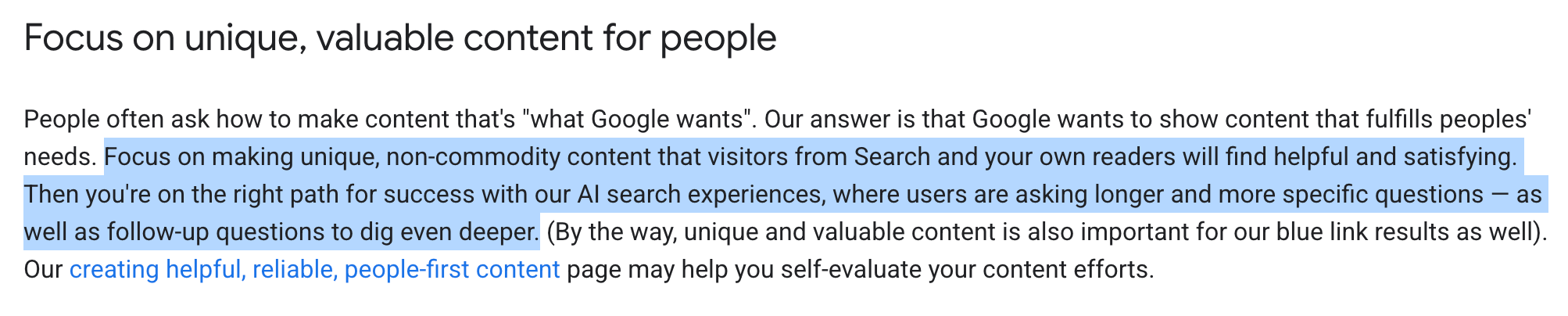
The post also specifically referenced AI search experiences where users ask deeper and more specific follow-up questions.
Keep in mind, this isn’t a completely new ranking philosophy from Google.
It’s a more direct version of ideas already present in the Helpful Content system, E-E-A-T, and people-first content guidelines.
The difference now is that AI answer engines make the gap between generic and experience-driven content much more visible.
That’s likely why Google’s May 2026 AI optimization guide places “Create valuable, non-commodity content for your audience” as its first recommendation, even before technical SEO, structured data, and ecommerce optimization.
The message is fairly clear: technical SEO still matters, but original insight and first-hand experience are becoming much harder for AI systems to replicate.
How Google evaluates non-commodity content quality
Google hasn’t revealed a specific “non-commodity content” ranking signal. But across its patents, quality guidelines, and public statements, there’s a pretty clear pattern in how it evaluates originality and first-hand value.
A lot of it comes down to whether a page adds genuinely new information instead of repeating what already exists online. That’s where concepts like information gain and verifiable experience become important. Here’s how that works:
1. The information gain score
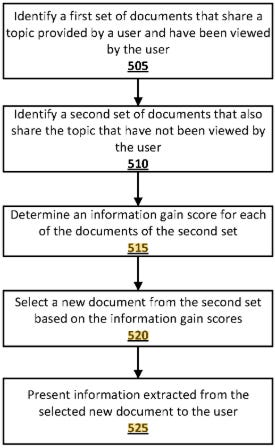
One of the clearest clues comes from a Google patent called “Contextual Estimation of Link Information Gain” (US20200349181A1), originally filed in 2018 and granted in 2022.
The patent describes a system designed to measure how much additional information a page contributes beyond what other pages on the same topic already provide.
In simple terms, Google’s system could compare multiple pages covering the same topic and evaluate which one actually adds something new. The patent refers to this as “information gain.”
That means a page with more original insight, proprietary data, or first-hand knowledge could theoretically rank above a more authoritative page that mostly repeats existing information.
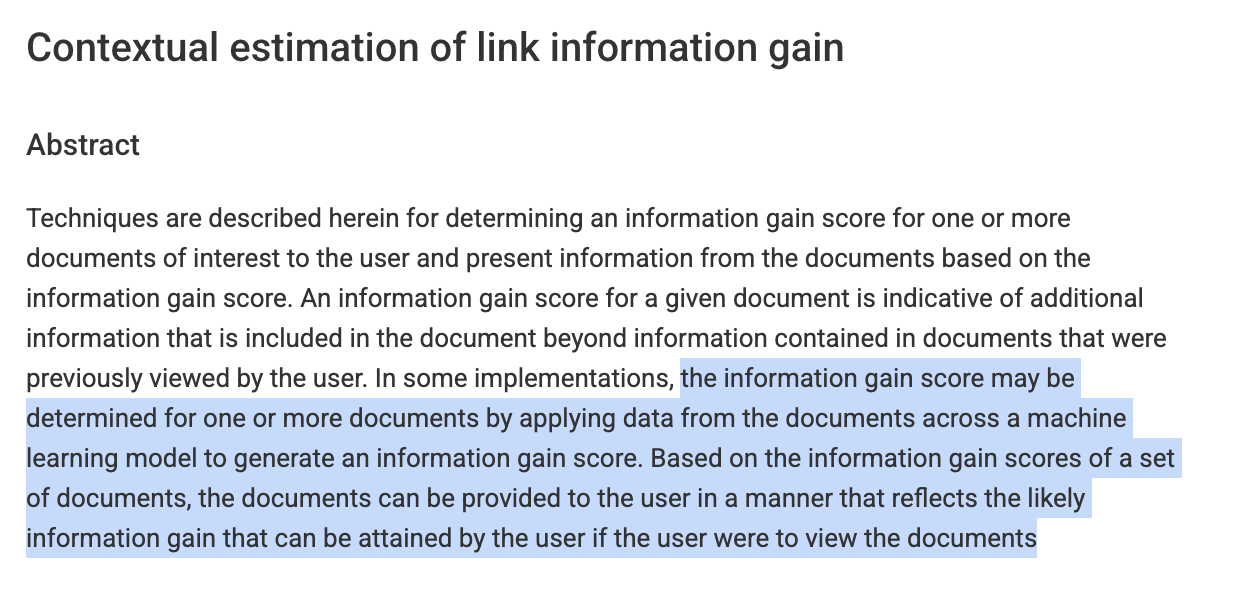
The patent specifically describes the information gain score determined by:
“one or more documents by applying data from the documents across a machine learning model to generate an information gain score.
Based on the information gain scores of a set of documents, the documents can be provided to the user in a manner that reflects the likely information gain that can be attained by the user if the user were to view the documents.”
It also explains that documents can be scored using machine learning models trained to compare them against existing content on the same topic.
To be clear, Google has never confirmed whether this exact patent is actively used in production ranking systems. But the patent is widely discussed in the SEO industry, has international applications, and was updated as recently as 2022.
More importantly, the idea aligns closely with how Google now talks about non-commodity content publicly.
Commodity content naturally has low information gain because it mostly restates what’s already available across hundreds of competing pages. Non-commodity content tends to have much higher information gain because it introduces something the index may not already contain:
- Original research
- Proprietary insight
- Actual testing
- Lived experience
- Unique analysis
- Real-world observations
Bill Slawski also noted that information gain becomes especially useful in follow-up searches.
If users seem dissatisfied with initial results, Google can prioritize pages that introduce genuinely different information instead of showing slightly rewritten versions of the same content again.
That idea fits almost perfectly with how conversational AI search works today. Because users increasingly ask follow-up questions, refine context, and dig deeper into specific situations. As a result, generic definitional content struggles in those environments because it rarely adds new informational value after the first answer.
2. Google’s quality guidelines weigh verifiable experience
Google's Quality Rater Guidelines are a document used by human quality raters to evaluate the quality of search results. While these guidelines don't directly influence rankings, they show the kind of content Google considers helpful and trustworthy.
One thing the guidelines make clear is that it's not enough to simply claim expertise or experience.
Strong content should provide readers actual evidence that the experience is real. And according to Google’s Quality Rater Guidelines, clear signs of real-world experience include:
- Original photos instead of stock images
- Screenshots from actual use
- Dated anecdotes
- Named examples
- Firsthand observations
- Evidence of direct experience
Simply claiming expertise is no longer enough. Google’s systems (and its human raters) are looking for proof signals that make the experience believable.
The standards become even stricter for YMYL topics like health, finance, or legal advice. Generic bylines like “Admin” or “Staff Writer” can now trigger the lowest quality bar ratings if there’s no verifiable expertise or conventional wisdom attached to the content.
That directly reinforces the same three traits Google uses to define non-commodity content:
- Uniqueness comes from having perspectives that others don’t.
- Specificity comes from focusing on real situations instead of generic advice.
- Authenticity comes from being able to demonstrate that the experience actually happened.
It’s also important to clarify what the Quality Rater Guidelines are. They are not a direct ranking factor. Human raters do not manually rank pages in Google Search.
But Google has repeatedly said the QRG reflects the kinds of signals its algorithms are designed to evaluate over time. In other words, the document gives us one of the clearest windows into how Google defines content quality internally.
How to create good non-commodity content
The good news is that creating non-commodity content doesn't require a research team, a six-figure budget, or months of original research.
In fact, most businesses are already sitting on the raw material Google is looking for.
The challenge just lies in identifying the experiences, insights, and observations that only your business has access to, and turning them into content. Here’s where most teams should start:
1. Identify your unique contribution
Before creating content, ask yourself:
What can I contribute to this topic that someone without my experience couldn't?
That's the simplest non-commodity content filter.
Google's AI optimization guide encourages creators to start from the opposite direction: "Consider what in-depth experience you can bring to your content."
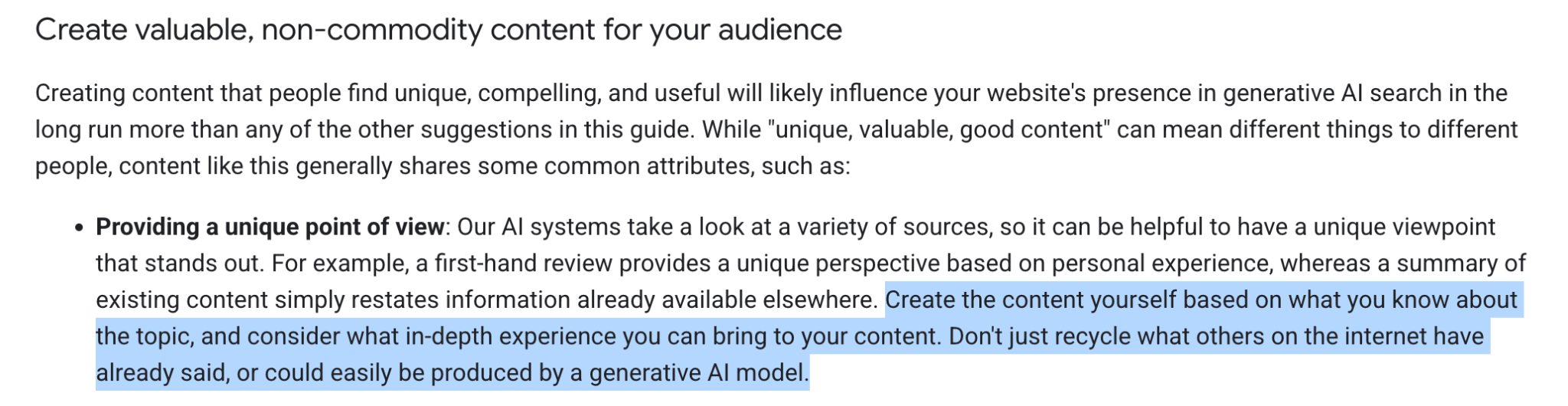
That means if someone could create the same article through an AI Overview, or ask ChatGPT for a summary, you're probably creating commodity content.
For most businesses, the answer is usually hiding in one of these four areas:
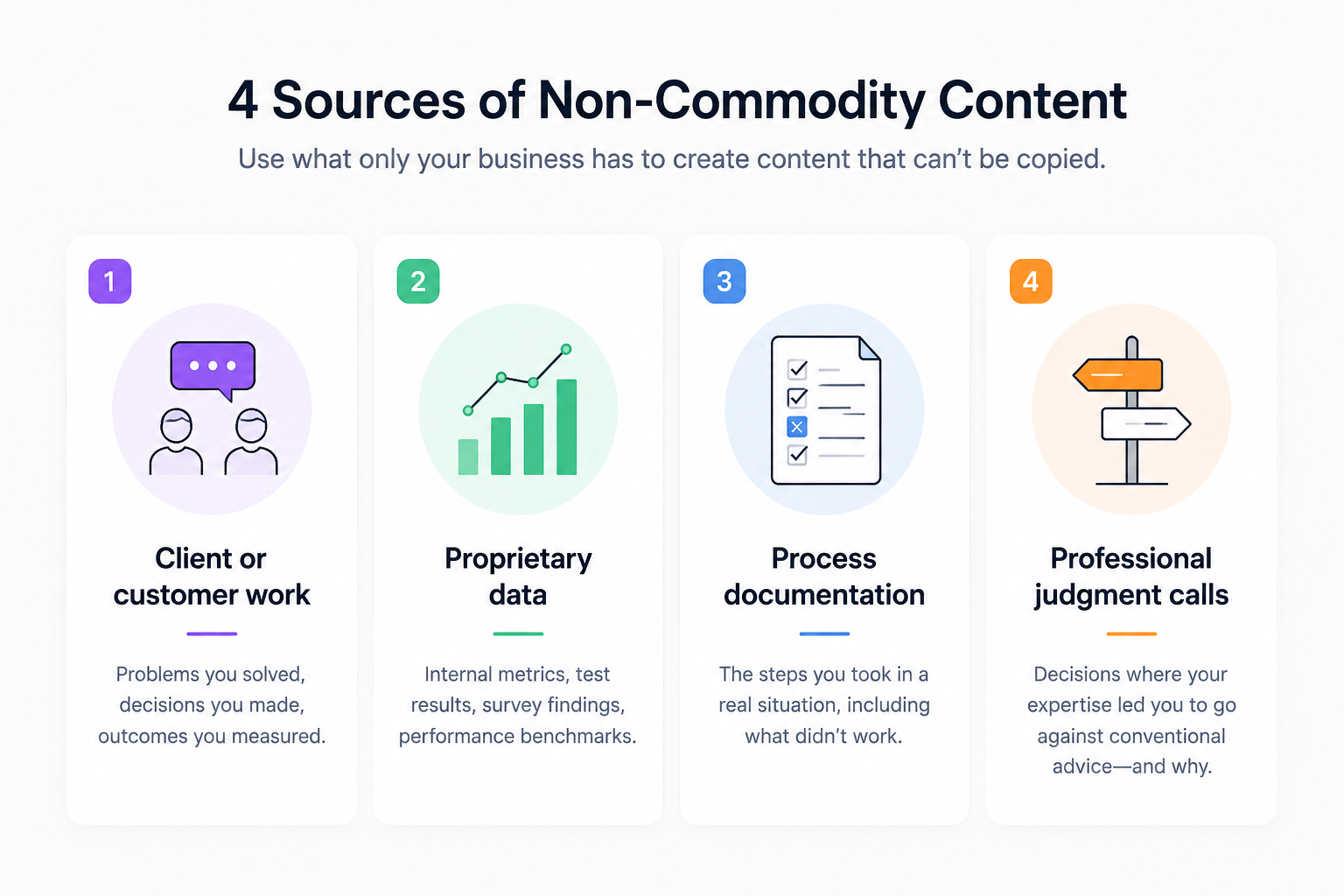
- Client and customer work
Every business solves problems, makes decisions, and measures outcomes. Those experiences often make better content than generic advice because they're rooted in real situations.
Instead of writing "How to improve employee retention," for example, you might document how a client reduced turnover by 30%, the changes they made, and what surprised you during the process.
This is also one of the easiest places to start. Case studies and customer stories are rated among the most effective original content formats by 53% of B2B marketers and are actively used by 75% of content marketing teams.
- Proprietary data
Any information that only your business has access to can become a source of non-commodity content.
That could be survey findings, internal performance benchmarks, product usage trends with specific examples, test results, or original research and data.
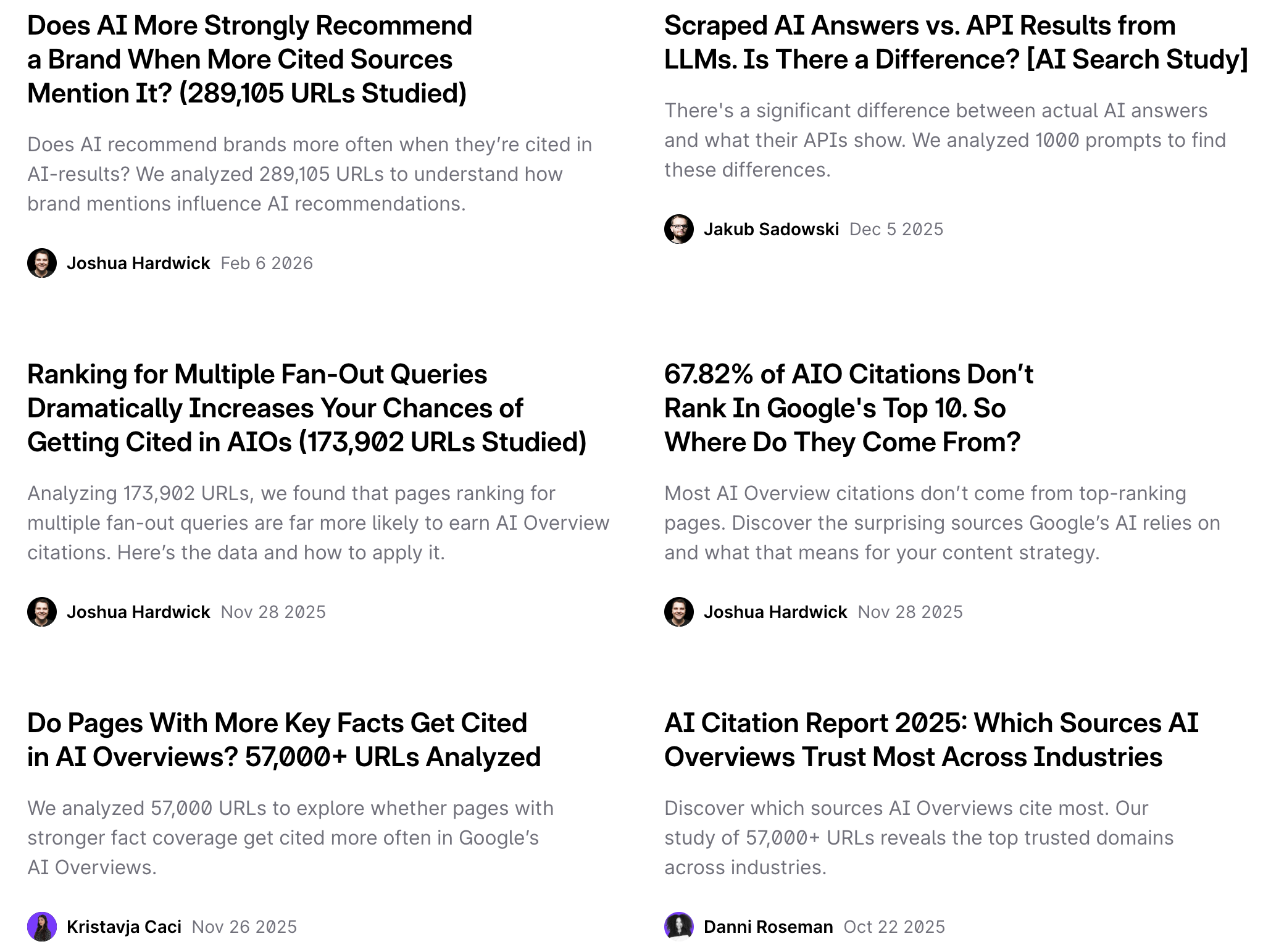
The reason original data performs so well is simple: nobody else can publish the same information. Plus, it’s great for SEO as original research and data earn more backlinks than opinion-based content.
- Process documentation
Most content explains the outcome. Very little explains how the outcome was achieved.
Documenting the actual process (including what didn't work, what changed midway, and why certain decisions were made) creates content that's much harder to replicate because it comes from direct experience.
- Professional judgment calls
Google's own examples repeatedly focus on expertise-driven decisions.
The real estate agent who chose to waive an inspection, or the interior designer who advised against green cabinets.
The value isn’t exactly the final recommendation, but more behind the reasoning.
These judgment calls are often where expertise becomes most visible because they reveal how professionals think, not just what they know.
And none of this requires a research department, a huge content budget, or much data.
Google's examples weren't large-scale industry studies. One involved a running store analyzing a customer's shoe wear pattern. Another centered on a single home purchase.
The differentiator wasn't production quality. It was access to information that wasn't already available online.
That's also why 67% of B2B marketing leaders in a 2026 TopRank Marketing report state that original research and expert-driven content is more valuable for building trust signals and credibility. And also why 53% of B2B decision-makers say strong thought leadership can outweigh brand recognition.
The common thread across all of these examples is that they add information that wasn't already available online.
2. Approach commodity topics with a non-commodity angle
Most businesses don't operate in inherently unique content categories.
Realtors will write about home-buying advice, and kitchen designers will write about remodeling trends. On the other hand, a running shoe brand will most obviously write about shoe selection.
The topic itself isn't the problem here.
The problem is publishing the same version of that topic that hundreds of other sites have already published.
Instead of avoiding commodity topics, approach them through a lens only your business can provide.
A simple way to do this is to run every content idea through the three-trait filter:
- Does it contain a unique viewpoint?
- Is it tied to a specific situation?
- Does it include authentic evidence?
For example, "Best running shoes for 2026 buying guide" is a commodity topic.
But "The shoe I stopped recommending after testing it for six months" isn't.
The topic is still about the best shoes of 2026, but the difference is that the content is built around a real decision, a specific project, and evidence from actual work.
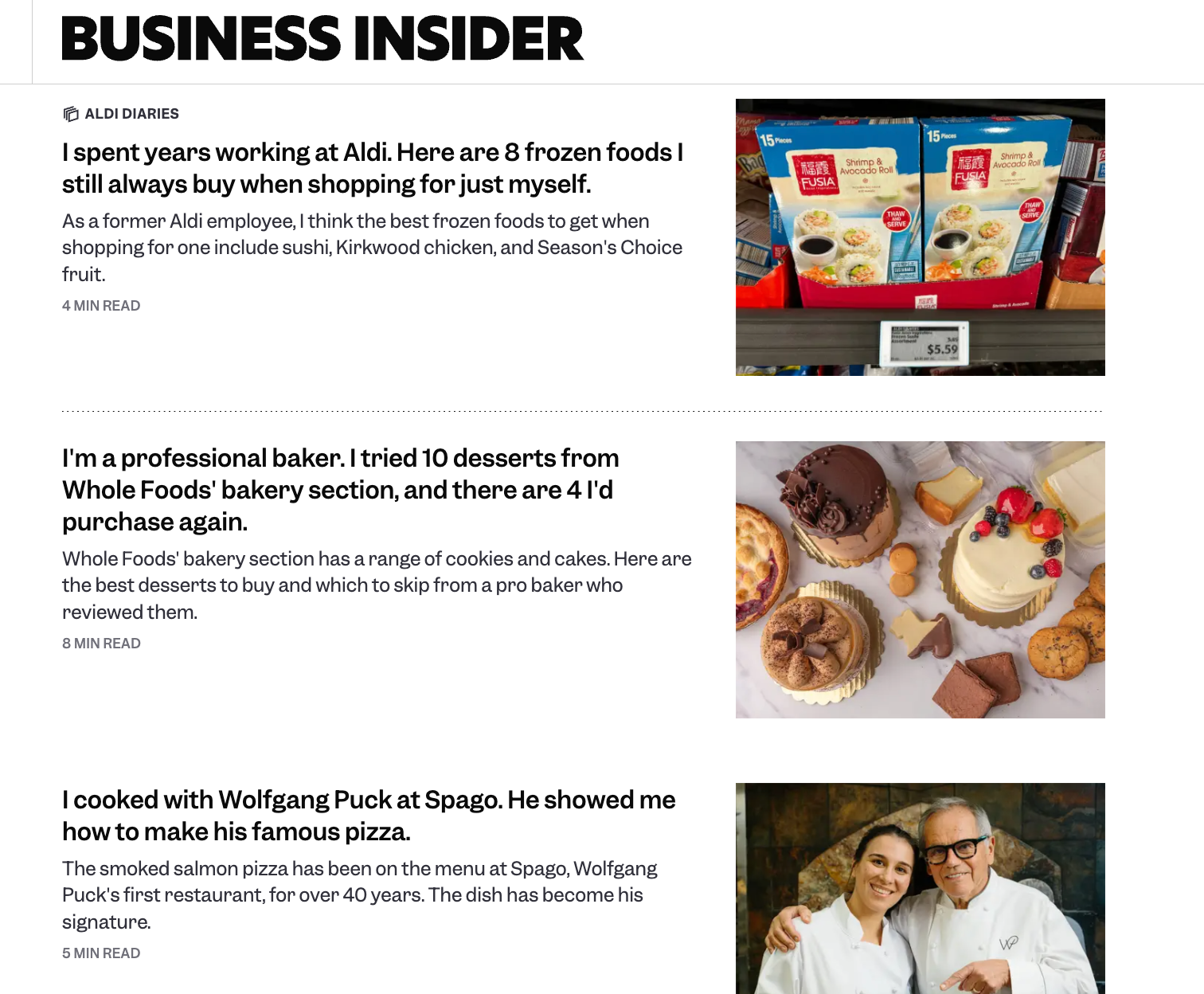
Here's a quick transformation framework to help you approach commodity topics with a non-commodity angle:
Commodity approach
Non-commodity approach
Generic topic
One specific real scenario you experienced
General advice
The decision you actually made and why
Broad trend coverage
Your tested opinion on how the trend performs in practice
Search Engine Journal's analysis of non-commodity content also highlighted this distinction. They propose two filtering questions before creating content:
- Are we creating this just for SEO?
- Are we adding anything unique to the existing corpus of information?
If the answer to the first question is yes and the second is no, the content probably shouldn't be created at all.
The biggest mistake businesses make is assuming non-commodity content means adding a personal anecdote to an otherwise generic article.
But that’s not enough.
A paragraph about your experience buried inside a standard "Top 10 Kitchen Trends" article doesn't make the piece unique.
The experience needs to become the foundation of the content itself. The real project, real decision, real test, or real outcome should be the story the article is built around. Not something added as decoration after the fact.
That's the difference between content that simply exists and content that contributes something new to the conversation.
3. Test your content against Google's self-assessment
Once you've identified a unique angle, the next step is making sure the content actually delivers on it.
Google already provides a framework for this through its Creating helpful, reliable, people-first content documentation. In fact, Google's AI optimization guide links directly to these self-assessment questions as a way for site owners to evaluate their content before publishing.
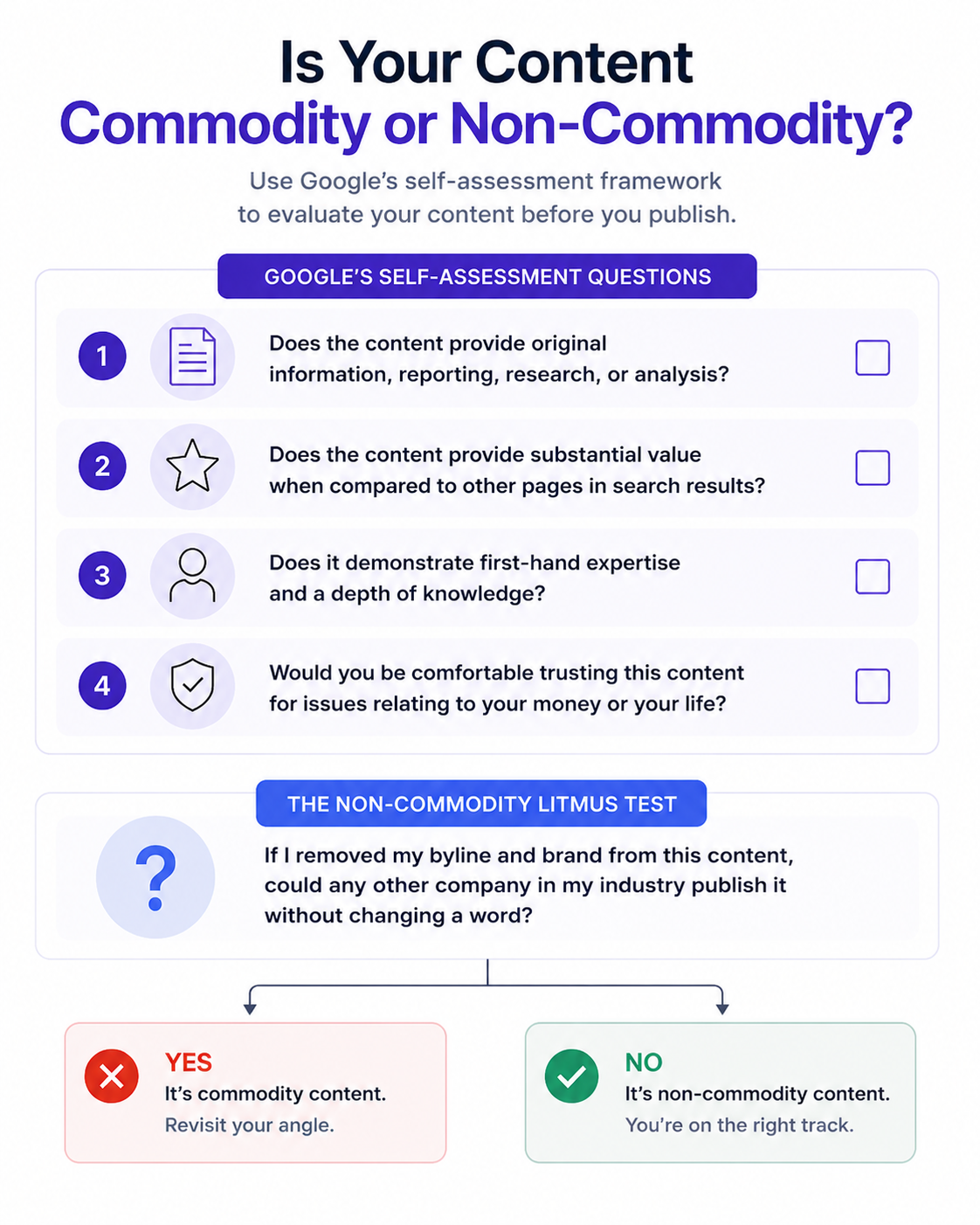
Several of the questions are particularly relevant when assessing whether content is commodity or non-commodity:
- Does the content provide original information, reporting, research, or analysis?
- Does the content provide substantial value when compared to other pages in search results?
- Does it demonstrate first-hand expertise and a depth of knowledge?
- Would you be comfortable trusting this content for issues relating to your money or your life?
Notice how all of these questions point back to the same idea: is the content contributing something meaningful, or simply repeating what's already available elsewhere?
You can also turn Google's framework into a simpler litmus test:
If I removed my byline and brand from this content, could any other company in my industry publish it without changing a word?
If the answer is yes, you're probably looking at commodity content.
If the answer is no—because the examples, data, observations, or perspective come from your own experience—you're much closer to non-commodity content.
Here’s a quick checklist for you to break this down:
Google's AI optimization guide offers an even simpler version of the same test:
"Is this content that my visitors would find satisfying?"
According to Google, if the answer is yes, you're on the right track because its systems are designed to connect users with exactly that kind of useful information.

The keyword here is satisfying.
A satisfying piece of content doesn't just answer a question. It gives readers information they couldn't easily get elsewhere. It helps them understand a problem more deeply, make a better decision, or learn from someone who's already been through the situation themselves.
And Google's self-assessment checklist isn't a new concept. It's actually part of an existing scale that already has a defined floor.
According to Google’s updated Search Quality Rating Guidelines from September 2025, content that fails the self-assessment questions (no original information, no substantial value, no first-hand expertise) doesn't just miss the "satisfying" threshold—it maps directly onto Google's lowest quality classification.
The same guidelines also highlight how originality and uniqueness are major factors that are used to define quality content:
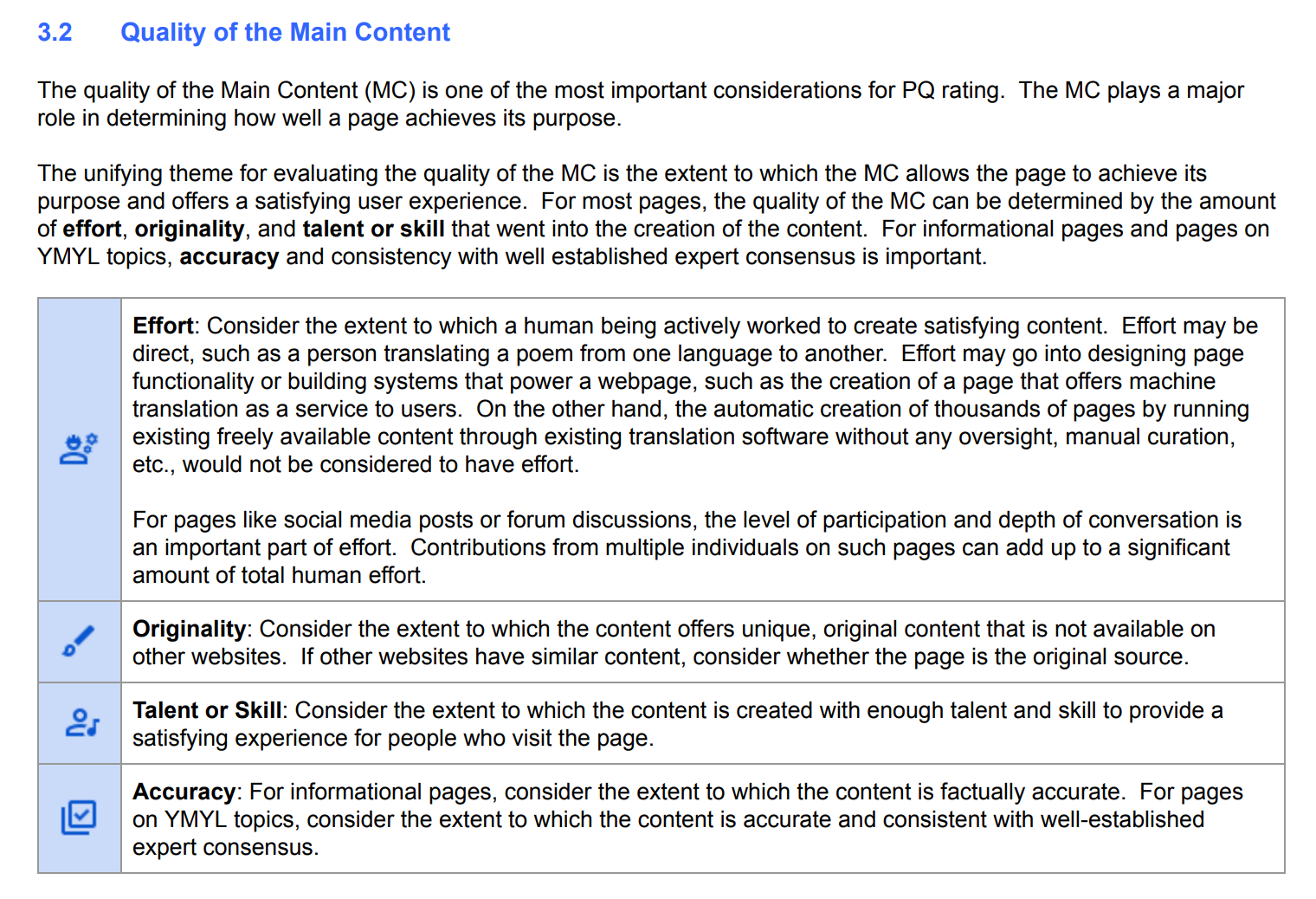
This is ultimately what Google's self-assessment framework is trying to measure—and what non-commodity content consistently delivers.
Start creating content Google actually wants to surface
At first glance, non-commodity content can feel like another layer of SEO advice added on top of AI search optimization, and everything else marketers are trying to keep up with.
But when you look closely, Google is really saying the same thing it has been saying for years.
The ideas behind non-commodity content are the same ideas behind E-E-A-T, the Helpful Content system, and Google's people-first content guidance.
What's changed is that Google now has a much clearer way of describing what it wants to reward in both traditional search and AI search experiences: content that is unique, specific, and authentic.
A single piece built around a real customer challenge, an original dataset, a firsthand observation from a subject matter expert, or a decision your team actually made will usually add more value than ten articles repeating the same advice already available everywhere else.
As AI Overviews and answer engines get better at summarizing generic information, content that simply restates what's already known becomes easier to replace. But content that is rooted in real human experience doesn't.
A good next step for content teams is to review your most recently published content and ask three simple questions:
- Is it unique?
- Is it specific?
- Is it authentic?
If the answer is no to all three, it's probably commodity content.
And that's becoming a harder type of content to earn visibility with as AI systems get better at delivering generic answers on their own.
The sites most likely to succeed won't necessarily be the ones that produce the most content, but the ones that bring unique insights, original analysis, and high value content to the conversation.
If you have a lot of content, it can be tough to know where to begin. Surfer's Content Audit keeps an eye on your existing pages and highlights the ones with the best chances for improvement.
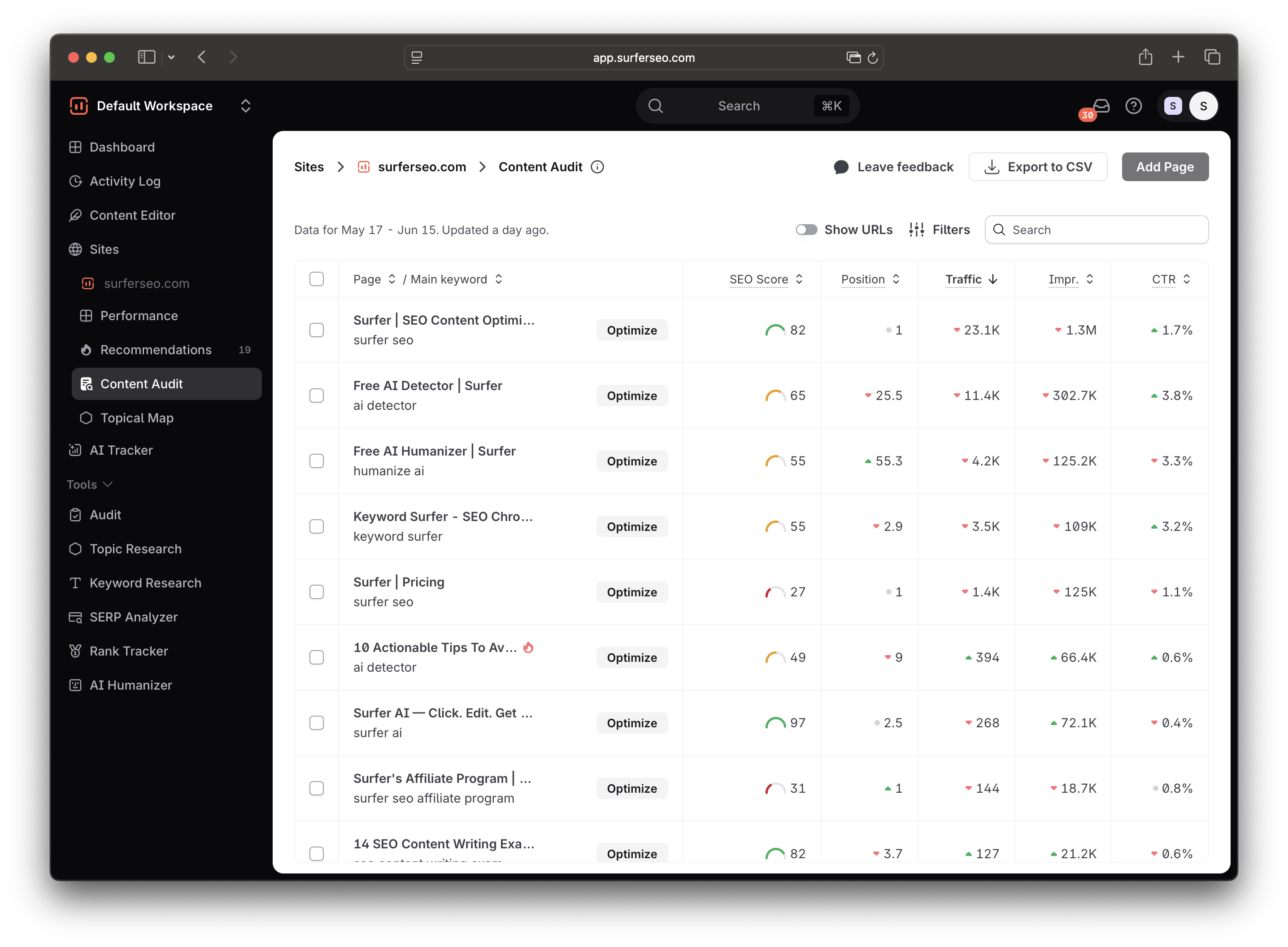
This way, you can start with the pages that need the most help and focus on rebuilding them with your own unique perspective. The tool shows you where to look, but the real experience and ideas still need to come from you.