
For nearly two years, a how-to guide on the MailTracker blog went mostly unnoticed. Despite steady search demand, the post barely ranked and attracted fewer than 20 visits a month.
As the content strategist behind MailTracker, I realized the issue wasn’t the topic, but it was the structure. The article tried to cover too many ideas at once, making it confusing for readers and unclear to Google.
So, I rebuilt the content from the ground up with a sharper focus, clearer intent, and on-page optimization using Surfer.
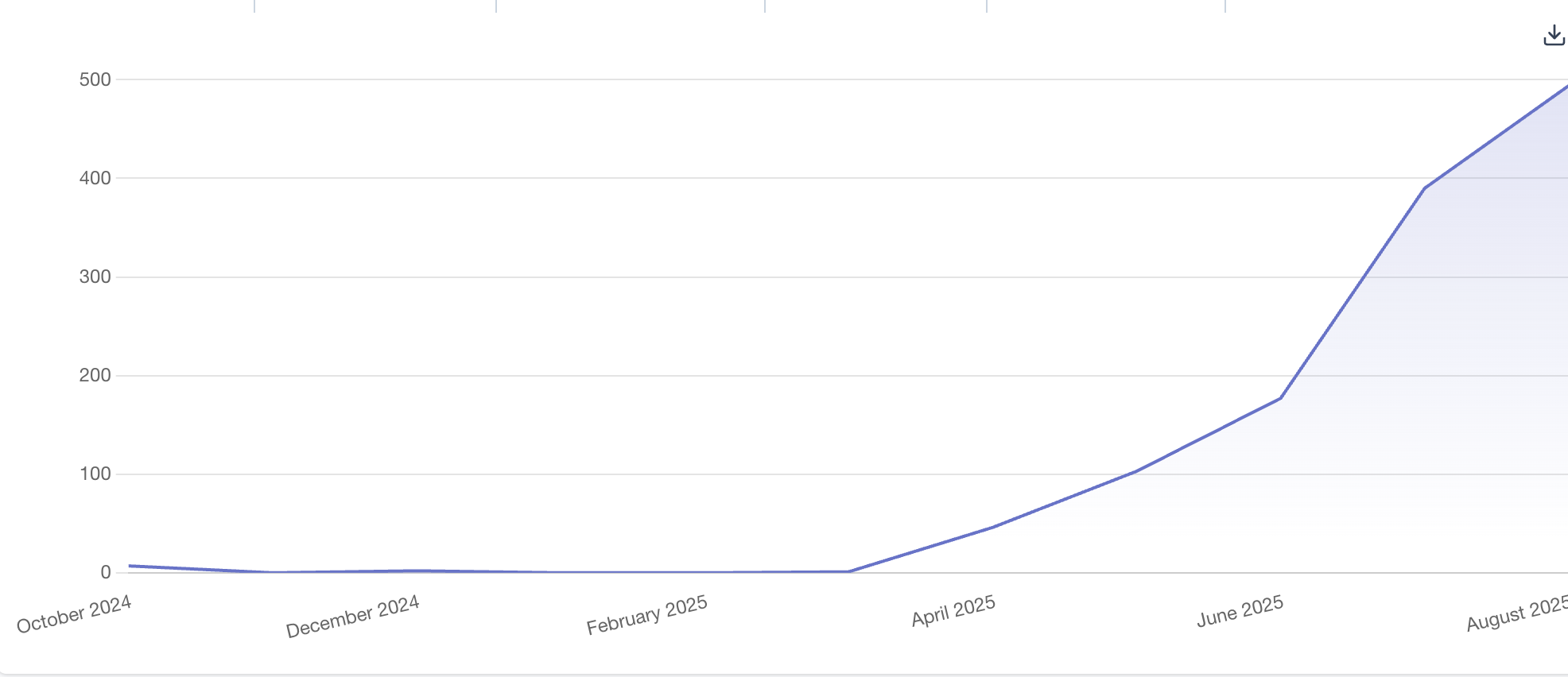
Four months later, traffic grew 5× to around 500 organic visits per month, and the post climbed to #3 for its main keyword.
Here’s how I did it, step by step:
A how-to article no one was reading
The article “How to Write Cold Emails” was first published on the MailTracker blog in mid-2023, but it never gained any real visibility.
For almost two years, traffic stayed flat, with fewer than 20 visits per month and ranking for almost no keywords.
The topic had potential, but the content wasn’t easy to follow. The original version tried to do too many things at once:
- It explained the steps
- Mentioned different features
- Listing generic tips without a clear order
- Mixing examples, templates, and benefits in the same sections
Everything was packed into one long scroll of text. Readers struggled to find quick, actionable information, and Google couldn’t determine what the page was truly about.
That’s when I decided to start over.
This time, focusing on a single, clear intent: helping readers write better cold emails through real examples.
Repurposing the article to align with intent
Instead of keeping the long how-to structure, I reimagined the article as a listicle titled “10 Cold Email Examples That Get Replies.”
The old version opened with generic sections like “What is a cold email?” and “Why it matters,” burying the value in long paragraphs.
I flipped that structure, starting with a short intro, a clear definition, and a clean list of 10 practical examples.
Each example included:
- A brief explanation
- A ready-to-use template
- One sentence on why it works
The format was easy to scan and answered user questions faster. Instead of dense text, I used:
- Bullet points and short tables
- Clear H2s and H3s matching search queries
- Concise, actionable sections like “What to write in your first cold email”
This approach matched user intent (quick examples and takeaways, not theory) and gave Google stronger topical signals.
Optimizing with Surfer
I used Surfer to see how top-ranking articles were structured. This confirmed my decision to lead with examples rather than theoretical explanations because most high-ranking pages jumped straight into actionable cases after a brief introduction.
The Facts tab was particularly useful for comparing specific cold email techniques and terminology that competitors covered against my draft. It ensured that I didn’t leave out practical tactics like "follow-up timing," "personalization at scale," and "subject line formulas."
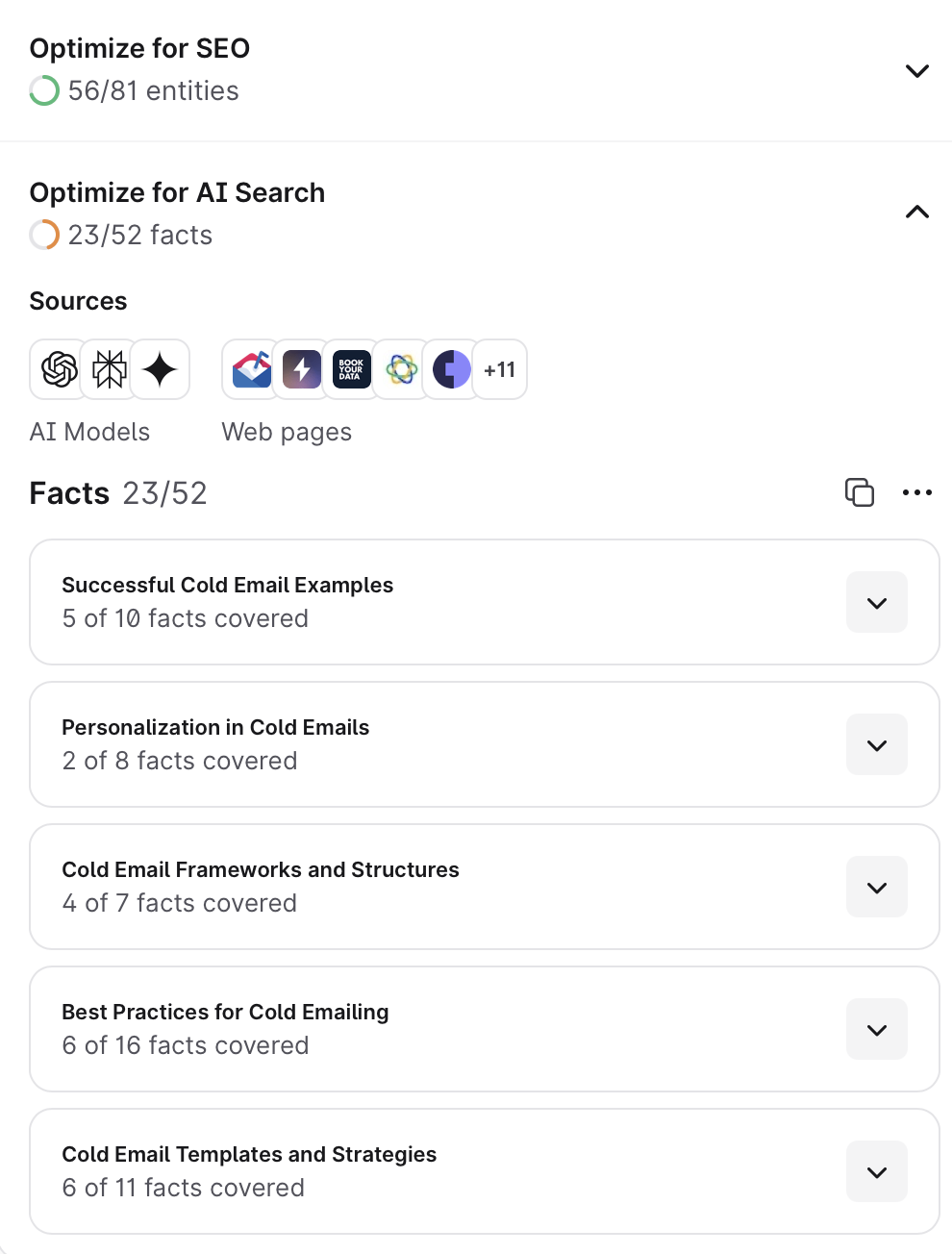
I added these naturally where they fit, without forcing them in.
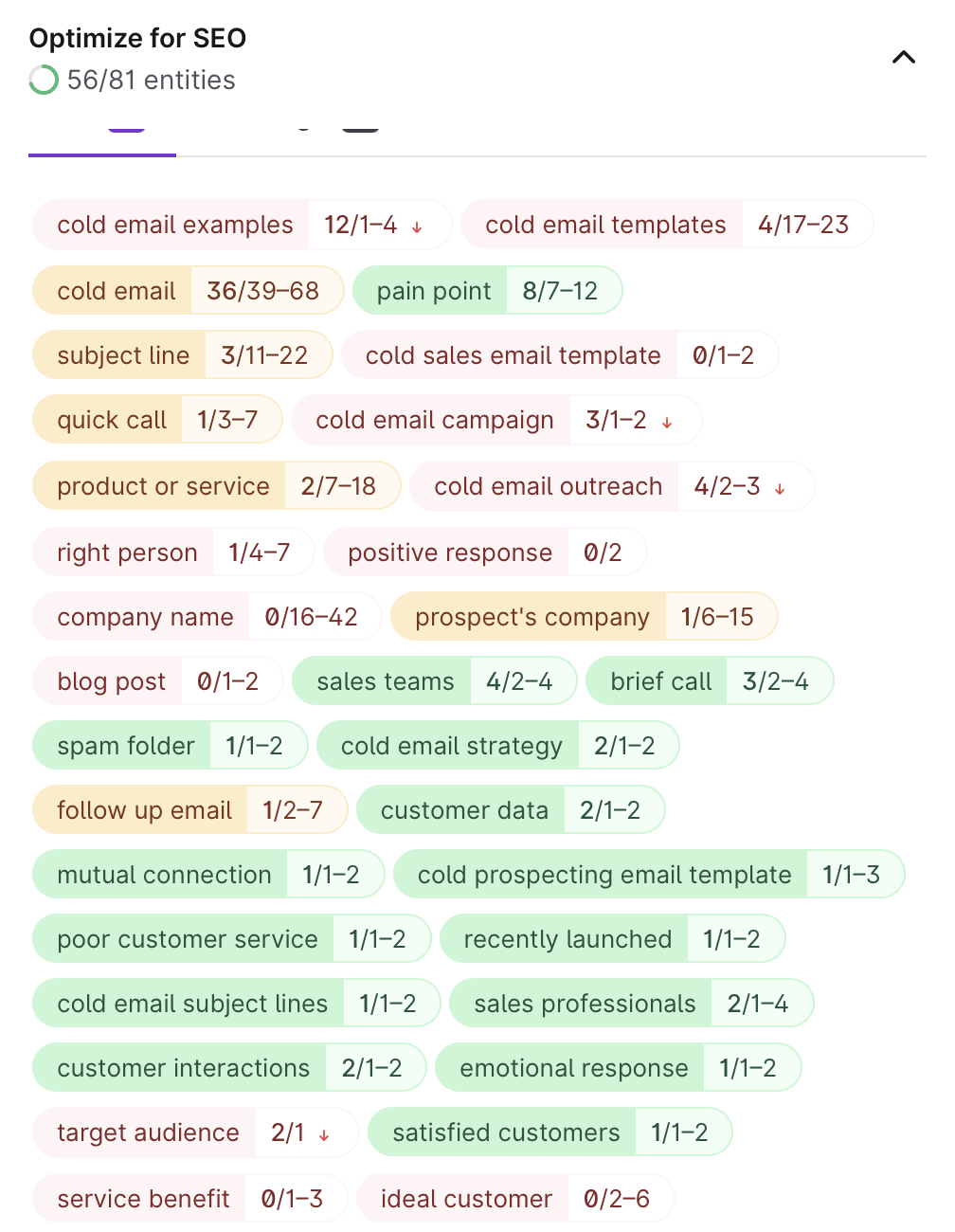
For keyword usage, Surfer helped me balance primary and secondary terms without over-optimizing. Instead of stuffing "cold email examples" everywhere, I incorporated related queries like "how to write a cold email," "cold email templates," and "cold email subject lines" in headers and body text where they made sense contextually.
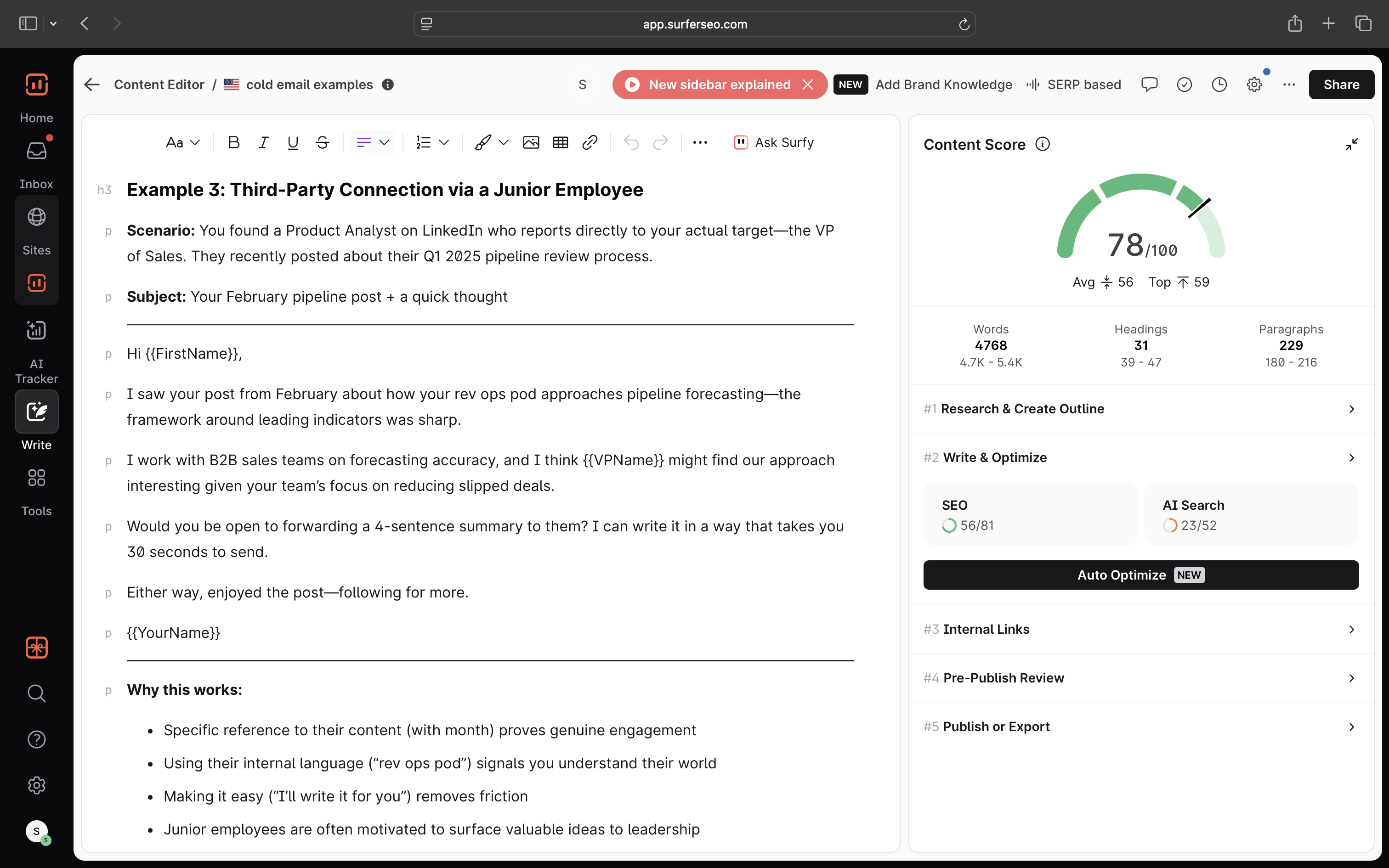
The Content Score gave me a clear benchmark—I wasn't chasing a perfect 100, but I did want to match the depth and coverage of pages already ranking in the top 5. Once the score hit the green zone and all major topical gaps were addressed, I hit publish.
From invisible to 5× traffic growth in 4 months
The results started showing almost immediately. Within days of republishing, organic clicks began to rise. Over the next four months, the post reached:
- #3 position for its main keyword
- ~500 organic visits per month (up from fewer than 20)
The chart below shows how the traffic changed. The article stayed almost flat for nearly two years, then began growing in April 2025, with a clear acceleration between June and August.
Final thoughts
You don’t always need to publish new articles to see growth.
In this case, all it took was a clear structure, sharper intent, and a few targeted optimizations with Surfer to turn a stagnant post into one of the blog’s top performers.
This rewrite showed how much difference it makes to focus on what readers actually search for and to format the content in a way that answers their questions quickly.
Refreshing old content isn’t just maintenance, but it’s one of the simplest ways to unlock new visibility and steady, long-term growth.




.avif)